
In our series celebrating the best of British television, FINLAY McLAREN salutes his own Roman Empire.
Open the Radio Times, circa 1976, at a random page and chances are you’ll find a costume drama. The 1970s were a golden age for the genre on British TV, with viewers being treated to the likes of Elizabeth R, The Onedin Line, Poldark and Upstairs, Downstairs. If you enjoy RADA-trained thesps, strutting onto proscenium-arch sets and shouting ‘The King is dead, m’Lord!’ or some such, then the Seventies were the place to be.
Fast-forward five decades, and while you might see the occasional home-grown period piece dotted about the schedules — Austen remixes The Other Bennet Sister and Sanditon, or the seemingly immortal Call the Midwife — on the whole, the genre is slowly dying out. This is an extraordinary change from its heyday, and even from just a decade ago, when programmes like Downton Abbey and Victoria were king (and queen).
As usual, the problem is money. While big-budget streamers can still afford the lavish expense associated with historical drama, the rest of the industry is having to mind its shekels. Whenever broadcasters need to tighten their belts, programmes involving writers, directors, actors, props, sets, rehearsals, location filming, studio time, horses, rapiers, choreographers and lots of costumes tend to be the first to go.
Last year, Peter Kosminsky, director of Wolf Hall: The Mirror and the Light, explained the difficulties of making such work in the current environment, noting that the original script for the series featured ‘many scenes set outside, many scenes involving horses; we had a whole joust, an extraordinary scene as conceived by Hilary Mantel, the original novelist – and we had to cut everything’.
Rather than abandon the genre that once reigned supreme on the box, commissioners should look to the example of those costume dramas of yesterday, often made on a fraction of modern budgets and all the better for it. Take I, Claudius, first broadcast fifty years ago this week and still one of the finest pieces of television ever made.
Based on Robert Graves’s 1934 novel of the same name, and its sequel from the following year, Claudius the God, the series covers the history of the early Roman Empire – as recounted by the elderly Emperor Claudius – beginning in 24 BC and continuing until his death in AD 54. Across twelve episodes – or thirteen if you’re watching in America – the viewer is treated to an epic of madness, murder and debauchery.

Made on the, even then, modest budget of £60,000 an episode, I, Claudius may seem cheap to modern eyes; no throngs of extras, no on-location international filming – even the obligatory gladiator fights remain off-screen. Certainly it’s no Ben-Hur; it isn’t even Carry On Cleo. Instead I, Claudius trusts in character and story, because it knows that’s more than enough.
The script by Jack Pulman crackles, with dialogue ranging from the hilarious (‘Tell me, Livia, if I’m a god, even in Palmyra, how do I cure gout?!’), through the sublime (‘Let all the poisons that lurk in the mud hatch out’), the iconic (‘Is there anyone in Rome who has not slept with my daughter!?’) and the haunting (‘Don’t touch the figs’).
I, Claudius isn’t all comic interplay and arch one-liners though. The series was notorious on transmission for its gory, explicit content, including suicide, infanticide, regicide, parricide, familicide and a smattering of bare bosoms. The horrors peak with episode eight, ‘Zeus, by Jove!’, which ends with the Emperor Caligula cutting the foetus out of his wife Drusilla’s womb and then consuming it. While the gorier shots were cut before transmission, on the orders of BBC top brass, the implication – the screams, blood around Caligula’s mouth, hushed entreaties of ‘don’t go in there’ – nonetheless conveys the full horror of the event.
The more history-minded viewer may be inclined to arch an erudite eyebrow at the many liberties taken by Pulman (and Graves) (and Suetonius), or to decry the series as an attempt to smear the Julio-Claudian dynasty, but let’s face it, no writer ever had this much fun with the truth.
Pulman’s script is only one ingredient in the television alchemy at play here; there is also the cast – and what a cast! After both Charlton Heston and Ronnie Barker (imagine) turned down the part of Claudius, it went to the young Derek Jacobi.
Unlike his fellow grand old thesps, Jacobi has never found his ‘franchise part’ – the Gandalf, Dumbledore or M that immortalises an actor to millions worldwide and tops up their pension pot – but he deserves one. Among the greatest actors of his generation, his performance as the stammering, stuttering, Claudius is extraordinary. The only character present throughout the series, Claudius is variously the boy looked down on by his family as an idiot, the wily scholar carefully stepping around palace intrigue, and finally the reluctant old emperor. The role rightly earned Jacobi the BAFTA for Best Actor.

Brian Blessed appears as the first Emperor Augustus – long before he gained a reputation as BRIAN BLESSED – and he renders Augustus as a great bear of a man, at times cuddly and affable, but with an alarmingly short temper. Blessed’s final moments in the series give us the most incredible death scene ever filmed, as he holds a ‘dead’ face for four-and-a-half minutes, with no blinking and no muscle movement. Halfway through we see the light go out of Augustus’ eyes and the Roman Empire dies with it. The scene is a reminder of what a technically skilled and sophisticated actor Blessed really is.
Later in the series John Hurt, fresh off his success in The Naked Civil Servant, gives career-best work as mad Emperor Caligula. Hurt’s portrayal is utterly bewitching, a multi-layered display of immaculately posed unpleasantness. You cannot take your eye off him.

But the greatest performance comes from Siân Phillips – who retired from acting in August this year, at the age of 93 – as the Empire’s scheming matriarch Livia. During rehearsals, Phillips reportedly struggled with the role, until director Herbert Wise advised her: ‘Just be evil. The more evil you are, the funnier it is, and the more terrifying it is’. The result is like Servalan in a stola. An exquisite portrayal of lip-curling cruelty. Phillips was also awarded a BAFTA for her part in the series.
The work of director Herbert Wise is a masterclass in the forgotten arts of blocking and staging. Sets are busy with human beings who move – and so does the camera! Where a director today might keep the lens static – later ping-ponging between actors, usually filmed on separate days, during editing – Wise has the camera dance across the studio floor, becoming an eavesdropper on the intrigue. The limitations of multi-angle studio set-ups and analogue post-production forced directors then to become choreographers, thinking about space, bodies and movement. What looks stagey now is often considerably more dynamic than the supposedly cinematic television that replaced it.
But for all the artistry, this is not some lofty epic full of its own self-importance and grandeur. Actually, it’s a bit of a soap opera. Pulman described the Claudians as a big Jewish family, and Herbert Wise agreed, noting, ‘We wanted to make the point that human psychology hasn’t changed much in the last two thousand years.’ This intention is clear from our first sight of the imperial family reclined on sofas, critiquing their entertainments like a Roman Gogglebox. Despite their poisoning and depravity, the Claudians are as recognisable in 2026 as they were in 1976.
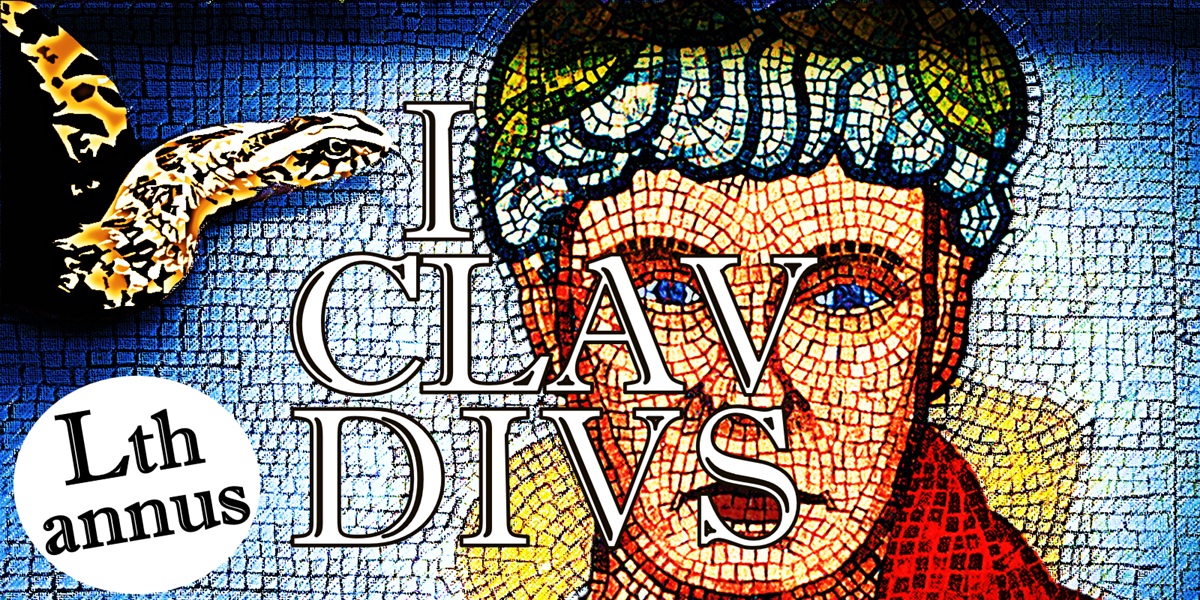
Fifty years on, I, Claudius remains a supreme work, towering over and above all the other costume dramas that followed in its wake. Too many programmes have been influenced by it – both intentionally and unwittingly – to mention every one, but chief among them is the father of modern television The Sopranos, about the unlikely ruler of a large, Italian ‘family’ and its scheming matriarch: Livia.
I, Claudius is also a reminder that costume drama doesn’t need armies of extras, CGI palaces or international location shoots. It needs good scripts, good actors and directors who know how to use them. As the television industry struggles with budgets and commissioners become increasingly frightened of expensive productions, perhaps the future lies not in trying to compete with multi-million-pound streaming hits, but in cheap, writerly drama like I, Claudius.
What a future that would be.
FINLAY McLAREN writes about modern British politics and pop culture. He has been spotted at UnHerd, the Daily Sceptic and the Critic. His Substack is called Notes from Behind the Sofa. He is not fit to be emperor.
I, Claudius is available on the BBC iPlayer.
see also:


Discover more from Lion & Unicorn
Subscribe to get the latest posts sent to your email.
