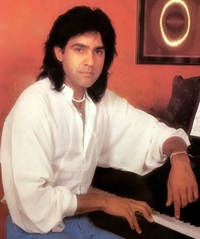
ALWYN TURNER remembers the career of Britain’s first disco-king, Biddu, and selects a dozen of his finest.
A playlist is available on YouTube
‘I started life as a singer out in India, but there’s only so much you can do in India,’ reflected Bangalore-born Biddu Appaiah. ‘I used to do Western music, and I’d do these shows in Bombay, Delhi, Calcutta where I used to have thousands of kids every day. But I always wanted to get out, and I finally managed to hitch-hike to England.’
Arriving in Swinging London, his first single, ‘Daughter of Love’ (1967) was produced by Tony Visconti, to whom he’d been introduced by Procul Harum and Move producer Denny Cordell (‘Tony, this is India’s Elvis’). It wasn’t successful, and the record company, Regal Zonophone, didn’t bother with a follow-up. A couple of subsequent releases on Polydor – ‘Started Me Thinking’ (1969), ‘The Sooner I Get to You’ (1970) – did nothing either.
He concluded that he might not be cut out for solo stardom in such a competitive market. ‘I decided not to be a singer here because it was such a big industry. In India I was one of ten, one of the top acts, but here I’d be one of thousands. So I decided to take up writing and producing.’
Not that his chosen career was exactly full of promise, because he wanted to make soul records. On his journey to Britain, he’d had an epiphany in the unlikely setting of Beirut. ‘The first time I heard a black song was the Four Tops’ “Reach Out – I’ll Be There”. I was walking past this shop and heard it, and I just stood there and I thought that’s the best thing I’d ever heard. Because we never got anything black in India. From that moment on, the only thing I was interested in was black music generally.’
But home-grown soul music wasn’t doing much business in Britain in the early 1970s when Biddu started out. ‘The sort of stuff we were doing in the clubs,’ said Jimmy James of the Vagabonds, ‘the hardcore, sweaty, gut-crunching r&b that people were listening to and dancing and getting down on, wasn’t being played on radio, so the record-buying public wasn’t hearing it.’
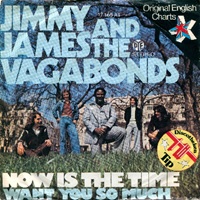
Jamaican-born James, whose first single had come out in 1965, was one of those who drifted into Biddu’s circle of artists, along with others who’d been around for years, without breaking through to a mass audience. ‘I didn’t know who Jimmy James was, who Carl Douglas was,’ reflected Biddu. ‘I didn’t know their histories. Probably if I did, I wouldn’t have signed them, ’cos I’d have thought to myself: well, they’ve already been going for the last ten years, who’d want to work with Jimmy James? I should’ve avoided him, but you don’t – you like the voice and you go in and do it.’
He found that by cutting costs, it was possible to operate as an independent producer, licensing one-off singles to record companies. ‘We used to record at Nova Studios in Marble Arch, and we used to do four songs in a three-hour session,’ remembered guitarist and arranger Pip Williams. ‘In the early days, Biddu used to cram everybody in: a rhythm section, a couple of horns, small string section. In those days he would never use cellos, because he said it used to muddy up the sound – I expect it was a lot to do with budget as well – so we only used to use four violins and a couple of violas. A tiny string section, not unlike some of the Motown things.’
Other regulars in the studio were bassist Frank McDonald, guitarist Chris Rae (also to be heard on records by the Bay City Rollers) and drummer John Richardson (later Barry d’Souza, when Richardson found success with the Rubettes). And then on keyboards, there was Gerry Shury, who’d worked with Biddu as far back as 1969. He did most of the arranging and was reckoned by many to be the key figure. ‘For me, Biddu may have had ideas, but Gerry was the man who made them work,’ said Jimmy James. The engineer was generally Richard Dodd (‘a fantastic engineer,’ according to session pianist Mike Moran), who summed up the characters of the two men: ‘Gerry seemed to me to have no desire to be the front-man, and Biddu had every ounce of desire to be the front-man.’
The continuity of personnel meant that – even when the records were derivative, as they often were – there was something distinctive about their sound. They didn’t attract much attention, but it was a moderately successful model. ‘I found that although none of them were getting played on the radio, they were building up a scene up north, the northern dance scene, which I didn’t know anything about, but I’d find that each sold 5,000 or 6,000 copies.’
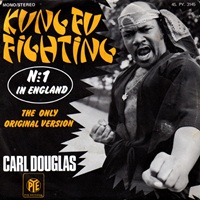
The breakthrough came in 1974, when Biddu offered a new single, ‘I Want to Give You My Everything’ by Carl Douglas to Pye Records. ‘I took it to the record company and played them the A-side, and they said, “Yeah, yeah, fine – what’s the B-side?” And I said, “Oh forget it, it’s just this song.” And the guy said, ‘Let me just quickly listen to it.” And I guess this is how karma works, because he put it on and after thirty seconds he stopped it and said, “This should be the A-side.” I said, ‘You must be joking.”’
The track was Douglas’s own song, ‘Kung Fu Fighting’, spinning off the martial arts craze initiated by Bruce Lee’s films and the David Carradine TV series Kung Fu. It was recorded in the last ten minutes of a session as a throwaway. ‘It’ll keep him happy,’ was Biddu’s thinking. But that was before Pye’s Robin Blanchflower had his say.
‘Can you sell five thousand copies?’ asked Biddu. ‘That was my criteria. He said, “Yeah, I think we can do at least ten.” So I said, “If you think you can sell ten thousand copies, bring it out.” He brought it out and the rest is history.’ Again, the single first made an impact in the clubs rather than on the radio, but this one broke out. It went to #1 in a dozen countries, including Britain and America, and at the last count has sold around eleven million copies.
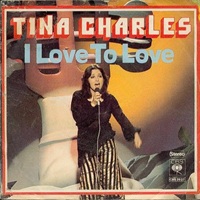
Biddu never matched those sales again, but he was now a big name, a hit-maker for the first time. He could afford bigger studios, and his sound moved on – the Motown influence replaced by that of ‘Rock the Boat’ by the Hues Corporation and George McCrae’s ‘Rock Your Baby’ – as he became Britain’s leading producer of disco. There was a further #1 in 1976 with Tina Charles’s ‘I Love to Love (But My Baby Loves to Dance)’.
The approach, though, was much the same. The central team remained, and he was still recruiting the also-rans of British music. ‘Even Tina Charles had made a lot of records; even though she was very young, she had sung on this, that and the other.’ And he was still more interested in the music than the stars. ‘None of the artists I had were attractive or slim or fit any pop role model. They were plump, fat, one was balding. Tina was the youngest one, but she was nothing like you’d imagine a pop star to be: she was plump, frumpy, everything else. But she had a great voice.’
In 1973, Biddu had released a single on DJM, ‘Hey! What’s Wrong With England?’, suggesting that British people were too quick to run down their own country. But by the end of the decade, the malaise was getting to him too. ‘I was getting very disillusioned with the scene over here, because punk had come in and – although I’m not a Christian or anything like that – I can’t stand people swearing and cussing. And my wife and I even thought about emigrating, we just thought the country was going downhill, morally and everything else.’
The death of long-term collaborator Gerry Shury in a 1978 car crash was a further blow, both personally and professionally. ‘That’s when it all fell apart for Biddu and me really,’ said Tina Charles. ‘It’s okay to produce something but you have to have something there to produce, and what Gerry did was write the most beautiful arrangements. We never found another Gerry Shury.’
The difference was evident on two albums released by the Biddu Orchestra in 1978. First, Futuristic Journey, a varied set of disco near-instrumentals that sparkles with imagination. Try ‘Journey to the Sun’, with its sitar flourishes and fine use of tubular bells. Or the cheesy lounge of ‘Un Homme Et Une Femme’ – sounding very much like the Gentle People. And then, in Shury’s absence, Disco Gold: 20 Golden Disco Greats (1978), a collection of covers from ‘Star Wars’ to ‘Satisfaction’, released on the budget-price Warwick label. It felt perfunctory at best.
As it turned out, though, Biddu was moving on. He wrote ‘Aap Jaisa Koi’, performed by fifteen-year-old British-Pakistani singer Nazia Hassan for the soundtrack to the movie Qurbani (1979), and it was a huge hit in India and beyond. From then on, his attention drifted from Britain. ‘The only thing I do now is a lot of music for India,’ he told me in 1995. ‘I started getting a buzz for two reasons: writing Indian songs was something new for me, and it made my mother really happy, because she lives in India and she can see and hear my name all the time.’
But that’s a whole other story…
The twelve songs I’ve selected here come from Biddu’s time in British music, though I’ve studiously avoided the big hits – because you already know ‘Kung Fu Fighting’ and ‘I Love to Love’. All tracks were written and produced by Biddu, unless otherwise noted.
A playlist is available on YouTube
SIDE ONE:
01. Biddu, ‘Look Out, Here I Come’ (1967)
The A-side of Biddu’s debut single, ‘Daughter of Love’, was fully orchestrated and wasn’t very good (‘In the temple of my mind is where I worship her’), but the B-side was a nice bit of psych-adjacent pop that could surely have been a hit, given a bit of promotion. In Tony Visconti’s autobiography, he says the musicians included John Paul Jones on bass and Nicky Hopkins on keyboards, though – unlike the note on YouTube – he makes no mention of Jimmy Page, so presumably it’s not him.
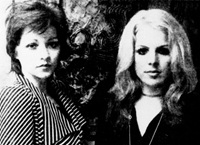
02. The Playthings, ‘Stop What You’re Doing to Me’ (1973)
Their names were Della and Pauline, they were discovered by Biddu, and this was the first of three singles he made with them for Pye. More than that, I cannot tell you. The song was later recorded by Tina Charles on her album Heart ’n’ Soul (1977).
03. Johnny Johnson & The Bandwagon, ‘Honey Bee’ (1972)
A New York soul band, the Bandwagon recorded the original version of ‘Breaking Down the Walls of Heartache’ (later covered by Dexys Midnight Runners’ on the B-side of ‘Geno’), but were more successful in Britain than in America. Relocating to London, and reduced to Johnny Johnson plus session singers, there were a few hits under the guidance of British songwriter/producer Tony Macaulay, before the well ran dry in 1970. This single didn’t reverse the career decline, but I think it was the best of Biddu’s Northern soul records, and the best thing Johnson did in Britain. ‘Fabulous voice,’ said Biddu, accurately.
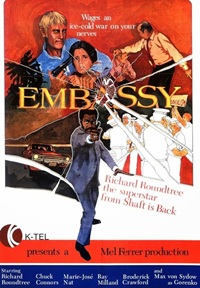
04. Carl Douglas, ‘Somebody Stop this Madness’ (1972)
Despite an impressive cast – Richard Roundtree, Ray Milland, Max Sydow – the British movie Embassy wasn’t much celebrated. ‘A telly-sized story, mildly thrilling,’ said the Sunday Mirror, and the Daily Express was similarly half-hearted: ‘I wouldn’t run up any flags for Embassy, but it’s worth a friendly nod.’
On the other hand, the soundtrack gave Biddu a chance to try his hand at blaxploitation and he made a pretty decent fist of it. ‘Everybody’s talking about peace, but war is all we see.’ It also introduced him to the man who’d give him his biggest hit.
05. Lon Satton, ‘The Love I See in Your Eyes (Is Meant for Another Guy)’ (1974)
Even by the standards of Biddu’s stable, Lon Satton was getting on a bit, an American jazz singer in his late-40s who’d worked with Earl ‘Fatha’ Hines. Real success was yet to come, playing Poppa in the original West End cast of Andrew Lloyd Webber’s musical Starlight Express (1984).
In the meantime, there was this Biddu release, with an arrangement that sounded like a TV theme. ‘Plaintive lyrics are put over with conviction, but the music is nondescript,’ said Richard Rideout in Kent’s Evening Post, but Ormskirk’s Advertiser was more positive: ‘a bright piece of dance music ideal for discos.’
06. Electric Dolls, ‘Dr. Love’ (1973)
This was one of Biddu’s best songs and an obvious hit, though it took a while for the public to cotton on. The Pearls got to #55 with it in 1974, but it wasn’t until Tina Charles covered it in 1976 that it finally reached the top five, where it belonged. This, though, was the original recording, with (an uncredited) Elkie Brooks on lead vocals. She was another who’d been knocking around hitless for years, having released her debut single in 1964. This was the only record under the name of the Electric Dolls.

SIDE TWO:
01. Lee Vanderbilt, ‘Pick Up Your Troubles’ (1974)
Born in Trinidad, Lee Vanderbilt moved to Britain and released his first single, ‘Sitting in the Ring’ in 1966 (under the name Ebony Keyes). He became a key associate of Biddu, co-writing many songs, including this stripped-back funk track that was released on the B-side of non-chart single ‘It’s Dawn Again’. It’s not the greatest song, but I like its relentlessness, and Vanderbilt had a terrific voice – more character-actor than romantic-lead.
02. Tina Charles, ‘You Set My Heart On Fire’ (1975)
This was Tina Charles’s seventh single since 1969, and like the previous six, it failed to be a hit in Britain, though it gave her a first taste of success in parts of Europe. And her fortunes were about to turn – the next release was to be ‘I Love to Love’. And pretty much all the elements were already here, including the offbeat disco shuffle. ‘All my songs have a slight samba rhythm,’ said Biddu. ‘They just have a slight, very light Latinish feel, just nice to dance to.’
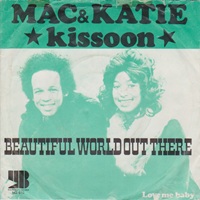
03. Mac and Katie Kissoon, ‘Beautiful World Out There’ (1973)
Trinidadian siblings Mac and Katie Kissoon were another act from the mid-1960s, though they had at least had sporadic chart action in Europe and even in America, where they’d reached the top twenty with a version of ‘Chirpy Chirpy Cheep Cheep’ (1971). Their biggest British hit was to come later with ‘Sugar Candy Kisses’ (1975), written and produced by Wayne Bickerton and Tony Waddington, best known as the team behind the Rubettes. This quasi-Eurovision record was a Biddu song, but produced by journeyman Miki Dallon. A ‘catchy jogalong,’ said Mike Guy of Burnham’s Mercury, Gazette & Express.
04. Geno Washington and the Ram Jam Band, ‘Your Love Keeps Haunting Me’ (1976)
It was, perhaps, inevitable that Biddu would eventually cross paths with American ex-pat Geno Washington (first single: 1965). Again, he didn’t produce this – it was Kaplan Kaye – but the song was written by him and Gerry Shury, and it’s a belter. ‘It would make a fine addition to the charts,’ thought the Thanet Times’s John Hutson, but that didn’t happen. Jimmy James’s version, on the album Now (1976), had a better arrangement but was taken too fast, and anyway the song was better suited to Geno’s voice.
05. Jimmy James, ‘If You Think This Funk Is Junk, You’re Drunk’ (1979)
Biddu had finally taken Jimmy James into the top 30 with ‘I’ll Go Where The Music Takes Me’ and then into the top five with ‘Now Is the Time’ (both 1976), decent pop songs that attracted mainstream attention. James remembers that the former was initially turned down by Radio 1 and got its first play by Jimmy Young on Radio 2.
The albums, however, tended to be tougher affairs. And an excuse to have fun. ‘I came up with “You Don’t Stand a Chance if You Can’t Dance”,’ said Biddu, ‘and then a few months later Lee Vanderbilt said, “Oh, I’ve got a better title.” And it was “If You Think This Funk Is Junk, You’re Drunk”.’ I don’t think I’m imagining things when I detect a George Clinton influence creeping in.
It too was rejected by Radio 1, said James: ‘They wouldn’t play it, because they thought we were using the f-word. That’s why it never got played. We did one called “Do The Funky Conga” as well – “No, sounds like he’s swearing, we’re not playing it.”’
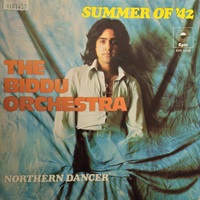
06. Biddu Orchestra, ‘Summer Of ’42’ (1975)
The soundtrack to the movie Summer Of ’42 (1971) won its composer, Michel Legrand, both an Oscar and a BAFTA for Best Original Score, but it didn’t really deserve the awards. Not when Isaac Hayes was also being nominated for Shaft. This version of the main theme, however, is lovely and gave Biddu his first hit under his own name. Ron Roker, who was Gerry Shury’s musical sidekick, attributed the success to his erstwhile partner: ‘The Biddu Orchestra did a beautiful record of “Summer of ’42”. Gerry and Biddu produced that together, but it was Gerry’s arrangement.’
‘It’s quite daunting, remembered Biddu; ‘suddenly here’s this little kid from India and he’s got the BBC orchestra and he’s on Top of the Pops.’
This piece draws on interviews conducted in 1995-96 with Biddu, Tina Charles, Richard Dodd, Jimmy James, Mike Moran, Chris Rae, Ron Roker and Pip Williams. My thanks to them all.
see also:
Discover more from Lion & Unicorn
Subscribe to get the latest posts sent to your email.
