PAUL SAFFER remembers a short-lived BBC radio station set up by accident that somehow influenced all that followed.
In the 1970s, Eric Idle had a Radio 1 programme called Radio 5. It was a slightly odd mixture of pop records bookending a conventional sketch show with the overarching concept of an unhinged fifth national audio network to complement the BBC’s existing four. On 27 August 1990, the BBC launched a Radio 5 for real that in retrospect was only slightly less absurd.
This was not the 5 Live that began in 1994, but the network which it replaced in order to satiate the nation’s thirst for non-stop news and sport chat. The original Radio 5 had no such remit, but that is what gave charm to a strange four-year anomaly in British broadcasting that proved a surprisingly fruitful petri dish for talent and innovation.
The technology of analogue radio meant that the stations of the day, BBC or commercial, were not as specialised or targeted at specific demographics as they were to become. Nonetheless, the four numbered post-1967 BBC networks had clear identities: Radios 1 and 2 for music-based entertainment aimed at younger and older audiences respectively; Radio 3 for classical, the arts and highbrow discussion; and Radio 4 for more general speech. They were all available on both FM/VHF and either AM/medium wave or long wave, and a Tory government keen to encourage commercial competition was pressuring the BBC to give up those duplicated frequencies.
And so they did — as mandated by the 1990 Broadcasting Act — making way for what are now Absolute Radio (on Radio 3’s former frequencies) and TalkSport (where once was Radio 1). The BBC did keep Radio 2’s AM frequency for a putative new fifth network, although what it would actually be was unclear. Indeed, the eventual Radio 5 was to be made up of things the other stations were keen to shed: the more earnest youth output of Radio 1, sport from Radio 2, and schools programmes from Radio 4. (It would also share Radio 3’s test cricket opt-outs.) The various regions were earmarked to supply nightly programming.
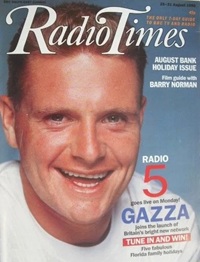
Sport naturally was the highest-profile addition. Having sat uneasily within Radio 2’s schedules on a split frequency, it was now given more room to breathe. BBC radio sport chief Patricia Ewing was made controller of the new network, and Radio 5’s existence was announced with a Radio Times cover featuring Paul Gascoigne — although as then-imperial phase Gazza gurned from the front page of pretty much every publication in the second half of 1990 that may have been a coincidence.
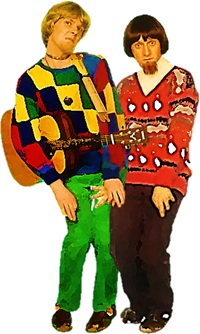
The confused identity was underlined when Radio 5 crept on to the air on Bank Holiday Monday 27 August 1990, following pre-launch transmissions helmed by kids’ TV comedians Trevor and Simon with magisterial Radio 4 newsreader Peter Donaldson. The opening programme at 9am was Take Five, also aimed at children and presented by Radio 1’s compact disc jockey Bruno Brookes, with guests including Gascoigne himself answering kids’ questions.
After more children’s programming, another Radio 1 refugee Johnnie Walker presented This Family Business, before a simulcast of Radio 3’s lunchtime concert, two afternoon hours given over to the World Service, and then drivetime show Five Aside from Manchester, with the first glimpse of sport in the form of European Championship athletics from Split. Later in the evening, listeners were treated to book readings, a programme on European youth culture with Caron Keating, and The Mix, the first of the nightly regional shows, this one from ‘the South and West’ presented by political stand-up Mark Thomas. By 23:08, Radio 5 had handed back to the World Service to end proceedings.
The normal weekday schedule began the following day with breakfast show Morning Edition, a local radio-style mixture of news, chat and music. The rest of the day was the already familiar sequence of children’s programmes, Radio 4-esques features (including a drama), simulcasts of Radio 3 and the World Service, further athletics from Split and, last up, Manchester’s evening youth contribution Hit the North presented by former Radio 1 producer and Piccadilly Radio DJ Mark Radcliffe. Gazza returned for Wednesday’s Sporting Albums, discussing his music choices with football’s Roy Plomley, Garth Crooks.
The weekend was given over more to sport, with phone-in quiz Sports Call helmed by Danny Baker followed by Sport on 5 and Sports Report, long-standing features transferring (with one obvious name change) from Radio 2. Sunday’s sport was sandwiched by the Open University, gratefully dumped like schools’ programmes by Radio 4.
Clearly a worthy schedule, but with a target audience so fractured it was hard to see anyone’s dial being locked to 909 and 693 AM, other than if they remembered to tune in for individual strands. Once the football season was in full swing, commentaries were added on Tuesdays and Wednesdays, as well as occasional midweek coverage of the likes of cricket and horse racing, but other than the extended sport bulletins that followed the news headlines, there was not much attempt to exploit the station’s most compelling attraction.
As Radio 5’s first year went on, programmes at least expanded enough to drop some simulcasts with the likes of Radio 3. But other than slight schedule tweaking, the network did not produce a signature programme until Saturday 5 October 1991, when Sports Report was followed by Six O Six, a phone-in with Danny Baker, whose lunchtime Sportscall was already something of a success.
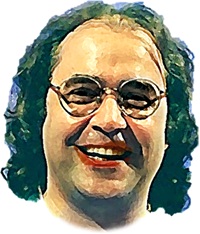
Six O Six was intended as a conventional discussion on the sport of the week, but Baker had other ideas. A former music journalists and well-known face on London independent television in the 1980s, he had become a sudden star of radio in the capital with a weekend breakfast slot on BBC Greater London Radio (GLR) from 1988 to 1990, holding forth on a heady mix of trivia, bizarre phone-in topics, pop culture, P.G. Wodehouse, and whatever else occurred to a mind as sharp as his Bermondsey accent was unmodulated.
Writing about Six O Six in his autobiography, Baker said: ‘On the very first show I took calls about chess, cross-country and fencing. However, I made it plain that the last thing I wanted was commonplace opinions and descriptions of someone’s pastimes.’
Thus the chess portion was restricted to calls about the form of the game played with giant pieces. This prompted a contribution from a player who, when facing-off in a match with some monks in the Himalayas, had tripped and broken his legs: the holy men treated him with chants and he recovered in three days. ‘I don’t know whether that take contains even a grain of truth,’ wrote Baker, ‘but it was brilliantly told and certainly beats some old bore droning go about whether Manchester United should play 4-3-3 or 4-5-1.’
More significantly, another suggested topic ‘Just how crooked are referees?’ prompted a call from Chelsea player Andy Townsend on his way home from a game. Unsurprisingly, this made the Sunday papers and put Six O Six on the map. Soon it became a football-only show aimed at fans travelling back from Saturday matches, thus inserting itself at the vanguard of the transformation of the game from disgraced 1980s reprobate to the cultural juggernaut it has been ever since.
In fact so successful was Six O Six that by the following February, Radio 5 handed their weekday breakfast show Morning Edition over to Baker. The man who had begun his GLR debut by ringing a handbell and declaiming: ‘Get up, you deadbeats! You weasels! New sheriff in town!’ was never likely to stick with the previous staid magazine format, so now the station had a distinctive breakfast show that might not have attracted audiences the size of Radios 1, 2 or 4 at that hour, but which brought Radio 5 an influx of new listeners, as well as awards and, most importantly, an identity.
Baker was soon propelled to greater national fame (Daz adverts, Radio 1 and brief TV ubiquity). But he was not the only new broadcasting talent almost accidentally given a big break by Radio 5. Not least were Baker’s rotating breakfast sidekicks Danny Kelly and Mark Kermode; and by this stage the night-time shows supplied by the regions included among their relatively unknown presenters former Communard and future reverend Richard Coles, Radcliffe (now paired with former musician and record-plugger Marc ‘Lard’ Reilly) and Rob Brydon, as well as a first regular national radio slot the in afternoons for children’s ITV stalwart Tommy Boyd.
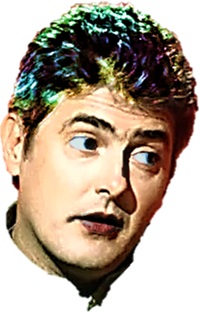
Although Radios 1 and 2, as well as 4, regularly featured comedy, so did Radio 5, originating The Mark Steel Solution, Room 101 with Nick Hancock (both more cutting and whimsical than future television incarnations — just like its host station), and They Think It’s All Over (chaired not by Hancock, but by Des Lynam). And the station was leaning ever more into sport, giving over its schedules entirely to the 1992 Summer Olympics, rather than fitting around Radio 2 programmes as in the past (Terry Wogan, as well as Baker, was among the presenters from Barcelona).
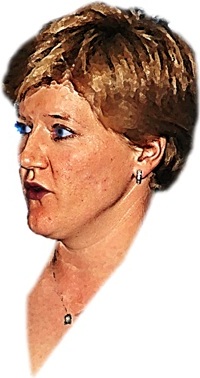
Meanwhile John Inverdale now had the space to become radio’s answer to Lynam, and the launch of both the FA Premier League and UEFA Champions League that year provided even more nightly material for the commentaries that consistently were Radio 5’s most popular element (including quite a lot of horse racing, with daily bulletins on Baker’s show read by a nervous former jockey called Clare Balding).
But just as it found its feet, Radio 5 was to run out of road.
Oddly, the seeds for its downfall were sown as it prepared to go on air in August 1990, when Iraq under Saddam Hussein invaded Kuwait. The resulting war, the following year, prompted the BBC to turn Radio 4’s FM frequency into a rolling news channel for the duration of the conflict, and deputy director general John Birt was keen for this to become a permanent feature at some point. Radio 4’s long wave frequency was initially proposed for this new network’s home, but the resulting storm of highly-publicised protest persuaded Birt (by 1993 DG in his own right) to propose a news and sports channel to replace Radio 5, whose messy identity had never appealing to the trained engineer. (He called it ‘improvised and disjointed’ while describing the replacement as ‘coherent and cohesive’.)
Whereas Radio 4’s long-wave service could call on a well-connected collection of campaigners to fend off rolling news, Radio 5’s fanbase was more disparate and less noisy. And since the station’s most popular feature, sport, was to be expanded, the main disappointment came from producers of children’s radio, whose decline in audience had not been reversed.
Of course, there were still the popular presenters, like Baker* and Radcliffe, who had helped attract listeners that Radio 5 had never expected upon its launch. But a few weeks before the station’s demise was announced, both Baker (with sidekicks Kelly and Kermode) and Radcliffe became key parts of the radically revamped line-up for Radio 1 under new Birt-mentored controller Matthew Bannister.
What remained of Radio 5 marked time for its final few months until its replacement by Five Live on 28 March 1994, blessed with a more competitive budget, love from the BBC hierarchy, and still an effective monopoly on nationally-broadcast radio sport. The mixture of news programmes, phone-ins and commentaries were closer to what had been familiar on local radio than the incisive mission-to-explain analysis that Birt had perhaps initially envisioned, but the format has proved popular enough to survive for more than three decades largely unchanged.
Baker, whose profile on Radio 5 had been amplified by his sudden ubiquity in advertising, as well as spin-off football videos (another unlikely legacy of the station), saw his personal audience treble on Radio 1 in October 1993 to around nine million. But since that was half of what Dave Lee Travis had been attracting months earlier in the same weekend morning slot, Baker was deemed a failure. He offered to resign, but instead had his broadcasting hours cut in a way that led him to declare his show ‘radio’s answer to Boxing Helena‘, before he left in September 1996, transferring back to Five Live to do a football phone-in. Radcliffe proved more enduring on the network (despite an ill-starred move to breakfast time).
That Baker — then and since — has bounced around radio stations without ever finding a natural national home illustrates why the original Radio 5 did after all have a purpose. Free from a clear definition or format, it was a mad laboratory, accidentally alighting upon broadcasters like Baker and giving full rein to their talents, thus attracting audiences of millions often unserved by what existed elsewhere. Not DLT numbers, but the not-DLT numbers were why there was a Radio 5 in the first place.
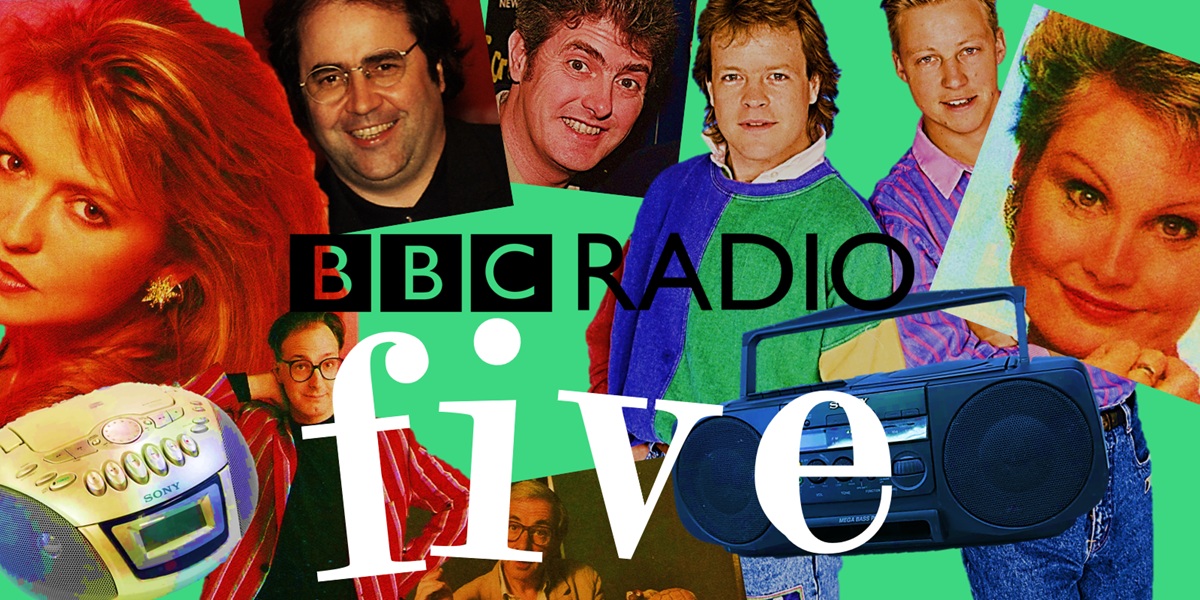
Something like Radio 5 would never exist today, and barely existed then. It was almost the last gasp of a dying tradition of broadcasting, just as the technology was making countless channels concentrating on a single topic or genre — narrowcasting if you will — the only viable way ahead, leaving the BBC itself even more fretful about its purpose and future. The legacy terrestrial TV and radio networks still exist, including Five Live, though it is soon to shed the AM frequencies that were once considered so precious that to keep them the BBC set up a radio station without first thinking through they wanted to do with it.
By accident, Radio 5 somehow produced a roster of future radio stars and gave breathing space to the sport coverage that has kept its successor in rude business. Of course, a trawl of Spotify or YouTube might catch new voices and ideas of similar verve, but briefly the BBC set up a station that put them all in one place.
* 606 was now in the hands of David Mellor, leaving some to suggest that the station’s controller was taking the opportunity to choke the passion, wit and dissent that they clearly had never intended the programme to possess in the first place. And as it is still going today, who is to say they were wrong.
see also:
Discover more from Lion & Unicorn
Subscribe to get the latest posts sent to your email.
