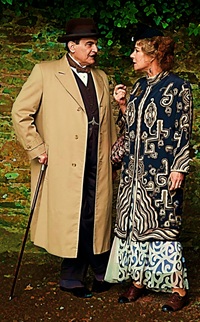
BEN THOMAS takes issue with an episode of Poirot.
Ariadne Oliver: I only regret one thing – making my detective a Finn. I don’t really know anything about Finns and I’m always getting letters from Finland pointing out something impossible that he’s said or done.
Agatha Christie, Cards on the Table (1936)
I’ve always loved the works of Dame Agatha Christie. When I was a boy I worked my way through most of her oeuvre via my local library. I can tell you the first one I read: Dumb Witness (1937). I think it had Bob the Fox Terrier from the book on the cover. I worked out the murderer before the end (something that thrilled me and would never happen again) and I was hooked.
I’ve never finished Death Comes as the End (1944). It’s set in Thebes around 2000 BC and all the ancient Egyptian names, ‘Renisenb’ this and ‘Imhotep’ that, got on my wick. I think I’ve read all the others, though. Even The Big Four (1927), her frankly batshit and tonally baffling spy thriller, featuring Poirot and Hastings hopping around Europe, trying to bring down an international crime syndicate. ‘That rotten book’ as Dame Agatha referred to it. If you told me she was on ether when she wrote it, I’d believe you.
I also love Christie adaptations. The good ones anyway. I hold an almost psychopathic hatred for the ITV Marple series (2004-2013). Geraldine McEwan and Julia McKenzie were well cast, but otherwise the people making it seemed to have a barely concealed contempt for the novels. June Whitfield was a strong Miss Marple on Radio 4, but I revere the Joan Hickson versions (1984-1992), each adaption a love letter to the source material.
On the Poirot side (which reads like a euphemism, now I come to type it), the Peter Ustinov films – the three released theatrically between 1978 and 1988 – are camp, star-studded and sun-kissed delights. Ustinov isn’t much like Poirot, really. He’s Ustinov with a false moustache and a silly voice, but Ustinov was nearly always playing Ustinov putting on a silly voice. That was his shtick, it’s what the public wanted, and it was nearly always good fun. (Except in the title role of Charlie Chan and the Curse of the Dragon Queen (1981). Different times…)
Albert Finney brought barely concealed fury to his one-off Poirot appearance in Murder on the Orient Express (1974). At times he seems unhinged. It was one of the few adaptations of her books released during her lifetime of which Christie approved (although she didn’t think his moustache was sufficiently magnificent). Christ knows what she would’ve made of the Kenneth Branagh Poirot movies. She must’ve been spinning in her grave like a fairground Waltzer. What in the name of Tommy and Tuppence was he wearing on his top lip? It was like offcut carpet tile.
But as Joan Hickson was the gold standard of Miss Marple, it’s probably David Suchet who’s best and most fondly thought of in the role of Poirot.
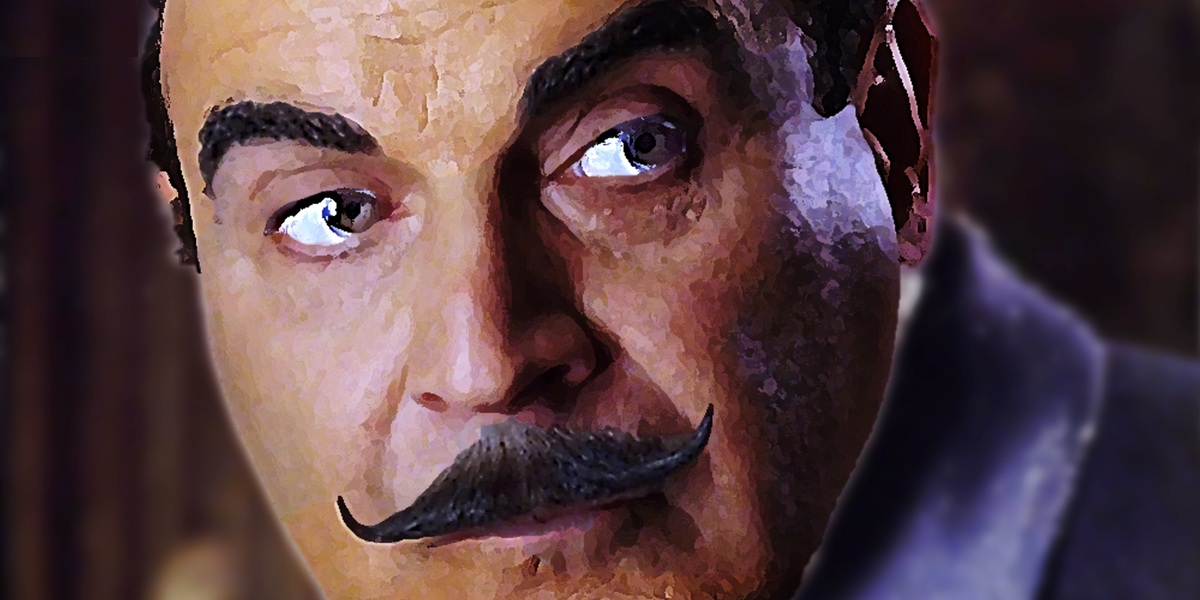
Hercule Poirot: I like an audience, I must confess. I am vain, you see. I am puffed up with conceit. I like to say: ‘See how clever is Hercule Poirot!’
Agatha Christie, Death on the Nile (1937)
Over thirteen series between 1989 and 2013, Suchet played the Belgian detective in seventy adaptations of Christie’s stories. Before he filmed a scene, he read all thirty-three novels and more than fifty short stories, during which he compiled a five-page, hand-written ‘dossier of characteristics’ for the character, including ninety-three distinct aspects of Poirot’s life, personality, habits and speech. Suchet had this leather-bound diary on set for his entire twenty-five-year run. And he’d stay perfectly in character while in costume.
Would it be unfair to say he sounds at least a tiny bit exhausting?
It paid off for him, though. He is the embodiment of the Poirot from the books: meticulous, egotistic and faintly ludicrous, but empathetic, principled and brilliant. His penguin-like waddle perfectly captures Christie’s description of ‘a rapid, mincing gait’. Every movement is small, deliberate and precise. His voice is shrill, clipped and pinched. Suchet is consumed by the fussy little Belgian.
So yes, he’s as perfect as he can be. The series boasts sumptuous production values and attracted talented writers like Clive Exton, Anthony Horowitz and Mark Gatiss. Suchet was cocooned by a regular supporting cast, including Hugh Fraser’s intellectually blunt but fiercely loyal Captain Hastings, Philip Jackson’s gruff but forbearing Inspector Japp, and Pauline Moran’s unflappable but twinkly Miss Felicity Lemon. Across its lengthy run, the series boasts far more hits than misses.
But misses there are. ’The Murder of Roger Ackroyd’ (2000) is bland, Christie by numbers. That’s almost unavoidable on screen, as the narrative twist that made the book such a sensation when it was released doesn’t work well off the page. And without it the mystery is pedestrian. A great shame, as the cast are strong. Oliver Ford Davies, who played Doctor Sheppard, is an actor of almost infinite range and ends up underused in a main role.
The adaptation of ’The Big Four’ (2013) is a well-intentioned attempt to make a nonsensical story make sense. It might have worked if they’d embraced the silliness, but it was part of the last series and, by that point, ITV’s Poirot was taking itself very seriously indeed. Having Hastings, Japp and Miss Lemon, who were mainstays of the earlier, more frivolous era, turn up to take a bow was like having Rod, Jane and Freddie turn up for a cameo in Tenko.
You could argue that ’The Labours of Hercules’ (2013) is a collection of linked short stories rather than a stand-alone novel. And you’d be correct. Trying to turn it into a self-contained two-hour drama ended up producing a strange ‘cut and shut’ featuring odds and ends of six of the stories. It shouldn’t work, and it doesn’t. Also, the book is incredibly light and playful whereas series 13 of Poirot isn’t. It’s quite grim.
’Appointment with Death’ (2008) is just a rolling sea of odd choices. The book is perfectly filmable – it literally was, and starred Peter Ustinov. If Michael Winner can manage it, then anyone could, in theory. But screenwriter Guy Andrews decided to ditch nearly the entire mystery, which was entirely serviceable, and throw in extra characters, a giddying array of nonsensical subplots, a surfeit of dark melodrama and – for some reason – a Polish nun involved in human trafficking. The whole thing is inexplicable.
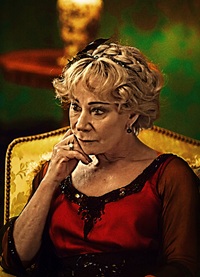
None of those are my least favourite, though. The Poirot I hate is a perfectly functional and entertaining piece of TV crime drama. It introduces Zoë Wanamaker as Ariadne Oliver, who would bring a touch of welcome levity to this and a further five adaptations at the more humourless end of the run. Nevertheless, it boils my piss into an arid steam.
Ariadne Oliver: Shaitana was a man of great vanity. He was also a stupid man. That is why he is dead.
Agatha Christie, Cards on the Table (1936)
The original Cards on the Table is among Christie’s finest work. It ticks through like clockwork.
Mr Shaitana – a flamboyant collector of ‘things’ – invites four master sleuths, including Poirot and Ariadne Oliver, to a dinner where he promises them an evening showcasing his ‘collection’ of suspected murderers who have evaded justice. During a post-dinner bridge tournament, with detectives and suspects seated at separate tables, Shaitana is stabbed. The murderer can only be one of the four invited ‘killers’.
It’s a unique set-up for Christie. Four suspects and only four. The detectives are above suspicion. Poirot is, of course, Poirot. Ariadne is comic relief and, as a writer of detective novels featuring an eccentric foreign investigator, an avatar of Christie herself. Superintendent Battle and Colonel Race, the other two sleuths, are established protagonists from earlier books. The butler couldn’t have done it, the room was clear of staff.
The detectives must delve into the suspects’ pasts to establish whether they do have blood on their hands, as Shaitana believed, and work out who stabbed the victim to keep their skeletons buried.
Nick Dear, who adapted the book for ITV, had been handed a quirky but perfectly engineered Agatha Christie mystery. He barely needed to alter a line. For reasons best known to himself, he decided to bugger about with it.
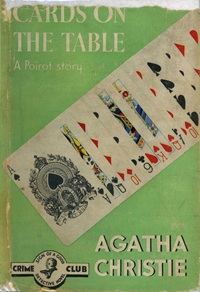
Characters’ crimes, backstories and motivations are changed and complicated, seemingly at random. Mr Shaitana is given more layers than in the book. That shouldn’t be an issue, but really it’s more satisfying to leave him as a vain and arrogant prick who gets his comeuppance. Several characters are rewritten as gay. Nothing shocking about that; gay characters appeared in Christie’s books, even if their sexuality was usually only hinted at. Later Poirot adaptations have changed characters’ sexualities, often to good effect. Here, though, the changes seem entirely gratuitous. It’s got a tiresome whiff of ‘Ooh, aren’t I daring?’
Superintendent Battle and Colonel Race, two interesting legacy characters who have meaty roles in the book, are swapped out for generic replacements, Superintendent Wheeler and Colonel Hughes. Race is understandable: James Fox, who had played him in ‘Death on the Nile’, was unavailable. Still, a recast would have been acceptable. Indeed, Fox has a brother who’s an actor – arguably a better one. But Battle’s kicked out so that Wheeler can become an additional suspect, undermining the whole bloody point of the book.
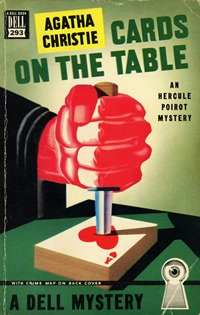
There’s a refreshing simplicity to the novel. A deceptive simplicity that surely comes from the confidence of a writer with sixteen years’ experience under her bustle. I’d argue it’s the purest Poirot novel. And Nick Dear just blindly dicks around with it, like O’Reilly in the Fawlty Towers episode ‘The Builders’, who bricks up doors for no reason and doesn’t seem to understand the concept of load-bearing walls.
You could aim similar criticism at ‘Appointment with Death’, but that’s less of an act of vandalism. It’s based on a merely serviceable book, and you could argue that the changes make it more interesting. Who doesn’t enjoy a superfluous Polish nun? But ‘Cards on the Table’ is like borrowing someone’s Rolls-Royce Silver Ghost and wrapping it around a tree.
Nick Dear would walk away from the wreckage and go on to write four more Poirot adaptations. They’re all quite good, but he’s working with lesser clay.
see also:
Discover more from Lion & Unicorn
Subscribe to get the latest posts sent to your email.
