
He’s not quite the pipe-smoking, peppermint-sucking Norfolk detective of Alan Hunter’s original novels (1955-99), but as played by Martin Shaw, DCI George Gently is old-fashioned, incorruptible, liberal. Relocating from London to the North-East, he teams up with DSgt John Bacchus (Lee Ingleby), a grammar school boy who married the Chief Constable’s daughter, and who drives an MG sports car.
Inspector George Gently (originally just George Gently) ran on BBC Television from 2007 to 2017, and covered a period from 1964 to 1970. It was adapted for television – very loosely adapted – by Peter Flannery, best known for his series Our Friends in the North, which included the same period. The two shows also shared many of the same themes.
Here’s a guide to what we learn from the first four series – the remainder to come later – about how 1960s Britain was viewed from a distance of forty years.
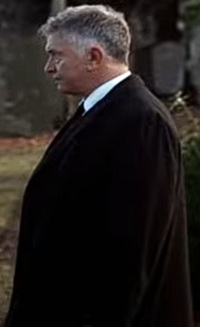
1964
1. ‘Gently Go Man’
Gently is an honest cop in the Metropolitan Police, but some of his colleagues aren’t cut from the same cloth – they’re taking backhanders from the gangster, Joe Webster. ‘I know of seven, a minimum of seven, high-ranking police officers who are on his payroll.’
When Gently’s wife is killed in a supposed hit-and-run case that he knows was Webster’s work, he decides he’s had enough and that it’s time to retire. ‘My one-man mission to clean up the Met cost Isabella her life,’ he says. But before he goes, there’s one last case – Webster has been sighted at a funeral in Northumberland, so Gently goes to find him.
The funeral was that of a member of the Durham Defenders, a motorcycle gang. What are they defending themselves from? Gently asks the gang-leader. ‘From the bullshit, dead-end jobs, hand-me-down values, second-hand opinions, mortgages.’ He has a message for Gently, as well. ‘Your world’s coming to an end, George. It’s inevitable. You won’t know England in twenty years.’
The dead man was also homosexual. His mother is tolerant. ‘I don’t know why the world has to scoff at it so much. Do you, Mr Gently?’ ‘No, I don’t,’ he replies. Later, Gently challenges Bacchus: ‘Do you have difficulties with homosexuals?’ ‘I just think the sooner they find a cure, the better. Cos in the meantime: blackmail, suicides, murders.’
Meanwhile, Joe Webster is exploring Durham Cathedral, equipped with a volume of Pevsner. As a Catholic, he’s not happy. ‘Entirely a left-foot building project. Now it’s owned and run by C. of E. nancy boys in two minds as to the truth of the Resurrection.’ Gently quotes Pevsner, as well.
A couple of dexys cost five shillings.
2. ‘The Burning Man’
The remains of an Irishman are found; he’s been shot and the body burnt after death. At the same time another Irishman – this one used to boast of being ‘the IRA’s number one quartermaster’ – goes missing from the RAF base where he worked. Also missing is a consignment of 144 Sten guns.
‘Why do the Paddies want to shoot the Brits for in the first place?’ wonders Bacchus, and Gently explains: ‘Catholics believe quite strongly in a united Ireland.’ Which raises another question for Bacchus: ‘We’ve given most of it back. Does it really matter if we kept a bit for the Proddies to live?’
A Commander in Special Branch has a deeper perspective. He says there’s a war against the IRA coming – ‘The war the politicians don’t seem to have noticed.’ The situation in ‘the Six Counties’, he says, is unsustainable. ‘The Protestants rule the roost and the Catholics live like pigs, sans houses, sans decent jobs, sans a meaningful vote in many cases.’
Despite all of which, the case really hinges on a wronged woman. ‘Men use you. Men tell lies. Sometimes a man can push a woman too far.’ Doesn’t stop her trying to seduce Gently, though.
There are no planes left at the air base. ‘We’re being slowly mothballed,’ says a Squadron Leader. ‘Don’t ask me who’ll protect England if the Russians ever arrive.’ A man in the stores is reading a copy of Men Only.
Gently has to tell Bacchus off – having a police warrant-card does ‘not give you the right to be impolite’ or to be a bully. He doesn’t approve of the Special Branch man hitting a suspect, either.
3. ‘Bomber’s Moon’
A German man is found dead in the harbour. He’d sailed over from Bremen in a rather nice yacht. ‘Must have cost a few bob,’ says Bacchus. ‘I thought they lost the war.’ The dead man was a Luftwaffe bomber-pilot, shot down in 1944 and held as a prisoner-of-war, working on a local pig farm. He’d come back to renew old acquaintances, but not everyone was pleased to see him.
When he went to the pub, some muttered about the Nazis and made Seig Heil gestures, and a barman is said to have urinated in his beer. ‘I did it three times,’ he admits. ‘Once for each Reich.’ This barman used to be a professional wrestler. ‘He was a nasty piece of work,’ remembers a policeman, who’s a grapple fan. ‘Did some horrible things to the Wild Man of Borneo.’ He’s known as Chick Shavers, and would rather no one found out that his real name is Malcom Fairy.
The dead man’s son, a successful businessman, tells Gently that it’s all anti-German prejudice, stemming from jealousy. ‘We are more determined than you. More industrious, more ingenious. And this makes you angry.’ He’s shouting at the wrong man, though. When Bacchus comments on the Luftwaffe bombing, Gently puts him straight. ‘Ever hear of Dresden? Our bombs created a firestorm that killed 50,000 civilians for no particular reason that I can think of – except to terrorise a nation.’ Bacchus is unimpressed: ‘The Germans should have thought of that before they started the war.’
The old pig-farmer is scornful of Gently: ‘A bloody Londoner and a big wig and all.’ (‘Welcome to the North-South divide, sir’ notes Bacchus, coining a phrase that would become fashionable a decade later.) An Italian barmaid tries to get off with Gently.
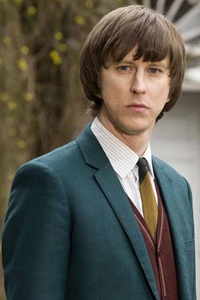
4. ‘Gently with the Innocents’
An old man who owned a big house in the country has been murdered. The house used to be an orphanage, until the regulations introduced by the Children’s Act 1948 prompted a lot of small, independent establishments to close. His estranged wife regrets that she didn’t emigrate to Tasmania with her son when she had a chance. ‘Who wants to live in England now? All these foreigners, boys with long hair, girls flashing their backsides at all the men every time they bend over.’
To no viewer’s surprise, Gently discovers that the orphanage saw ‘the organised sexual abuse of young children’, with teachers, police and other people in authority involved. Gently’s investigation is impeded by a high-level cover-up. He has dinner with an old girlfriend, now a paediatrician, to ask her advice. ‘Are you familiar with the term “paedophile”?’ she asks. ‘It’s never dealt with. The police are hopeless. Nobody wants to believe this.’ She’s disappointed that Gently just wants to probe her expertise.
One of the victims reflects: ‘We’re still telling kids: do as you’re told, respect your elders, have respect for authority. That’s starting to change now. That world’s slowly washing away.’
Bacchus does a school visit. ‘What do you want to be when you leave school?’ he asks the kids. ‘William Burroughs,’ volunteers a boy; ‘he’s the only serious novelist currently working.’ Later, the boy reads one of his compositions at a school poetry evening – it’s a homage to Burroughs, titled ‘Love, Bill’, and comprises in total: ‘If I had known sooner how much you loved me, I’d have shot you earlier.’
A police sergeant has a transistor radio. ‘New toy,’ he says. ‘Imagine what it’ll be like when everybody’s got one. No more peace and quiet.’

5. ‘Gently in the Night’
A hostess club has opened in Newcastle: Rakes, an outlet of an American chain. The waitresses are known as foxes, and one of them has been found dead, laid out on a church altar. Her professional name was Blaise (‘Because there’s no modesty’). The manager’s wife sees the club as offering freedom from the dullness of Britain, ‘A small island that can’t make its mind up if the war’s over, that still watches black-and-white television, and likes tripe and onion for tea.’
A small gaggle of Christians gather outside the club every Sunday to protest. ‘Bunch of weirdos,’ says Bacchus, and Gently puts him straight: ‘Nothing weird about people who see the world differently than you.’
One of the Christian protestors says she’s worried by the direction the world has taken. ‘I feel like I’m trying to stem a tide.’ And Rakes is not the only symptom of the malaise. ‘There is a house in this city where abortion is performed on a weekly basis, and a blind eye is turned towards it. In England. In the twentieth century.’
To no viewer’s surprise, her husband was a habitué of Rakes.
6. ‘Gently in the Blood’
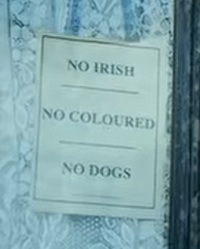
A civil servant who’s been illegally selling old passports is a transvestite. (‘They’re going to love you in Durham Jail,’ says Bacchus.) An unmarried white woman has a mixed-race baby, which suggests – according to Bacchus – that ‘She likes a bit of the old tarbrush.’ Gently is unhappy with such language and puts him straight: ‘When it comes to racialism, the police force has form, and I won’t have it.’
When the woman is found murdered, suspicion falls on her white boyfriend. ‘That mixture of sexual jealousy and racial hatred makes him capable of almost anything,’ says Gently. The boyfriend is a crook, head of a gang who are engaged in a turf war with an Arab gang. The latter are led by a young man of Yemeni descent, who thinks Gently is racist, like all the British. ‘Scratch the surface with any of you, and you’re all the same.’ But he himself is British, argues Gently. ‘I was born in Britain,’ he replies, but ‘I’m not British, I’m Arab.’
Gently served in the 1958 Notting Hill race riots. ‘I saw things I never want to see again on an English street. It was like Mississippi.’ It was a formative experience for him, leading to much self-reflection. ‘I got frightened and called somebody a monkey. So he assaulted me. And because he assaulted me, he got sent to prison, and because he got sent to prison, his son learnt to hate white. Why did I do that? Why do we find this so hard?’
For a third episode set in 1964, a murderer is hanged. Which is remarkable, considering that of the 296 murders committed in England and Wales that year, only one case resulted in capital punishment.
7. ‘Gently through the Mill’
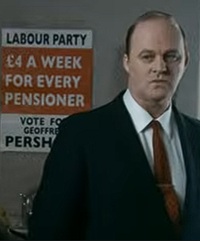
There’s a general election. ‘It’s touch and go, they reckon,’ says Bacchus. Gently doesn’t vote, but when he hints that he might be in favour of a Labour govrnment, Bacchus responds, ‘You like paying taxes, do you?’
The Labour candidate is a Rhodesian-born businessman, who flew Spitfires during the war. Bacchus takes against him, saying that his cologne (his ‘pouf juice’) makes him smell like ‘an Egyptian knocking shop’. One of his businesses is a flour mill, and now the manager – the man he bought it from – has been found hanged.
The dead man was a Freemason, to the distaste of his wife. ‘The mafia of the mediocre,’ she calls the Brotherhood. Gently’s been approached to join, but turned them down. ‘They’re harmless enough,’ says Bacchus, and Gently has to put him straight: ‘They’re not harmless. Police officers should never have a sense of conflicted loyalty. I hate secret societies, anyway.’
The foreman at the mill is a chippy sort. He served in the Engineers – not one of the Few, but one of the many. ‘Didn’t come back to rich parents or university. I came back to nowt, Mr Gently, except broken promises.’
1966
8. ‘Gently Evil’
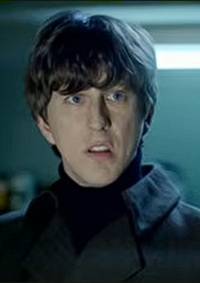
We’re two years on, and although Bacchus has cut his hair, he’s looking very mod these days. Unfortunately, his marriage is falling apart. His estranged wife, Lisa, is a responsible woman – she doesn’t smoke in front of their little daughter.
There’s a beach with a campsite and – nearby – a newly built council estate, where people have been moved from Newcastle. ‘Fresh air and that for the kids,’ explains Bacchus. ‘Nice little school. Plenty of work at the power station. Steel plant down the coast. Paradise compared to Byker and Wallsend.’ There are still problems, though. ‘You can take the people out of the slums, but you can’t take the slums out of the people.’
A thirteen-year-old girl seems to be responsible for abducting and murdering smaller children. ‘Is this the Face of Evil?’ scream the front pages. Our two coppers don’t agree on the answer. ‘There is such a thing as evil,’ says Bacchus, but Gently can’t accept that: ‘I don’t believe in evil people.’
Bacchus is out of his depth. ‘I’m a copper. I’m not a social worker. Do I look like a lass with a degree in making tea?’
9. ‘Peace and Love’
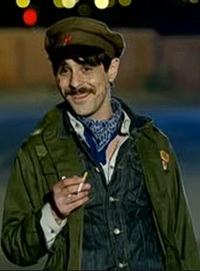
The arrival of Polaris submarines at the Swan Hunter shipyard provokes a CND demonstration, mostly comprised of university students. The protest turns into a violent clash with the police, largely under the influence of a radical lecturer, who’s described as a Trotskyist (though he used to be a member of the Communist Party). He also smokes pot with the students and says he’s ‘not a one-woman sort of guy’. According to a female colleague, he ‘embraced the ideology of sexual liberation with gusto, spreading the gospel of free love even unto the freshers’.
A student has posters of Lenin on her walls, and keeps on her desk copies of Marshall McLuhan’s The Medium Is the Massage, Hermann Hesse’s Steppenwolf and the first volume of Karl Marx’s Das Capital. There’s also a framed photograph of Che Guevara, of whom Bacchus hasn’t heard.
Like Gently, the university head-porter served in North Africa; he was in the Long Range Desert Group. ‘You wonder if it was all worth it,’ he reflects. ‘The sacrifice. For this mob.’
Enquiries lead to a gay bar in Whitley Bay. ‘This is a teapots’ place,’ exclaims Bacchus in horror. He wants to get it closed down, but Gently worked in the vice squad in Soho and knows better. ‘All I learned was that the harder you push these vice lords down, the stronger they get. And in the end, they beat us anyway.’ How? ‘They bought us.’
The Chief Constable isn’t happy with the protests. ‘And now with this association football tournament coming here as well, it just means more louts.’ (Some of the World Cup matches in 1966 were played at Roker Park in Sunderland, including the Soviet Union’s three victories in the group stages.)
10. ‘Gently Upside Down’
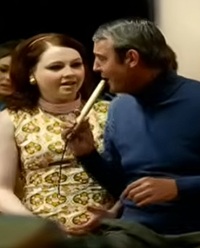
There’s a youth show on local TV, Upside Down – you’ll know the Walking Dead, who are on this week with their single ‘Suzanne’ – and it’s hosted by a middle-aged hipster, ‘Uncle’ Tony Hexton. But then the producer spots a charismatic seventeen-year-old schoolgirl in the audience and decides to give her a chance at presenting. Because that’s how the media work these days.
Hexton is furious. ‘This world used to belong to professionals like me. Radio, TV, you name it, I can do it, because I’m a consummate professional,’ he says, but that’s not what his producer wants. ‘Nothing matters to him except how old you are, whether you look natural.’ It’s not just the producer: with the girl as presenter, the ITV network picks up the show for national broadcast.
Meanwhile, her best friend has been found murdered. Uncle Tony tried to pull her once, but she thought he was ‘a boring old fart in a jumper’. ‘We should never have given up on capital punishment,’ says Bacchus.
The dead girl had drawings of the Bronte sisters on her bedroom wall. ‘Who are these?’ says Bacchus. ‘The Beverly Sisters?’ He’s not big on literature, our John. ‘Did you ever hear of Dylan Thomas?’ Gently asks him. ‘No, who does he play for?’ He also gets into an ill-advised argument over Shakespeare with an English teacher, insisting that Julius Caesar (‘The one with Marlon Brando in it’) is historically accurate.
11. ‘Goodbye China’
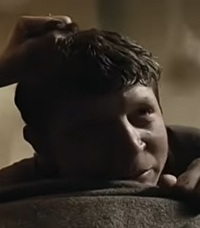
There’s a pair of teenage brothers, hoodlums. They most recently got caught breaking into a care home for spastic children, and torturing one of the residents. ‘They’re animals, the pair of them,’ is their father’s verdict. ‘They’re not normal. When they were bairns and the game was the Japs and the English, they wanted to be the Japs. Cowboys and Indians, they wanted to be the Indians. I bought one of them a puppy for his birthday – the other one drowned him in the sink.’
‘We’ve gone completely soft in this country,’ says Bacchus. ‘People don’t know how to control their kids these days.’ ‘Bit young for nostalgia, aren’t you?’ replies Gently, but Bacchus sticks to his guns: ‘My dad belted me when I was a kid. Didn’t do me any harm.’
As it happens, the two boys have been beaten – very severely. Their victim at the care home was the son of a senior police officer, who proceeded to take the law into his own hands. ‘Corporal punishment was banned twenty years ago,’ argues Gently, ‘and for one very good reason: it doesn’t work.’ ‘But it does work,’ retorts the other officer. ‘I hate to admit it, but it does work.’
A divorced young mother sets her cap at Gently – ‘I reckon you’d make a great dad’ – but he declines her approaches. At the police station, there’s a new hot-drinks vending machine, which no one can work and which can’t make a decent cup of tea. ‘The future’s arrived,’ announces a sergeant.
see also:


Discover more from Lion & Unicorn
Subscribe to get the latest posts sent to your email.
