
It’s been a while since I’ve written one of these top tens, and as I had reached my threshold of 1976, I’ve had to go back here, to the year of my birth, 1974.
What we have is similar in tone to my pieces about 1975 and 1976, with links to folk-rock, the British blues boom and of course, prog. As ever, I’ve chosen a playlist of the best track from each album, this time available on both YouTube and Spotify.
Writing and compiling this one, I noticed quite how dark and heavy some of the material here is. It would be easy to employ cliches about the ‘post 60s hangover’ etc, but there is a palpable sense of doom and unease here that feels different to material by the same artists just a few years hence. That said, there are some fine examples of writing, musicianship, production and innovation here to get through the heavy atmosphere.
And again, just as before, the more obvious choices are denied a place to accommodate the cerebral and obscure. Plus, Alwyn Turner would do Roxy Music and David Bowie so much better than would I.
So, with the housekeeping done and dusted, let’s move on the best of 1974. As ever, it looks to be quite a trip, man.
A playlist is available on YouTube and on Spotify.
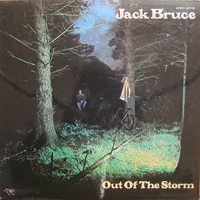
10. Jack Bruce, Out of the Storm
‘One of the most important individuals currently working in rock.’ – Allen Jones, Melody Maker
Recorded at the Record Plant in Los Angeles, Bruce’s fourth solo studio album is largely forgotten in comparison to Song for a Tailor and Harmony Row but is in fact one of his greatest records. Although deep into a heroin addiction, his musicianship, compositions and vocals are at a peak here, ably supported by guitarist Steve Hunter and drummers Jim Gordon and Jim Keltner on a set of jazz-fusion inspired material.
Despite positive reviews, the record sold poorly, and was the last Jack Bruce album distributed in the United States by Atlantic Records. As at other times in his career, Jack was just that little bit too original and ‘out there’ for a mainstream rock audience. Their loss.
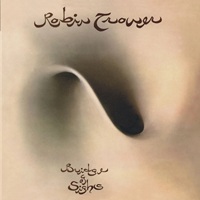
9. Robin Trower, Bridge of Sighs
‘A cold wind blows and gods look down in anger on this poor child.’
Bridge of Sighs was the second solo album by the former Procol Harum guitarist, consolidating his post-Hendrix bluesy power trio style with Reg Isidore on drums and James Dewar on bass and powerful lead vocals. It was Trower’s commercial breakthrough, and he’s in fine form, with several of the songs – the classic title track, ‘Too Rolling Stoned’, ‘Day of the Eagle’ and ‘Little Bit of Sympathy’ – becoming fan favourites. Expressive, soulful and often quite dark; no wonder Robert Fripp was an admirer.
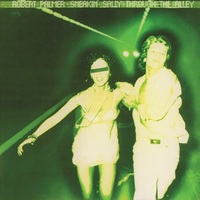
8. Robert Palmer, Sneakin’ Sally Through the Alley
‘Here was this white English kid coming to New Orleans and New York to work with bands I had only heard on vinyl. So, I jumped in the deep end and asked if they would be up for some sessions. Eight bars into the first tune, [Bernard] Purdie turned around and said, “Sir, excuse me, what did you say your name was?” From then on, it was great.’
The Yorkshire-born singer’s first solo album saw Palmer record in the US with funk royalty: the likes of the Meters and Stuff, augmented by Lowell George of Little Feat on guitar, and New Orleans supremo Allen Toussaint. Suffused with soul, r&b and southern grooves, some reviewers considered it to be too restrained. Charles Shaar Murray argued in the NME that ‘it just doesn’t catch fire anywhere’, but perhaps he should have listened to the title track more intently – a great performance by Palmer and all, a supremely confident piece of work, and a highpoint of Palmer’s best album of the 70s.
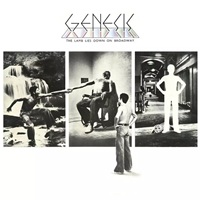
7. Genesis, The Lamb Lies Down on Broadway
‘There aren’t many novels written by committee.’ – Peter Gabriel
Gabriel’s story about a Puerto Rican street kid in New York who undertakes a surreal voyage of self-discovery spelled the end of the line for the frontman and Genesis, the constraints of band membership coming to the fore. Despite the album’s reputation and its status among diehard Genesis fans, there are detractors – including some of the band – who point to its dense storyline and unfocused second part as evidence of a flawed work.
However, Gabriel’s often nightmarish narrative – inspired by West Side Story, The Pilgrim’s Progress and Jodorowsky’s El Topo – is accompanied by some of the finest, most melodic, yet muscular music the band ever created. The title track, ‘The Carpet Crawlers’ (which provided an emotional encore piece for the band’s last ever show in 2022), ‘In the Cage’ and ‘Back in NYC’ (covered by Jeff Buckley) are masterful. I’ve chosen the medley of ‘Fly on a Windshield/Broadway Melody of 1974’, which starts with a moody, ethereal jam before settling into Gabriel’s evocation of all things pop culture America. An ambitious, daring and completely original record, one of prog’s and Genesis’ lofty highpoints.
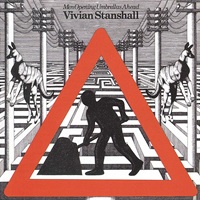
6. Vivian Stanshall, Men Opening Umbrellas Ahead
‘It’s all about frustration, it’s one long squawk.’
Deleted by Warner Bros. soon after release, having sold only the initial pressing of 5,000 copies, Stanshall’s debut solo album was out of print for over thirty-five years and became somewhat of a cult classic, with several bootleg reissues emerging until an official one in 2012. Aided by most of Traffic, along with Ric Grech and Neil Innes, Men Opening Umbrellas sees Stanshall engage with afro-rock styles, but also has a dark, anguished atmosphere (Stanshall later expressed how he was ‘plunging into the abyss with no way out’ during the album’s making) despite titles such as ‘How the Zebra Got Its Spots.’ The standout for me is the rare single included in the reissue ‘Lakonga’.
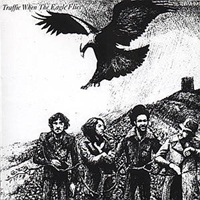
5. Traffic, When the Eagle Flies
Traffic’s last album until Winwood & Capaldi’s reunion in 1994 sees an advance into a sophisticated jazz-rock style, propelled by the great Rosko Gee on bass, best evidenced on the standout ‘Dream Gerrard’ written by Winwood with Vivian Stanshall.
When the Eagle Flies saw Traffic somewhat strip down their line-up, with Capaldi back on drums, less guitar work by Winwood, where he instead delves into synthesisers and Moog, effective on ‘Graveyard People’. Produced by their Island label boss Chris Blackwell, the album has a deep, rich groove and a late period classic in ‘Walking in the Wind’ which proved to be a favourite when performed on the 1994 reunion tour.
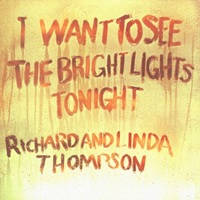
4. Richard & Linda Thompson, I Want to See the Bright Lights Tonight
The one entry in this list by the folk-rock fraternity had to go to this record. The first by the then newly married couple, I Want to See the Bright Lights Tonight is their statement of intent, and one that would set the blueprint for their following output. Richard’s bleak and often despairing worldview, reflected in his lyrics, was leavened by Linda’s powerful vocals.
The title track drew inspiration from the Band, but continued Fairport’s example of making it thoroughly British, as evidenced by the use of Manchester’s CWS brass band horns. ‘When I Get to the Border’, ‘The Great Valerio’ and ‘End of the Rainbow’ are all wonderfully written and performed songs, but my playlist choice goes to ‘The Calvary Cross’. Live, it would turn into a guitar-led jam epic with Richard’s Celtic, bagpipe-influenced fretwork building ever higher in intensity (see the version on the 2007 release Live in Concert November 1975), but here it is a concise and spiritual workout with lovely additional vocal harmonies by former Fairport singers Sandy Denny and Iain Matthews. Stunning.
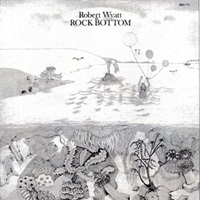
3. Robert Wyatt, Rock Bottom
You look different every time
You come from the foam-crested brine
It’s your skin shining softly in the moonlight
Partly fish, partly porpoise, partly baby sperm whale
Am I yours, are you mine to play with? – ‘Sea Song’
In 1973, the ex-Soft Machine drummer fell from a window, putting an end to that part of his career. A paraplegic, now confined permanently to a wheelchair, Wyatt relocated to a cottage in Wiltshire in early 1974 to work on what became the sublime Rock Bottom. The writing process had begun while in Venice in 1972, where Wyatt was accompanying then-girlfriend Alfreda Benge while she worked on the Nicolas Roeg film Don’t Look Now. One can hear the influence of Venice in the aquatic, rippling imagery of the album from the opening ‘Sea Song’ to ‘A Last Straw’. Employing the cream of the early 70s Brit jazz/avant garde scene (such as bassist Richard Sinclair and the great trumpeter Mongezi Feza), it is masterfully produced by Pink Floyd’s Nick Mason, and for me, is one of the drummer’s greatest artistic achievements. Alternately atmospheric, atonal and sometimes blissful, Rock Bottom is a surreal, submarine cry of catharsis that is one of the great British records.
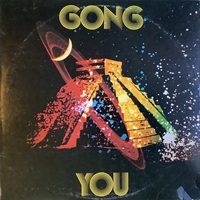
2. Gong, You
‘Some far-out jazz-prog shit.’ – Ultimate Guitar magazine, 2020
Possibly the most far-out title on the list, You is a joyous prog-psych-jazz extravaganza, the third (and final) of their ‘Flying Teapot’ album trilogy, and the last incarnation of the band with founder and visionary Daevid Allen until 1992.
The album was recorded at Virgin Records’ Manor Studios in June 1974 and features short narrative pieces alongside longer instrumentals. The expansive jams, such as ‘Isle of Everywhere’ are ahead of their time, looking forward to the sounds of dance and rave music. It is indeed Gong’s spaciest album, with an ethereal atmosphere that is as irresistible as it is addictive. Delicious.
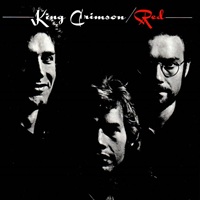
1. King Crimson, Red
Red provided a stunning climax to the 70s Crimson studio work, an album that was so far ahead of the competition it is no wonder the band imploded. Talisman Robert Fripp had apparently lost faith in Crimson’s future, and by the time the record was released, the band were already defunct. But what a way to go! Red is a masterpiece of dynamics, alternating between the sheer heaviosity of the title track to the stately ‘Fallen Angel’, while the live ‘Providence’ is a wonderfully abstract and dark jam. Best of all is the closing ‘Starless’, an elegiac meditation on depression, with John Wetton’s vocals soaring. The instrumental work in the second part of the song – with saxophone by Mel Collins – may be one of the most intense pieces of rock music ever made. I’ve said it before, and no doubt will again: There was simply no one like King Crimson.
bubbling under:
Henry Cow, Legend
The Strawbs, Hero and Heroine
Hatfield and the North, Hatfield and the North
King Crimson, Starless
Gryphon, Midnight Mushrumps
A playlist is available on YouTube and on Spotify.
see also:

Discover more from Lion & Unicorn
Subscribe to get the latest posts sent to your email.
