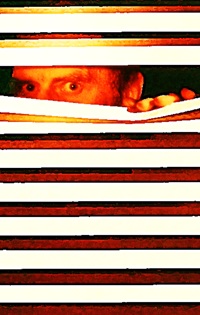
It wasn’t all Abba and the Ramones in 1976. BEN FINLAY is your guide to the best British albums of the year.
In last year’s top ten of 1975, I advised readers to ‘bring along your flares and cheesecloth shirt – it might be your last chance to wear them’. Well, I might have to take that back. Despite the reputation of 1976 as the eve of ‘Year Zero’, there is plenty here that is from the ‘old school’. And while there is a fair bit of jazz-rock fusion evident, a lineage from my other top ten articles is visible. For instance, there is a touch of prog still about, some unashamed 12-bar boogie harking back to the British blues boom, an unsung classic of British jazz, and traditional folk.
As with the 1975 piece, for many of the choices I’ve gone for the less well-known, the more marginal, that sort of thing. There are a few bestsellers here, but as ever, I feel it best to be honest and choose what I see as the most notable records of the year in question.
So, again as ‘they’ say, enough of my yakkin’, let’s travel back fifty years and consider my Lion & Unicorn top ten albums of 1976. Someone else can do the late Seventies, I’m already a year beyond what I (only half-) jokingly refer to as my musical cut-off point.
A playlist is available on YouTube
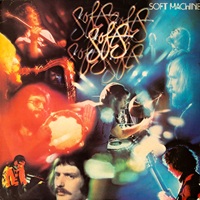
10. Soft Machine, Softs
With the departure of the last remaining original band member, keyboardist Mike Raetledge, there was something of Trigger’s Broom to the Canterbury jazz/proggers in 1976. However, Softs is a fine album indeed. It’s less guitar-heavy than the previous album, Bundles, with John Etheridge a fitting replacement for guitar genius Allan Holdsworth (who left in 1975 to pursue a solo career).
Softs sees the band embrace some New Age and electronic sounds, and saxophonist Alan (brother of Rick) Wakeman soars throughout the record. ‘Ban-Ban Caliban’ is a superb trippy and funky jam that amply demonstrates the band’s supple grooves.
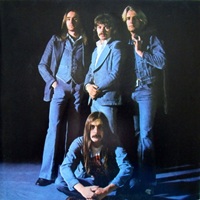
9. Status Quo, Blue for You
No apologies here – the Quo were my first favourite band (as a schoolboy in the mid 1980s they offered something earthy and rocking compared to the pop charts of the era), and Blue for You offers two of their greatest numbers: ‘Rain’ and ‘Mystery Song’. Produced by the band themselves, the whole affair is a tightly grooving, powerful record, with a markedly bluesy edge. And the front cover image, with the band adorned in denim (Francis Rossi appears to be wearing a three-piece denim suit), encapsulates the group in all their mid-Seventies glory. Brilliant.
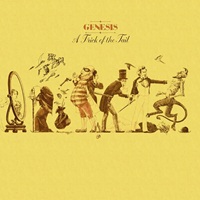
8. Genesis, A Trick of the Tail
Madrigal music is playing…
Their first album after the departure of Peter Gabriel, A Trick of the Tail sees Phil Collins come to the fore, handling both vocal and drumming duties. The now four-piece Genesis sound is reinvigorated, and the album is a big, confident statement, still firmly in the prog-rock camp, but with a more accessible, melodic sensibility, as evidenced on ‘Ripples’ and ‘Mad Man Moon’. A favourite of both the band and fans alike, the many highlights include the opening ‘Dance on a Volcano’, ‘Squonk’ (Collins doing his best John Bonham-like groove), the fusion-influenced closer ‘Los Endos’, and the wonderful acoustic ‘Entangled’, where they sound for all the world like Crosby, Stills and Nash if they’d come from the Surrey countryside and gone to a private school.
Trick was the first of two albums they released in 1976; the second, Wind & Wuthering is included in my top ten prog albums.
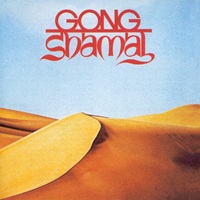
7. Gong, Shamal
There’s a strange wind blowing through us all
There’s a strange wind blowing through us now…
With the departure of founder Daevid Allen, the space jazz proggers settle into a funky, fusion groove and sound magnificent for it. Shamal was produced by Pink Floyd drummer Nick Mason, and is a lush sounding, wonderfully recorded album. The presence of marimba and xylophone gives the record a touch of the Frank Zappa fusion efforts of the mid Seventies, and the saxophone work by Didier Malherbe is superb.
In 2018, a 2-CD remastered edition of the album was released with an additional disc of live material recorded in 1975; it’s thoroughly recommended.
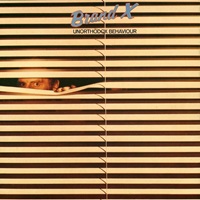
6. Brand X, Unorthodox Behaviour
The second album featuring Phil Collins (the busiest man in showbiz in the mid Seventies), Unorthodox Behaviour sees him at the peak of his drumming powers, sounding every bit as dextrous and powerful as his Stateside counterparts. This, the band’s debut album, is an eclectic slice of prog/jazz, that demonstrates their melodicism, improvisation, balanced group dynamic and compositional skills. The follow-up, the pun-tasticly titled Moroccan Roll is included in my top ten British jazz albums. For more Phil Collins fandom, see my review of Eno’s Another Green World in my top ten of 1975 piece.
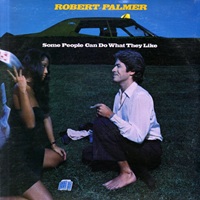
5. Robert Palmer, Some People Can Do What They Like
Dedicated to South African trumpeter Mongezi Feza, Palmer’s third solo album is a soulful, sophisticated affair, a lesser-known title in his discography that deserves a reappraisal. Recorded in Los Angeles during the summer of 1976, it features several members of Little Feat, which reflects in its funky, economical sound (indeed, one can hear the Feat effect on great covers of ‘Man Smart, Woman Smarter’ and their own ‘Spanish Moon’). Fine blue-eyed soul from one of Britain’s great vocalists.
The front cover pictures the frisky chain-smoker engaging in a game of strip poker with Playboy magazine’s April Playmate of the Month, Denise Michele. How wonderfully 1976.
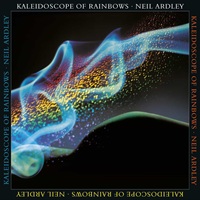
4. Neil Ardley, A Kaleidoscope of Rainbows
This wonderfully ambitious record by composer and polymath Neil Ardley is rightly considered a landmark recording in British modern jazz and really couldn’t have been conceived by anyone else. Kaleidoscope is the final album of a trilogy that begun with The Greek Variations and continued with A Symphony of Amaranths, records that amply demonstrated that no one else had the vision of Ardley.
The piece is a series of movements based on the five-note scale of Balinese Gamelan music which formed the basis of the compositions and improvisation. Taking in influences from World music, its use of synthesisers is notable, as are performances from such British jazz stars Ian Carr (Nucleus), Paul Buckmaster, Barbara Thompson, Dave MacRae, Tony Coe and Geoff Castle.
The Essential Jazz Records (2000) judged it as one of the 500 best albums in the entire history of jazz, one of very few British works to be included. Furthermore, it is completely absorbing yet wholly accessible. If this is (as critics suggests) at the end of a classic period of British jazz, it’s a hell of a way to go out.
Ahead of its fiftieth anniversary, last year the Guildhall Jazz Orchestra performed the piece in its entirety at Chichester Festival Theatre. Its follow-up Harmony of the Spheres is in my top ten British jazz albums.
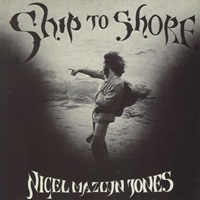
3. Nigel Mazlyn Jones, Ship to Shore
Quite possibly the only act I’ve ever written about that worked for conservationist and writer Gerald Durrell, Mazlyn Jones may also be the most obscure artist on the list. However, his debut, Ship to Shore is one of those lost-treasure albums, a record imbued with a trippy, pagan mystery, adorned by harmonic chiming guitars and a revelry in nature’s elements, ‘progressive folk’ if you will. A wonderful tapestry of emotion, poetry and excellent acoustic guitar work, this is a ridiculously overlooked album that deserves seeking out. Magical.
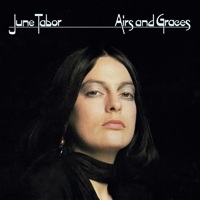
2. June Tabor, Airs and Graces
It suited the middle class to consider rural life a ‘lost world’. It is then not only that the real land and its people were falsified; a traditional and surviving rural England was scribbled over and almost hidden from sight by what is really a suburban and half-educated sprawl — Raymond Williams, The Country and the City (1974)
By 1976 British folk had passed its peak, and performers in hippy-clothing living in the bucolic idylls of the countryside were now becoming old hat, as everything musical moved to a harder edged, urban image and sound. Yet the real faithful – the Fairports, Martin Carthy, the Watersons, Bert Jansch and John Renbourn – quietly carried on, ploughing their own furrow, unaffected by fashion. It was in this atmosphere that June Tabor made her first record Airs and Graces, an understated collection of traditional and original songs beautifully sung, some acapella as with the haunting ‘The Band Played Waltzing Matilda’.
Airs and Graces is pure British traditional folk, unadorned by electric instruments, and all the better for it. The record launched Tabor’s career of wonderful music, proving that the most committed of pure artists are unmoved by the changing of the guard. Bloody good thing too.
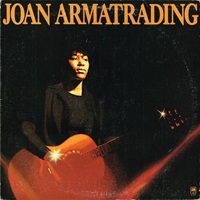
1. Joan Armatrading, Joan Armatrading
I have very fond memories of these first two albums that I made with Joan. They are up there with my favourites from all the records I have made — producer Glyn Johns
Joan’s third album is where she really finds her style and confidence. As much as I’m a fan of her first offering, the underrated Whatever’s for Us (1972), here it all comes together. From the moment the record kicks off with the exceptional ‘Down to Zero’, it’s clear that something new is occurring. The songwriting is mature beyond her years, and the arrangements are superb; the songs also exhibit a satisfying mid-Seventies grooviness, with plenty of space, but taut and supple. The whole album sounds very London soul-ish (this may be because I grew up to the sounds of Armatrading in the late 1970s and forever associate the two) and is superbly produced by the then already legendary Glyn Johns.
Her highly individual voice and phrasing really shine on this record, and there is a sophistication that is every bit as nuanced as her stateside contemporaries; indeed, as Robin Denselow wrote in the Guardian at the time, the album ‘showed that we now have a black artist in Britain with the same sort of vocal range, originality (in fact even greater originality in terms of musical influences) and lyrical sensitivity as Joni Mitchell’.
The album peaked at number 12 in the UK charts and includes bestselling single ‘Love and Affection’. Joan Armatrading had arrived and became an icon as a young, powerful British singer-songwriter. It took Joan to the heights of first-class artists, and her creativity, skill and confidence made her influential on subsequent generations. Quite right too.
Bubbling under:
The Rolling Stones Black and Blue
Eric Clapton No Reason to Cry
Jeff Beck Wired
Robin Trower Long Misty Days
Steve Hillage L
see also:

Discover more from Lion & Unicorn
Subscribe to get the latest posts sent to your email.

Pingback: Top ten: 1974 – Lion & Unicorn