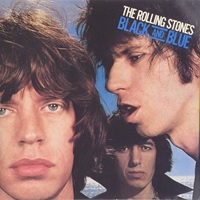
BEN FINLAY praises one of the less celebrated albums by the Rolling Stones.
‘Black and Blue was a bit of a holiday period. I mean, we cared, but we didn’t care as much as we had, not really concentrating on the creative process’ — Mick Jagger
‘Black and Blue is a letdown of hideous proportions, totally devoid of either the epic sense of sleazy grandeur or the galvanic bejewelled tension which are the Stones’ twin ace cards’ — Charles Shaar Murray, NME, 24 April 1976
‘The heat’s off, because it’s all over, they really don’t matter anymore or stand for anything… this is the first meaningless Rolling Stones album, and thank God’ — Lester Bangs, Creem, July 1976
April 23rd is the fiftieth anniversary of Black and Blue by the Rolling Stones. Coincidentally, the exact same date sees the fifty-fifth of Sticky Fingers, an undisputed Stones classic that has had more than its fair share said about it. Black and Blue, on the other hand, has long been written off as a notable slump in the Stones’ recorded output, a ragbag, transitional album that indicated just how out of touch they were, and a pointless, uninspired offering among the rumblings of change on the horizon.
This is in some part due to the battering it received by the reviewers at the time. Aside from Charles Shaar Murray’s righteous takedown in the NME, others were equally unimpressed; in the American rock monthly, Circus, James Wolcott called the album a ‘soulless… depressing vacuum,’ while short-lived British publication Street Life was slightly less damning, offering that ‘it’s another Stones’ album, that’s all’. And yet, while it’s not on a par with such late 1960s glories as Beggars Banquet or Let it Bleed, it’s a lot better than its reputation suggests. A reappraisal is due, which is dirty work, but someone has to do it…
In December 1974, as the band were beginning to work on the album, lead guitarist Mick Taylor suddenly left, throwing the already chaotic unit (Keith Richard was locked into his deep heroin period) into further disarray. With a summer American tour booked, the Stones started 1975 on the hunt for a new guitarist. Several notable players were auditioned including Harvey Mandel of Canned Heat, session man Wayne Perkins (suggested by Eric Clapton), the great Irish blues player Rory Gallagher, and Ronnie Wood.
In a decision that appeared socially rather than musically motivated, it was Wood who took the job on the 1975 tour, and he officially joined in early 1976, after the disbandment of the Faces. But despite Wood’s appearance on the sleeve of Black and Blue (Charles Shaar Murray quipped that ‘Messrs Wood and Richard flanked Jagger, looking for all the world like a pair of diseased crows’), he only appeared on only three of the album’s eight tracks, the other guitar duties covered by Keef, Harvey Mandel and Wayne Perkins.
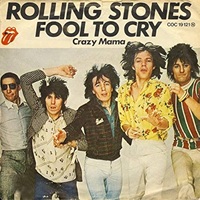
Musically, Black and Blue sees the Stones employ a variety of styles, from funk (the irresistibly groovy opener ‘Hot Stuff’) through reggae (a cover of Eric Donaldson’s 1971 ‘Cherry Oh Baby’), soul (‘Melody’, completely ripped-off — sorry ‘inspired by’ — soon-to-depart touring keys player Billy Preston, whose singing and playing is all over the album; his efforts deserved far better than that for certain) and soft rock (the gorgeous ‘Fool to Cry’, which although now rightly lauded as a Stones classic was derided at the time by the NME and co.).
The sound of the record is excellent, and in particularly demonstrates the skills of Charlie Watts (Shaar Murray was to have one positive word, praising Watts for playing ‘the best white reggae drums I’ve ever heard’). The additional musicians — percussionist Ollie Brown, keyboardists Billy Preston and Nicky Hopkins — give a live, funky element to the album and, for the time, a contemporary edge. Furthermore, the exchanges between Wood and Richards (best heard on closing rocker ‘Crazy Mama’) point the way to the future Stones, providing the template the band have stuck with ever since. Black and Blue, transitional as it may appear, is an important entry in the band’s catalogue for that alone, and the 2025 reissue highlights the musical shift.
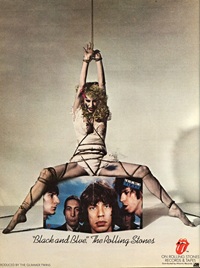
But outside the world of music, things were changing. The promotional campaign for the album may not have raised as many eyebrows back in the Sticky Fingers era, but by 1976 their schtick was beginning to look old. One advertisement depicted a battered and bruised woman declaring ‘I’m “Black and Blue” from the Rolling Stones — and I love it!’ which inspired a particularly strong reaction from the American feminist, anti-pornography organisation Women Against Violence Against Women (WAVAW). Jagger retorted that a lot of women ‘want to be chained up’. A few years earlier, the comment would have been seen as a display of the band’s sexual frankness and rebellious spirit, but now they looked out of touch, misogynistic and boorish.
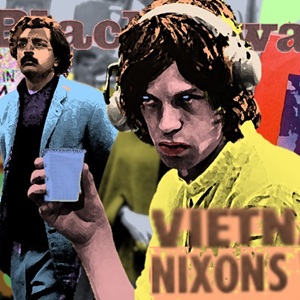
That these criticisms came from the Left may be seen as a departure from the conventional view that the Stones were only ever under attack by a Right-leaning establishment, but in fact Jagger had fallen foul of an older, more culturally conservative Left some years before. Back in 1968, his hand-written lyrics were featured on the cover of underground press paper, Black Dwarf. One reader vehemently complained ‘about doggerel from Mick Jagger, an unfortunate nothing whom the world could do well without… something which will surely make any sincere Socialist want to vomit’. Eight years on, older socialists of a sincere disposition were beginning to be usurped by lefties of a far more identarian persuasion, another portent for the future.
And this is another point which makes Black and Blue even more relevant; rather than be judged on his musicality, it was criticised for its lack of socio-political merit. This is of course now utterly ubiquitous in today’s ultra-sensitive, censorious cultural politics, and much of the shift to where we are now starts here. The once bad-boys of rock and roll were seen to have nothing new to say, now that the climate had changed. The irony was that they had been in many ways part of that change, and issues such as ‘obscenity’ were now somewhat redundant as they had paved the way for such a shift. The old shock tactics no longer worked, and it was just more of the same.
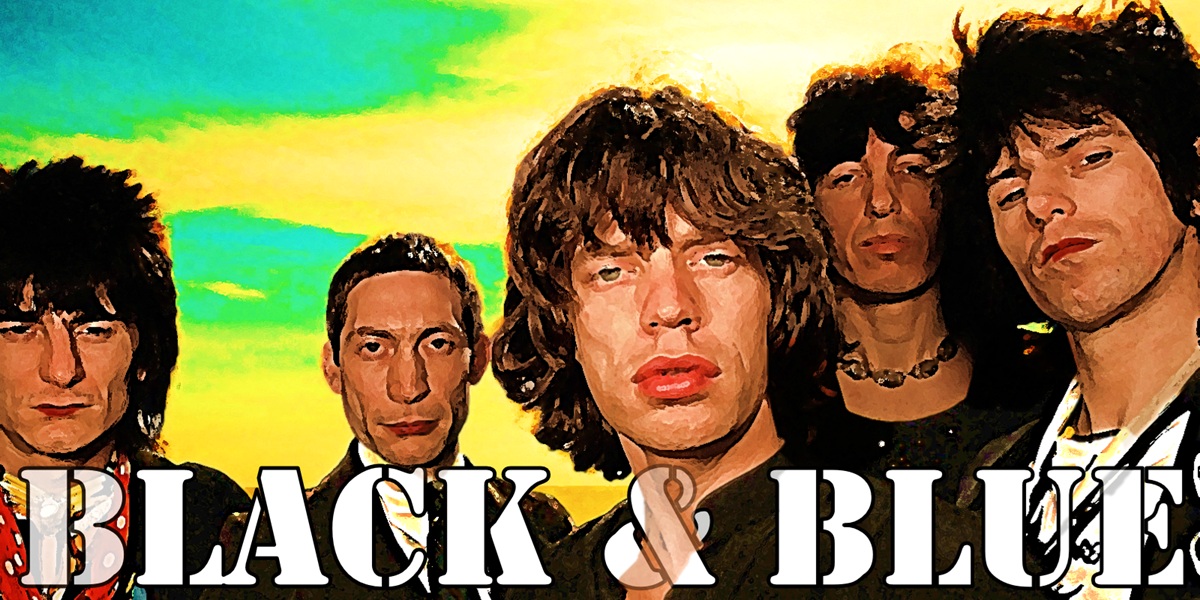
In time, the rebellion would be commodified and culturally absorbed into the mainstream as the band solidified their position as the ultimate heritage act. But in 1976, the group were entering their thirties and were unable to keep up their image as rebels and outlaws. In a Britain that was becoming ever more culturally political, the Stones were now to be disregarded as past-it. This was most evident with what was to come with punk, a form that would have been impossible without the example set by the band, yet which claimed to find them utterly contemptible.
Black and Blue therefore should be reconsidered; the eclecticism ingrained within its grooves would be seen as an indicator of innovation in a figure such as David Bowie, but the Stones’ lack of cool credentials has long prohibited this. A crying shame really, considering their contribution to everything rock, roll and rootsy. And of course, many laud its successor Some Girls (1978), but there is plenty here to enjoy. Dust it off, and give it a spin, even if it’s just for Charlie’s subtle but solid whomp, or for Wayne Perkins’ superb guitar on ‘Fool to Cry’.
see also:
Discover more from Lion & Unicorn
Subscribe to get the latest posts sent to your email.
