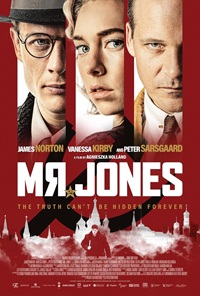
SIMON MATTHEWS admires Agnieszka Holland’s period drama Mr Jones (2019).
You would wait a long time to see a film with acting as exquisite as that on display here. Not only the acting: the camera work is interesting, the editing is good, the lighting is effective (everything beautifully lit, or underlit with many gloomy interiors), and the production values are exceptional with a high level of authenticity. The soundtrack isn’t bad either.
All of this is put to work telling the story of Gareth Jones (1905-35). Foreign policy adviser to Lloyd George from 1930, Jones twice visited the Soviet Union, publishing on his return anonymous articles about his travels, and pointing out that sections of the agricultural population were suffering from starvation. After a visit to Germany in early 1933, during which he met and interviewed Adolf Hitler, he returned to the Soviet Union for a third time in the spring of 1933. The film’s plot is based on his description of this trip. Wrapped around it is a sub-plot about George Orwell writing Animal Farm, with Jones’s adventures being intercut with shots of Orwell struggling to complete his work and of pigs foraging for food.
It seems that Jones wanted to interview Stalin, but wasn’t allowed anywhere near him. However, as a member of Lloyd George’s staff, he had some uses to the Soviet Union and stayed for several weeks in Moscow, meeting various figures in the regime. The creepy atmosphere of this time is effectively conveyed, with its mixture of abrupt, threatening behaviour and debauched entertainments for senior apparatchiks and influential foreigners. Think here Cabaret-type night clubs, subject to sudden interventions by the secret police.
Jones continues to ask questions. Maxim Litvinov – he gets that high up the ladder – impatiently suggests that he goes south to see that there is no starvation. He rattles off on a long train journey to Ukraine. Old documentary footage of electrification schemes and massive harvests is intercut, providing a doom-ridden sense of irony. He is being trailed by a KGB stooge (of course), whom he manages to escape. Continuing alone across a bleak landscape, and accompanied by extracts from Orwell’s book, he quickly encounters signs of a famine.
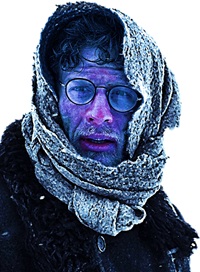
Reaching a town, he is quickly denounced as a spy and pursued through a frozen, snow-covered forest. He escapes and takes photographs of grain being deliberately exported out of the area. He finds people who have starved to death in their beds. The photography is brilliant, there are horrific scenes, including cannibalism – this is not for the faint-hearted – until he reaches another town and is arrested.
After a spell in the basement of the Lubyanka, where he comes across the Metropolitan Vickers engineers (a famous case: arrested and accused, falsely, of espionage when working on the installation of power station equipment), he is taken to see Litvinov. A deal is offered: if Jones will publicly deny the existence of a famine, the engineers’ lives will be spared. If he won’t, he, and they, will be dealt with severely. He agrees, and is immediately put on a train home.
Back in the UK he is introduced to Eric Arthur Blair, just back from a spell in Paris. Jones asks Blair for advice about whether or not he should publish his findings. Blair says ‘tell the truth’. But – as a leftist – Blair still harbours views that the Soviet Union is in some way progressive. Jones tells him that Stalin is bad. Returning to Lloyd George, Jones finds his mentor sceptical about the existence of a widespread famine, deliberately created by the Soviet government. They have a big argument about this.

Played by Kenneth Cranham, a reliable thespian who’s been around UK film and TV for half a century, the portrayal here of Lloyd George as being politically significant in 1933-34 jars. He may have still commanded a degree of respect as an ‘elder statesman’ (particularly abroad) but domestically his support had collapsed down to a tiny group of four MP’s, two of whom were his own children. He was not a major player in UK parliamentary politics, and had little chance of returning to office.
In Wales, Jones confronts William Randolph Hearst, who handily makes a visit to town, remonstrating with him about one of his journalists in Moscow, Walter Durranty, whose reports deliberately play down the gravity of the position inside the Soviet Union. Jones tells Hearst ‘There is only one truth’ and the film ends with shots of Blair/Orwell writing Animal Farm and reading aloud its introduction.
Did Jones meet Hearst, in Wales? It isn’t clear if he did. It is certainly the case that he never met Blair/Orwell. Scanning Orwell’s multi-volume letters and essays there is no mention anywhere of a Gareth Jones. As for the substantive point – famine in Ukraine – whilst Jones worked out (accurately) that all was not well there, it is doubtful that he saw the egregious scenes, cannibalism and so on, portrayed in the film.
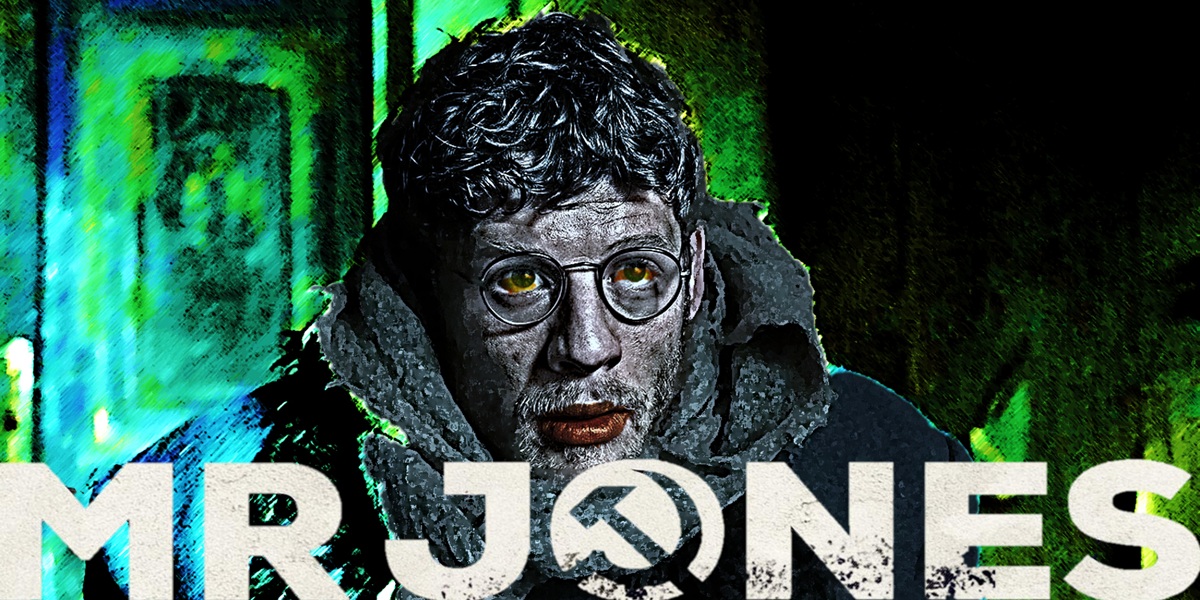
Dramatic licence is used freely here, but the acting remains paramount. James Norton, with an effective Welsh accent is brilliant as Jones. This film was a big step up in his career after some notable UK TV work, not least the creepy, violent and accurate, depiction of contemporary Russian gangsters in McMafia. Peter Saarsgard is excellent as Hearst’s New York Times journalist Walter Duranty. Uncritically pro-Soviet, probably due to his being allowed to indulge his penchant for sex and drug fuelled orgies, and then being blackmailed about them, his performance as a respected, double-dealing, authoritative writer is brilliantly understated. Polish actor Krzysztof Pieczyński is a grimly matter-of-fact Litvinov, every inch the colorless functionary, and Vanessa Kirby, notably seen as Princess Margaret in The Crown, is an effective love interest.
It comes as no surprise to learn that this was a Polish-Ukrainian production, directed by Agnieszka Holland, whose father, despite his loyalty to ‘the party’ and distinguished war service, died in 1961 having ‘jumped out of a window’ after falling into the custody of the Polish secret police. Holland has directed twenty films since 1978, winning an Academy Award for Europa, Europa (1990). Her work remains topical – Green Border (2023), a study of the Syrian refugee crisis, won a prize at the Venice Film Festival – and she has an easy familiarity with the English language, as can be seen from her adaptations of The Secret Garden (1993) and Washington Square (1997).
Given her body of work, and its quality, it is somewhat surprising that Mr Jones is not better known. After premiering at the Berlin International Film Festival in February 2019, it won the Grand Prix at the Polish Film Festival only to be swallowed up by the Covid pandemic. A US release never happened, which may be why it is freely available on You Tube. Given events in Ukraine since 2022, the liberties taken with the events it portrays, and the wrapping around it of the Orwell sub-plot, may be forgiven. It is a powerful piece of work.
see also:



Discover more from Lion & Unicorn
Subscribe to get the latest posts sent to your email.
