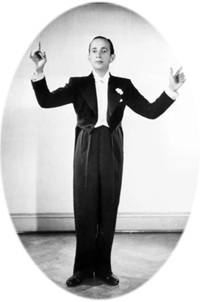
Jazz arrived in Britain in the immediate aftermath of the Great War, with the 1919 visit of the Original Dixieland Jazz Band. It took a while for the country to get the hang of this new music, but in the meantime there emerged a wave of dance bands that kept the syncopation of jazz while softening the rougher edges. Tempos were tighter, strings were added, orchestration replaced improvisation, and a smooth-voiced singer was often featured.
Mostly, these bands wished to distance themselves from the original. ‘Jazz music is essentially erratic; it gets the weirdest possible effects by breaking all the rules,’ explained Debroy Somers in 1925. He led the Savoy Orpheans, who, he said, were ‘a self-respecting syncopated orchestra’ which did ‘at least pay attention to the rules of music’.
Consequently, the British dance-band era is not very highly regarded by critics, but I think it has a charm of its own. And if there were no bandleaders to rival Duke Ellington, Count Basie or Glenn Miller, these men were huge stars at the time, and there were some fine musicians. There was also an impressive repertoire; in addition to the pieces featured here, there were the likes of ‘A Nightingale Sang in Berkeley Square’ and ‘By a Sleepy Lagoon’ (now best known as the theme to Desert Island Discs).
A playlist is available on YouTube
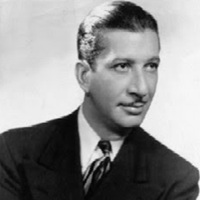
10. Fred Elizalde, ‘Singapore Sorrows’ (1929)
Born in the Philippines to a Spanish sugar magnate, Elizalde was a classically trained pianist who’d disappointed his parents by starting a jazz band while studying law at Stamford University in America. To remove him from such temptation, he was sent to Cambridge in 1927, and within weeks he was again playing in an undergraduate band. By the end of the year he’d secured a residency at the Savoy Hotel in London, putting together a new band that was streets ahead of anyone else in the country. They could play American-styled jazz, but there was also a sophistication to the arrangements that hinted at European influences. It was too much for the Savoy, who wanted something sweeter; they let him go in 1929.
The exotic locale of this piece was characteristic of the time. At London’s Metropole Hotel, the Midnight Follies Orchestra was led by Bert Firman, the youngest bandleader in the world at just sixteen; its repertoire in 1924 included ‘Eastern Love’, ‘Honolulu’, ‘Nighttime in Italy’, ‘Pasadena’ and ‘Riviera Rose’.
The guitar on this record is played by Al Bowlly, to whom we shall return.
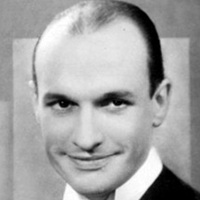
9. Roy Fox, ‘Sweet and Hot’ (1931)
It’s not a British song, but it sort of sums up the central drive of the best British bands: the hot rhythms of jazz, combined with sweet melodies and vocal harmonies, hence the near-barbershop singing.
Roy Fox – ‘the whispering cornettist’ – was an American who brought his band to London in 1930 and stayed, recruiting a new line-up of British musicians. He’d previously worked in Hollywood and there was a touch of glamour to the man – he claimed that he bought himself a new Rolls-Royce every year.
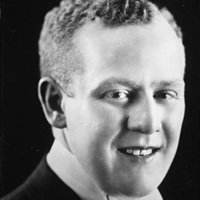
8. Jack Hylton, ‘Love Is the Sweetest Thing’ (1932)
One of the great British songs of the era, this is best known in the original recording by Ray Noble, who wrote it, with vocals by Al Bowlly, though my own favourite version is by Peter Skellern on his album Skellern (1978). I’ve gone for this early cover by Jack Hylton, partly because I think it’s a fine arrangement, and partly because I wanted some width to this playlist – it can’t all be Noble and Bowlly.
Also, I’m attracted to Hylton himself, who had a wonderfully extravagant lifestyle, as befit the star status of bandleaders in the 1930s. He was ‘the centre of Angmering scandal,’ it was said in the small Sussex village where he lived; ‘baffled whispers and head shakings usually accompanied the mention of his name’. His motto was ‘If you think champagne, you’ll drink champagne,’ and he had multiple horses, cars and mistresses. ‘He lived like Nero,’ noted his friend, comedian Arthur Askey, ‘and was, naturally, a good socialist!’

7. Lew Stone, ‘These Foolish Things (Remind Me of You)’ (1936)
And this is the very pinnacle of interwar British songwriting, a delicate lilting melody and a magnificent list-lyric. Leslie ‘Hutch’ Hutchinson made it a hit, and it’s been covered by Billie Holiday, Bob Dylan and Bryan Ferry, as well as – a personal favourite – the Dominoes, back when Clyde McPhatter was the lead tenor.
I’ve chosen this early version by Lew Stone’s band. I like the sweet swing of the music, and in particular I really like the carefully enunciated, unemotional vocal of Suzanne Botterell. The lyric is wistful, shading on the sentimental, and I think it works best when the delivery remains detached, refusing to indulge.
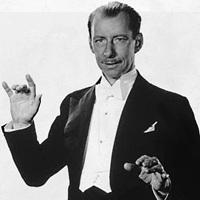
6. Ray Noble, ‘Try a Little Tenderness’ (1932)
And now we come to Ray Noble himself, and a song that was covered by Bing Crosby, Frank Sinatra and – in a very different arrangement – Otis Redding. I still rate this version, though, with a vocal by Val Rosing. The lyrics are gauche but genuine and he sings it straight, allowing the violin and trumpet to carry the pathos. I think it’s a song aimed at the radio listener at home, rather than the nightclub patrons who formed the live audience. The Depression was settling in, and this seeks refuge in small comforts.
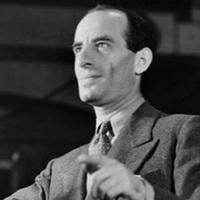
5. Ambrose, ‘The Very Thought of You’ (1934)
Ray Noble had the big hit with this one, as well, with – again – vocal by Al Bowlly. But let’s take the opportunity to celebrate Benjamin Baruch Ambrose, a Polish Jew who’d come to Britain as a child. In 1927 he started a residency at the newly opened May Fair Hotel, on a contract worth £10,000 a year, in addition to what he could earn from record sales, radio and variety performances. ‘The offer was too good to be refused,’ he said. ‘I am now the highest paid dance-band conductor in the world.’ His band was generally reckoned to be the best for dancing, and he was revered by both his musicians and audiences, despite his rudeness to all of them. It was said that when a young aristocrat slipped him ten shillings with a request, he screwed up the note and threw it away – he wouldn’t play requests for that kind of money.
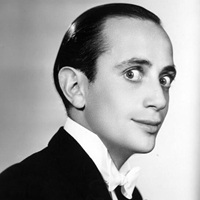
4. Harry Roy, ‘My Girl’s Pussy’ (1931)
Even by the standards of 1930s bandleaders, Harry Roy was a showman; in the London Palladium show All Alight at Oxford Circus (1936), he made his entrance riding an elephant. He also introduced scat singing to Britain, in imitation of American swing star Cab Calloway. And he had a line in suggestive songs, including ‘Lucy’s Lips’ (1934), ‘She Had to Go and Lose It at the Astor’ (1939) and – most notably – this classic about his girl’s pussy. ‘I stroke it every chance I get.’ Indeed.
In America there were plenty of downright filthy songs around at the time, but they tended to be bawdy blues, sung in a lascivious style – the likes of Lil Johnson’s ‘Press My Button (Ring My Bell)’ or Bo Carter’s ‘Pussy Cat Blues’. What I like about Harry Roy, by contrast, is that there’s very little inflection, not much more than Suzanne Botterell brought to ‘These Foolish Things’ or Val Rosing to ‘Try a Little Tenderness’. There’s a very British reserve to all this, a restraint that belies what’s going on. ‘Alec behaved so beautifully, with such perfect politeness,’ says Laura Jesson in Brief Encounter. ‘No one could have guessed what he was really feeling.’

3. Henry Hall, ‘The Teddy Bears Picnic’ (1932)
In 1932 Henry Hall became the leader of the BBC Dance Orchestra, and was on his way to being the biggest star of them all, an ever-present part of British life. By 1937, when he left the BBC for the variety circuit, he calculated that he’d made 2,000 broadcasts and played 3,000 different tunes.
That ensured that his repertoire was all-encompassing, from the more sophisticated American songwriters – Irving Berlin, Jerome Kern, Cole Porter – through to ‘Underneath the Arches’, with Bud Flanagan and Chesney Allen. And indeed to this, his first big hit, a charming, if vaguely sinister, children’s song, with lyrics by Jimmy Kennedy (he also wrote ‘Red Sails in the Sunset’, ‘Harbour Lights’ and ‘My Prayer’).
The diversity reflected Hall’s own musical education. He came – like Roy Fox – from a Salvation Army family, he’d studied at the Guildhall School of Music, played concertina on the variety stage and accompanied silent movies on piano. At heart there was an audience-pleasing approach to entertainment. ‘I am one of those Englishmen whose real theatre is the music hall,’ he said.
He was also a favourite of my father, who himself came from the Salvation Army, and spent three decades as a bandleader, albeit in military music rather than in the clubs and hotels of the 1930s.
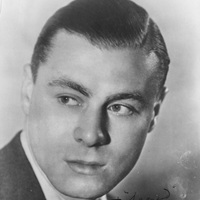
2. Nat Gonella, ‘The Lambeth Walk’ (1938)
Talking of my father, he was originally a cornetist, and taught me from a young age to see Louis Armstrong as the greatest instrumentalist of the twentieth century. In this, he was of course quite correct. He also had a great respect for Nat Gonella, who he said was the closest Britain got to Satchmo, and he was right about that as well.
This is the best British version of a song that was also covered by some of the world’s most revered jazz stars, including Artie Shaw, Duke Ellington, and the Quintet of the Hot Club of France with Django Reinhardt and Stephane Grappelli.
In my book A Shellshocked Nation, I claim the huge success of ‘The Lambeth Walk’ as a defiant assertion of liberty in an age of dictators: all that business of ‘Everything free and easy; do as you darn well pleasey’. Which is why it was received with such hostility by the Nazis. ‘I understand that Hitler regards the Lambeth Walk as too democratic a dance for Germany,’ said Clement Attlee. ‘All they can do there is the goose step.’
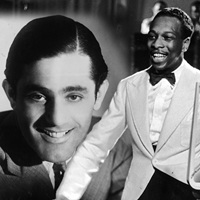
1. Ken ‘Snakehips’ Johnson and Al Bowlly, ‘It Was a Lover and His Lass’ (1940)
So finally, we get to Al Bowlly, a singer of mixed Greek and Lebanese parentage who’d been born in Mozambique and brought up in South Africa, before moving to Germany, where he made his first gramophone record. He came to Britain to join Fred Elizalde’s band at the Savoy, and was soon acclaimed as the best singer in the field. ‘Al Bowlly is a real find,’ enthused the Melody Maker; by 1932 he was being promoted by Decca Records as ‘England’s Bing Crosby’.
He’s backed here by Ken ‘Snakehips’ Johnson, born in British Guiana and leading the West Indian Orchestra (‘all “hi-de-ho” in the ecstasy of throbbing, whirling, modern syncopation,’ said the press), as they take on an American jazz arrangement of a song written by William Shakespeare. Good luck with sorting out who’s doing the cultural appropriation from whom.
Johnson and Bowlly were killed in separate air-raids on London, six weeks apart in 1941.
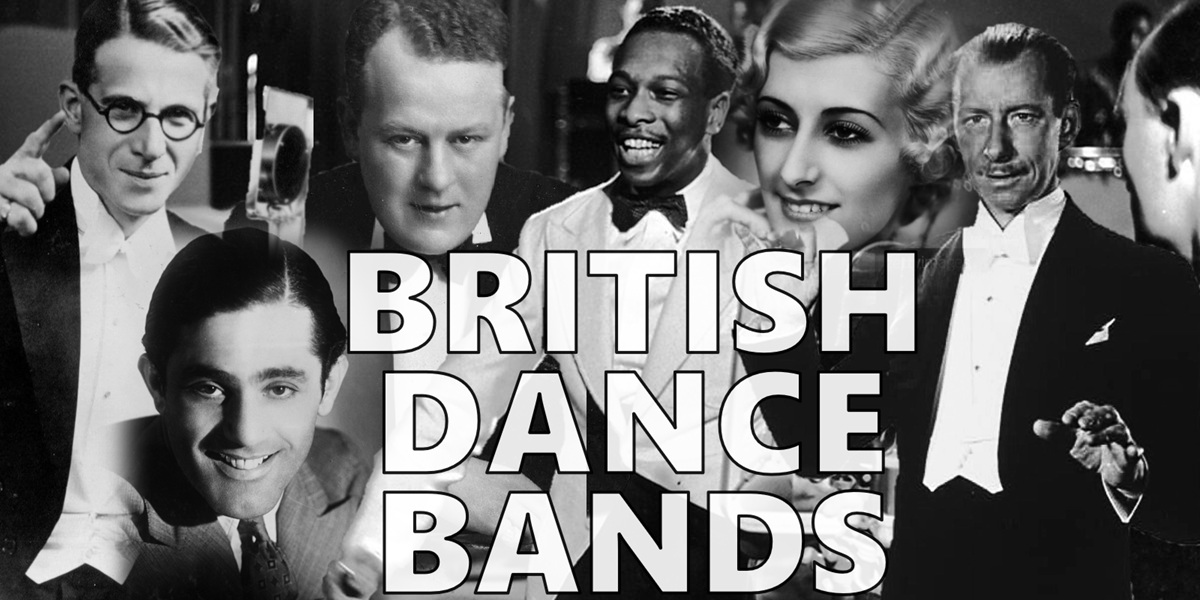
bubbling under…
Carroll Gibbons, ‘On the Air’ (1932)
Billy Cotton, ‘Trouble in Paradise’ (1933)
Debroy Somers, ‘The Blue Train’ (1927)
Geraldo, ‘The Palais Glide’ (1938)
Sydney Lipton, ‘One Night in Chinatown’ (1935)
from the maker of:

see also:
Discover more from Lion & Unicorn
Subscribe to get the latest posts sent to your email.
