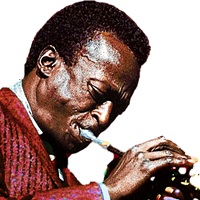
To mark the centenary of the birth of American jazz giant Miles Davis, BEN FINLAY celebrates his first British gigs in 1960.
Davis somehow managed to recreate, and even intensify, the hypnotic effect of recordings which have obliged us all to stop in our tracks and ask once again, ‘what is jazz, anyway?’ … Rarely have I witnessed a more impressive concert of jazz.
Benny Green, review of Hammersmith Gaumont Show, 8 October 1960.
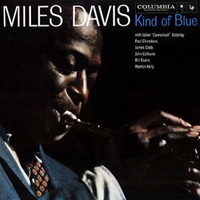
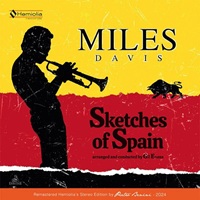
How fortunate one must have been to be a British Miles Davis fan in 1960. At the peak of one of his several creative highs, and hot on the heels of two of his masterpieces – Kind of Blue (1959) and Sketches of Spain (1960) – the trumpeter and his band visited the UK as part of a European tour for twelve shows between Saturday 24 September and Sunday 9 October.
Arranged by jazz promoter and impresario Norman Granz, the tour would feature Davis augmented by pianist Wynton Kelly, drummer Jimmy Cobb, and bassist Paul Chambers (who had all played on Kind of Blue). The tenor saxophone position was taken by Sonny Stitt, John Coltrane having departed in March 1960 to pursue his own path. Davis had initially identified Jimmy Heath and then Wayne Shorter as his first choices, but Heath was on parole and couldn’t leave Philadelphia, and Shorter had ongoing commitments with Art Blakey’s Jazz Messengers. By all accounts, Stitt turned out to be an excellent replacement; as Benny Green enthused, he was ‘positively brilliant, playing with a masterful execution and producing a cascade of ideas completely overwhelming to the listener bred on a diet of derivative of homegrown jazz’. Praise indeed, although one is not sure how well that went down with the earnest British jazz musos.
Starting in London at the Hammersmith Gaumont, and returning to the capital in the middle and end of the tour (the Astoria, Finsbury Park on Saturday 1 October, and Hammersmith again the following Saturday, with the final show at Kilburn Gaumont State on Sunday 9 October), Davis and his band visited Portsmouth, Leicester, Liverpool, Bristol, Lewisham, Birmingham, Newcastle and Manchester, where a recording was made for broadcast on BBC radio, later widely bootlegged and now available on YouTube.
For the opening show in London, the quintet was preceded by The Jazz Five, a short-lived British band, consisting of Vic Ash (clarinet/tenor sax), Harry Klein (baritone sax), Brian Dee (piano), Malcolm Cecil (double bass), and Bill Eyden (drums). Malcolm Cecil was a founding member of the Jazz Couriers, a leading UK jazz quintet of the late 1950s, before going on to join combos led by Dick Morrissey, Tony Crombie and Ronnie Scott in the late 1950s and early 60s. In an excellent trivia note, Cecil subsequently collaborated with Robert Margouleff to form the duo TONTO’s Expanding Head Band, a project based on a unique combination of synthesizers which led to them collaborating on and co-producing several of Stevie Wonder’s Grammy-winning albums of the early 1970s – at the time that Davis himself was experimenting with heavy electronic funk and rock textures.
Anyway, back in 1960 the setlist consisted of such live staples as ‘On Green Dolphin Street,’ ‘Walkin’’, ‘Four’, ‘Autumn Leaves’ and newer tunes such as ‘So What’ and ‘All Blues’. The band were in fine form with Kelly, Chambers and Cobb creating solidly swinging foundations for both soloists. Stitt would particularly excel on blues-based material such as ‘Walkin’’ exhibiting his musical roots and Charlie Parker-esque phrasing.
By all accounts the tour was enthusiastically received by British jazz fans hungry for the American icons of the music (a twenty-year-long Musicians’ Union ban on American musicians performing in Britain only ended in 1956). It’s difficult to comprehend in the present day just how revelatory it must have been to see and hear Davis in the flesh subverting and extemporising on material only previously familiar on record. Furthermore, on the cusp of the social and cultural revolution of the later sixties, to have one of the foremost leaders of Afro- American jazz visit and perform near, or in, one’s hometown must have been a heady brew indeed.
But in the world of British jazz nothing was ever that easy. Just a couple of months before Davis arrived here, the historian Eric Hobsbawm (writing in his guise as jazz critic ‘Francis Newton’) deplored in the New Statesman ‘the present vogue’ among young jazz fans for Davis, asserting that the trumpeter had ‘only a narrow technical and emotional range’ and his music close ‘to self-pity and the denial of love’. Other members of the intelligentsia were none too keen either. Philip Larkin savagely denounced modern jazz in his book All What Jazz (1964), at one-point singling out Davis and bebop innovator Charlie Parker for their ‘exaggerated musical non-sequiturs’ that had perverted the pleasures of jazz into ‘chaos, absurdity and hatred’. His friend, the novelist Kingsley Amis, agreed that figures such as Davis and Parker were indeed ‘moving in on our jazz, my jazz, from different directions’.
To Larkin and Amis – middle-class, grammar schoolboys who discovered early jazz via records in the 1930s and 40s – the cool insouciance of Davis was an insolent and elitist challenge to the accessibility of traditional jazz. Furthermore, the ‘vogue’ for Davis and modern jazz was on the rise in the late 50s; Soho institution Ronnie Scott’s opened in 1959 with an emphasis on the modern, with Scott stating that it was ‘the first British jazz club on American lines’. It would go on to host the cream of the US jazz elite in the following years.
The tension between ‘trad’ and modern developed in Britain during the fifties, reaching a peak at the infamous ‘Battle of Beaulieu’ in July 1960, when violence broke out between fans of the two rival genres during a BBC broadcast at the Beaulieu Jazz Festival. The stage was invaded, a building was set on fire, thirty-nine people were injured, and the BBC pulled its outside broadcast off the air six minutes early, with the announcer primly intoning with understatement that ‘things are getting quite out of hand’.
In today’s moribund cultural climate, these sorts of arguments just don’t exist any longer. But this was a time when music was identity and mattered a great deal. Jazz was a hotbed of competing styles, with deep antagonisms that divided fans and critics alike. But while revivalist jazz would peak in popularity in the early 60s and stay dear for a long while with the faithful, the likes of Davis and John Coltrane would go on to cast an all-pervading influence over American and British jazz and, later, a generation of rock musicians eager to experiment.
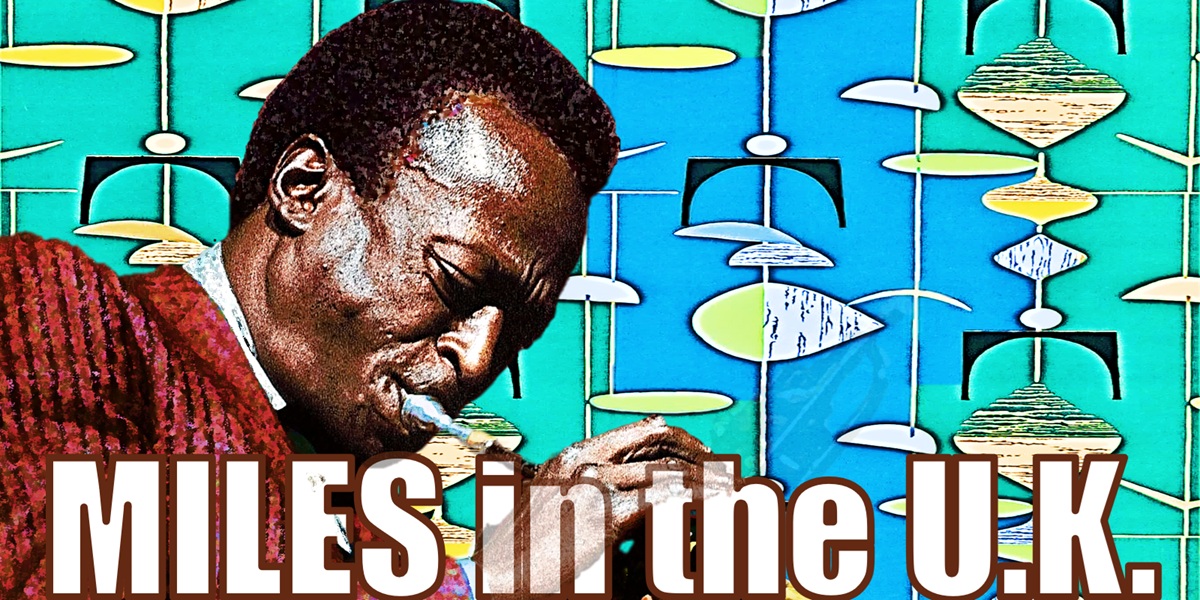
Miles would return to Britain in 1967, 1969 (at Ronnie Scott’s), 1970 (for a storming performance at the Isle of Wight festival), 1971, and then frequently at jazz festivals during the 1980s. His last concert in London took place in July 1991, not long before he died.
However, the last word on Miles’ 1960 visit must go to national treasure Cilla Black. Recalling seeing Davis perform in Liverpool during the tour, she remarked that she and husband Bobby thought it ‘an awful racket, nothing like the records’. Miles’s comments about Cilla are sadly undocumented.
The bootleg of Miles Davies at the Free Trade Hall, Manchester can be found here.
see also:
Discover more from Lion & Unicorn
Subscribe to get the latest posts sent to your email.
