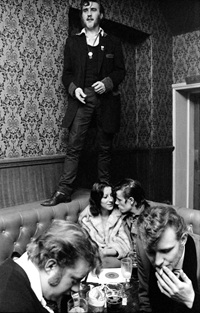
ALWYN TURNER’s selection of the best British rock ‘n’ roll from 1973-1982.
A playlist is available on YouTube.
The death of glam rock towards the end of 1974 produced something of a crisis of confidence for British pop music. Disco was coming, but there wasn’t really enough of it to go round at this point. Instead, the revivalist tendencies of glam lingered on with the exhumation of pre-Beatles stars and records, so that in 1975 Chubby Checker, Duane Eddy and Brian Hyland all found themselves back in the top ten.
That year also saw covers of the Four Seasons’ ‘Bye Bye Baby’ and Buddy Holly’s ‘Oh Boy’ by the Bay City Rollers and Mud respectively, while from TV came Telly ‘Kojak’ Savalas with a spoken-word version of Bread’s ‘If’, and It Ain’t Half Hot Mum’s Windsor Davis and Don Estelle doing the Inkspots’ ‘Whispering Grass’. Together with a reissue of Tammy Wynette’s ‘Stand by Your Man’ (1968), these records occupied the #1 slot for an unbroken sixteen-week period.
And topping the album charts in 1975 were greatest hits compilations by middle-of-the-road veterans, Engelbert Humperdinck, Tom Jones, Jim Reeves and Perry Como. They were followed in 1976 by similar #1 albums from Roy Orbison and Slim Whitman.
The revivalism continued in ever more unlikely forms, with Glenn Miller back in the singles charts for the first time in twenty-two years, and Laurel and Hardy’s ‘The Trail of the Lonesome Pine’ kept from #1 only by ‘Bohemian Rhapsody’. Most implausible of all, though, was the arrival in the top three of Hank Mizell’s ‘Jungle Rock’.
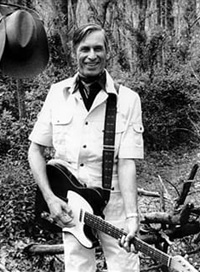
Mizell was an Alabama rockabilly singer, obscure even by the backwoods standards of rockabilly, and ‘Jungle Rock’ had been his debut single back in 1958. It hadn’t been a hit, there was a three-year gap before there was a follow-up (also unsuccessful), and sometime in the early 1960s he retired from music. A World War Two veteran, he was no spring chicken: when ‘Jungle Rock’ was first released, he was already thirty-four, older than the founders of rock ’n’ roll like Fats Domino, Bill Haley and Ike Turner. Now, in the Britain of 1976, and at the age of fifty-two, he had his first hit. Why? Who knows? It seemed to pass all understanding in a chart where rock ‘n’ roll normally meant Showaddywaddy – who had a #1 that year with a cover of Curtis Lee’s ‘Under the Moon of Love’. Nonetheless, it was a damn fine piece of roots rockabilly, so basic that it didn’t even have a guitar solo. (It was later covered by the Fall.)
Even more implausibly, Mizell became the hero of a new British subculture. The rockabillies who were already starting to become visible drew on 1950s rock ’n’ roll, while being distinct from the teddy boys who preceded them. The greased-back hair was still in evidence, but the drape suits had been replaced by donkey jackets and turned-up jeans. There was also some of the attitude and energy of punk, as well as its fondness for independent record labels. A couple of years later, after punk had failed to take over the charts, there came a spate of revivals – ska, mod, psychedelia – but rockabilly was there first.
In due course, a spruced-up version of the music enjoyed some success. Bands like Matchbox, the Polecats and Coast to Coast had hits, and there was one genuine star in the shape of Shakin’ Stevens (four #1 singles, four platinum-selling albums). The rockabilly revival also provided a base for American band the Stray Cats, who were big in Britain long before they broke through in the US.
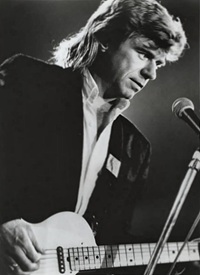
Those hits, however, are not our concern here. Much as I love 1950s rock ’n’ roll, I’m far less taken with most later versions of the form. They’re too clean and well-produced, losing sight of the fact that it was the raw, chaotic, unbridled mess of it all that made the music so wonderful in the first place. Take Dave Edmunds’s ‘I Knew the Bride’ (1977), for example – it’s a good song, written by Nick Lowe, and I have a lot of time for Edmunds, who’s made a huge contribution to British rock, but it’s just too pristine and proficient, too tame and tidy. There’s no sense of the primitive, moonshine-fuelled madness found on the best of the originals.
Although I can’t promise anything to rival Sonny Burgess or Charlie Feathers, let alone Jerry Lee Lewis or the Rock and Roll Trio, here’s a dozen of my favourite British tracks from 1973 to 1982: first, the old-school rockers who kept the faith, and then the new generation of rockabillies. There are some notable absentees, including the Jets, who had eight hits in 1981-84 without ever quite making the top twenty, and, most regrettably, the Flying Saucers, who released the wonderfully titled album Planet of the Drapes, but whose best single – ‘The Ballad of Johnny Reb’ – isn’t on YouTube.
Incidentally, the title of this piece is a nod to Matchbox’s first big single, ‘Rockabilly Rebel’ (1979), but it wanders a little beyond that brief. For this, I offer no apologies.
A playlist is available on YouTube.
SIDE ONE
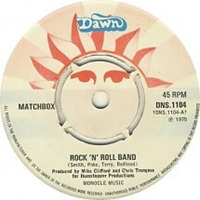
01. Matchbox, ‘Rock ’n’ Roll Band’ (1975)
So, let’s start with Matchbox. Later they acquired vocalist Graham Fenton and signed to Magnet Records, a label founded by Michael Levy (that’s Baron Levy of Mill Hill to serfs like you and me), and home to Alvin Stardust, Darts and Chris Rea. That’s when they started having hits. But this was the debut single, and it’s much better – brash, enthusiastic and not far removed from the late-glam pop of the time.
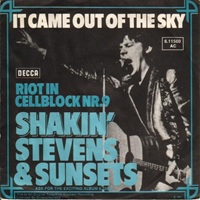
02. Shakin’ Stevens and the Sunsets, ‘It Came Out of the Sky’ (1974)
South Wales remained a hotbed of rock ’n’ roll in the 1960s, when the music was out of favour, with bands like the Backbeats and Robbie Rae and the Jaguars. Elbowing their way to the front rank were Shakin’ Stevens and the Sunsets, who began to attract fashionable attention: they supported the Rolling Stones at a 1969 gig, John Peel liked them, and their debut album, A Legend (1970), was produced by Dave Edmunds.
All of which was okay, and live they were reckoned to be very good, but the records never quite made the grade – with the exception of this one, a storming version of Creedence Clearwater Revival’s 1970 single. If Shaky is no match for John Fogerty as a vocalist, then nor is anyone else much, and he gives it his best shot.
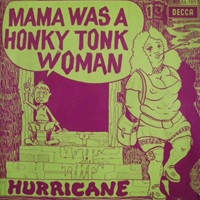
03. Hurricane, ‘Bit by the Boogie’ (1973)
Pianist Freddie ‘Fingers’ Lee had played in Screaming Lord Sutch’s band the Savages – the influence is clear on his debut single, ‘The Friendly Undertaker’ (1965) – and then for Eden Kane, before going solo (Ian Hunter was in his band long before he joined Mott the Hoople). And in 1972 he formed the short-lived Hurricane, who were popular on the live circuit, but only released one single (as pictured). The album they recorded, from which this comes, was never issued.
That’s a shame because they were a terrific, rootsy act who were more pub rock – complete with country and funk influences – than pure rock ’n’ roll. This track, for example, is indebted to New Orleans, with traces of Huey ‘Piano’ Smith and Professor Longhair. (Not really rockabilly, then? So what?)
Anyway, Hurricane deserve considerably more attention than the none they’ve been given. In addition to ‘Fingers’ on piano and vocals, there was thunderous drummer Carlo Little – another of Sutch’s alumni, he’d turned down an offer to join the Rolling Stones in the pre-Charlie Watts days – and session saxophonist Howie Casey (he’s on Paul McCartney’s Band on the Run, inter many alia). There was also Stuart Colman on bass, who became a great broadcaster and later a producer, most notably responsible for Shakin’ Stevens’s big hits.
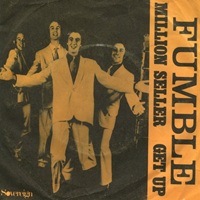
04. Fumble, ‘Million Seller’ (1973)
Formed in Weston-super-Mare in 1968, Fumble specialised in good-time rock ’n’ roll – their first single was a harmless cover of Ricky Nelson’s ‘Hello Mary Lou’. ‘All we want people to do at a Fumble concert is smile,’ said singer and guitarist Des Henley. Their self-titled debut album on EMI in 1972 got them an appearance on The Old Grey Whistle Test, and they travelled widely, with tours of Switzerland, Rumania and Bulgaria.
The really big break came in 1973, when David Bowie invited them to support the Spiders from Mars on several British gigs and on an American tour. That also got them signed to RCA, for whom they made their second album, Poetry in Lotion (1974), produced by Shel Talmy.
In between those two albums came this single, which I rate as their best, a nice, Buddy Holly-influenced piece of pop. It was written by Fumble’s own Sean Mayes, who would later play piano on Bowie’s albums Stage (1978) and Lodger (1979) – that’s him on ‘Boys Keep Swinging’ and ‘Fantastic Voyage’.
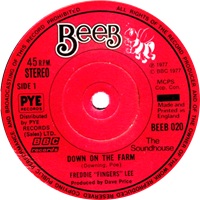
05. Freddie ‘Fingers’ Lee, ‘Down on the Farm’ (1977)
In 1976 Stuart Colman (formerly of Hurricane) co-organised a protest march on Broadcasting House, demanding that the BBC play more rock ’n’ roll. The result was the launch of a Radio 1 series It’s Rock ’n’ Roll, presented by Geoff Barker and Coleman himself, and featuring old records together with new sessions. From the latter came an album on the BBC’s own label, featuring Shakin’ Stevens and the Sunsets, Darts, the recently reformed Pirates (sans the late Johnny Kidd) and Chas and Dave.
And then there was Colman’s old band-mate Freddie ‘Fingers’ Lee, who’d returned to a solo career and to straightforward rock ’n’ roll after Hurricane fell apart. Billed as ‘Britain’s answer to Jerry Lee Lewis’, his live act was unrestrained, involving him playing the piano with paint-rollers and badminton rackets, attacking it with axes and sledgehammers, and setting fire to it.
To be honest, the gimmicks were a bit unnecessary. When he got going, Lee made his point with the music. This version of a 1958 single by Big Al Downing and the Poe Kats was released as a single from the BBC album and – even in the midst of punk – was surely the fastest-paced record of 1977.
Lee went on to be part of the team of regulars when ITV revived Jack Good’s classic show Oh Boy! in 1979, alongside Joe Brown and the Bruvvers, Shakin’ Stevens, Fumble and Mud’s Les Grey. It wasn’t very good.
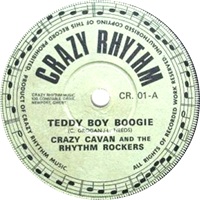
06. Crazy Cavan and the Rhythm Rockers, ‘Teddy Boy Boogie’ (1973)
Cavan Grogan was the biggest rocker to come out of South Wales this side of Shaky, and had an extraordinarily long career: his first band was Screamin’ Count Dracula and the Vampires in 1964, his last gig was in 2020, shortly before his death at the age of seventy.
This was his debut single and I’ve enthused about it before. It’s magnificently malevolent, brutal in its simplicity, like a council-estate Cramps:
Standin’ on the corner, swingin’ my chain,
Along came a copper and he took my name.
He put his dirty maulers on my long drape coat,
So I whipped out my razor and I slit his throat.
SIDE TWO
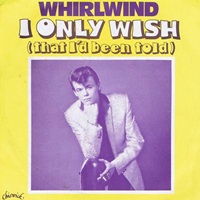
01. Whirlwind, ‘I Only Wish that I’d Been Told’ (1978)
I really thought that Whirlwind were going to be big. They were young, good-looking and had loads of potential. I’m sure I remember correctly that Danny Baker made them joint-single of the week in the NME along with the Chords’ excellent ‘Maybe Tomorrow’. That would’ve been ‘Midnight Blue’ (1980), the title track of the second album and a lovely, polished piece of pop. Better still was the debut album, Blowing Up a Storm (1978), which was much more garage. As was this early single, so murky that it lurches towards psychedelia.
Anyway, I was entirely wrong about their commercial prospects, and it seems they don’t even have a Wikipedia page, which is a sad indictment of the modern world. Singer Nigel Dixon later formed Havana 3 A.M. with ex-Clash bassist Paul Simonon – there was a self-titled album in 1990, but no follow-up because Dixon died of cancer in 1993.
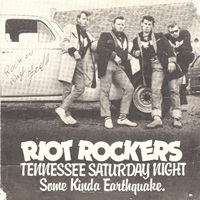
02. The Riot Rockers, ‘Tennessee Saturday Night’ (1978)
As with some others featured here, the Riot Rockers clearly loved the music and had the attitude down pat, but suffered from not writing their own material. Their self-titled debut album (1977), on Dutch label Rockhouse, had an overly generous eighteen tracks, all covers, and was frankly wearing. What they needed to do was find some less familiar songs to make their own – and this was their best find, originally an American hit in 1948 for Red Foley and the Cumberland Valley Boys (possibly learnt from Jerry Lee Lewis’s 1967 cover).
It was released on Raw Records, which was best known for early punk singles by the Killjoys, the Users and the Soft Boys, but also had Danny Wild and the Wildcats and, briefly, Matchbox on its roster.
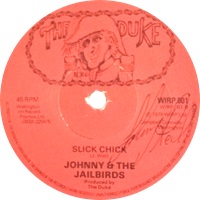
03. Johnny and the Jailbirds, ‘Slick Chick’ (1979)
I regret to say I know virtually nothing about Johnny and the Jailbirds. Unlike the other acts here, they passed me by entirely at the time. They came from Northampton, signed to Charly Records and released an album, Out on Bail (1980), before splitting up. They reformed in 1996 to play a benefit gig for original guitarist Nigel ‘Wilf’ Brown, who’d suffered brain damage in a car crash on his return from America, where he’d been playing with Pete Murphy of Bauhaus. There followed more albums.
This is the B-side of their debut single, a good bit of frantic rockabilly, with all the requisite twangy guitar riffs, hiccupping vocals and slapback echo.
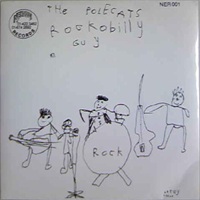
04. The Polecats, ‘Rockabilly Guy’ (1979)
North London band the Polecats had already toured America, supporting Hank Mizell, when they released this, the first single from rock ’n’ roll label Nervous.* They then signed to Mercury Records and had minor hits in 1981 with covers of Bowie’s ‘John I’m Only Dancing’ and Marc Bolan’s ‘Jeepster’, as well as a more professionally recorded version of this song. But the original remains the best – it’s good to be rough around the edges.
Guitarist Boz Boorer went on to join the Deltas, and later to work with Morrissey as his co-writer and musical director.
* In 1982 Nervous Records released the only album by New York rockabillies Buzz and the Flyers, whose singer – Buzz Wayne – later renamed himself Dig Wayne and formed JoBoxers.
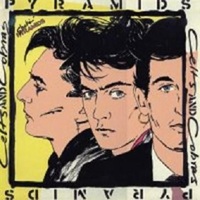
05. The Shakin’ Pyramids, ‘Reeferbilly Polka’ (1982)
Scotland’s best rockabilly group, the Shakin’ Pyramids came from Glasgow and – if I remember right – used to play gigs with label-mates the Cuban Heels (the less successful half of Johnny and the Self-Abusers, after some members left to form Simple Minds).
Their debut single was the similarly titled ‘Reeferbilly Boogie’, they recorded an EP with Lonnie Donegan in 1981, and this was the last track on their Virgin album Celts and Cobras. It’s not far from some of the punky-folk bands who used to play at the Mean Fiddler in Harlesden in the wake of the Pogues. Which prompts me to mention that Shane MacGowan’s first single was with the Nipple Erectors on the punk-rockabilly ‘King of the Bop’ (1978). There was a lot of it about.
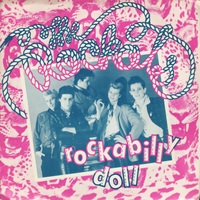
06. The Rockats, ‘Rockabilly Doll’ (1980)
When the rockabilly revival seemed to be gathering commercial steam, the Rockats made albums for Island and RCA, but – as with many others here – the best stuff came earlier when they were still rootling around on hit-and-run sessions for independent labels. They came from Southend-on-Sea, but were discovered by New York punk photographer Leee Black Childers, who took them to America, where they made their live debut at Max’s Kansas City. Later they found themselves supporting big names like Bowie, Iggy Pop and the Clash.
This was the second single, recorded in New York and released on the American Kat Tale Records.
A playlist is available on YouTube.
see also:
Discover more from Lion & Unicorn
Subscribe to get the latest posts sent to your email.
