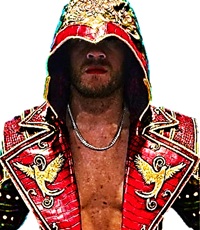
Continuing our series on the shows fans would rather forget, BEN THOMAS remembers ‘one of the worst UK wrestling matches of all time‘.
I’m old enough to remember when British professional wrestling was one of the biggest things on television. No surprise there, I’m deceptively venerable. I can recall when pound notes and ha’penny pieces were legal currency. I can still picture dial-up modems and top-loader video-recorders. I lived at a time when those high-street defibrillator booths had public telephones in them.
From the mid-1960s to the late-1980s the wrestling was a fixture on ITV, with brawlers like Les Kellett, Jackie ‘Mr TV’ Pallo and Mick McManus. Queen Elizabeth II and Prince Phillip were reportedly big fans. Jimmy Savile (don’t ask) and Kendo Nagasaki were household names.
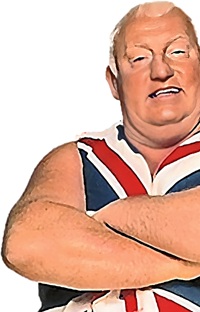
The pinnacle of this era was the match between Big Daddy and Giant Haystacks in Wembley Arena in 1981. More people tuned in to watch that match than that year’s FA Cup final. Was it a good match? No, it was godawful, but it was the climax of a nearly decade-long feud.
The rise of the American World Wrestling Federation changed all that. The UK main eventers were ageing and lacked the razzle-dazzle of the superstars in the US. The ITV contract ended in 1988. After that, the shell of the British wrestling scene had to eke out a living in leisure centres, workingmen’s clubs and holiday camps.
UK wrestling kept threatening to burst back into life during the early 2000s. Frontier Wrestling Alliance offered a cutting-edge ‘New School’ wrestling style and secured a TV deal with Bravo. Unfortunately, financial pressures, infighting and the loss of the Bravo deal sent them scuttling back to obscurity.
The real UK wrestling renaissance didn’t happen until the 2010s. A number of British ‘super-indies’ (independent wrestling promotions) started to build dedicated fan bases. London-based PROGRESS Wrestling was at the forefront of the boom. They were complemented by Glasgow’s Insane Championship Wrestling and Revolution Pro-Wrestling, the latter bolstered by a talent-sharing relationship with international promotions like New Japan Pro-Wrestling.
New stars – such as Zack Sabre Jr. (from the Isle of Sheppey in Kent), Will Ospreay (Rainham, Essex), Pete Dunne (Birmingham) and Grado (the Tap End of Stevenston, Scotland) – caught the eye with a mixture of high-flying acrobatics, mat-based chain wrestling, and the boneshaking British strong style that was as close to genuine violence as predetermined wrestling gets.
In 2018 PROGRESS drew 4,750 fans to Wembley Arena. The largest audience for a British independent wrestling show in thirty years.
Of course, this being British wrestling, the wheels fell off. WWE had already started muscling into the UK market and began hoovering up much of the talent. Then there was Covid, which completely wiped out the revenue for these small companies. And then came the Speaking Out movement: widespread allegations of sexual misconduct, abuse and grooming within the UK wrestling scene.
By the time Covid restrictions were lifted, British wrestling had been gutted, shamed and financially devastated.
Time heals. PROGRESS survives, under new management. ICW endures up in Glasgow. RevPro’s 14th Anniversary Show on 29 August this year sold 5,000 tickets. Pro-Wrestling: Eve – Britain’s only all-female promotion – has also been making waves. UK wrestling seems to be on the upswing again.
‘What’s all this got to do with Hate watch?’ I hear you cry. It’s context for what I think might be one of the worst UK wrestling matches of all time.
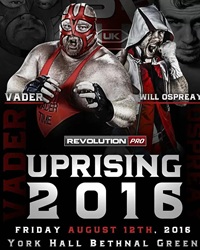
The year is 2016. The venue is York Hall, Bethnal Green. The show is Revolution Pro Wrestling’s Uprising 2016.
In the red corner is Will Ospreay, the Essex-born wrestling savant. He was fresh from becoming the youngest-ever winner of New Japan’s Best of the Super Juniors. His style was, and still is, lightning fast, spectacularly athletic and occasionally reckless. Outside the ring he seems dedicated to his craft, entirely unaffected by his fame, and heart-warmingly dense. There are times I just want to give him a big, avuncular hug.
In the blue corner is Vader (real name Leon White). Vader was sixty-one at the time of the bout. In his prime, back in the late 1980s and early 1990s, he’d been a huge star in America and Japan. A terrifying combination of monstrous size and baffling agility. His finishing move, the Vadersault, was a somersault splash off the top-rope that almost defied physics. That was then. By 2016 he was chronically overweight and crippled by joint pain. He’d also just been diagnosed with congestive heart failure.
Leon White should not have been in a wrestling ring in 2016. He shouldn’t have been walking to a ring unaided. He was there because he’d started a Twitter beef with Ospreay – after seeing a blistering thirty-second clip of a match Will had with an American wrestler called Ricochet in Japan, he tweeted:
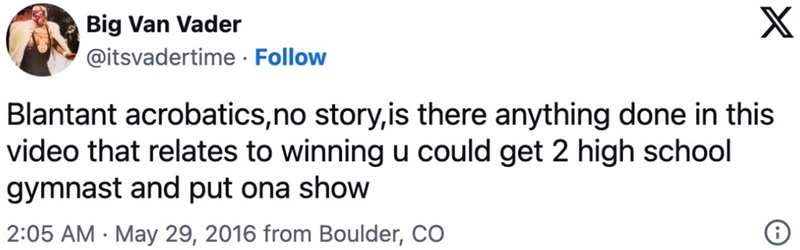
Ospreay and Ricochet both responded saltily. Things escalated. RevPro promoter Andy Quildan thought there might be money in flying Vader over to the UK to wrestle Ospreay. Vader, for his part, oversold how physical his physical condition was. Things got even worse on the day of the match, when Vader made it clear that he had no interest in losing.
The match lasted seven minutes and six-and-a-half of that was filled with what could be called shenanigans. It had to be. Vader couldn’t safely take most of Ospreay’s offence without risking his life. There was a surfeit of outside interference, and the match ended with Vader pinning the home-town hero in the centre of the ring to stunned silence.
Backstage, after the match, Vader was reportedly so exhausted he couldn’t lift himself off the yoga ball he’d collapsed onto. He’d contributed virtually nothing to the match other than his presence, and he was utterly spent.
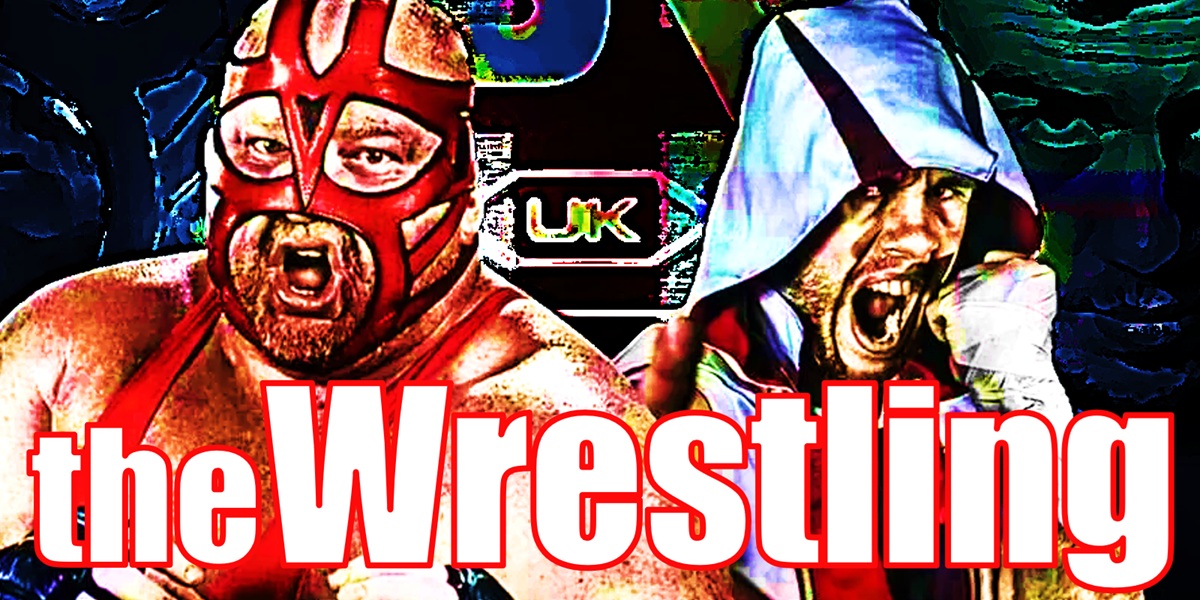
Here’s an incomprehensible statistic: Vader would wrestle eight more times after this. His last match was on 25 May 2017, on a nothing independent show in Ringgold, Georgia, about a year before he died.
Ospreay survived the ignominy of the defeat. Thrived, in fact. He wrestles for All Elite Wrestling now, America’s second-biggest promotion, and he recently won the World Title at Wembley Stadium in front of more than 40,000 of his countrymen. The night before the most important match of his life, he wrestled on the RevPro Anniversary Show, risking possible injury out of a desire to give back to the promotion that built his career. I did tell you he was dense, didn’t I?
see also:
Discover more from Lion & Unicorn
Subscribe to get the latest posts sent to your email.
