In our ongoing series celebrating individual episodes of British TV, FINLAY McLAREN watches Harold Wilson, James Callaghan and Denis Healey in a 1971 edition of 24 Hours.
It’s the middle of June, Britain has been basking in a rare stretch of uninterrupted sunshine, and in 10 Downing Street, the prime minister is busy packing his bags. But this beleaguered and shop-worn Labour premier isn’t going away on his summer holidays. In fact, he’s just been sacked.
Of course, dear reader, this isn’t Keir Starmer in 2026 (not yet, anyway…), instead we’re talking about pipe-smoking, Gannex-wearing, man of the people, Harold Wilson. It’s 19 June 1970 and, after six years in office, the Labour government has been voted out.
For Wilson this was a devastating shock. The Labour Party had been ahead in almost all the polls, they had performed well in the recent local elections, and Ladbrokes were offering 20-1 odds in their favour. A third consecutive win for the party, and for Wilson, seemed certain.
This confidence had carried over into the campaign. In marginal constituencies across the country, Labour paid for a series of posters designed to portray their Conservative rivals as out of touch and past it. They showed plasticine models of senior Tories — Ted Heath, Reginald Maudling, Iain Macleod et al. — beneath the slogan ‘Yesterday’s Men (They failed before!)’. But just weeks later, those same men were back in power and Labour were out. And so, in the early hours of the morning, after an all-night drive back from Liverpool, Harold Wilson and his wife Mary began preparing to leave Downing Street for the last time.
Their two sons, Robin and Giles, came to help as the family hurriedly packed their belongings into trunks and tea chests. They played ‘The Carnival Is Over’ by the Seekers on the family record-player, again and again, its chorus echoing through the increasingly empty house:
This will be our last goodbye
Though the carnival is over
I will love you ’til I die
As the day wore on, a procession of ashen-faced soon-to-be-ex ministers passed through Downing Street, offering words of commiseration to the defeated ex-premier. That afternoon, there was one final meeting of the outgoing cabinet. Few could attend, and even fewer had anything to say. The now former minister of technology Tony Benn asked if he might take some photographs of Wilson, as he sat in the cabinet room for the last time. It was, thought Roy Jenkins, ‘a climax of embarrassed bathos’. Later, when Benn tried to develop the film, the images were returned blank.
That evening, as he exited through Downing Street’s garden gate, Wilson was, in the words of biographer Ben Pimlott, ‘homeless, civil servant-less, driver-less, power-less, and to a large extent reputation-less.’ The same was true for most of the Cabinet — Roy Jenkins, James Callaghan, Barbara Castle, Denis Healey, Anthony Crosland. The great titans of the now-defunct Labour government had all lost their status, and salaries, in a matter of hours.
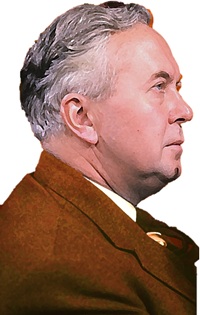
One year later, the Labour front bench’s difficult transition from government to opposition would form the basis of a BBC documentary, to be cruelly, but fittingly titled Yesterday’s Men. It would go on to provoke one of the most furious rows in the BBC’s history.
Yesterday’s Men began as an idea from the young David Dimbleby, then an emerging talent, who pitched it to BBC bosses as a look at ‘the personal and political consequences of defeat’. Watching Yesterday’s Men today, I’m struck by how modern it feels. Like a prototype for the fly-on-the-wall political documentaries that would become commonplace decades later.
We see Wilson in the Scilly Isles Labour Club drunkenly singing ‘On Ilkla Moor Baht’at’, James Callaghan gamely playing the role of a tenant farmer, and Denis Healey on the rubber-chicken circuit making jokes about having carnal relations with an elephant. Coming from a time when even parliamentary proceedings weren’t being filmed, these moments are startling.
Adding to this sense of the now is the realisation that many of the programme’s concerns are uncannily familiar. Debates over whether Britain should pursue ever closer political ties with Europe? Ding. Economic stagnation coupled with anxieties about national decline? Ding-ding-ding. Internecine power struggles within the Labour Party? Ding-ding-ding-ding-ding.
As a result, it’s tempting to imagine what ‘yesterday’s men’ might be up to today. Wilson would almost certainly be making a disastrous go of things as a podcast host, à la Friday Night, Saturday Morning. Tony Crosland would no doubt be getting into trouble for wearing a ‘Never Kissed a Tory’ T-shirt. While Callaghan’s Farm has become a smash hit on Amazon Prime.
Yet, in other ways, the film shows a world completely alien from our own. Owing not only to the grainy 16mm film stock, or the fact that absolutely everybody is smoking — indoors no less (!) — but also thanks to the complete lack of any media training. From Callaghan grumbling that he ‘couldn’t live on an MP’s salary and have a full-time secretary and run a car’ to Tony Crosland calling the Conservatives ‘horrible people’ pushing ‘horrible policies’, these are politicians unbound by modern considerations of sound bites, spin and public relations.
Obviously, no-one likes a nostalgist, but when it comes to our political class what other reaction can there be? Whatever else can be said about yesterday’s men, they are all gloriously uninhibited. As a result, after forty-two minutes I feel I know these people — most of whom died before I was born — better than I know any of the Labour front bench today.
So why was Yesterday’s Men so controversial?
First, there was the title itself, which had been deliberately hidden from contributors. Their contracts referred to the programme either as Her Majesty’s Opposition or The Labour Party in Opposition.
The truth was only revealed one week before transmission, when Yesterday’s Men was listed in the pages of the Radio Times. BBC managing director of television, Huw Wheldon, later observed that it was like making a programme all about doctors, then calling it Quack, Quack.
Fundamentally though, Yesterday’s Men wasn’t interested in public service, focusing instead on the grace-and-favour trappings of high office; secretaries, offices, ministerial cars. ‘What was disturbing about it was that its attitude towards politics was utterly trivial,’ thundered editor of The Times William Rees-Mogg. ‘This view of political affairs is, to put it frankly, the view of immature young people… It is much more dangerous to trivialise than ever it is to criticise politicians.’
And then there was the song. Commissioned specially for the programme, ‘Yesterday’s Men’ by The Scaffold (of ‘Lily The Pink’ fame) plays throughout the documentary and includes lines like ‘Yesterday’s men and it’s no fun at all / getting sacked and put out to graze’, and ‘we used to earn what the rich man earns / but now we’re reduced to ranks / we go on telly just to pay the rent / and overdrafts from the banks’. (The participation of the band was itself a twist of the knife, as Wilson had previously named their hit ‘Thank U Very Much’ as one of his favourite songs.)
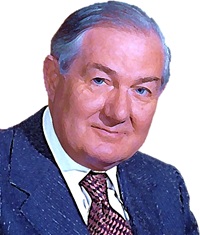
All considered, it’s little wonder that some of yesterday’s men felt that they’d been tricked into appearing in a documentary designed to mock them. But it was for what wasn’t included that the programme would prove most controversial.
During an interview for Yesterday’s Men, David Dimbleby asked Harold Wilson about his finances. Wilson had just written an autobiography, The Labour Government 1964–1970, extracts of which were then serialised in the Sunday Times. Reports suggested he had earned between £100,000 and £250,000 from the book, and Dimbleby asked him to give the figure.
‘No,’ Wilson replied. ‘I don’t think it’s a matter of interest to the BBC or anybody else.’
Before Dimbleby could respond, Wilson started to rant. Why, Wilson asked, was he being questioned about his earnings when no one asked Ted Heath how he could afford a £25,000 yacht? He accused the BBC of double standards, called the question insulting, and demanded that the exchange not be recorded.
As the confrontation escalated, Wilson warned that unless the footage was cut, ‘the interview is off, and the whole programme is off.’ At that point, Wilson’s press secretary, Joe Haines, stepped in and placed his hand over the camera lens.
‘I think we’ll have a new piece of film in and start all over again,’ Wilson said. ‘But if this film is used, or this is leaked, then there’s going to be a hell of a row.’ Dimbleby assured him he would not leak it, but Wilson remained sceptical: ‘These things do leak. I’ve never been to Lime Grove without it leaking.’
A month later, the row leaked.
What followed was a farcical and deeply embarrassing saga involving threats of libel action, frantic late-night negotiations, and intense political pressure as the Labour Party sought to force the BBC to remove all references to Wilson’s finances.
At an official dinner for BBC top brass, Director-General Charles Curran was repeatedly called away to take phone calls from disgruntled Labour figures demanding that material be cut from the programme. One of the callers was Wilson’s lawyer, Lord Goodman. Curran agreed to meet him later that night and, accompanied by Huw Weldon and BBC One controller Paul Fox, headed to Goodman’s home in Portland Place.
But it soon turned out that none of the three men could remember the address. And so, they ended up huddled in the dark, using cigarette lighters to read the nameplates outside various houses. Eventually, they gave up and went home.
The following morning, the BBC Governors took the extraordinary step of viewing the programme before transmission. They agreed it should be broadcast, but only after the questions about Wilson’s memoir earnings had been removed. Furious at the decision, Dimbleby and producer Angela Pope demanded that their names be taken off the programme. The controversy led to an inquiry and a formal BBC apology to Wilson, along with payment of his legal costs.
For years afterwards, the affair cast a long shadow over the BBC. ‘Better safe than imaginative’ became the bitter motto, and six years later the Annan Commission on Broadcasting noted the dampening influence that the controversy had had on current affairs-programme making.
Yesterday’s Men would remain hidden away in the archives until 2013, when it was shown as part of BBC Parliament’s Harold Wilson Night. Reflecting on the affair, David Dimbleby offered a revealing postscript.
‘It wasn’t until several years later,’ he recalled, ‘that I heard — and I think it’s probably true — that we had inadvertently stumbled across a perfectly legal tax-avoidance scheme Wilson had used to receive the money from the book.’
Dimbleby explained that an unpublished manuscript effectively had no market value until it was sold. As a result, when Wilson transferred the rights, the proceeds could be treated as a capital gain rather than income, attracting a much lower tax liability. ‘In effect,’ Dimbleby said, ‘he got the money from the book tax-free. And I think he thought we knew that.’
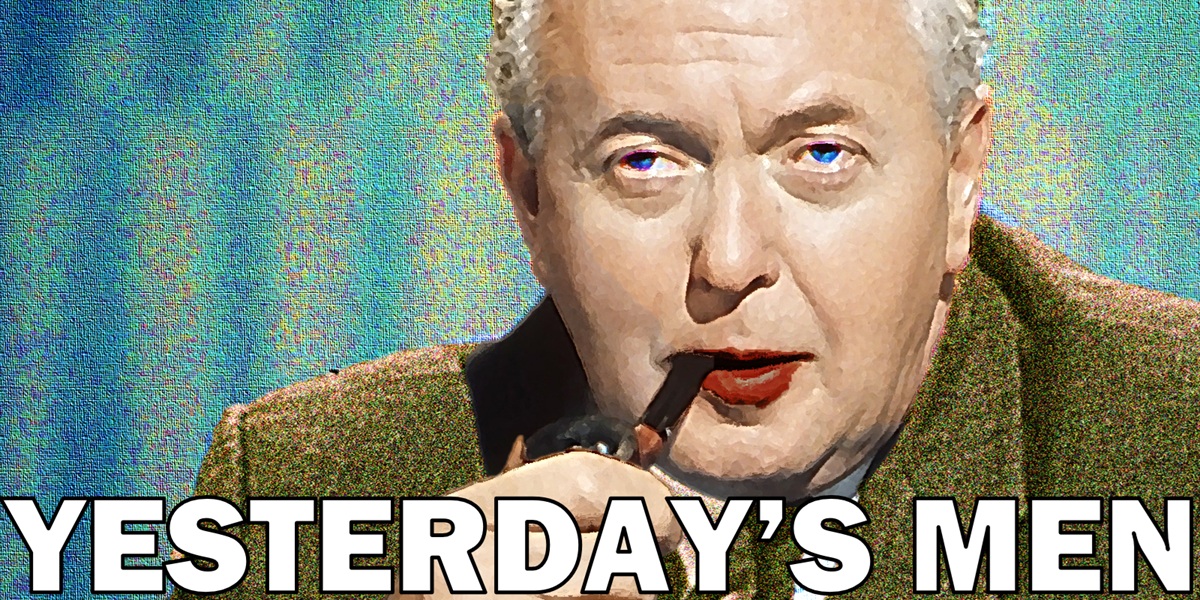
In the end, we return to 19 June 1970 and to events on Downing Street. Outside, crowds are celebrating, while inside, civil servants applaud their new boss. Meanwhile, just a few metres away, the Wilson family are stoically loading suitcases, blankets and books into the family’s twin set of blue Minis.
In an uncharacteristic show of good nature, the incoming prime minister has offered the Wilsons use of Chequers until they can find somewhere to live. As they drove off into the warm summer evening, Harold Wilson could hardly have imagined that just four years later he would be back in power.
By the time you’re reading this, dear reader, it’s very possible that another Labour prime minister is preparing to make a similar journey of his own. And that’s not the only echo of Yesterday’s Men we can find in today’s headlines.
Whether it’s political donations, BBC bias, or selective editing, the themes of the documentary, and the controversy it spawned, are familiar to us all.
Whatever day it is, politicians come and go, scandals flare and fade, reputations rise and fall.
And so, when Keir Starmer leaves Downing Street for the last time, he can take some solace in the knowledge that, eventually, we all end up as Yesterday’s Men.
And maybe he’ll write a book too.
Yesterday’s Men is available on YouTube.
Find more writing from FINLAY McLAREN at his Substack Notes from Behind the Sofa.
see also:


Discover more from Lion & Unicorn
Subscribe to get the latest posts sent to your email.

Harold Wilson was very sensitive about his financial affairs.
Even in 1970, politicians were likely to face public criticism, and hostility, concerning the public perception that they were simply scroungers, getting a free ride at the expense of the hard-pressed taxpayer.
There used to be a popular slogan about politicians of all parties, which went roughly thus: “Being an MP is better than working for a living!”
Wilson was worried, by the questions asked in the “Yesterday’s Men” interview, that the BBC had learned he was paying no tax on his earnings from his recently published volume of political memoirs. The whole debacle which resulted arose from Wilson’s paranoia, as the BBC actually had no idea that Wilson’s tax affairs, although legal, might be politically damaging for him.
It puts me in mind of another famous contraversy involving “Gannex Man”: namely, Gannex!
Wilson was unusual among left-wing politicians, in that he was making money privately from his commercial interests. It was similar to a footballer today selling merchandise about himself, such as a sponsored-shirt deal. Wilson always wore the famous Gannex macs associated with his nickname as ‘Gannex man’.
I suppose many people must have assumed that he had a sponsorship deal, and was paid by the Gannex corporation to wear their overcoats, for the publicity effect. Few people probably knew that, actually, he was part-owner of Gannex, and so made money from every sale of one of their products.
In those far-off days of 1970, I don’t believe there was any rule in Parliament which required an MP to disclose his commercial interests, so there would have been no public record of his financial links to Gannex. An MP’s financial affairs were genuinely no one else’s business.
Gannex macs were a feature of working-class life. It was not unusual for an MP from a working-class background to have working-class habits, so Wilson’s sartorial choices did not seem especially unusual.
But, secretly, MI5 had an interest, because Gannex was a company run by a Lithuanian-born businessman named Kagan. Lithuania was then an Iron Curtain state, and Kagan might easily have been (or been represented as) a Soviet deep-cover agent. And he had close ties to the Prime Minister.
Wilson did not want headlines about his secret tax affairs, his wealth, or his Iron Curtain links, all of which would have been hugely damaging to him politically.
So any apparent BBC investigation into his financial affairs was deeply worrying for him, given the type of embarrassing facts it could potentially lead to.
Wilson, the come-back king, was already planning his campaign for a successful return to Downing Street in 1974, after 5 years of Tory misrule, and he had plenty to hide.
Certainly, being derided as one of “yesterday’s men” was a development he could have done without, but it was far less of a concern than the revellations that might have emerged, which could have possibly blighted his chances for 1974.
LikeLike