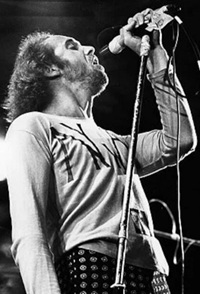
There are bands where you know the name, but not the music, and you’re not really sure where to start. So here — in a new series that will aid your education and serve as an introduction — is BEN FINLAY to tell you about Family.
And here’s a Playlist of five recommended tracks.
Progressive Rock? Don’t know anything about it!
Roger Chapman
People think the late 60s/early 70s were a great time for music and I think a lot of it was down to the people who were looking for different things. People used to talk a lot of the time about the alternative society and that there was a different day coming with the politics – which of course there wasn’t – but also in art, literature and music. The people said, ‘no, I don’t want three minutes, I don’t want the band to dress all the same’ So it was punter driven.
Poli Palmer
As you may have deduced from my scribblings on music, I am a fan of the obscure, the unsung and the underrated in British music history. For all the quite rightly celebrated popular bands and artists, there are many equally deserving groups that are somewhat forgotten, performers that achieved a cult following, but are less remembered. So in a new occasional series, I will highlight some of these creative and interesting acts, look at their catalogue, and recommend their best and most accessible works.
For the first instalment, I have turned my attention to a band I feel has been somewhat overlooked, the excellent Family. Arguing that they ‘fully deserved a reappraisal’, I included their 1970 album A Song for Me in last year’s top ten prog albums, and they have been a favourite of mine for some time now.
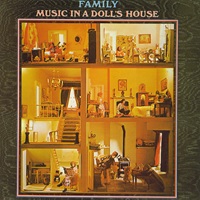
As a teenager, way back in the mists of time, and long before the internet, I used to frequent the local library, and pore over the music reference books. A particular favourite was The Illustrated Encyclopaedia of Rock, which would include potted histories of bands, discographies and some choice album covers. One that always stood out was Music in a Doll’s House by Family; back in the mid 1980s, it looked particularly exotic and Sixties, and although I had no easy access to the music, I made a mental note for the future to explore the band’s work. In 1989, a late-night Channel Four showing of the 1971 Glastonbury Fayre included the band performing ‘Drowned in Wine’ at twilight, a great atmospheric moment that brilliantly encapsulated Family’s heady sound. I was hooked, and tracked down their LPs in second-hand shops during the early 1990s.
Hailing from Leicester, the band played R&B covers, first as the Farinas and then as the Roaring Sixties. In 1966 the group changed their name to Family, following advice given by American producer Kim Fowley, who suggested they name themselves The Family, and dress onstage in suits with a mafia-image. Ignoring that and all but the best part of Fowley’s advice, they went on to make their debut Music in a Doll’s House in 1968.
Produced by Dave Mason (then of Traffic) and featuring arrangements by future Wombles producer Mike Batt, and a cameo from the Tubby Hayes group, ‘eclectic’ would be the first word that springs to mind on hearing the album. With influences drawn from soul, rock, folk, classical, Eastern music and blues, Doll’s House should have been hailed as either a late-period psychedelic classic or one of the first prog rock masterpieces, but somehow, it sits between the two, lauded by fans, but never quite reaching the ‘legendary’ category. Tracks such as ‘The Voyage’, ‘The Chase’ and ‘Me My Friend’ were concise, melodic and genuinely innovative, but as with many artists that embraced psychedelia, the group was soon to toughen their sound somewhat.
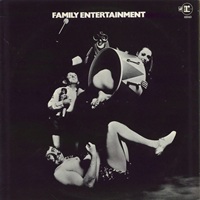
Indeed, Family Entertainment, their second album, saw the band begin to stretch out. Produced by Glyn Johns, it opened with the excellent ‘The Weaver’s Answer’, and included strains of Indian music, with strings arranged by Terry Cox and a darker edge than its predecessor. In contrast with Doll’s House, the cover was an acknowledged pastiche of the sleeve of the Doors’ second album, Strange Days.
This would be the last album by the band’s original line-up: Roger Chapman on vocals, John ‘Charlie’ Whitney, guitars, Jim King, saxophone, Ric Grech on bass, vocals and violin, and Ron Townsend, drums. Just two months after the record’s release, Grech left to join Eric Clapton, Steve Winwood and Ginger Baker in Blind Faith. And Family’s stability was further rocked by the departure of Jim King in October 1969. The band carried on, replacing Grech with Jim Weider and King with John ‘Poli’ Palmer on vibes, flute and keyboards. Palmer had been in the Helions with (then) future Traffic members Dave Mason and Jim Capaldi and played at the 1969 Isle of Wight festival with jazz/folk group Eclection.
It would be this new line up that made A Song for You in 1970. The album sees a collective impetus with everyone contributing strongly. As Palmer would later state, ‘when we were really hot at it there was a nice feeling that everyone could put their five penn’orth in and if it didn’t work it didn’t matter, it only took ten minutes of studio time.’ The glorious ‘Drowned in Wine’, ‘Love is a Sleeper’ and the closing title track see the band use a broad palette with the influences now incorporating elements of jazz, folk and country into their already heady brew.
Commercial success came in the form of two singles, with the heavy, violin-driven ‘A Strange Band’ reaching the top twenty in September 1970, and ‘In My Own Time’ which saw the band turning in a memorable performance on Top of the Pops, Roger Chapman’s intense vocals bursting out of viewers’ TV sets. It entered the UK singles chart in July 1971 reaching number four and stayed for thirteen weeks on the chart. The performance is available on YouTube.
The album Anyway (the first side recorded at a concert at Fairfield Halls in Croydon, with side two a collection of new studio recordings) appeared to great reviews in late 1970. Nick Logan in the New Musical Express praised the records ‘schizophrenic excitement’ and ‘screeching feeling’, lauding the ‘relentless fury’ of their highly original style
Another line-up change occurred in 1971, as John Weider left, to be replaced with John Wetton, the (then) future King Crimson bassist and vocalist joining for their next release, Fearless. He bought along his own distinctive bass playing and strong vocals, which can be evidenced on a performance of ‘Spanish Tide’ on the Old Grey Whistle Test, and on the opening ‘Between Blue and Me’ on Fearless (1971). Despite the change in their sound, NME declared the album as ‘peerless’.
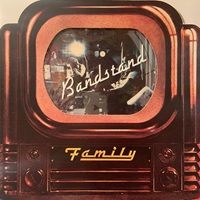
The more conventional musical stylings of Bandstand in 1972, saw Family move towards a rockier style, particularly apparent in the opener ‘Burlesque’, which would reach number thirteen when released as a single. The album did however include some more introspective material, most notably ‘My Friend the Sun’, an irresistible slice of early 1970s prog-folk. Other highlights included ‘Coronation’, ‘Dark Eyes,’ an atmospheric, sensual ballad Chapman wrote with Poli Palmer, and ‘Glove’, a soulful ballad and a firm fan favourite.
Wetton left the band in the summer of 1972 to join King Crimson, replaced by bassist Jim Cregan, and a few months later, Palmer also left, replaced by keyboardist Tony Ashton. A tour of the US and Canada that year supporting Elton John in 1972 saw their live performances often met with complete indifference by Elton’s fans, with Palmer later recalling that ‘the only clapping in huge stadiums would be the guys doing the PA’. Family made one more album, It’s Only a Movie (1973), but the heart had somewhat left the band by then, and they disbanded in October 1973. Palmer remarks that he left because he felt that ‘it had run its course really’ and that it was time to move on.
Perhaps Palmer was right; the variety and eclecticism of Family’s earlier material was straightening out, but that wasn’t uncommon in many bands that came of age in the same era. It’s also likely that such intense, restless experimentation was somewhat exhausting and impossible to sustain indefinitely.
What Family leave behind is a rich legacy of work, every record between 1968 and 1972 richly rewarding. And I’m glad I’ve given them that reappraisal.

The Playlist – five recommended tracks
‘Mellowing Grey’ from Music in a Doll’s House (1968)
The band’s debut must be heard to be believed. While it sounds very ‘1967’ in the present day, it is one of the great British late Sixties albums.
‘The Weaver’s Answer’ from Family Entertainment (1969)
This record sees a more pronounced folkier and acoustic side enter the group’s sound alongside the heavier offerings.
‘Drowned in Wine’ from A Song for Me (1970)
My first exposure to Family via the version on the Glastonbury Fayre film.
‘Spanish Tide’ from Fearless (1971)
A great album, full of energy, superb band interplay and John Wetton sounding in fine form.
‘Glove’ from Bandstand (1972)
A superb sleeve (die-cut in the shape of a Bush TV22 television set, with a black-and-white image of the band onscreen) packages the best of the later Family recordings.
See Ben’s substack for more of this sort of thing…
see also:
Discover more from Lion & Unicorn
Subscribe to get the latest posts sent to your email.
