In our ongoing series of decennial essays, FINLAY McLAREN begs Britain not to switch off the box in the corner.
It’s coming up for nine o’clock on Christmas Day 1977, and we’re somewhere in Great Britain.
It could be a crowded front room in central London, or a shabby lounge bar in Glasgow, or a long-stay hospital ward just outside of Swansea. It doesn’t really matter. Because wherever we are — and whoever we are — we’re probably watching Morecambe and Wise.
An estimated twenty-eight million people — more than half the country at the time — gathered round their television sets for The Morecambe and Wise Christmas Show that night. According to pop culture legend, even the Royal Family tuned in, delaying their Christmas dinner just to catch the special. To this day, it remains one of the most-watched television broadcasts in British history.
Looking back, this was very much the last hurrah for television’s golden age, the days when the box in the corner could unite the whole country and when, if you weren’t watching telly, then you were probably talking about it instead.
The following year, the first VHS machines began to arrive in Britain. The next decade brought with it games consoles and satellite TV; after that — well, we all know the rest — the internet, social media, smartphones, short-form content, and, of course, streaming. And so Watch with Mother became CocoMelon, Top of the Pops became Discover Weekly, The Morecambe and Wise Show became Off Menu, and terrestrial television was reduced to just another option in an increasingly scattershot and disparate cultural landscape.
Skip to 2026, and a report in the Daily Telegraph that HM Government has begun drawing up plans to convert our national broadcasters — Channel 4, ITV and dear old Auntie Beeb (among others) — into streaming services, finally switching off terrestrial telly for good. The new scheme will, purportedly, cut costs and enable British broadcasters to compete with the Silicon Valley leviathans of the streaming age like Netflix, Disney+ and Amazon Prime.
It is, of course, a terrible idea.
Admittedly, television isn’t what it was. Viewing figures are down, audiences have splintered across a thousand different platforms, and most of the stuff cluttering up what remains of the schedules makes you want to hop back in time to give John Logie Baird a damn good hiding.
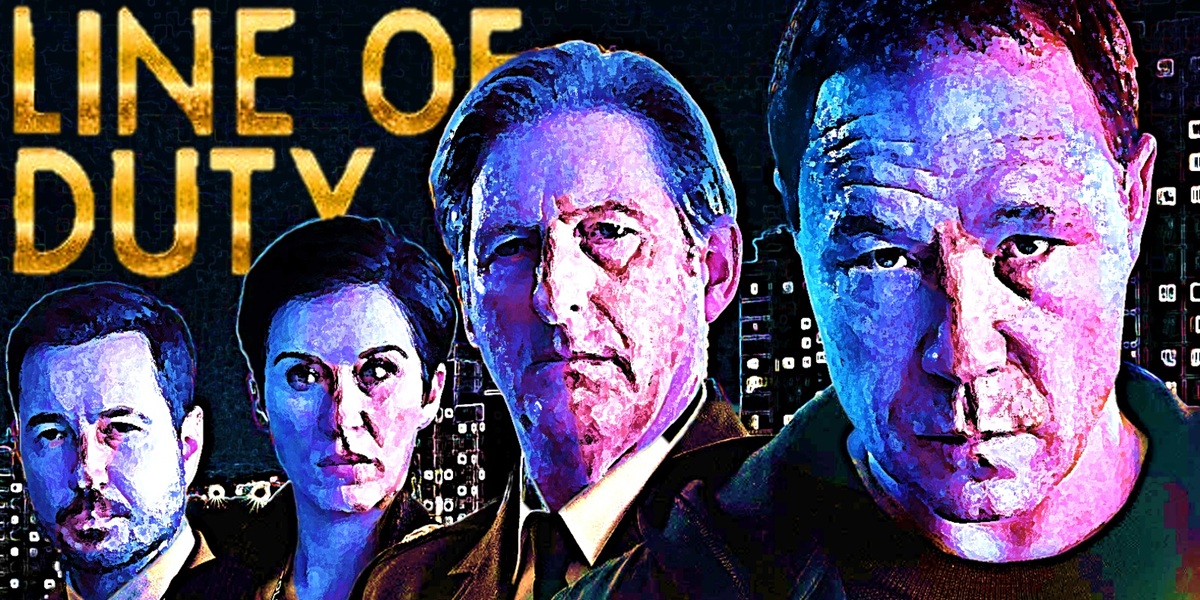
But only five years ago, the final episode of police-procedural drama Line of Duty (think The Sweeney but with more form-filling) was watched by 15.24 million people — the highest figure for any non-soap drama in the twenty-first century
Since then, TV has scored further ratings hits with the likes of The Pembrokeshire Murders (9.5m), Vigil (13.4m), SAS Rogue Heroes (9m), The Traitors (9.4m), Mr Bates vs The Post Office (13.4m), David Tennant’s return to Doctor Who (8.3m), Ludwig (9.5m), the 2024 Gavin & Stacey Christmas special (19.1m), and Celebrity Traitors (15m) to name but nine. (Ten, including Line of Duty.) Clearly, despite its reputation for being outdated and out of time, television is not some relic of a bygone age. It is alive and well.
‘But Finlay,’ you say, ‘these are specific examples — most programmes get nowhere near those kinds of figures’. You are, as ever, quite right, dear reader. But I would point out that if you’re planning to send a horse to the glue factory, then it goes and wins the Grand National, you don’t simply shrug your shoulders, say, ‘Ah well, nevertheless,’ and start chambering a round. The case for killing terrestrial TV is very weak.
Anyway, I’m not convinced that streaming is the inevitable future of television, as many people like to suggest. The chattering classes may have had kittens over the success of Netflix drama Adolescence (2025), but its BARB-topping ratings peaked at around 6.45 million. That’s roughly what yer average episode of BBC One’s Death in Paradise pulls in.
Besides, streamers are about as profitable as Harry Potter-brand chest-binders. Of all the major players, only Netflix regularly turns a profit. The rest survive because they’re welded onto more lucrative parent companies, or else die horrible deaths out on the battlefields of the streaming wars. (A moment of silence, please, for Quibi.)

Money isn’t everything, of course, but the streamers are supposed to be commercial enterprises and — typically speaking — commercial enterprises are supposed to make money. Given their failure to do so, culling our national broadcasters in the hope of online success feels a bit like if Gordon Brown had sold off Britain’s gold reserves so he could invest heavily in Beanie Babies.
Beyond stats (and snark), there is a broader cultural argument to be made in favour of trad telly.
Britain’s ‘common culture’ — i.e. our shared experiences, references and customs — is often talked about in vague, lanyard-y terms. Last year, when Keir Starmer attempted to describe the ‘real face of Britain’, he talked about supposed social rituals and niceties: ‘Painting a fence, running a raffle, cutting the half-time orange’.
Really he should have said, ‘Dirty Den’s divorce papers, hiding behind the sofa, and “Don’t tell him, Pike!”’ Because Britain is nothing, if not a country of viewers. Our common culture has nearly always been whatever was on the box last night.
It’s telling, then, that TV’s highest viewing figures this century came during Lockdown, when ordinary social interactions disappeared, and people instinctively searched for and tried to create shared experiences. Understanding this impulse helps to explain why Line of Duty became such a phenomenon: its success came in large part from the fact that millions of viewers, up and down the country, knew that they were watching it ‘together’.
The weekly release schedule, the long-running ‘Who is H?’ mystery, the cliffhanger ending to the penultimate episode all meant that, if you were invested in the series, there was only one place to be at 9pm on Sunday 2 May 2021: in front of the television. Even if you weren’t watching Line of Duty, you knew it was on.
Streaming can’t give us that. Have you ever tried talking to someone about a streaming show? Even if you’re subscribed to the same service, you’re almost never watching the same programmes, and if you are, you’re at opposite ends of the latest series. And so, the conversation quickly devolves into an exhausting barrage of recommendations and apologies.
I realise that there’ll be people reading this being sick in their mouths at the mawkish sentimentality I’m peddling. Either that or rolling their eyes theatrically at the suggestion that the nation will lose something if families don’t gather together to watch the dusty old box in the corner.
And I admit it: all this talk of common culture and the importance of national television sounds a bit ‘kumbaya’. In fact, it is very ‘kumbaya’. So be it.
For the last decade, we’ve heard from successive governments about social fragmentation and polarisation. Meanwhile they’ve presided over the withering — and now dismantling — of one of the few things in this country that can still, reliably, bring millions of people together.
If they succeed — if terrestrial television gets switched off — then we’re going to lose something very important. Not the shows or the channels or the talent, but communal viewing. Those rare times when you, your family, your friends and a whole island of strangers are all laughing, gasping and watching together.
In this fragmented world of personalised feeds and infinite choice — where we’re all stuck in our own culture silos — these moments are more precious than ever.
What a shame it’ll be to lose them.

Discover more from Lion & Unicorn
Subscribe to get the latest posts sent to your email.
