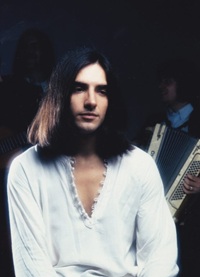
Continuing our series of introductions to neglected acts in British music, BEN FINLAY would like to talk to you about Heron.
A playlist of five selected songs is available on YouTube.
Heart of the country,
Where the holy people grow;
Heart of the country,
Smell the grass in the meadow.
– Paul and Linda McCartney, ‘Heart of the Country’ (1971)
I am the maker of everything
And I soar with the birds in the sky.
– Heron, ‘Lord and Master’ (1970)
The late-1960s negotiation of the rural aesthetic by urban middle-class types resulted in some great records that were communally made. As I mentioned in my piece on Bronco, British bands would soon follow the example of Bob Dylan’s former backing group, the Band, who had decamped from the cities to a house in Upstate New York in 1967 to write the classic album Music from Big Pink.
Even if it is easy to satirise, the idea of ‘getting it together in the country’ – making music communally in the idyllic surroundings of the countryside – was a sincere attempt to pursue creativity and engage with one’s deeper British roots. The band Traffic got out of the city and rented a Berkshire cottage, kick-starting the communal experiment this side of the Atlantic, and their Island Records contemporaries Fairport Convention followed suit, relocating to Hampshire to work on the mighty folk-rock talisman Liege & Lief (1969).
Both groups made music imbued with British folk music and rural influences. Following on, Led Zeppelin wrote most of their third album in a remote cottage in Wales and the record would have a pronounced acoustic, bucolic vibe.
But while there are several examples of great records made in the countryside by popular and respected artists, there are also many lesser-known acts that warrant our attention. One such group is Heron.
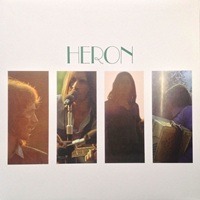
The Dolphin Folk Club in Maidenhead, Berkshire, provided the venue where Tony Pook (vocals), Roy Apps (guitar, vocals) and Robert Collins (guitar) first met. When Collins left, Pook and Apps were joined by Gerald T. Moore (guitar, mandolin, vocals) and Martin Hayward (guitar). Inspired by Bob Dylan and the Incredible String Band, they formed Heron. After Gus Dudgeon signed them as songwriters to Essex Music, Hayward left the band, to be replaced by Steve Jones (keyboards).
As Roy Apps recalls: ‘we started sitting around at home with an old reel-to-reel tape recorder. Then we took the tapes up to London and started knocking on doors. We were completely fearless. We just phoned people up, and said, “We’re coming round with a tape,” and turned up! Eventually Essex Music signed us up for publishing.’
Signing to Pye Records subsidiary Dawn in 1969, the band found that they didn’t enjoy the recording studio environment, instead relocating to vocalist Tony Pook’s family farmhouse in Appleford-on-Thames. There they recorded their self-titled debut album with a mobile studio in a field behind the house, picking up ambient noises such as bird song.
Released in November 1970, the self-titled album achieved only moderate success. The band toured with Comus, Titus Groan and Demon Fuzz on Dawn’s loss-making Penny Concert tour and appeared on John Peel’s Top Gear radio show. Steve Jones recalls that ‘the reception to the various bands differed from venue to venue – we got a standing ovation in Bristol, for example, whereas it was Titus Groan who went down well in Birmingham. But we were a quiet band, and we felt more comfortable when we played more intimate gigs.’
Sadly, album sales eluded the band. They also released a single, Moore’s song ‘Bye and Bye’, which received considerable airplay but failed to sell in large quantities because of problems of vinyl supply, followed by a strike of delivery drivers. They continued to perform, on one occasion supporting David Bowie at a BBC Radio 1 concert. And there is another Bowie connection here. As Apps also remembered: ‘After Bowie had his big hit with “Space Oddity”, he went quiet for a while and ran this folk club in Beckenham. He saw us playing somewhere, and, out of the blue, he booked us to play at his club. It’s quite a memory that David Bowie carried my PA into a folk club… once!’
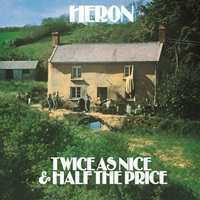
Aside from brushes with future Ziggy, Heron would add Bill Boazman (electric guitar), Mike Cooper (slide guitar), Mike Finesilver (bass) and Terry Gittings (drums) to their line-up, and would record their second album Twice as Nice & Half the Price (1971) in a cottage garden at Black Dog, a small village near Crediton in Devon, the cover reflecting a gentle hippy bonhomie. As Pook later commented:
I think that there was enough material there for one very good album, but one quite mediocre double album. But we wanted two records for the price of one. That was the hippie ethos behind it, for people to get value for money – which I think they did.
The record would also fail to sell, and the band disbanded.
Interest in the band was maintained by record collectors, with their two albums becoming cult classics. In 1997, Apps, Pook and Jones, together with Gerry Power (vocals, keyboards, percussion), returned to Black Dog to record a new album as Heron, named River of Fortune, and performed for villagers at a show later released on CD as Black Dog in Concert. There is a great documentary about the event called Heron – In a Field of Their Own available on YouTube.
Ultimately, Heron was one of those bands that were of their time, and in that hallowed era were up against some tough competition. However, I think that the band’s best material is some of the best relaxed, British rural music made in the early 1970s, with a lovely, carefree sound that reminds me of some of Ronnie Lane’s bucolic records.
So, take the (country) road less travelled, decamp to a sun-dappled spot, and enjoy the countryside bliss of Heron.
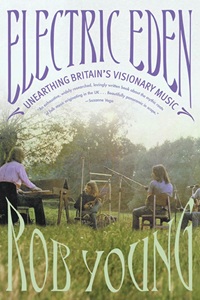
P.S. A photo of Heron adorns the front cover of Rob Young’s masterful Electric Eden: Unearthing Britain’s Visionary Music (2010), a book that I heartily recommend.
The Playlist – a selection of five songs
‘Bye and Bye’ and ‘Lord and Master’ from Heron (1970)
Recorded at Tony Pook’s family farmhouse in Appleford, Berkshire (just a matter of miles from Traffic’s rural retreat in Aston Tirrold), Heron’s debut record was made in a meadow at the back of the house with the recording engineers setting up microphone booms around them. A mic was also set up to intentionally capture the outdoor ambience, picking up birdsong and moving foliage, with space given between individual tracks to let the listener really settle into the bucolic atmosphere.
‘Lord and Master’ sees the band evoke the rural divine in an excellent ode to nature.
‘Love 13 (Lone)’, ‘The Sound of Music’ and ‘Minstrel and a King’ from Twice as Nice & Half the Price (1971)
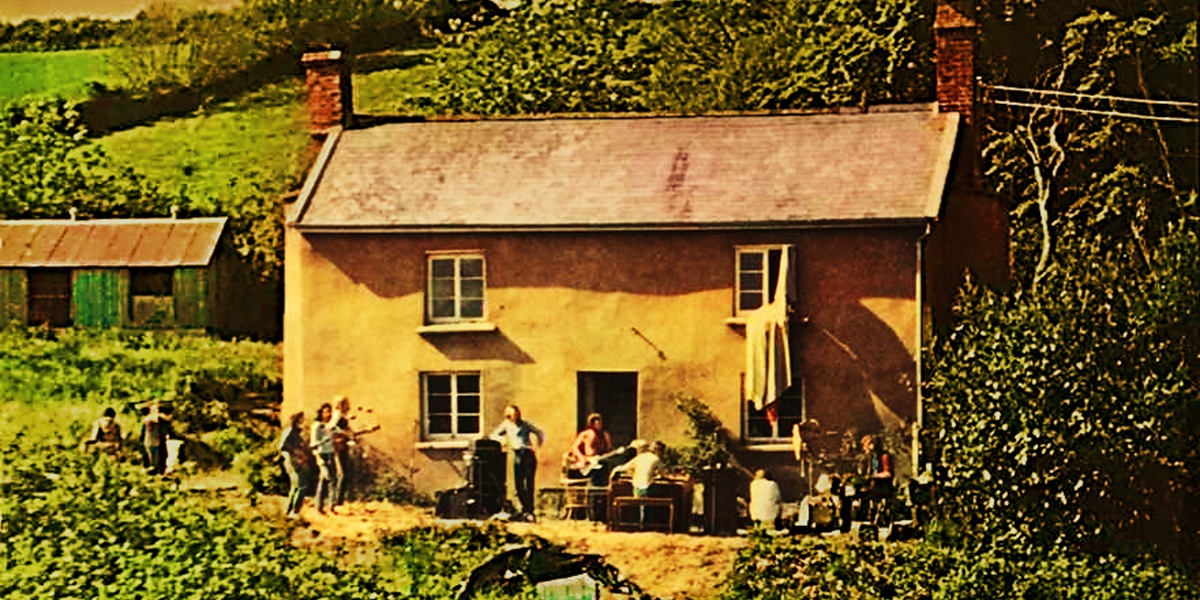
Made at West Emlett Farm, near the village of Black Dog in Devon, Twice as Nice... repeats the bucolic feel of their debut, but on a sprawling, lesser-focused double-album. Apparently, when the outdoor reverie was interrupted by low-flying RAF jets, a call was placed to the local base commander to halt operations.
The front cover is highly evocative, a folk-rock paradise with the two-storey farmhouse bathed in sunlight as the musicians blissfully play outside the front door watched by their friends and families. The three tunes chosen for this playlist are, to my ear, the best and most representative of the band’s talents on the record.
See Ben’s substack for more of this sort of thing
see also:
Discover more from Lion & Unicorn
Subscribe to get the latest posts sent to your email.
