BEN FINLAY chooses some music appropriate for the slow turn of the season.
When I wrote my first seasonally themed piece (Autumn) for the Lion & Unicorn, I had no idea it would develop, adding Yuletide, Spring and Summer to the mix. But I like the format – it encourages one to consider music in terms of mood, and to enjoy some of the fine, deep material produced in this country during the 1960s and 70s.
However, having run out of seasons to use, I’ve had to none-too-subtly shoehorn this piece in. Walking late the other night, and despite the heat, I noticed there were small, but definite signs of Autumn on the way; that we are indeed in late Summer. That put me in mind of a fine record by Dion, Suite for Late Summer (1972), but Dion was American, so I pilfered the title, and made my own playlist to evoke this time of year – which as the L&U’s self-appointed ‘folk rock oracle’ (or something like that), I considered it my duty to do.
What we have here is a handpicked set of British folk and pastoral material that thematically (if loosely) spans from Lammas Day (Corn Rigs), through Harvest to the Autumn equinox, heavy on mood and atmosphere.
So, hopefully you enjoy it. Situate yourself in a nearby meadow, perhaps bring along a bottle of mellow red, (cheers Alwyn Turner) and settle into the L&U’s Suite for Late Summer (cheers Dion).
A playlist is available on YouTube
Side One:
1. Richard Rodney Bennett, ‘Far From the Madding Crowd Theme’
I recently watched and thoroughly enjoyed the film adaptation of Thomas Hardy’s Far from the Madding Crowd (1967). Richard Rodney Bennett’s score is excellent, and I particularly like the main theme – it transports one to hazy Dorset fields and meadows, the rolling hills, and the elite of Swinging London romping in the rural.
2. Paul Giovanni, ‘Corn Rigs’
It was upon a Lammas night,
When corn rigs are bonnie,
Beneath the moon’s unclouded light,
I held awhile to Annie
Lammas (also known as Loaf Mass Day) is a Christian holiday celebrated on 1 August, a festival in the liturgical calendar to mark the blessing of the First Fruits of harvest, with a loaf of bread being brought to the church for this purpose. Lammastide falls at the halfway point between the summer solstice and the autumn equinox, so obviously this song had to be included.
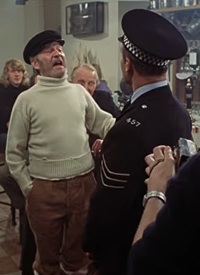
And what a fine piece it is. Arranged and recorded by Paul Giovanni (an American, but the film is British, so that’ll do), ‘Corn Rigs’ is an arrangement of the Robert Burns ballad ‘Rigs O’ Barley’, and of course, featured on the soundtrack of the 1973 folk-horror classic The Wicker Man.
3. Shirley Collins, ‘The Barley Straw’
By 1968, Sussex-born Collins was already a veteran of the British traditional folk scene; she had made an album with mercurial guitarist Davy Graham (Folk Roots, New Roots) and paired with her sister Dolly made several notable albums – the duo signed to burgeoning underground label Harvest to record two classics of the genre, Anthems in Eden and Love, Death and the Lady.
‘The Barley Straw’ is a traditional tune from The Power of the True Love Knot (1968). The theme of this album was ‘the idea of true love as a power outside society’s control,’ as Collins declared in the liner notes. On this selection, Dolly performs her trademark eerie pipe-organ accompaniment. Produced by Joe Boyd, The Power of the True Love Knot is another high point for Collins, for me the finest interpreter of British traditional folk.
4. Shelagh McDonald, ‘Stargazer’
Recording just two albums between 1970 and 71, Shelagh McDonald then abruptly retreated from public life after a bad LSD trip left her paranoid and hallucinating, with a ruined voice. She lived a nomadic lifestyle in Scotland, staying away from music until 2012, when she spoke to fRoots magazine, leading to a resurrection of her career.
On Stargazer, McDonald was backed up by many notables within the English folk-rock scene, including Richard Thompson, Dave Mattacks, Danny Thompson and Keith Christmas, among others. The title track is a wonderous mini masterpiece: Shelagh’s rich voice and piano, elevated by Robert Kirby’s amazing string arrangement, and a sublime choral coda setting the epitaph by Johannes Kepler. Stunning.
5. Sandy Denny, ‘Carnival’
A wonderfully introspective song from Denny’s third solo album, Like an Old-Fashioned Waltz, ‘Carnival’ evokes the late-August drift into Autumn. Her vocal is melancholy but assured, and the strings add a shimmering haze, while Jerry Donahue’s telecaster-playing is sublime. A deep Denny gem that the fine US band Midlake included on Light Night Tales, a curated compilation series.
6. Water into Wine Band, ‘Waiting For Another Day’
Perhaps the most obscure offering here, the Harvest Time album is a unique, interesting record that is richly evocative.
The origins of the Water into Wine Band go back to 1971, when Cambridge University students Trevor Sandford (vocals, guitar, bass), Peter McMunn (guitar), Ray Wright (guitar, bass, bongos) and Bill Thorp (violin, piano) met up and found they had mutual interests in theology and music. As Trevor Sandford would later explain, ‘We were all at Cambridge doing various degrees and things and we all played different things; some were from a folk background, some rock. Bill Thorp who plays the violin was from a classical music background. We all just met up and it was at the time when folk rock was in vogue and we all got together, we were there at the same time and because we got on quite well.’
Although remembered as part of the Christian music scene of the mid-1970s, their music doesn’t overtly come across as such. Indeed, Harvest Home (the group’s second album) is a collection of ambitious material, what with the eighteen-minute side-long title track. My money, however, is on the gorgeous ‘Waiting on Another Day’, a shimmering, sultry late summer classic.

Side Two:
1. Mother Nature, ‘Orange Days and Purple Nights’
A gorgeous slice of folky pop from Mother Nature, a lesser-known act of the UK folk underground. I came across this on the fine Dust on the Nettles set (a 2015 compilation exploring the British underground folk scene from 1967 to 1972) and immediately warmed to it.
Although recorded in 1968, it took until 1971 for debut single ‘Orange Days and Purple Nights’ to gain a release, by which time the era for that sort of stuff had long passed. A shame, because their recordings show great potential. As it was, the group lasted just another year after the singles late release before folding. A compilation of their material also entitled Orange Days and Purple Nights was released in 2015.

2. Joan Armatrading, ‘Visionary Mountains’
Visionary mountains
Above and afar,
Like answers to questions
On life, love and the longing to survive
A short, but beautifully longing track from Armatrading’s neglected debut album. Whatever’s for Us (1972) was released as a Joan Armatrading solo record, but was the result of a three-year collaboration with Guyanese-born singer/songwriter Pam Nestor, who co-wrote all but two of the songs. The sidelining of Nestor by the record company and management team saw a split in the partnership.
Whatever’s For Us was produced by Gus Dudgeon and was recorded over two weeks at the famous Château d’Hérouville studios near Paris, and then at Trident Studios London. For me, it’s a lost classic, with traces of the hippie ethos, though many of the songs are influenced by folk music. The front cover, designed and drawn by the artist Sumiko, shows an idyllic multiracial pastoral scene, complete with long hair, patterned skirts, flowers and psychedelia.
There was critical praise at the time – Derek Jewell wrote a review in the Sunday Times declaring that ‘this country has produced at last, from the new generation, a black singer of total individuality. Her name, Joan Armatrading, her first album, Whatever’s for Us, is sizzling.’ Nonetheless, it failed commercially.
I’ve been trying to get Joan’s first record into a piece, and I’ve finally done it. Splendid.
3. Nick Drake, ‘Harvest Breed’
A less-celebrated composition from Drake’s stark final album, Pink Moon (1972), ‘Harvest Breed’ is a very brief (just 1’37” long) gasp of Drakean despair – the ‘Harvest breed’ are those selected to die, culled from the crop of humanity. Heavy, I know, but life’s not all beer and skittles sometimes, is it?
4. Dando Shaft, ‘September Wine’
Commercially unsuccessful at the time, Dando Shaft are now heralded as one of the primary outfits in the progressive stream of the 1960s folk revival. Although influenced by Pentangle, there was a lot else going on within their music. Bulgarian tempos, a multi-instrumental approach, and hints of psychedelia – all make their four albums worth investigating. My choice here, ‘September Wine’ comes from their 1970 debut album An Evening with Dando Shaft.
5. Traffic, ‘Rainmaker’
Traffic’s folky leanings are all over ‘Rainmaker’, the closing track from 1971’s masterful Low Spark of High Heeled Boys. Chris Wood’s lyrical flute leads the way, with Steve Winwood and Jim Capaldi’s vocals sounding suitably rural, employing a folk-style harmony on the main refrain. Like a stoned jazz/folk Brit version of ‘King Harvest’ by The Band.
6. Ronnie Lane’s Slim Chance, ‘Harvest Home’
Recorded in the fields outside Lane’s farm on the Welsh borders (listen for the birdsong), ‘Harvest Home’ is a glorious accordion led instrumental, an affirming sound of artistic contentment that nicely rounds off proceedings.
see also:
Discover more from Lion & Unicorn
Subscribe to get the latest posts sent to your email.
