BEN THOMAS cracks the shits at an episode of ITV’s beloved detective series.
It’s sometimes forgotten these days that ITV’s Inspector Morse is based on a series of novels. Thirteen of them in total, written by Colin Dexter. Dexter had a full-time job with the Oxford University Examination Board, and only started writing detective fiction after finding himself stuck in a guesthouse on a rainy family holiday in Wales. There were just two crime novels available in the house and they weren’t very good, so he sat at the kitchen table and began writing what would become the first Morse book, Last Bus to Woodstock (published 1975).
Dexter had an enviable routine: he’d come home from work, have his supper, listen to The Archers on Radio 4, write one page of his current novel, and then go to the pub. I might try that.
The books differ from the television series in a few ways, major and minor. In the early stories Morse drives a Lancia, not the iconic Jaguar Mark 2 from the TV adaptations. Lewis is originally Welsh, an ex-boxer and older than Morse. Morse himself is coarser, less of a romantic, and has a fascination with pornography that wouldn’t have flown on prime-time ITV. Shame.
What is true both in print and on screen is that Oxford is the third principal character. Oxford and its pubs, colleges, streets and libraries are Morse’s natural habitat. Dexter himself wasn’t from there. He was born in Lincolnshire and went to Cambridge University, only moving to Oxford for work in 1966. But he became a man of Oxford. He considered it his ‘adopted mother city’ and was awarded the Freedom of the City in 2001.
In an interview, Dexter explained that he felt earlier Oxford detective fiction concentrated too heavily on murderous academics and undergraduates. He wanted his novels to celebrate both sides of Oxford: the university and the ordinary city beyond it. And that’s what you get: a healthy balance of Oxford’s gleaming spires and rougher underbelly. The earlier books, written in the mid-1970s, are deliciously grimy at times.
You don’t always see that in the TV series. Dexter and the programme-makers were conscious that the city’s appearance contributed to the appeal of the show. However, there are earlier stories, like ‘Last Bus to Woodstock’ and ‘The Dead of Jericho’, that dwell on the less salubrious parts of the city; cold and grey in a way I always associate with mid-1980s England.
Oxford is so intrinsic to Inspector Morse that you risk upsetting the apple cart if you try randomly relocating him elsewhere, even temporarily. Say, to pick a random example, Australia.

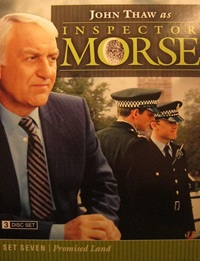
‘The Promised Land’ was the fifth episode of the fifth series of the show. I watched it on the original broadcast, 27 March 1991. I was fifteen years old and probably eating crisps at the time.
The plot: Inspector Morse and Sergeant Lewis travel to Australia to track down a former supergrass informant whose testimony in an old Oxford bank robbery case is suddenly called into question.
It was filmed mostly in New South Wales, with Canowindra standing in for the fictional Outback town of ‘Hereford’, not to be confused with actual Hereford, although it shares the same insular nature and unnatural attachment to livestock (this post is sponsored by the Hereford Tourist Board). Additional filming took place in the towns of Cowra and Kangaroo Valley, while the epilogue featuring Morse and Lewis was filmed in Sydney, around the Opera House.
Funnily enough, the scenes set in Oxford at the beginning were filmed in London and the Home Counties, likely as a cost-saving measure to balance the expensive trip to Australia. This may be the only episode without a single second of the real Oxford in it.
I’ve just rewatched ‘The Promised Land’ with a nice cup of tea. No crisps. The cup of tea was the highlight of the experience. I wish they’d sent Thames Valley’s finest on a Spanish package holiday instead. Watching Lewis and Morse larking about in Ells Bells, or on the Costa Plonka would’ve been a lot more fun.
First problem: this is very slow. It’s no slower than an ordinary episode of Morse, but Morse is usually a whodunnit and this isn’t. It’s a fairly linear thriller, without the show’s usual twists and turns, and it lacks the urgency the genre demands. I don’t blame the director, John Madden (who would go on to helm Shakespeare in Love and The Best Exotic Marigold Hotel). I think the plodding nature is inherent to the script, written by series regular Julian Mitchell.
Speaking of the script, another issue: the Australian characters in this are painted in fairly broad strokes, to put it politely. They’re mostly lager-swilling, pommy-bashing roughnecks. It’s not actively insulting, but there’s very little light and shade. John Jarratt’s character, Sergeant Scott Humphries, is better served and the friendship that builds between him and Lewis is nice. He’s still fairly gruff, needlessly antagonistic and one-note, though.
Fun fact: Jarratt would go on to play sadistic serial killer Mick Taylor in the horror franchise Wolf Creek. A serial killer or two in this might have livened things up a bit.
The Outback looks suitably arid and unforgiving. That does help liven things up. I’ve never been to Australia but as far as I can tell it’s constantly on fire and everything there is trying to kill you. Like someone’s built a Dignitas clinic on the side of the sun.
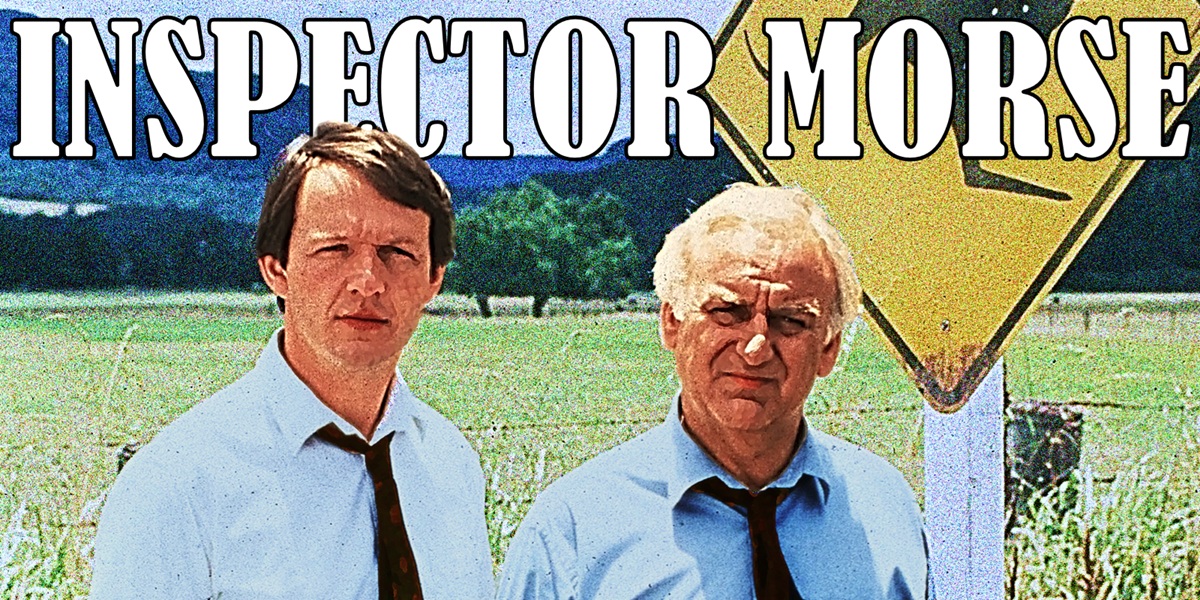
On to Morse. No criticism of John Thaw’s performance. He’s hot and bothered and out of his depth Down Under. But that, in itself, is also a problem, because Morse is supposed to be brilliant. He’s often wrong, more so in the books, but he’s cerebral, intuitive and uncompromising in the face of injustice. In this story he’s a bit of a dunce. You can put that down to his unfamiliar surroundings, the nagging guilt that he’s allowed the wrong man to die in prison, or the fact that he can’t get a decent pint, but he’s a complete liability. He’s indirectly culpable, to a greater or lesser degree, for all five deaths through a mixture of bullish arrogance, self-destructive recklessness and historic oversights. He’d have done far less harm if he’d just stayed in Oxford.
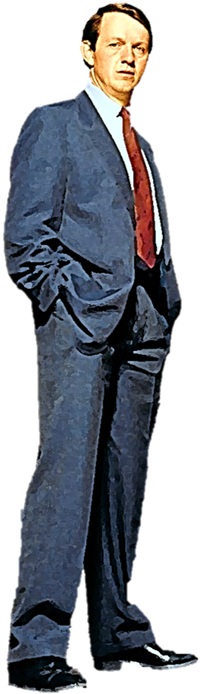
Lewis, meanwhile, has a far better day at the metaphorical office. He’s completely at ease with the natives and spends most of his time thoroughly enjoying the round-the-world trip that Morse has dragged him on. He’s far more personable and has the common touch that endears him to the Australian policemen whom his superior has been rubbing up the wrong way. Kevin Whately gets some satisfying material to work with, especially when he’s down the boozer with Sergeant Humphries. The moment when Morse calls him ‘Robbie’ for the first time is a real watershed in their relationship.
It all ends with Morse on his own, cowed by his experience, looking up at the Sydney Opera House. My first instinct as the credits rolled was to put on another episode, which is exactly what I did; I wanted something properly Morse-flavoured to watch. (‘Who Killed Harry Field?’, in case you were wondering. Plenty of delicious red herrings and lingering shots of Oxford to enjoy in that.)
I know a lot of fans adore ‘The Promised Land’. That is their privilege. There are arguably worse and/or more objectionable stories. My issue is that uprooting Morse from Oxford and sending him to somewhere that is the city’s antithesis diminishes him. He’s institutionalised in Oxford; it’s his environment. It’s a place whose rules, hierarchies and prejudices he understands intimately. It’s where he has status and where his remarkable mind is at its sharpest. Blunt that keen intellect, take away his authority, and he’s just a belligerent and argumentative alcoholic raging at Lewis, the only man trying to save him from himself. Morse is, at heart, a sensitive, noble and troubled man and I take no pleasure watching him struggle.
He will travel abroad again in the following series, next time to Vicenza in Italy for ‘The Death of the Self’ (1992). Northeast Italy is a much better fit for our detective. It has the same architectural grandeur and history as Oxford, and, best of all for Morse, lashings of his beloved opera. It’s a place where he evidently feels better able to carry Oxford in his heart.
There’s even an actual whodunnit at the core of the story as well, making for a far more satisfying endeavour.
Find more writing from Ben Thomas at his blog summers2theb.