BEN FINLAY is your guide to the best drama series from the days when children’s television wasn’t afraid of being a bit odd.
Ah, 1970s television, guaranteed to bring about a pang of nostalgia for viewers of a certain vintage. But even beyond such warm reminisces, there is plenty to re-evaluate and revisit, particularly in children’s programming of the time.
Alongside many classics of the era, there is a strand of kids’ television that engages with sometimes weightier, darker themes, such as traditional folk storytelling and magic, and a connection back to pre-modernity and the mythology of Britain.
The early 1970s saw a growing interest in ‘alternative’ religion, including Paganism. Magic practices and elements of witchcraft began to trickle into the mainstream narrative, lifting the occult into popular culture. In British cinema, this would be manifested with films such as The Blood on Satan’s Claw (1971) and The Wicker Man (1973). On the small screen, similar themes found their way onto daytime television and documentaries. Children’s television programme makers of the era followed with encompassing dramas that looked both to the past and the future, incorporating tradition with modern-day issues such as class, race, technology and science.
Rather than delivering the over-repetitive moral and political orthodoxy inherent in today’s television, these dramas often presented serious ideas in an imaginative, creative manner that challenged the intellect and emotions of young viewers, encouraging intelligent introspection rather than repelling it. Reflecting on the luck he felt in being a teenager viewer in the 1970s, comedian Stewart Lee commented that ‘there was something really comforting for nerds and weirdos about programmes like Children of the Stones and The Changes’.
Indeed. And that’s why this list looks at that form of esoterism, rather than such rightly lauded classics as The Wombles and The Magic Roundabout, reconsidering some familiar but also lesser-known gems of the era.
So, for those who wish to re-engage with an alternative selection of children’s television that is stimulating, educational and entertaining, here are the top five children’s shows that evoke ‘the weird, old Albion’.
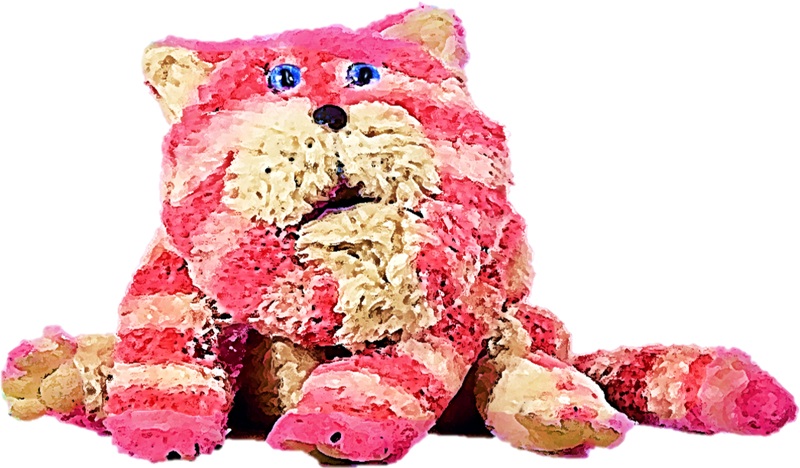
5) Bagpuss (1974)
At 1.45pm on Tuesday 12 February 1974 the BBC first broadcast Bagpuss, a show that has become a beloved children’s TV classic. It ran for just one series and thirteen episodes, but for a certain generation of viewers, it remains a perennial favourite. In 1999 it topped a BBC poll of the all-time best children’s TV shows, and it has passed into popular culture, with references as disparate as Radiohead and The Crown.
What made, and continues to make, Bagpuss so popular? In the present day, that is an easy question to answer: it is decidedly analogue in a cold, digital world. As Rob Young, author of The Magic Box: Viewing Britain Through the Rectangular Window writes, ‘every one of Bagpuss’s thirteen episodes is a little cosmic cycle of awakening, enlightenment and symbolic death’ – not familiar tropes in modern programming.
Bagpuss presents a very clear connection to the land, as witnessed in the episodes ‘The Mouse Mill’ and ‘The Fiddle’. The stories are free of predictable narrative, revealing no positive affirmation or agenda, instead engaging with the past and encouraging the viewer to make up their own mind.
Furthermore, key to the series, the music is British folk, provided by the traditional music luminaries Sandra Kerr and John Faulkner. The songs are rebellious and haunting, auditory messages from the past. Above all, with its setting of a shop that doesn’t sell things, but finds lost items, mends them and displays them in the window so that their owners can reclaim them, Bagpuss chimed with the then alternative society’s view of a non-commercial, non-combative existence.
Gentle and slow-paced (by today’s standards), but with an ‘old weird’ undercurrent, Bagpuss is perfect for younger children’s viewing (and for adults too). No wonder it is still lauded fifty years later.
Available on streaming and BBC DVD.
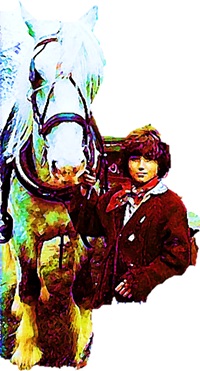
4) Kizzy (1976)
Perhaps the least-known title on this list, Kizzy deals with themes that are still pertinent today. Broadcast by the BBC in early 1976, the series is an adaptation of Rumer Godden’s 1972 novel The Diddakoi, the story of orphaned Romany gypsy Kizzy and her struggle to be accepted by village ‘gorgios’ (the gypsy word for those who live ‘in brick’).
Kizzy is an often-harrowing watch of cruelty to the ‘outsider’ that unremittingly details the main character’s abject misfortunes. Kizzy’s guardian Gran dies, and her gypsy caravan home is burnt down (in accordance with gypsy custom). Kizzy then catches pneumonia, is threatened with being put into care, is bullied and physically attacked, and sees her beloved horse die of old age.
Big themes include criticisms of the care system, tradition versus modernity, and class snobbery. Kizzy demonstrated that 1970s children’s television didn’t shy away from serious, adult ideas, presenting them in a manner that neither patronised nor infantilised the young imagination.
All episodes available on YouTube.
3) The Changes (1975)
Originally broadcast on the BBC in 1975, The Changes was based upon Peter Dickinson’s best-selling trilogy of sci-fi novels: The Weathermonger, Heartsease and The Devil’s Children. The Changes is congruent with many of the themes of the early 1970s ecology movement, and looks to the future in a stark, foreboding manner.
The basic plot is that of a post-apocalyptic Britain, where everyone has rebelled against modern technology and reverted to a pre-Industrial Revolution way of life (an idea that Teddy Goldsmith, devisor of The Ecologist magazine, espoused during the era). When main character Nicky Gore tries to investigate the cause of the changes in society, she is accused of being a witch and imprisoned to prevent her spreading dissent.
Again, The Changes looks to the future, its apocalyptic themes preparing the way for further BBC sci-fi drama like Survivors (1975), The Day of the Triffids (1981) and The Tripods (1984). Furthermore, for a drama made in 1975, The Changes broke ground with a strong female lead, and with an ethnic minority (Sikhs) playing a central role (unlike some TV of the era, they’re depicted in a positive manner). Breaking with the tradition of studio sets, the production was largely shot on location.
Available on BFI DVD.
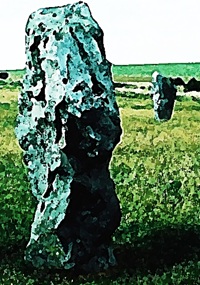
2) Children of the Stones (1977)
Children of the Stones (ITV, Jan/Feb 1977) borrows plot strands and styles popular in 1960s and ’70s British horror cinema, mixing them into a satisfying serial that appeared fresh and new to children.
Filmed in Avebury, Wiltshire, it tells the story of scientist Adam Brake and his son Matthew who come to the quiet village of Milbury to study the 4,000-year-old stone circle that surrounds it. But the stones seem to hold some kind of ancient power, one that the mysterious Mr Hendrick hopes to tap into, and that holds all the villagers in its thrall.
Director Peter Graham Scott remarked on seeing the script of episode one, ‘And this is for children?’ Not only is it genuinely frightening, thanks in no small part to Sidney Sager’s unsettling pseudo-Neolithic vocal score, but the script is un-patronisingly complex.
Perhaps the most famous title here, the series was revisited by Stewart Lee for a Radio 4 documentary in 2012 called Happy Days – The Children of the Stones which is available on the BBC Sounds app.
All episodes available on YouTube.
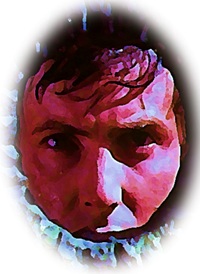
As frightening and good as Children of the Stones undoubtedly is, it is beaten to the number one spot by what I consider to be a more than worthy challenger…
1) The Owl Service (1969-1970)
First broadcast on ITV between late December 1969 and February 1970, The Owl Service was adapted from Alan Garner’s prize-winning novel. It pushed the boundaries of children’s television drama and set the scene for what was to come in the 1970s.
The background to the book and TV series is the Welsh legend of Blodeuwedd, a tale of betrayal retold in the eleventh-century book The Mabinogion. Blodeuwedd, a woman made of flowers, was unfaithful to Lleu Llaw Gyffes with Gronw Bebyr. Gronw then killed Lleu with a spear so that Lleu became an eagle, while Lleu’s magician Gwydion turned the unfaithful woman into Blodeuwedd, the owl, as punishment.
In The Owl Service, three teenagers are revisited by the curse. Middle-class Alison, her public-school stepbrother Roger, and working-class Welsh boy Gwyn are similarly locked into a triangle of love and hate that threatens to destroy them. Alison finds a dusty dinner service in the loft of her Welsh holiday home. Seemingly possessed, she traces their flower pattern and from the tracings makes paper owls. Gwyn later learns of the father he’s never known and discovers that his mother was once possessed by the same old plates Alison has uncovered in the attic.
In a portent to themes explicit in future 1970s drama, The Owl Service looked at class struggles and adolescent permissiveness, albeit within a supernatural fantasy framework. To illustrate this, the production makes some great use of period psychedelic imagery. This was the first fully scripted drama to be made entirely in colour by Granada Television, although it was shown in black and white on its original runs and not seen in colour until its 1978 repeat.
Pioneering, evocative and downright eerie, The Owl Service is worthy of reinvestigation, the final scene suggesting a cyclical rebirth of the legend for evermore.
All episodes are available on YouTube.
see also:

Discover more from Lion & Unicorn
Subscribe to get the latest posts sent to your email.

I have watched Bagpuss on many occasions and will be writing a blog post about the series very soon. I don’t know why the other four slipped under my radar as a 70s kid, because they would have been right up my street. Time to play catch up I think!
LikeLike