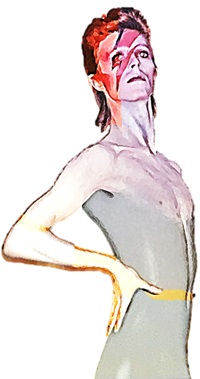
For your pleasure, ALWYN TURNER selects the best British glam albums.
Funny chap, Johnny B. Glam. The popular memory of the early-1970s heyday is of burly blokes in make-up and silly clothes on Top of the Pops, punching the air with a shout of ‘Hey!’ Obviously that was part of it, and a very splendid part it was too. Slade, Gary Glitter, the Sweet, Alvin Stardust, Suzi Quatro, Wizzard – all of them released wonderful singles, and they made the charts of 1972–74 some of the best ever.
None of those acts, however, really got the hang of albums. Which is no kind of criticism – after all, the single is the highest form of pop music. But this series is supposed to be an albums guide, so none of those acts make the cut. Instead this list is skewed towards the other, artier end of glam, a darker, self-dramatising place of masochists, martyrs and loners, of music suffused with solipsistic gloom, made by stars obsessing over the nature of stardom and their relationship with the audience. It was riddled with absurd, self-conscious posing about a world that looked like it would end not with a bang, but a simper. It was also – in my view – the highpoint of British pop.
Much of it was an attempt to recreate the innocent enthusiasm of the first generation of rock ‘n’ roll, but blown up to a grand scale. And at its best, it was very grand indeed. Many of the selected tracks here are very long, though they all retain a pop sensibility that marks them out from the contemporaneous prog rock.
As a commercial genre, glam was dead by the end of 1974. But the spirit lived on and occasionally resurfaced, most notably in the 1990s. So some of that’s included as well.

10. The Auteurs, New Wave (1993)
selected track: ‘Showgirl’
The first live review of Luke Haines’s band compared them to Cockney Rebel (see below), which wasn’t wholly accurate, but attracted the attention of people like me who’d been waiting a long time for British guitar bands to be any good again. ‘Showgirl’ was the first single, released at the end of 1992, and was a fine statement of intent; the pristine production couldn’t conceal the grubbiness of the glamour – he may be dreaming of stardom, but he’s still hanging around public libraries. The album lived up to expectations.
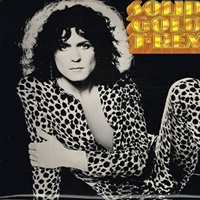
9. T. Rex, Solid Gold (1979)
selected track: ‘Teenage Dream’
What’s my favourite Marc Bolan album? I’d have to say the Best of T Rex. I know that this is heretical, that The Slider, Tanx and, in particular, Electric Warrior are highly rated by critics and fans, but I’ve never liked Bolan albums – they sound to me like a couple of singles, half-a-dozen songs not quite good enough to be singles, and some filler. He was, however, a supreme creator of 7-inch singles, so I’m cheating here and choosing a compilation.
To compound my heresy, it’s a compilation that excludes the first four big hits and starts the story in 1972 with ‘Telegram Sam’. To my taste, this is when he really hit top form, shifting from lolloping rock ’n’ roll to heavy bubblegum. And by ignoring the likes of ‘Get It On’ and ‘Hot Love’, this compilation makes room for the late singles, which I’m very fond of. ‘Teenage Dream’ was his big elegiac anthem – and elegiac was very much what glam did best.
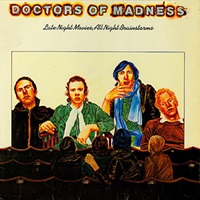
8. Doctors of Madness, Late Night Movies, All Night Brainstorms (1976)
selected track: ‘Mainlines’
Caught between glam and punk, the Doctors of Madness were not a commercial success. Nor, so far as I remember, did they enjoy a great deal of critical acclaim. But despite the timing, they were one of the greatest of all rock groups – so long as you were a fan of sleazy, druggy, pretentious beauty. Just the names of the line-up were a joy: Kid Strange, Urban Blitz, Pete Di Lemma, Stoner. Strange was the key figure – singer, guitarist, writer – but the sound was largely shaped by Blitz’s violin.
This was their debut album – two more would follow before they split in 1978 – and I think it’s the best. Although Polydor didn’t release a single, most of the songs are relatively punchy and very good, but they’re essentially scene-setting, getting us ready for the final track, ‘Mainlines’, which remains their absolute masterpiece and just about as good as British rock gets.
A fifteen-minute epic, it’s a portrait of youth in a suburban dystopia of Wimpy bars and Woolworth’s, where the ‘fear-factories await our arrival’. As the repeated last line says: ‘Mainline trains could never find drivers to run a service out to here.’ The heroin implications of the title aren’t spelt out, and there’s little hope in sight – except that the grandeur of the music imbues the whole thing with glam romanticism.
They may have been in the gutter, but they were definitely looking at the stars.
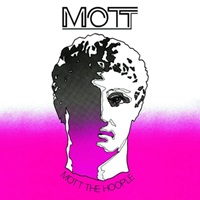
7. Mott the Hoople, Mott (1973)
selected track: ‘Hymn for the Dudes’
Mott the Hoople never really liked to be thought of as a glam band, but then that was true of most of the others as well. And indeed they predate the glam years – but again so too did most of the others: like Bolan and Bowie, Mott only broke big with their fifth album, having built a loyal live following. It was that album, All the Young Dudes, that brought them into Bowie’s glam coalition, and this is the follow-up, by which time the stage-image was headed towards thigh-high white boots and a guitar shaped like an Iron Cross. Definitely glam.
There are a couple of big rock ‘n’ roll hits in ‘Honaloochie Boogie’ and ‘All the Way from Memphis’, together with the rather sweet ‘I Wish I Was Your Mother’, and the deranged assault of ‘Violence’. And there’s ‘Hymn for the Dudes’, a stately song about the fleeting nature of stardom (‘Some kinda temporary’ is a great line). The guitar solo is Mick Ralphs’s finest moment, and the backing vocals are by the ever-wonderful Thunderthighs.
6. Denim, Back in Denim (1992)
selected track: ‘The Osmonds’
No one was expecting a glam revival in 1992. And if anyone was, they certainly didn’t expect it to be spearheaded by Lawrence from Felt, a minor cult hero of 1980s indie. But Back in Denim was a marvellous folly, resuscitating not just the chugging guitars of glam, but also the cheesy synths of the time. It was a masterpiece of lovingly detailed pop art that celebrated and elevated cheap disposability, authentic enough to rope in members of the Glitter Band to shout ‘Hey!’ at appropriate moments.
At its heart was ‘The Osmonds’, an eight-minute chronicle of Britain in the 1970s – from Chopper bikes to the Birmingham Pub Bombings – that is absolutely perfect. I suggested having the entire lyric as the Prologue to my book Crisis? What Crisis?, but my publishers didn’t approve.

5. Cockney Rebel, The Human Menagerie (1973)
selected track: ‘Death Trip’
The original incarnation of Cockney Rebel – before most of the band left and it became Steve Harley and Cockney Rebel – only made two albums, but they were both superb. This is the first, a collection of twisted little character sketches that sound unlike anyone else, largely because there’s no electric guitar, giving space instead to keyboardist Milton Reame-James and violinist Jean-Paul Crocker.
Side One ends with the seven-minute long ‘Sebastian’ (it was trimmed a little to become the debut single). But it’s topped by the ending of Side Two: ten minutes of ‘Death Trip’. It starts quiet with a piano flourish and Harley’s strained, slightly lisped vocals: ‘Now we’re on a death trip, listen to the blood drip, oozing from a cold lip – ever thought of dying slowly?’ That it builds into histrionic excess comes as no surprise, though some of its developments do, particularly the section that sounds like the Red Army Choir. It’s bombastic, absurd, over-the-top and utterly magnificent.
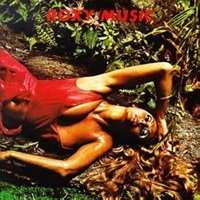
4. Roxy Music, Stranded (1973)
selected track: ‘A Song for Europe’
When Eno left Roxy Music after two albums, there were fears that it might upset the band’s delicate balance of art, experiment and rock ’n’ roll. As it turned out, they came back with their best-ever record, still full of odd noises and textures, still filtered through pop, but more consistent. And it’s better balanced than its predecessors: Side One starts with the grinding hit ‘Street Life’, ends with the slow-building devotion of ‘Psalm’ (complete with the London Welsh Male Voice Choir) and still manages to sound like an organic whole.
The best song is ‘A Song for Europe’, a paean of romantic nostalgia for a lost world: ‘These cities may change, but there always remains my obsession.’ At 3’25” there’s a beautiful, delicate little bass melody, then a sax-driven storm breaks and Ferry starts mumbling away to himself in Latin. Well, I mean to say, you can’t expect me to resist that kind of thing.
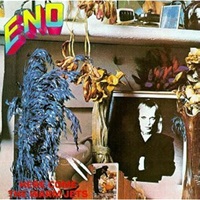
3. Eno, Here Come the Warm Jets (1973)
selected track: ‘Some of Them Are Old’
Meanwhile, Eno was releasing his solo debut, and it’s even better than his old band. There was none of that ambient stuff he later went in for, when he decided he wanted to be called Brian, just a collection of warped pop songs that are the epitome of English eccentricity – but with none of the cliches usually attached to that concept. He’s clearly not a singer, which makes his mannered vocals even better, and he coaxes extraordinary performances from an all-star collection of musicians (has Robert Fripp ever bettered his work on ‘Baby’s On Fire’?). It’s daft to say that music’s ahead of its time, but really this would have made so much more sense in 1978.
He’s also an entertaining lyricist, as on the valedictory ‘Some of Them Are Old’: ‘People come and go and forget to close the door and leave their stains and cigarette butts trampled on the floor.’ I’m intending to have this at my funeral.
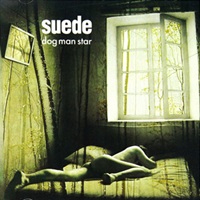
2. Suede, Dog Man Star (1994)
selected track: ‘Still Life’
Suede were signed by a record-label boss impressed with singer Brett Anderson’s glam charisma – ‘I thought: He’s a star, he’s like Bryan Ferry.’ Unlike the Auteurs, they rather let themselves down on their debut album: the sound was too thin, not rich enough for the band’s ambition, too bedsit. But Dog Man Star made up for it in spades, a glorious expanse of grandeur that had all the great glam themes: the fantasy of stardom, the romance of the misfit, the wasted elegance, the preening pretension. And it sounded majestic. Elton John reckoned that the closing song, ‘Still Life’, was a guaranteed #1, but it was never released as a single.
At the time, I was disappointed that the glory of Dog Man Star had considerably less cultural impact than did Oasis – whose debut album preceded it by a couple of months – but in retrospect that was both inevitable and right. It feels like an ending, a Gothic ruin, not the start of something new. It nearly broke up the band, with guitarist Bernard Butler leaving. But what a way to ring out the old.

1. David Bowie, Diamond Dogs (1974)
selected track: ‘Sweet Thing/Candidate/Sweet Thing (reprise)’
This is currently my favourite Bowie album (that hasn’t always been the case), the one where the apocalyptic warnings of Ziggy Stardust and Aladdin Sane finally mutate into nightmare. The arrangements and the textures are darker, denser and more claustrophobic than anything he’d previously released, and the fragmented words that emerged from the murky depths of the mix (unusually for Bowie, it didn’t come with a lyric sheet) suggested the desperation of a man trying to keep a grip on humanity in a world that was crumbling. On the first side in particular – a series of songs that don’t resolve themselves but peter out in chaos, or blend into the next track, or are abruptly conjoined – it feels as though the societal collapse that he was depicting was also destroying the precision and perfectionism of glam itself.
Technically, my choice here is three tracks, but it’s not really – they comprise a single collage.
bubbling under:
Pulp, This Is Hardcore (1998)
Bauhaus, Crackle (1998 compilation)
Sailor, Sailor (1974)
The Glitter Band, Listen to the Band (1975)
Adam and the Ants, Kings of the Wild Frontier (1980)
from the maker of:
see also:
Discover more from Lion & Unicorn
Subscribe to get the latest posts sent to your email.

Your Number 1 choice would be mine as well. Thanks for some great choices ☺️
LikeLike