The death of John Prescott last week was greeted with a mix of sorrow and nostalgia. The consensus was that he was one of the good ones, the kind of politician we simply don’t have anymore, and that public life is poorer for that fact. That’s true to some extent, but it does obscure his role in shaping the political world we now inhabit.
He came from a time when participating in politics was a social thing. He talked of the ‘old days when being a member of your local Labour Party meant sports days, parties, tons of amusements and games’. For him, Labour was a family as much as it was a movement, a sprawling, squabbling family full of jealousies and rivalries in which he played as full – and as bitchy – a part as anyone. Robin Cook was ‘the most brilliant parliamentarian of our times,’ he wrote, ‘but he was well aware of it’. His verdicts on others were more direct still: Clare Short was ‘fucking mad’, Harriet Harman a ‘fucking hypocrite’.
But they were still family, and Prescott was fiercely defensive when he was called upon. In the aftermath of Labour’s better-than-expected election defeat in 2017, his conclusion was: ‘Like Blair did in 1997, Corbyn gave people hope.’ Few others saw the comparison between Tony Blair and Jeremy Corbyn, and fewer still of the former’s supporters were prepared publicly to back the latter, but Prescott’s allegiance to the paterfamilias was never in question.
The flipside to this loyalty was his tribal, bred-in-the-bone hatred of the Conservatives – the ‘fucking Tories’, in his standard formulation. Margaret Thatcher, in particular, was ‘the devil incarnate’. The class war was personal and cultural as much as it was political. As the scale of Labour’s victory became clear on election night in 1997, Prescott and his team took his battle-bus around Smith Square in Westminster, where the Conservative Party headquarters were located, singing as loudly as possible: ‘Out, out, out, at last you’re out, out, out!’

While loyalty to leader is less evident these days, that default loathing of Tories survives. Angela Rayner apologised in 2021 for calling them ‘scum’, but she was not unique in so feeling, and many on the Left assumed she had her fingers crossed behind her back.
The comparison with Rayner, the current working-class deputy-leader, has already become a cliché, of course. It’s about authenticity. These are the representatives of the rank-and-file at high table, the heartbeat of Labour. The task, it is said, is to connect a right-leaning leadership with the ‘traditional’ membership, an endeavour that demands all of that anti-Tory demonology, rather in the manner of Squealer in George Orwell’s Animal Farm. (‘Do you know what would happen if we pigs failed in our duty? Jones would come back!’)
The difference is that Prescott became immensely popular with the public beyond the party, in a way that Rayner has yet to get anywhere near. Some of that discrepancy is down to their sex and age. She was forty when she was elected deputy leader, he was fifty-six, and though the fire was still alight, it wasn’t as fierce as it had been – it warmed without burning. People liked him, admired his commitment to his cause, and felt he was instinctively on their side. They also refused to take him as seriously as he would have wished.
Most mocked was his speaking style, the tortured grammar and mangled language that was a gift to sketch-writers. He wasn’t misunderstood, though. As Labour MP Giles Radice said, he was ‘incoherently eloquent’. The comedian Linda Smith had the best line – ‘I suspect language isn’t his first language’ – and the wit hinted at the deeper truth: Prescott didn’t communicate in words. In preparing for a key speech in defence of then-leader John Smith in 1993, his approach was to put argument and reason to one side. ‘I had to turn it into something which was about emotion,’ he later wrote. ‘It was the theatre of politics.’
For the wider public, those who weren’t much interested in politics, he was mostly seen as fun, always living up to his image. In the expenses scandal that did so much damage to politics in 2009, he claimed the maximum permissible allowance for food. There were also reports of the mock Tudor beam fitted to his house (both aspirational and, at just £300, cheap), as well as the two toilet seats in the space of two years. However much he denied the details, they all seemed entirely characteristic and provoked laughter rather than anger.
Similarly, his two-year affair with his diary secretary was presented not as a scandal but as a Carry On storyline. He ‘might have the body of a saveloy but in the department where it matters he is a chipolata,’ chortled the Sun, helpfully printing a life-size picture of a two-inch cocktail sausage.
He was notoriously thin-skinned and all this sort of thing infuriated him, which only encouraged the papers to further teasing. If this were Rayner, it would look like bullying, but it did his public standing no harm at all. The tubby, middle-aged man nursing his injured dignity is a recognisable sitcom role, and he added to the gaiety of the nation. He was a character. And that, above all, is what drove the expressions of nostalgic sadness when his death was announced. The Left has been short of characters this century, while the Right has had the pleasure of Ann Widdecombe, Nigel Farage, Boris Johnson and more.
Certainly, the affection in which he was held was nothing to do with his achievements in office, which do not speak for themselves. He peaked early, playing a key role in securing the Kyoto Protocol in 1997, back when there were genuine hopes for international cooperation on greenhouse-gas emissions. (British CO2 emissions decreased by 2 per cent during his and Blair’s decade in office, even if they increased globally by 26 per cent.)
Thereafter, he was not a success. Chris Mullin, who served as a minister in the vast Department of the Environment, Transport and the Regions that was created for Prescott, noted in his diary that ‘there is a barely concealed contempt among both civil servants and ministers for his absolute lack of management skills, his inability to see wood for trees and his flat refusal to listen to anything anyone is telling him.’ He added, with a note of sorrow: ‘Deep down I am sure he, too, realises that he is out of his depth.’
His attempts at English devolution collapsed when a referendum on a regional assembly for the north-east decisively rejected the proposal (giving Dominic Cummings, who ran the No campaign, his first taste of success). He made little impact on the railway industry, and although Blair, in his statement last week, rightly pointed to the repairs programme for social housing, the numbers of new-build properties in the sector were shockingly low, worse even than in Thatcher’s time.
His one significant contribution to policy – as opposed to internal Labour politics – was to advocate for private-finance investment in public-sector projects. It found a supporter in Tory chancellor, Norman Lamont, much to its creator’s annoyance. ‘You buggers have pinched our public-private financing plans,’ Prescott said to Lamont, and Lamont replied, ‘Well, it’s your own fault for having a good idea.’ Blair agreed, and building schools and hospitals on the never-never became a defining feature of New Labour.
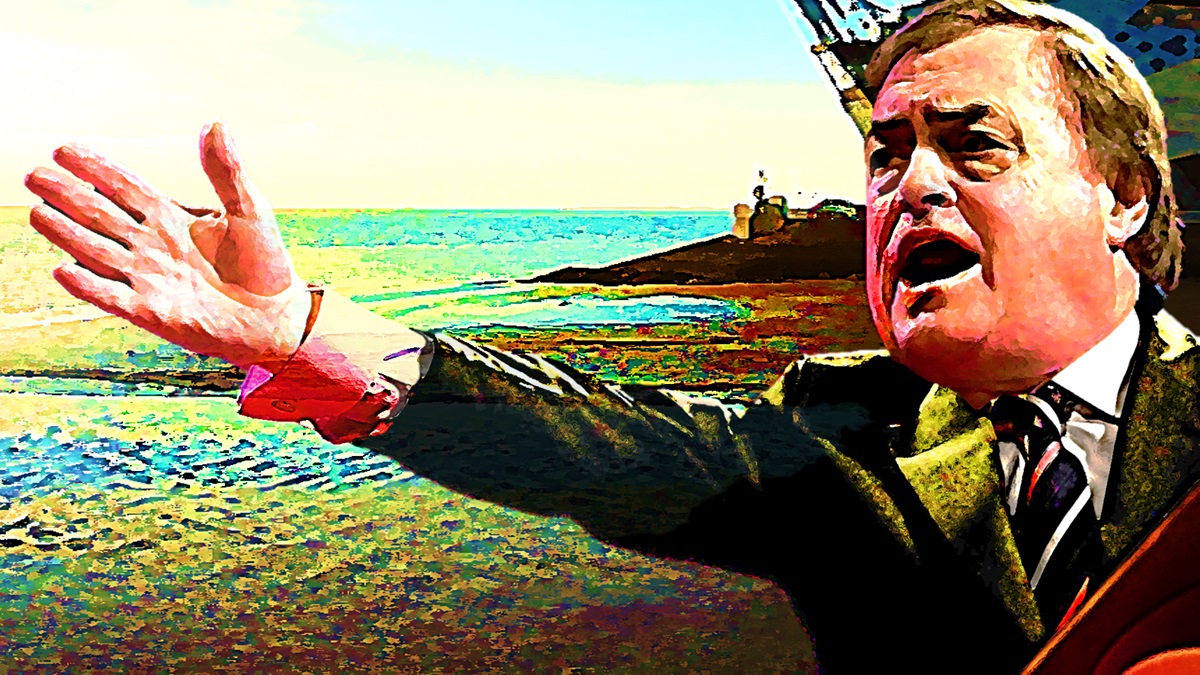
Still, never mind the policies, feel the vibes. With his emphasis on emotion over debate, and with his Manichean tribalism, Prescott was made for the social-media age – and indeed he was an early adopter of Facebook and Twitter. Traditional values in a modern setting, as he was fond of saying. He wasn’t as out-of-time as he was sometimes painted.
Ultimately, perhaps, the most old-fashioned aspect was that he actually believed in the political process and that he really wanted to be there. That shouldn’t be noticeable, but it is. This century we’ve got used to people passing through Parliament on their way somewhere else, as though high office is just another entry on a CV. It wasn’t obvious that, say, Rishi Sunak had a calling to become an MP. But Prescott clearly wanted to redress wrongs in society and saw politics as the place where change could be made. Such faith is in short supply these days.
In 1992, as he made his second attempt at the deputy leadership (he got the job at the third time of asking), he commented: ‘All the individuality, the chance, the difference has been taken out of our politics, and the electorate doesn’t trust us.’ Maybe he at least helped slow the growth of that trend.
Discover more from Lion & Unicorn
Subscribe to get the latest posts sent to your email.

Reminded me of a cross between Oliver Reed and Les Dawson.Later of Jabba the Hut!
LikeLike