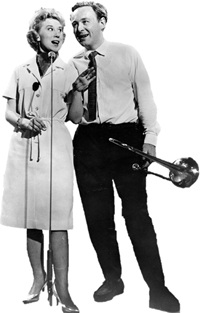
It’s trad, dad! And BEN FINLAY‘s your guide to the best of British revivalist jazz.
It’s no secret that I’m a modern jazz sort of fellow, as last year’s top ten of British jazz demonstrated. However, I’ve always had an appreciation of the British trad revival, even if I didn’t know it as well as the later stuff. And over the last few years, I have dug deeper and have found a genre full of vitality and excellent recordings.
Traditional jazz emerged in Britain after World War Two and enjoyed its greatest popularity from the early fifties through to the early sixties. An often-earnest attempt to recreate the sound of New Orleans jazz from the twenties – emulating heroes such as Louis Armstrong, King Oliver and Jelly Roll Morton – the music was lively, dance-orientated and characterised by enthusiasm from both audience and performer alike (as opposed to the cool detachment of the modern jazz types.)
They’re often ridiculed for their purism, but I see the earnest respect that the trad jazzers afforded to their heroes in New Orleans as a parallel to the blues-boom performers who came just a few years later in Britain. In fact, performers such as Ken Colyer (perhaps the purist of the puritans on the scene) would actually travel to New Orleans to see the originators in person. Now, that’s dedication.
The achievements of the trad jazz fraternity shouldn’t be overlooked either; it was Britain’s first youth movement, and added much-needed joy to the drab post-war years. It should also be remembered that trad had a serious ‘crossover’ appeal; singles such as ‘Bad Penny Blues’, ‘Midnight in Moscow’ and of course ‘Stranger on the Shore’ were big hits. That the tension between the traditionalists and modernists (most explicit at the disturbances between the two factions at the Beaulieu Jazz Festival in 1960, named the Battle of Beaulieu by the press) was so pronounced demonstrates the potency that music had upon individuality in the era.
The popularity of trad would wane during the 60s but it remained with the faithful. And some of its exponents – George Melly and Humphrey Lyttleton in particular – would go on to have wider careers in writing and broadcasting.
The history of the British trad revival is a fascinating story, and I can recommend two documentaries made by the BBC that are available on YouTube: Trad Jazz Britannia and ‘Stranger on the Shore’, the first episode of Jazz Britannia.
So, with all that said, put on your best corduroy trousers and sandals as we set off to discover my personal best of British trad on record. And watch out for those modernists on the way.
A playlist is available on YouTube
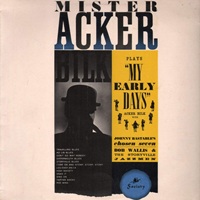
10. Mr Acker Bilk, Plays My Early Days (1963)
There was certainly more to Mr Acker than ‘Stranger on the Shore’, as this fine compilation album of prime trad released in 1963 amply demonstrates. Featuring sides recorded in the mid-to late 50s, the record sees a young Bilk playing with Johnny Bastable’s Chosen Seven and Bob Wallis & The Storyville Jazzmen. Somerset’s greatest trad-jazz man romps through favourites such as King Oliver’s ‘Dippermouth Blues’ and ‘Travelling Blues’, which is included on the accompanying playlist. Excellent British trad that deserves a reappraisal.
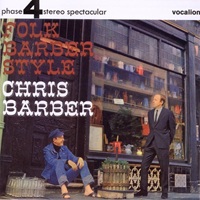
9. Chris Barber, Folk Barber Style (1965)
The title and the inclusion of titles such as ‘Bobby Shaftoe’ suggest a conversion to acoustic guitars and fishermen’s sweaters, but this album still sounds decidedly traditional. Presumably named to cash in on the mid-60s folk boom, it is, in fact, a joyous and eclectic romp through a great selection of material, with Barber and his band in great form. Special mention must go to Ian Wheeler who plays superb clarinet on ‘When Johnny Comes Marching Home’ and soprano sax on ‘Goodnight Irene’. Overall, an interesting and enjoyable attempt at fusing trad jazz and folk – Barber style, of course.
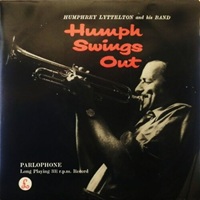
8. Humphrey Lyttleton, Humph Swings Out (1956)
Released as a ten-inch album in 1956 (the same year he had a hit with ‘Bad Penny Blues’), Humph Swings Out finds the beloved trumpeter in fine form, with one foot in the traditional, but also hints at Lyttelton’s gradual advance towards modern jazz. However, the six-track record is a great listen, with ‘Just One of Those Blues’ particularly standing out for me.
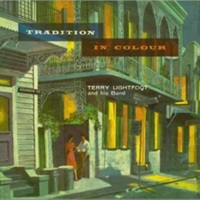
7. Terry Lightfoot’s Jazzmen, Tradition in Colour (1958)
The first LP by clarinettist Lightfoot features a young Ginger Baker on drums and is an excellent collection of songs, incredibly well played and performed. ‘Blue Turning Grey Over You’ is the standout track with trumpeter Colin Smith excelling himself. The CD reissue from 2005 includes EPs and other recordings from the era, some produced by the legendary Joe Meek.

6. Humphrey Lyttleton, Jazz at the Festival Hall (1955)
Recorded at the then newly built Royal Festival Hall on 28 November 1954, this live album sees Humph and the band bringing a joyous performance home with such trad favourites as ’When the Saints Go Marching Home’ and ‘Basin Street Blues’. The audience is lively and appreciative, with the atmosphere coming through loud and clear on the recording. A wonderful live document demonstrating the vitality of trad at its peak.
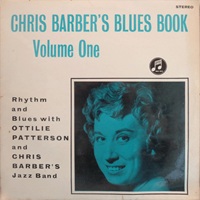
5. Ottilie Patterson and Chris Barber, Blues Book (1961)
Ottilie Patterson was the greatest blues singer on the trad scene, earning her the title ‘godmother of British blues’, with George Melly proclaiming her to be ‘Bessie Smith Reincarnated’. She joined Barber’s band in 1954, touring with them extensively between 1955 and 1962 and making many recordings including the EPs ‘Blues’ (1955), ‘That Patterson Girl’ (1955), #That Patterson Girl Volume 2’ (1956), ‘Ottilie’ (1959), and my choice, the LP Chris Barber’s Blues Book (1961). The album is orientated towards covers of Memphis Minnie, Ruth Brown and Big Maceo whose ‘Kidman Blues’ makes the accompanying playlist. Absolutely superb.
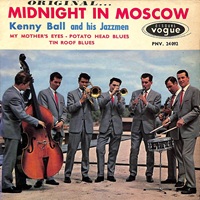
4. Kenny Ball and His Jazzmen, Midnight to Moscow (1962)
Ball had begun career playing trumpet as sideman to such artists as Sid Phillips, Charlie Galbraith, Eric Delaney and Terry Lightfoot before forming his own trad band, Kenny Ball and his Jazzmen, in 1958. The band were very popular on the Brit trad scene, and in 1961 reached number two on the UK singles chart with ‘Midnight in Moscow’ (a cover of the song ‘Leningrad Nights’ written by Vasily Solovyov-Sedoy and poet Mikhail Matusovsky in 1955). The record sold over a million copies, earning gold disc status and demonstrating the crossover appeal of trad in that era.
For the resulting album named after the single, the band and Ball presented an eclectic collection of jazz and popular standards, each of which possessed the personality and sound of trad.
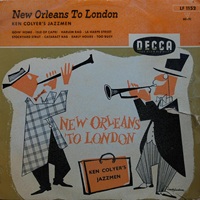
3. Ken Colyer’s Jazzmen, New Orleans to London (1954)
Originally a ten-inch album, New Orleans to London is one of the best albums of the British trad jazz scene. Trumpeter Colyer was the purist of the British trad jazzers, going so far as to rejoin the Merchant Navy (he had first been a member when he was seventeen) and jumping ship in Mobile, Alabama, so he could travel to New Orleans. Once there, he played with Orleans stalwart George Lewis and his band. He was offered the job of lead trumpeter on a tour, but was caught by the authorities, detained and deported. On his return to London, he joined a band formed by Chris Barber that included Monty Sunshine and Lonnie Donegan. Using Colyer’s name, they were an instant success, and ‘Isle of Capri’ was released as a single, becoming a minor hit. Setting the benchmark for the piano-less British trad band, the outfit lasted barely a year and on Colyer’s departure Chris Barber took over leadership.
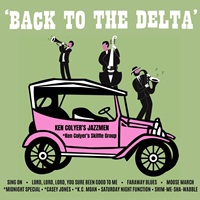
2. Ken Colyer’s Jazzmen, Back to the Delta (1954)
Also originally released as a 10-inch LP, Back to the Delta was made with Colyer’s second line-up and featured a then-unknown Acker Bilk. Yes, I know this is the second Colyer record on the trot, but it is a superb companion piece to From New Orleans to London and just must be included. Fortunately, it has since been re-released together with that album and is highly recommended.
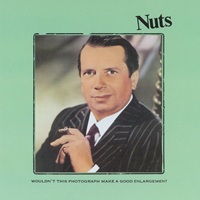
1. George Melly and the Feetwarmers, Nuts (1973)
Recorded live (although some tracks were re-recorded in the studio due to the excessive drunken bonhomie of the performance), Nuts sees Melly and the Feetwarmers in their natural environment, excelling with a collection of traditional favourites. Melly’s bohemian credentials had given him kudos with the hippy counterculture, so much so that the flagship underground paper International Times reviewed it. (Melly had recently written a review of a Bessie Smith anthology for the publication.) Son of Nuts was released the following year and continued in the same vein as its predecessor. While trad purists might disagree on the album coming in at number one on this list, my only defence is that it is well recorded, the first Melly and trad jazz I ever owned and a personal favourite. So there.
bubbling under:
Chris Barber’s Jazz Band and Skiffle Group, New Orleans Joys (1954)
Kenny Ball and His Jazzmen, It’s Trad (1962)
The Temperance Seven, The Temperance Seven (1961)
Bobby Wallis and His Storyville Jazzmen, Everybody Loves Saturday Night (1960)
Mick Mulligan’s Magnolia Jazz Band with George Melly, Meet Mick Mulligan (1959)
see also:
Discover more from Lion & Unicorn
Subscribe to get the latest posts sent to your email.
