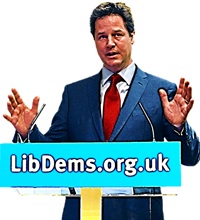
Continuing our series marking ten years of Lion & Unicorn, JONATHAN CALDER reflects on the fall and rise of the Liberal Democrats over the last decade.
‘I think I’ve just killed the Liberal Democrats,’ William Hague told his wife Ffion, after the Conservatives and Lib Dems reached their coalition agreement in June 2010. Sure enough, at the general election five years later the Liberal Democrats went from having fifty-seven MPs to eight and were to suffer years in the political wilderness after.
Yet today there are seventy-two Lib Dem MPs and the party has realistic plans to elect more. John Curtice, the patron saint of psephologists, told a fringe meeting at the recent Conservative Party Conference that the Lib Dems would ‘almost undoubtedly’ win more seats than them at the next election. If any party is going to be killed in the near future it is the Conservatives, though the coroner’s verdict will probably be suicide.
So what the hell, as the young people ask, just happened?
There were optimists among the Lib Dem membership, especially online optimists, who saw their party’s collapse at the 2015 as an opportunity. Wasn’t the idea that a party’s leader must be an MP outdated? Why didn’t we choose someone from beyond Westminster? Gina Miller was a name often on the lips of those able to convince themselves that near oblivion at the polls was in reality a plan of Baldrickian cunning.
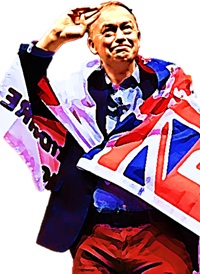
Wiser counsel prevailed, however, and the party held a conventional leadership election limited to members of its reduced parliamentary party. The winner was Tim Farron, whose victory marked a retreat to the Lib Dems’ roots in local campaigning. ‘Pick a ward and win it,’ was his advice to anyone who sought to rebuild the party’s strength. And these tactics, together with his good nature and inexhaustible energy, had turned his Westmorland and Lonsdale seat into a Lib Dem stronghold. Not only had it survived the massacre of 2015, it was to be one of the few rural seats that voted Remain in the EU referendum the following year.
It was the EU that dominated Lib Dem thinking in this period, and Farron settled upon a policy of calling for a second referendum on the Brexit deal once it had been negotiated. He defended this determinedly against ultras eager to ignore the referendum result and realists who wanted to accept it without a murmur.
But it was another issue that came to dominate his media coverage: Farron’s attitude towards homosexuality. Throughout his leadership, he struggled to reconcile his personal belief that it was sinful with his party’s wholehearted embrace of human rights. Farron’s voting record on gay issues was perfectly respectable for a Lib Dem MP, but ours is an age that believes in making windows in men’s souls, and that was not enough to satisfy his critics.
After he relinquished the leadership, Farron announced that he regretted keeping quiet about his personal views and questioned whether it was possible for a Christian to be involved in politics today, which left those who had defended him while he was Lib Dem leader distinctly unimpressed. But it was not being a Christian that made a career in politics difficult for Farron – there are many practising Christians in British politics – but the slightly home-made variety of Evangelicalism to which he adhered. A humourist once reconciled the two sides of Farron’s thinking by suggesting he believes that every word of the Liberal Democrat manifesto is literally true.
What really did for Farron’s leadership was that the party polled fewer votes in Theresa May’s 2017 election than it had in 2015, though the mysteries of first-past-the-post meant they returned four more MPs. Over the two years of his leadership, his party had convinced itself that a #LibDemFightback was underway, and every local by-election gain was greeted on Twitter with this hashtag. And, yes, this is Zack Polanski at the 2015 Lib Dem Conference. I’m not saying he should be ashamed of this now, but certainly he should have been ashamed of it at the time.
But a cool study of the results showed that many of these gains were in wards that were recent Lib Dem strongholds and it was a failure to win them back that would have been remarkable. Important as it was for party morale, this was true even of the recapture of Richmond Park in the 2016 parliamentary by-election.
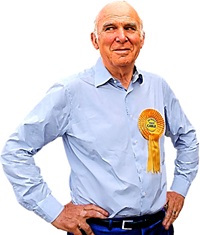
Vince Cable, who replaced Tim Farron as leader in July 2017 – he was the only candidate nominated – was just the leader the Lib Dems needed. Unfortunately, he was just the leader they had needed a decade earlier. He rose to public prominence during the credit crunch and possessed the priceless ability to sound as though he was above politics while being very political. In the early days of the 2010 general election, before the pretty bubble of Cleggmania, Cable had near equal billing with Nick Clegg and was the one who interested the media and the public more.
By 2017, Cable’s health was not as good and he resigned before he had completed two years as leader, but during that time he proved a calming influence on the party. He played to his personal strengths by emphasising economic issues and at the May 2019 local elections there really was a #LibDemFightback. The party saw its best local election results for twenty years, gaining 700 seats and control of eleven more councils.
His one national campaign as leader came the following month, just before he stood down. Britain’s last elections to the European Parliament saw the Lib Dems poll almost 20 per cent of the vote and win sixteen of the seventy-three seats up for grabs. The party’s manifesto was launched to the press under the tile ‘Bollocks to Brexit’, which suggested a new aggression to its campaigning, though (pace some pearl-clutching Labour MPs) the slogan was never used on literature sent to voters.
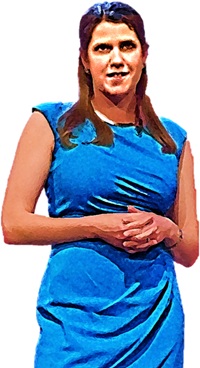
When Vince Cable resigned, the leadership was contested by Ed Davey and Jo Swinson, and Swinson was elected with 63 per cent of the vote. Quite what the party thought it would get from her leadership was never clear: Swinson had promised to build a ‘Liberal movement’, which was presumably different from a Liberal political party, but in the little time she was granted as leader, she didn’t do much to define it.
Emboldened by the European election results, Swinson went into Boris Johnson’s snap December 2019 general election claiming she might become the next prime minister and promising the Lib Dems would cancel Brexit without a second referendum. Lib Dem candidates and canvassers found this pledge played badly on dark winter doorsteps, being seen as anti-democratic – a reminder that plenty of habitual Lib Dem voters had voted Leave. Politics is more complex than it sometimes appears on Bluesky.
Swinson saw her party’s vote increase from 7.4 per cent of 2017 to 11.5 per cent, but its number of seats dropped from twelve to eleven, with none of the recent star recruits from Labour and the Conservatives (such as Chuka Umunna, Luciana Berger and Sam Gyimah) managing to get re-elected in Lib Dem colours. And Swinson’s own East Dunbartonshire seat was one of the ones that were lost. In a striking illustration of the maxim that all politics is local, her defeat was attributed locally to her getting on the wrong side of an indoor bowls club in Milngavie.
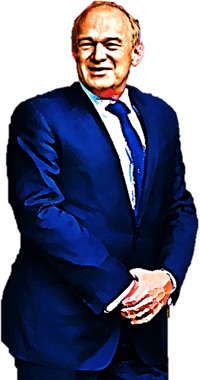
And so came Ed Davey, who defeated Layla Moran for the leadership. She was sympathetic to the idea of electoral pacts with the Greens, while Davey offered a more conventional approach. In his early days as leader, he was fond of telling his party to ‘wake up and smell the coffee’, which seemed a little unfair. The hubristic approach to the 2019 general election came from the top, not the grassroots, and the idea that politicians at Westminster are more in touch with the public than activists who have proper jobs and work-colleagues has always seemed a little unlikely. But then political activists are treated by their leaders as a stage army to be marched on and berated when they want to show the media how tough they are. (I would expand on this, but I have some local by-election leaflets to deliver.)
Davey’s leadership saw a new emphasis on the central selection of target seats, with funding being dependent on the level of effort the local party put it. But really, what made him such a success was the extraordinary decline in government of the Conservatives, who collapsed like a Bazball middle order faced with accurate Australian seam-bowling. Their haplessness continued into the general election campaign, with Rishi Sunak first announcing it in the rain and then going AWOL from the commemoration of the 80th anniversary of D-Day. Come the counting of votes and, though the Lib Dems vote had dropped slightly from the figure polled by Jo Swinson in 2019, the party returned seventy-two MPs. They became the largest third party in the Commons for a century.
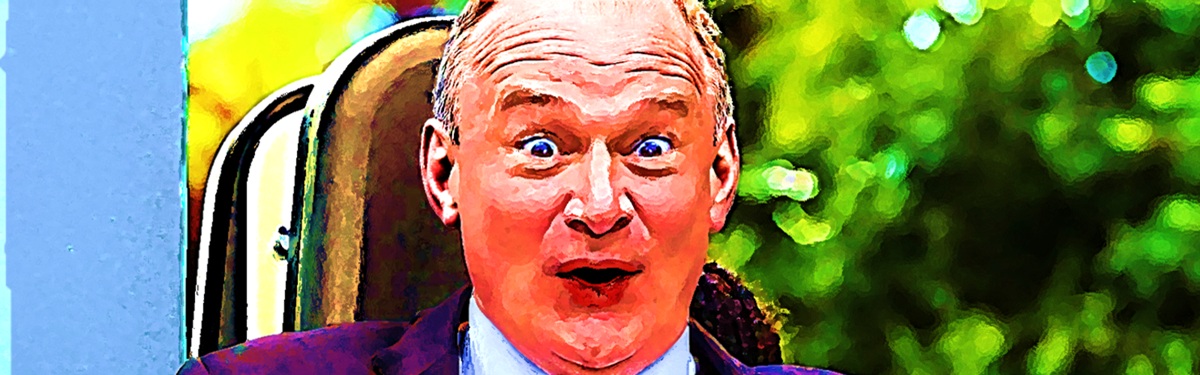
In this new political landscape, the Lib Dems found themselves representing swathes of prosperous Southern England. And their policy positions since the last election have come to reflect that. Their opposition to the ‘Family Farm Tax’ – and who could support a tax if you call it that? – appears in practice to mean opposition to any inheritance tax on land, and the Lib Dems have also taken the part of parents who pay for private education and owners of £2m houses. It’s all a long way from Vince Cable social democratic slant on things.
But the party is standing taller than anyone could have imagined ten or even five years ago, and in its opposition to digital ID and defence of jury trials, it is fulfilling its historic role of challenging concentrations of power wherever it finds them. If it can grasp that the greatest concentration of power is to be found among big corporations and tech bros, and adopt policy positions that reflect this understanding, it may grow taller yet.
Visit Jonathan Calder’s excellent blog Liberal England.
Discover more from Lion & Unicorn
Subscribe to get the latest posts sent to your email.
