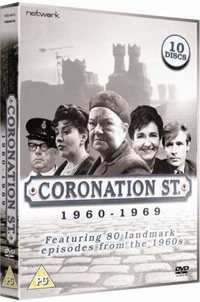
In our series celebrating individual episodes of British television, FINLAY McLAREN meets the neighbours.
On a winter’s night in Salford, a few years after the war, Tony Warren was wandering home after spending the day with his cousin at Cross Lane Market. As he walked along the front-row terraces and winding backstreets that patterned the landscape of the industrial North, Warren started noticing the everyday sights and sounds going on all around him.
The market stall lights were flickering into life, while the boiling fat warmth of Parker’s chip shop spilled into the streets. Glowing shop-front tellies were tuned to the wrestling and outside the Salford Hippodrome a sign gleefully announced, ‘Strip, strip, hooray — we’ve nothing on tonight’.
The young Warren drank it all in. The noise, the humour, the bustling alive-ness of the place. He was in love. But beneath the exhilaration, an unsettling realisation began to take hold. ‘It’s not going to last like this,’ he recalled thinking. ‘I want to preserve it like flies in amber.’ In that instant it hit him: he could capture it all and hold it forever, not in photographs or on film, but with words.
Soon, Warren began writing a drama for Granada Television about the lives of ordinary people, on an ordinary street, in an ordinary northern town. A series he called Florizel Street.
The title didn’t last. It was dropped after Agnes, the Granada Studios tea lady, said it sounded like a brand of toilet cleaner. Instead, the series became known to millions as Coronation Street.
Initially, just thirteen episodes were commissioned. The first of them went out at seven o’clock on 9 December 1960, to an audience of roughly seven million. The critics were unimpressed. Ken Irwin of the Daily Mirror dismissed the programme as ‘doomed from the outset — with its dreary signature tune and grim scene of a row of terraced houses and smoking chimneys’, though the Liverpool Echo was kinder, describing the series as ‘no better or worse than I expected’. While Granada’s own general manager Sidney Bernstein was said to have struggled to find a ‘single redeeming quality’ in the series.
Guardian critic Mary Crozier was more positive, writing that ‘Coronation Street with all its cliches has something funny and forthright about it’. Viewers agreed and by the end of its first year Coronation Street was the most popular programme in the country, regularly drawing in upwards of twenty million viewers.
Such was the programme’s success that in 1961 Violet Carson, who played one of the street’s original residents — the hairnet-wearing battleaxe Ena Sharples — was granted the highest honour the North can bestow: she was invited to turn on the Blackpool illuminations. Sixty-five Big Switch-Ons later and the nation’s favourite soap-opera is still there on ITV, week-in, week-out. After eleven thousand, seven hundred and forty six episodes, the world Warren feared would disappear forever remains. Preserved for generations to come.
Thanks to the wonders of our modern on-demand world, I recently made a YouTube pilgrimage back to that first episode. What struck me most wasn’t how much television has changed, or how young Ken Barlow looked, but how low-key it all was.
This was Granada’s brand-new twice‑weekly drama series, launched as a would-be flagship. Yet its entire plot would fit comfortably on the back of the world’s smallest cigarette packet.
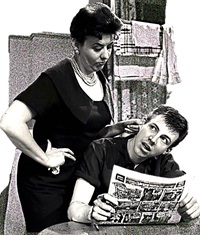
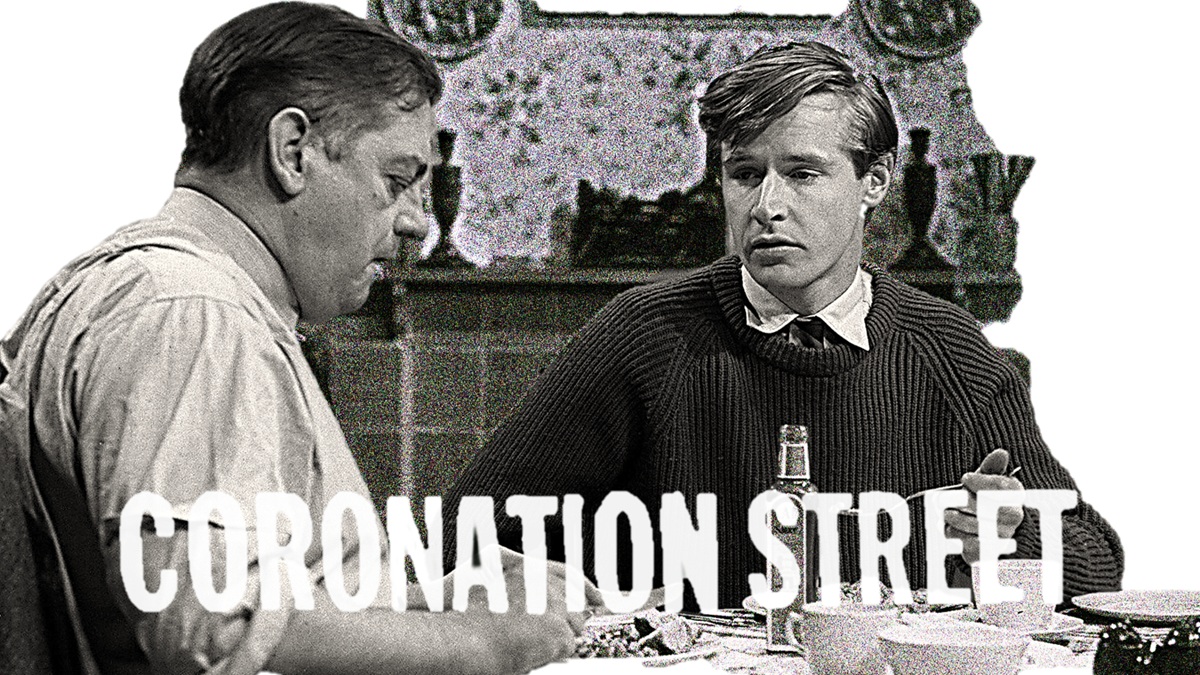
We start with new arrival Florrie Lindley, nervously taking charge of the street’s corner shop. The height of drama comes when Ena Sharples storms in to complain about a bad egg. Then, over at Number Eleven, there’s a mystery to solve. Two bob has gone missing from scarlet woman Elsie Tanner’s purse. (Spoiler: her daughter Linda took it, but forgot to say.) And finally, university boy Ken Barlow broods over an upcoming date and argues with his father about Ken’s newly developed airs and graces.
And that’s it. Money worries, family tension and a caretaker’s egg.
The nearest modern equivalent would be if Mr Bates vs the Post Office kicked off with a kerfuffle over a missing stamp, or if the first episode of Adolescence consisted of nothing more than Stephen Graham doing the weekend big shop with his strange son.
Of course it would be easy to dismiss these original storylines as dull, or to sneer — as the previously mentioned Mary flamin’ Crozier did — at television’s ‘through-the-looking-glass tendency to keep ordinary people watching ordinary people doing much what they themselves do’. But that misses the point.
Tony Warren wasn’t interested in working‑class life in sociological terms. If he had been, he could have grabbed a Box Brownie and gone into town, or set about writing a time-and-motion study about brass bands and bus queues. Instead, he dramatised it. In doing so, he made a simple but radical claim: that the lives of factory girls, pub cleaners and old‑age pensioners were drama enough.
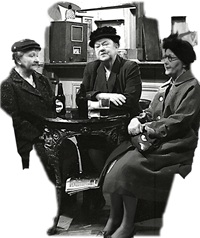
For years, Coronation Street didn’t rely on shocks or spectacle. Instead its drama came from small domestic tensions and minor community frictions. A love triangle between a schoolteacher, a shop assistant and a factory owner. Three old dears supping milk stout. A widow crying over an old pair of glasses. That careful sense of scale, and the quiet faith that the everyday could carry real dramatic and emotional weight were the show’s greatest strengths.
But if you go down to the Street today, you’re sure of a big surprise. Because sometime over the past decade, the ordinary events that once defined the show — births and deaths, marriages and divorces, Betty Turpin sensationally quitting the Rovers only to return three episodes later — have been stripped away and replaced by a parade of sensationalised crimes and relentless social-worker pamphleting.
Armed robberies, acid attacks, kidnappings and a new serial killer every financial quarter pass for a typical week on Coronation Street these days. Not to mention teenage knife crime, microaggressions and coercive control in LGBTQ+ relationships. The soap currently reflects everyday, working-class life about as well as House of the Dragon.
Some would argue that this is nothing new. Ever since Alan Bradley went under a tram and Richard Hillman was sent flying into a Manchester canal, the street has increasingly flirted with ‘sweeps-week’ style flash-bang-wallop spectacle and stunts. In fact, even the early years could be guilty of these excesses, with a collapsing viaduct, a coach crash and a lorry ploughing into the Rovers Return all featuring. But such moments were few and far between; for the most part Coronation Street remained content to focus on the everyday problems of ordinary folk.
This abandonment of working-class reality isn’t just a problem with Coronation Street, it’s a television-wide issue. In the early Sixties, it rubbed TV-schedule shoulders with Z Cars, Armchair Theatre and The Wednesday Play, along with comedies like Hancock’s Half Hour, Till Death Us Do Part and Steptoe and Son, all of which were rooted in naturalism and kitchen-sink sensibilities.
Today the elites rule the world of drama. What remains of the viewing public is besieged by the Fleet Street newshounds of The Hack, the garters and go-betweens of Bridgerton and the literal royalty of The Crown. Not to mention American imports like Succession or blue-blooded Love Island knock-off The White Lotus. All of which are so disconnected from real life that they might as well be about the Daleks.
Anytime rank-and-file characters get a look in on the vanishing world of TV drama, we’re either victims of some terrible injustice, perpetrators of some terrible injustice, or deigned worthy of nothing more than briefly shuffling into frame before the camera remembers it has somewhere more important to be.
Admittedly Shakespeare pretty much stuck to writing about kings and queens, and he did all right. But this recent shift carries an unspoken message from the media classes: that the lives of the great unwashed are no longer worthy of being drama.
So, how did television manage to evict its own audience? Simply put, the working classes aren’t on television anymore because the working classes don’t work on television anymore.
When Tony Warren first pitched Coronation Street to Granada bosses, he asked to ‘write about what I know’. The same was true of many of the Street’s defining figures. Jack Rosenthal, Brian Finch, Adele Rose and John Stevenson, all came from working-class backgrounds. They didn’t need to research Coronation Street — they had lived on it.
Today, that experience is vanishing from television. According to recent research, fewer than ten per cent of creatives in the industry come from working-class backgrounds — the lowest figure in over a decade. In his 2024 MacTaggart Lecture, writer James Graham suggested that class diversity in television is ‘worse than it’s ever been.’ The result is TV drama that either cannot, or will not, reflect the everyday lives it once existed to serve.
And yet those lives haven’t disappeared. There are still Elsie Tanners, Ena Sharples and Ken Barlows on streets up and down the country — worrying about money, fighting with their parents and arguing over bad eggs — but there are no Tony Warrens left to write about them.
I can only hope that somewhere out there tonight, a young wannabe writer is wandering home through a housing estate or a new-build cul-de-sac, drinking in the sights and sounds of ordinary life, afraid it won’t last and desperate to get home and write it all down. If television ever decides to let that writer through the door, then the original spirit of Coronation Street might yet find its way back onto our screens.
The first episode of Coronation Street is available on YouTube
see also:


Discover more from Lion & Unicorn
Subscribe to get the latest posts sent to your email.
