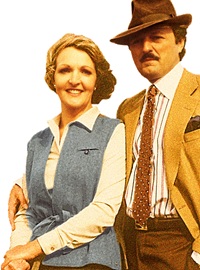
In our series on individual episodes of British television, FINLAY McLAREN brings a touch of class.
Last year, at the BBC Comedy Festival in Glasgow, the Corporation’s Director of Comedy Jon Pietre stood before a roomful of producers, script editors and people pretending to recognise one another to issue what has become his standard sermon.
‘It’s on all of us to fight for the right of UK mainstream comedy to exist,’ he said, ‘we’re asking you to do something really ambitious and help save our sitcom.’
Such declarations are nothing new. As traditional multi-camera studio sitcoms have faded from TV schedules and their streaming-era heirs have been lost to the algorithm, the call to ‘save our sitcoms’ has become part of the background noise of British life. So frequent are these appeals that Pietre has given the same speech at least twice since. (Insert joke about BBC repeats here.)
And yet, every time someone dares to suggest that maybe, just maybe, they don’t make them like they used to, a chill runs up the collective spine of the chattering classes. For many middle-class opinion-makers, nostalgia is the first symptom of that most dreaded of cultural diseases: right-wing-itis. You start off by asking ‘Why doesn’t the BBC commission more sitcoms?’ and before long you’ve subscribed to the Spectator, deleted the pronouns from your email signature, and started listening to Morrissey’s solo albums.
And so, in the pages of the Guardian, Viv Groskop (no, me neither) reassured the nation that ‘the great British sitcom is not dead, it’s just been forced to grow up’. In her view, the form is alive and well in the urban self-loathing of Fleabag and Catastrophe as well as the trans-atlantic therapy sessions of Ted Lasso.
The classics, she argued, were limited by their class and their race, ‘relying on assumed shared cultural references and an imagined agreement about what it was acceptable to laugh at’.
In other words, they were funny and they were popular. Please, oh please, would somebody fetch the smelling salts.
A few years earlier, Esquire had run a near-identical piece under the headline ‘How Sitcoms Got Less White, Less Male — and Funnier Than Ever’, by white male Tom Nicholson. He praised modern sitcoms Chewing Gum and Feel Good for their nuance, courage and willingness to talk about ‘difficult, awkward subjects’. ‘Sitcoms can do that now,’ he wrote, apparently proud that we’ve traded in Only Fools and Horses in favour of Play for Today.
These vague, unspecific and unearned criticisms of retro sitcoms never name names, but it’s obvious which shows they mean. Not The Young Ones or Porridge, but something altogether posher, such as the clipped vowels, stately homes and class satire of To The Manor Born.

By the time To The Manor Born swept into Britain’s living rooms, its star Penelope Keith had already perfected the art of hauteur. After a decade of bit parts on TV and film — a teacher here, a nanny there, a domineering German au pair called Lotte von Gelbstein just round the back — she finally found her defining roles in quick succession. First came Margo Leadbetter, the snobbish yet secretly tender next door neighbour in sitcom smash hit The Good Life (1975), and then came Audrey fforbes-Hamilton in To The Manor Born (1979).
Recently widowed and financially ruined, the regal Audrey is forced to sell her beloved Grantleigh Manor to self-made supermarket magnate Richard DeVere, played by the ever-suave Peter Bowles, a man determined to reinvent himself as the archetypal English gent — a plan routinely sabotaged by his domineering Czech mother, Mrs Polouvicka.
Left with only her butler, Brabinger, and her jolly-hockey-sticks friend Marjorie, Audrey retreats to the estate’s modest lodge, mere hedgerows away from her old life. As DeVere transforms the manor into the hub of his supermarket empire, traditional village life begins to totter, and the well-mannered war commences.
The premise of landed gentry versus nouveau riche is classic British sitcom fare, but what makes it sing is the simmering ‘will-they, won’t-they’ tension between Audrey and DeVere. Across three series, they spar, flirt and circle one another with the usual passive aggression of the English upper classes in mating season, until, inevitably, they marry.
The show was an enormous hit, buoyed by the 1979 ITV strike that cleared the competition from the schedules, making sure To The Manor Born routinely pulled in over 20 million viewers. The final episode of its first series, ‘A Touch of Class’ drew a record-breaking 23.9 million, making it the most-watched British television programme (save for live events) of the decade.
The episode in question sees DeVere, ever eager to perfect his adopted aristocratic image, filming an advert for Fauntleroy’s Old English Tonic, while dressed from head to toe in hunting pink. Meanwhile, Audrey, whose unpaid bills are beginning to pile up, is forced to confront an even greater humiliation: doing her own shopping. Standing imperiously in the fluorescent-lit purgatory of the local supermarket, Audrey declares: ‘If somebody doesn’t serve me in a minute, I’ll help myself!’
Later, when Audrey discovers that her loyal butler Brabinger has also been roped into the Fauntleroy advert — and has been handsomely compensated for his troubles, repeat fees included no less — her outrage is incandescent. ‘You are turning a way of life into a commodity,’ she tells the advert’s director, ‘to be bought and sold like so many cheeseburgers.’ But after learning of Audrey’s impeccable lineage and DeVere’s social pretensions, the director insists that Audrey join the commercial herself. Sensing an opportunity to beat DeVere at his own game, and to pay off her debts, she agrees.

Throughout ‘A Touch of Class’ Audrey fforbes-Hamilton and Richard DeVere snipe and point-score, while acting in ways that are entirely self-serving and selfish. Audrey remains snobbish and condescending, forever looking down her nose at the local villagers and expecting the world to rearrange itself around her, while DeVere continues to play the part of a desperate social-climber. She is a relic of an extinct class and he is a pretender to it. Both are proud, vain and absurd.
And yet, through the writing of Peter Spence and the performances of Penelope Keith and Peter Bowles, these two ridiculous people become utterly loveable. When Audrey curls her nose up at old Ned, the village’s odd job man, for buying frozen peas, or when DeVere strides into the manor for the first time looking like Boxing Day come early, you can’t help but adore them.
Without wanting to sound like I’ve caught the right-wing-itis, modern comedy could learn a thing or two from the older tradition of sitcoms built around flawed but fundamentally loveable characters. Increasingly, sitcoms have abandoned wit, warmth and affection in favour of characters who are either consumed by their flaws or defined entirely by their suffering. Instead of inviting us to enjoy characters, we’re encouraged to diagnose them. Rather than laugh with them, we’re expected to wince.
Broadly speaking, you can see this shift in the two dominant models of the modern ‘elevated’ sitcom.
First is the Fleabag model: the self-indulgent, middle-class therapy session masquerading as comedy. Here, the protagonist — often a very thinly veiled self-insert from a writer-performer — stares straight down the camera to walk us through their neuroses. Shows like Fleabag, Mae Martin’s Feel Good, Aisling Bea’s This Way Up and Sara Pascoe’s Out of Her Mind all follow this pattern. They play less like sitcoms and more like recovery worksheets with punchlines, asking us not to enjoy the characters but to feel sorry for them. Less ‘here’s someone delightfully ridiculous,’ and more ‘here’s someone visibly unravelling’.
Then there’s the Catastrophe model, where the governing emotion isn’t self-pity but mutual irritation. These shows frame human relationships as a string of emotional hostage situations. Back To Life surrounds its protagonist with a town that despises her, while Such Brave Girls paints its characters in several coats of mutual loathing and exhaustion. Rather than rooting for these characters, we’re invited to revel in how trapped, toxic or intolerable they all are.
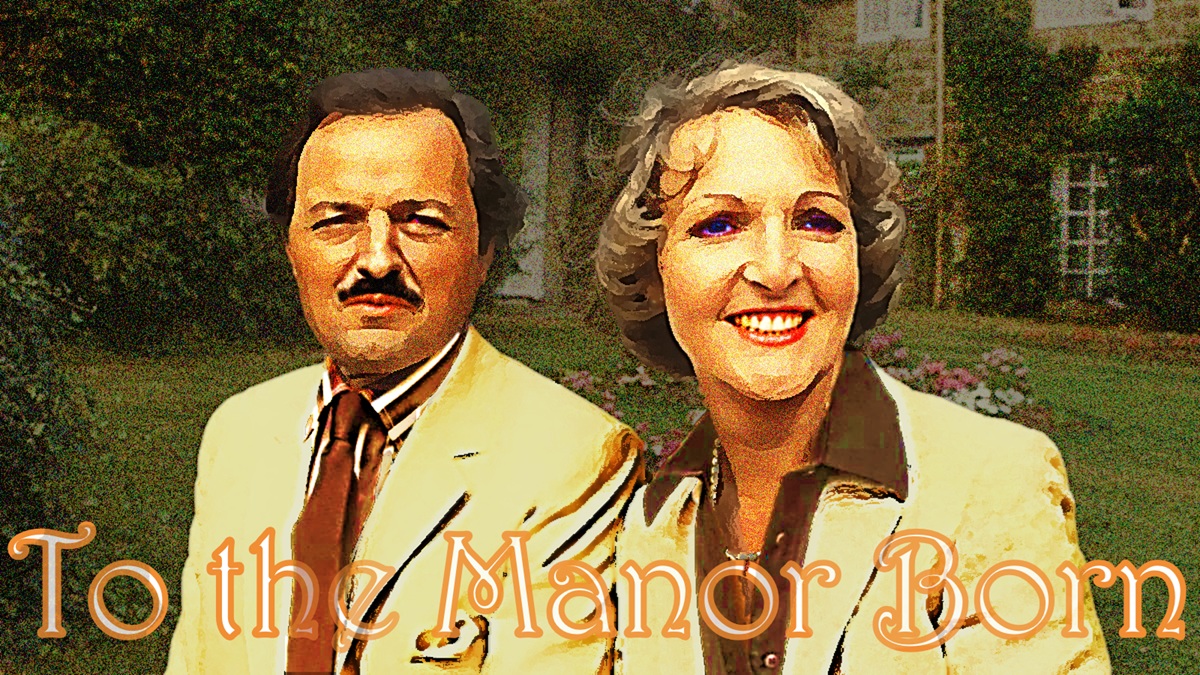
It would be easy to hate Audrey or Richard, or to have some modern authorial self-insert wander in and tell them off for their privilege. But we don’t. We’re invited to laugh at their ridiculousness without malice. Their vanity and pretentions are never targets for punishment, only for affection. The same goes for Captain Mainwaring, for Tony Hancock and for Hyacinth Bucket. We laugh at them, and with them, and, crucially, we love them. The way you’re supposed to with sitcom characters.
That, perhaps, is the lost mystery of how to make a great sitcom: big, warm, funny, lovely hugs disguised as thirty minutes of farce. It’s still possible. Whatever you think of them, Mrs Brown’s Boys, Miranda, Ghosts and Derry Girls have all proved it. Maybe that’s what Jon Pietre was really pleading for at that comedy festival: not just to ‘save the sitcom,’ but to remember what it’s for. To, once again, give the medium a touch of class.
To The Manor Born is available on BBC iPlayer.
see also:



Discover more from Lion & Unicorn
Subscribe to get the latest posts sent to your email.
