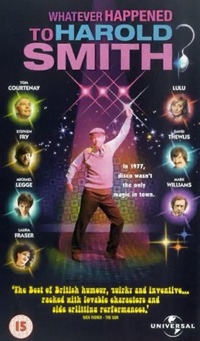
SIMON MATTHEWS watches Peter Hewitt’s 1999 movie Whatever Happened to Harold Smith?
The miserable attitude taken by the Thatcher government toward funding UK cinema came to its logical conclusion in 1985 when, having abolished the National Film Finance Corporation, the British Film Finance Agency and the Eady Levy it delegated what remained of its responsibilities to a private company, British Screen Finance. Featuring an eclectic array of directors – including the marvellously named Lord Eatwell, then Chief Economic Advisor to Neil Kinnock, and film producer Sanford Lieberson – it failed to revive the industry, and the job of repairing the damage inflicted by an obsession with neo-liberalism and market forces fell to John Major.
In 1992 his government introduced a scheme allowing investors to write off film production costs against tax, and that same year a new ministry, the Department of National Heritage, combining sport and the arts, was established. True, it went through four incumbents in five years (who remembers now that its first was David Mellor, almost immediately disgraced in his Chelsea football kit) but it got national cinema back on the agenda. Money was also available from 1994 with the launch of the National Lottery and a new film production fund, administered by the Arts Council.
New Labour arrived in 1997, and promptly renamed the ministry the Department for Culture, Media and Sport. Two successive Secretaries of State – Chris Smith and Tessa Jowell – were in situ for the next decade, giving its leadership a stability that was lacking during the Major years. (It’s interesting that Blair saw this portfolio as something best held by educated, articulate, ‘liberal’ middle-class representatives). A UK Film Council was created in 2000, pulling together the responsibilities of the British Film Institute, National Lottery and British Screen Finance. Cinema was now seen as a tool for creating jobs, promoting soft power internationally and – somewhat dubiously – ‘modernising’ the UK economy via an expansion of what were now deemed the ‘creative industries.’

Regional Screen Agencies were set up, and in the early years of the new century films like Billy Elliot (2000) and Gosford Park (2001) seemed to show that this approach could pay dividends, even if one were a superior country-house murder mystery and another a nostalgic retro revisitation of ‘the north’. Before these, though, came Whatever Happened to Harold Smith? Released in November 1999, its credits acknowledged the support of the Arts Council and publicity material for it carried the strapline ‘Everyone has their bright, shining, magical moment.’ Like Billy Elliott it is set in the recent past, in this case Doncaster circa 1977, revolving around the romantic tribulations of a young trainee solicitor (Michael Legge) with an odd family background.
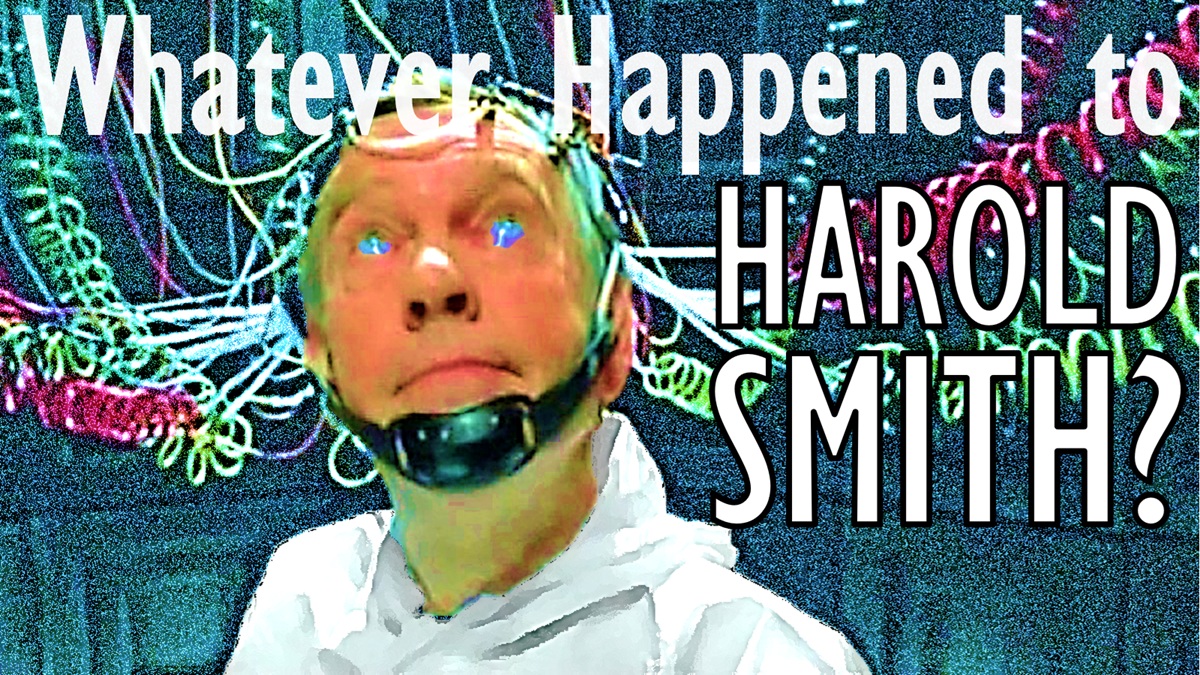
It’s a very curated setting: terraced houses with lots of brown and orange interiors and the cast decked out in immaculately accurate ’70s clothing. Signalling what a weird, spooky time it was back then, an analogue TV in the corner shows Uri Geller bending a few bits of cutlery. The plot divides into two strands, the trainee solicitor’s courtship of a young work colleague (Laura Fraser), and Tom Courtenay, as Harold Smith, the trainee solicitor’s father, who quietly demonstrates his psychic abilities. A late middle-aged man (62 playing 55, but Courtenay often played younger than his years, he was 26 when he did Keith Waterhouse’s 19-year-old Billy Liar) he becomes notorious when, demonstrating what most people believe to be harmless conjuring tricks in a care home one afternoon, he accidentally stops three heart pacemakers, killing the people concerned. Charged with murder, he reveals that he has had such powers since his childhood and ends up in government custody undergoing laboratory tests.
Much of the film, though, plays out over the developing romance between Legge and Fraser. He is working-class, she, it turns out, is middle-class and a punk-rocker in her spare time. The soundtrack therefore oscillates between disco (him) and punk (her). As any vinyl anorak will know, the film’s title is culled from ‘Whatever Happened To?’, the B-side of The Buzzcocks single ‘Orgasm Addict’ (1977), and from that side of the tracks we get the Members, the Sex Pistols, the Clash, and the Stranglers, competing – as they did then – with the Bee Gees, Maxine Nightingale, Tina Charles, Heatwave, and the Real Thing. It’s all good fun.
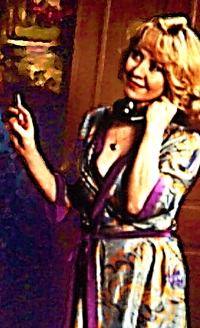
Lulu appears as Courtenay’s two-timing wife, and is surprisingly effective. The film is, in fact, blessed with an excellent supporting cast (most UK-funded efforts are), notably Stephen Fry as Fraser’s father, a hairy university lecturer and head of a massively dysfunctional bourgeois socialist family. Legge has a friend – James Corden in a key early role – who explains at one point ‘It’s like destiny.’ This, and the notion that your future can turn on a sudden course of events, seem to have been carried over by the producers, Guy East and Nigel Sinclair, from the rom-com Sliding Doors (1998) their previous production, and a decent-sized hit.
Things are trickier with Whatever Happened to Harold Smith? By choosing to frame much of its plot around (alleged) psycho-kinesis, territory normally reserved for The Fortean Times, it is unclear what it is ‘about’. Luck? Madness? Or just, perhaps, what it says on the posters, a ‘bright shining magical moment’.
Whatever its intentions, it moves along smoothly to a finale at a punk gig, which abruptly goes disco and the boy gets the girl. Something that could have been played like The X-Files is handled in a comedic fashion by director Peter Hewitt, who prior to this had hits with Bill and Ted’s Bogus Journey (1991) and an adaptation of The Borrowers (1997).
Whatever Happened to Harold Smith? didn’t replicate this, most reviews commenting that its plot tried to do too many things at once. But it serves as a reasonable example of some enjoyable entertainment made with a bit of state assistance.
But neither this, nor successes like Billy Elliott could save the UK Film Council. Described by Lord Puttnam as ‘a layer of strategic glue that’s helped bind the many parts of our disparate industry together,’ it pottered along quite nicely until July 2010, when it was abruptly abolished, without notice or consultation, by George Osborne as he deliberately reduced the size of the UK state. The political stability of preceding years also vanished at the Department for Culture, Media and Sport, with thirteen incumbent ministers over the next fourteen years. Whether we will see a return to the assured approach of the maligned Blair-Brown years looks doubtful now.
from the maker of:

see also:


Discover more from Lion & Unicorn
Subscribe to get the latest posts sent to your email.
