BEN FINLAY selects ten British albums for the season of mellow fruitfulness.
Autumn is now with us, and as the nights draw in, what better time to seek out some music to accompany this more introspective of seasons. As luck would have it, Lion & Unicorn is here to guide you through a top ten of British albums that are rich in ‘mood’ and evoke the seasonal change.
The music here is in a similar vein to this summer’s folk-rock piece, but the choices have a jazzier feel to them – and in the cases of Pentangle, Traffic, John Martyn and Nick Drake the vibe is decidedly more ‘folk-jazz’, a hybrid that sees all but two of these recordings situated in the hallowed era of 1968 to 1971. Nevertheless, I feel that there is a good variety of music here, and while not all the titles were recorded or released in the autumn months, several were, and all are of a mood conducive to the golden season.
So, that all said, light the lanterns, situate yourself at a nearby hearth and dig into the L&U guide to the top ten Autumnal albums.
Note: this piece was written just after the news of the death of legendary British double-bassist Danny Thompson, and that he appears on three of the records here is not so much a tribute to his talents – they would be on the list anyway – but more a testament to his musicianship and skill. RIP ‘Wing Commander’ Thompson.
A playlist of tracks from these albums is available on YouTube.
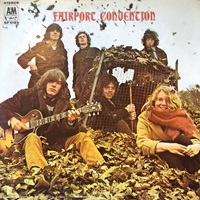
10. Fairport Convention, What We Did on Our Holidays (1969)
Recorded in late 1968, this was Fairport’s second album, and the first to feature Sandy Denny. Elements ofi their later sound emerge here – the traditional ‘She Moves Through the Fair’ and Richard Thompson’s anthemic ‘Meet on the Ledge’ – are stand-outs, as is the lesser-known traditional song ‘Nottanum Town’, here performed with a late-1960s modal raga sound, eerie unison vocals and a decidedly chilly autumnal edge.
While other records in their catalogue carry justly deserved plaudits, WWDOOH has a wonderful, innocent edge to it that bridges the divide between their original West Coast American leanings and the band’s later British folk-rock style. In 2008 founder member, rhythm guitarist and singer Simon Nicol described the album as ‘his favourite’ Fairport record, and although it’s a tough call for me, I’m inclined to agree. This is simply first-class British music from one of this country’s greatest ever bands, and a perfect record for an autumn late afternoon.
(To really push the autumnal theme, the American edition comes with a great sleeve picture of the band dressed in their overcoats sitting among a pile of fallen leaves in a London park.)
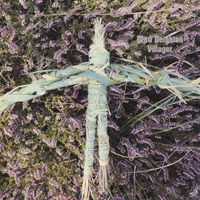
9. Matt Deighton, Villager (1995)
Deighton’s debut album Villager is the most contemporary record on this list (c’mon, it’s only thirty years old, practically last week) and one of the least known. But it should be far better recognised as it’s a masterpiece. Deighton had been guitarist in Acid Jazz legends Mother Earth, and after the band dissolved he made Villager. Released in 1995, it garnered great reviews from NME, Q and the Guardian, but then slipped under the radar somewhat.
However, it is a stunning album of British pastoral folk, with superb songwriting and a warm, deep exquisite sound. Special mention must go to bassist Phil Steriopulos who anchors the epic medley of ‘Villager – Bone Dry Boat’ with the same masterful earthiness as Danny Thompson in Pentangle. And there are indeed touches of Pentangle, Traffic, John Martyn and Nick Drake here without it ever going near pastiche – there is simply too much talent for that to happen.
Villager was the focus of a Mojo magazine ‘Buried Treasure’ feature some years back, affirming its ‘lost classic’ status, and it is indeed a superb work, one that I urge you to discover if you haven’t already. Particularly wonderful on a hazy autumn afternoon.
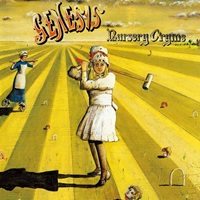
8. Genesis, Nursery Cryme (1971)
Nursery Cryme was the band’s third album and the first to feature drummer Phil Collins and guitarist Steve Hackett. And it is here that their sounds begins to coalesce, with English choral harmony blending with powerful rhythms and, on this album, a macabre Victorian storytelling. This is evidenced on opener ‘The Musical Box’, Peter Gabriel’s vocals delivering the story of a young boy killed with a croquet mallet with relish. Elsewhere there is whimsy – acoustic vignettes such as ‘Harlequin’ and ‘For Absent Friends’ – alongside heavier ensemble pieces such as ‘Fountain of Salmacis’ and the underrated but powerful mellotron-driven ‘Seven Stones.’
The sleeve (designed and illustrated by Paul Whitehead) is wonderfully evocative, depicting characters and scenes based on ‘The Musical Box’ while the inner sleeve resembles an old photo album, with a panel for each song along with an illustrated picture. Released in November 1971, the album is something of a favourite for long-term fans and indeed conjures up a particular olde English autumnal feel. While they went on to far greater commercial success, there is a sense of innocence and introspection here that gets lost after this record. And yes, I’m a big fan of it.
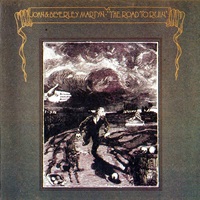
7. John & Beverley Martyn, The Road to Ruin (1970)
The duo’s second and last album before John inevitably went solo. Darker in tone than its predecessor Stormbringer, The Road to Ruin has a particularly noticeable Island Records Joe Boyd-production style, best exemplified on the ominous ‘Auntie Aviator’ featuring great vocals by Beverley, and superb piano by Paul Harris. The album has a jazzy feel to it with South African saxophonist Dudu Pukwana contributing to several tracks. The opener ‘Primrose Hill’, written and sung by Beverley, was extensively sampled by Fatboy Slim for the track ‘Northwest Three’ from his 2004 album Palookaville.
A portent of things to come, the track ‘A New Day’ marked the first collaboration on record between John and bassist Danny Thompson, who featured on many of Martyn’s subsequent landmark albums. A lesser known but notable title in Martyn’s career, The Road to Ruin has a jazzy, rustic autumnal feel (it was released in November 1970) and is worthy of reinvestigation. Splendid stuff.
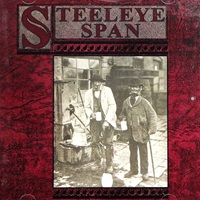
6. Steeleye Span, Ten Man Mop (1971)
Steeleye’s third album – Ten Man Mop, or Mr. Reservoir Butler Rides Again, to give its full title – may be one of the lesser-known works in the band’s catalogue, but it’s somewhat of a lost gem. Recorded in September 1971, Peter Knight’s fiddle playing is more prominent than on the previous album Please to See the King, and indeed there is an Irish influence in Ten Man Mop that is not evident elsewhere in the band’s career. However, it is the two drone ballads – ‘When I Was on Horseback’ and ‘Captain Coulston’ – that imbue a dark, autumnal feel to the record, the sort of medieval atmosphere only Steeleye could conjure; one that would reveal its influence on bands such as Espers some thirty years later.
Ten Man Mop proved to be a decisive album, with founder Ashley Hutchings and Brit folk guitar legend Martin Carthy leaving shortly after its release. But there is much to enjoy here; the original packaging had a gold-leaf-textured gatefold sleeve and inner pages that made it so expensive to produce that it lost the band money on each copy sold (see if you can track one down), and there is still the earthy, eccentric old English feel of the first two albums.
In case you’re wondering about the title, a ‘mop’ or ‘mop fair’ is a late medieval term for a job fair, where labourers come looking for work. The front cover portrays the band as old-time labourers, out of work and job-hunting. A ‘ten-man mop’ would be a very poor show, since there would be few potential employees to choose from. The even more curious subtitle is a reference to Reservoir Butler, who had originally performed songs covered on the album. Only in the early 1970s British folk world.
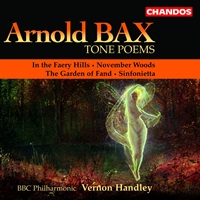
5. Arnold Bax, Tone Poems (1983)
Classical music doesn’t make lists such as this nearly as much as it should, but the work of Arnold Bax – a principal figure in what is referred to as the ‘Celtic Twilight’ movement – is integral to any serious study of British music. Bax was born in London on 8 November 1883 and studied at the Royal Academy of Music. During his career he wrote songs, choral music, chamber pieces, solo piano works, and orchestral music. In addition to a series of symphonic poems, he wrote seven symphonies and was widely regarded as the leading British symphonist.
His best-known work was the tone poem ‘Tintagel’ (included on the Tone Poems album), but for the accompanying playlist I’ve chosen ‘November Woods.’ Inspired by nature, the piece also reflects Bax’s turmoil following the disintegration of his marriage; as he later declared, ‘November Woods’ ‘may be taken as an impression of the dank and stormy music of nature in the late autumn, but the whole piece and its origins are connected with certain rather troublous experiences I was going through myself at the time….’
A wonderful, dramatic work and perfect for an inclement November day amongst nature.
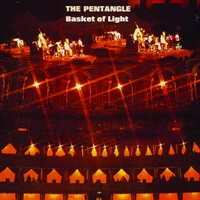
4. Pentangle, Basket of Light (1968)
‘We all had much broader musical backgrounds. Although I brought most of the traditional songs into the band, I didn’t actually own any folk records! I was into jazz, Miles Davis, John Coltrane. It was about experimentation. We all had an equal say in every song, jamming along, working on each tune together. Nobody was told how to play or sing; you just did what you liked.’ – Jacqui McShee
Released in October 1969 Basket of Light is Pentangle’s third album, a fan favourite which sees the folk-jazzers fully exhibit their exquisite sound, blending traditional British folk with jazz, grounded by the subtle drumming of Terry Cox and the muscular, dextrous bass playing of the recently deceased Danny Thompson. The band’s music never fails to summon up a particularly London-tinged, late 1960s folk-scene bohemia, a tight but loose swing, delivered with the telepathic interplay between the guitars of Bert Jansch and John Renborn and the crystalline vocals of Jacqui McShee. Produced by Shel Talmy – best known for his work with the Who – Basket of Light begins with ‘Light Flight’, a hit single, and the theme from BBC One’s first colour drama series Take Three Girls, which followed three young women sharing a flat in ‘Swinging London.’ The track uniquely demonstrates Pentangle’s talents, as indeed would the subsequent three albums, before they broke up in 1972. Basket of Light is a superb album, its legacy assured by inclusion in the guide 1001 Albums You Must Hear Before You Die (2006).
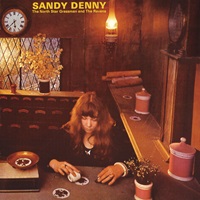
3. Sandy Denny, The North Star Grassman & the Ravens (1971)
The period between late 1969 and the autumn of 1971 (when this album was released) had been tumultuous for Denny. After suddenly leaving Fairport Convention, she formed the ill-fated Fotheringay, who recorded one album, began an aborted second one in late 1970 and then broke up. But out of those sessions came the beginnings of her greatest work, her first solo album, the deeply melancholic and introspective North Star Grassman & the Ravens. It recruited guitarist Richard Thompson (himself in the process of leaving Fairport) and retained most of Fotheringay’s members, while Harry Robinson (orchestrator of Nick Drake’s ‘River Man’) was bought in to add string parts to the beautiful ‘Next Time Around’ (written about Denny’s former boyfriend, the American folk singer Jackson C. Frank) and ‘Wretched Wilbur.’
The album sees Denny employ metaphors of nature while writing of friends, relationships and dreams. ‘Late November’ is one of her greatest tunes, all stately piano chords, and dark, minor-key drama. Similarly, ‘John the Gun’ evokes traditional music and themes of war with a rousing chorus. The only actual traditional song here is ‘Blackwaterside’ which had been introduced to her by singer Anne Briggs, and here Denny delivers a wonderful reading. The whole record is indeed imbued with nautical imagery, from the dark tale of ‘The Sea Captain’ to the mysterious title track, which incorporates the sound of waves and the chimes of a ship’s bell.
Marcus Keef’s photography for the front cover is nothing short of masterful. The picture places Denny in a cobwebbed apothecary’s shop, measuring out dried herbs as an autumn sun flares through the window, the clock standing at twenty to six, a wonderful evocative image that absolutely reflects the music within. Denny would go on to make three fine records (particularly 1972’s follow-up Sandy) before her untimely death in 1978, but none have the sheer melancholy atmosphere and connection to nature of this one. Essential.
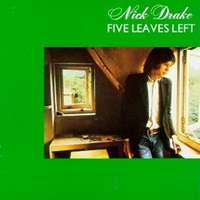
2. Nick Drake, Five Leaves Left (1969)
The first of Drake’s three albums, is to my ear, the best of his work. Robert Kirby’s orchestrations add a rich, impressionistic feel to his compositions, several of which – ‘Fruit Tree’, ‘Cello Song’ and ‘Day is Done’ – are Drake’s most memorable, full of ominous musings on life, the setting of the sun and are consequently autumnal in feel and delivery. The production is minimal in comparison to its follow up Bryter Layter, and accompaniment comes from Danny Thompson on six of the ten tracks. The major work here is ‘River Man’ – the 5/4 rhythm embellished by Drake’s skilful guitar work, plaintive vocal and Harry Robinson’s richly evocative string arrangement. Absolutely transcendent. Close your eyes and float downstream.
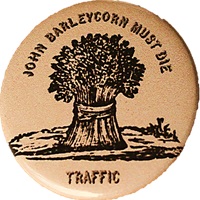
1. Traffic, John Barleycorn Must Die (1970)
‘A magnificent album that provides a remarkable showcase for the band’s gifts’ – The Mojo Collection: The Greatest Albums of All Time (2000)
‘Most of the Traffic stuff stands the test of time pretty well. All of those albums are like my children, so I really can’t pick a favourite—but in many ways, John Barleycorn is the core of what Traffic is, and it could be the most definitive album we did.’ – Steve Winwood
Traffic’s fourth album was originally conceived as a solo outing for Winwood, but he wasn’t enjoying the process, so in the winter of 1970 he rejoined with Chris Wood (flute/saxophone) and Jim Capaldi (drums/vocals/lyrics). Energised after a year’s break where Winwood had formed, performed and then folded supergroup Blind Faith, John Barleycorn finds the group tapping into the folk-rock/rural zeitgeist, while also inventing a particularly British fusion of soul, Motown and R&B grooves with an earthy, deep-rooted English groove – ‘folk-funk’ if you will. This was also tempered with a loose, jazzy jam vibe that was well received in the US, especially on the West Coast where they struck up a rapport with the Grateful Dead. This bond was still evident in the 1990s when a reformed Traffic supported the Dead on the Californian leg of their 1994 Summer tour.
Much of that year’s set featured tracks from John Barleycorn; the irresistible piano-led instrumental ‘Glad’, which ran straight into the psychedelic imagery of ‘Freedom Rider’ and the irrepressible bounce of ‘Empty Pages’. But it is the title track where Traffic masterfully took a traditional song and made it their own. Chris Wood introduced them to the song from a recording on Frost and Fire, A Calendar of Ritual and Magic Songs (1965) by the Watersons, and it is the hazy sound of his flute that takes the song to the heavens. As Winwood later explained:
‘It’s based on an English folk song sometimes called “The Passion of the Corn”. It’s a parallel with the Passion of the Christ and the rural cycle. The winter: the land being dormant, and then the corn growing, rising, being cut off, being ground between stones and being mistreated—eventually rising again in the form of alcohol or bread.’
Including ‘John Barleycorn’ as the album’s pivotal song, the former residents of the rural retreat in Aston Tirrold, Berkshire (Traffic were the first British rock band to ‘get it together in the country’) connected their Stateside influences to the folk tradition of the English countryside and produced their best work.
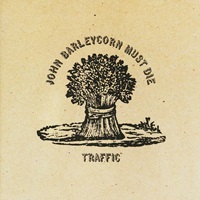
The sleeve design, with the engraving of a bushel of barley over a background of ochre burlap is just perfect, as is the psychedelic tinged photo of the three members across the inside gatefold sleeve. Issued on Island Records famed ‘pink label’, the whole thing is a superb package, and for me, one of the best British records, perfect for the darkening autumn evenings.
Furthermore, its influence would become apparent some twenty-three years later when a post-Jam Paul Weller took his friends off to the rural surroundings of Oxfordshire and made Wildwood – Winwood himself would appear on the follow-up Stanley Road in 1995. And now, with the contemporary British folk scene doing well, the ancient spirit of John Barleycorn continues to inspire and regenerate.
Bubbling Under:
Van Morrison, Moondance
Bert Jansch, Jack Orion
John Cameron, Kes (Original Soundtrack)
Anne Briggs, Anne Briggs
Third Ear Band, Alchemy
see also:
Discover more from Lion & Unicorn
Subscribe to get the latest posts sent to your email.
