In a series to mark Lion & Unicorn’s first decade, FINLAY McLAREN presents ten cultural artefacts from the last ten years, telling the story of where we’ve been, where we are, and where we’re going.
Despite having ended sixty-two years before I ever stumbled into a classroom, the Second World War seemed to occupy more space in the so-called Curriculum for Excellence than it would have done in the playgrounds of 1944.
For some reason, it was thought that children of my generation — Gen Z, and I’ve got the thousand-year-stare to prove it — would be ill equipped for the modern world should we fail to know the difference between an Anderson and a Morrison Shelter, or if we couldn’t knock up a facsimile gas mask out of pipe-cleaners and glitter.
Seven years of primary school education were splattered with various half-hearted assemblies organised to drill into us the oeuvre of war-time favourites, such as Vera Lynn and Flanagan & Allen, lest we should end up at Cambridge and embarrass ourselves by not knowing the words to ‘Underneath the Arches’.
The actual war, the grim business of troop manoeuvres, overseas campaigns and military machinery, was left to uncles in loveless marriages. For us, the conflict was always vaguely over there somewhere. Just out of frame. Instead, our camera was firmly fixed on British-based human-interest stories: the Blitz and German bombing-runs over the shipyards of Clydebank, child evacuees being sent off into the countryside, gas masks and rationing books.
Every subject linked back to the same obsession. English meant Carrie’s War and Goodnight Mr Tom. Art was plastic-bottle doodlebugs and wax-crayon Winston Churchills. Physical Education was dominated by rounds of Capture the Flag rendered as Manichean struggles between the plucky Allies and the Axis, and, on the last day of term, a respite as we watched The Dam Busters.
In 2020, during the long house arrest of Lockdown, while others spent their time engrossed in various twee self-improving activities like daily Duolingo lessons or getting really into baking, I explored my hinterland with a deep clean of my childhood bedroom, in advance of leaving home for my first term at university. I unearthed some of this old primary school coursework: the cardboard evacuee suitcase, a Lego air raid shelter and a dog-eared ration book rendered in faded pencil.
Among the relics, I found a photograph of myself and my childhood colleagues clustered around an elderly woman. She had been brought in to tell us about her experience as a child evacuee, though the photograph made her look more like Clive Dunn singing ‘Grandad’ on Top of the Pops.
This got me thinking: in another sixty-two years, in that far-off future space year 2082, would the children of Generation Epsilon — in between school trips to the moon and daily downloads of every book ever written — be called upon to learn about Lockdown?
It made sense to me. After all, this was a national cataclysm, the single greatest change to British daily life since the Second World War. Naturally, the school children of the future would be tasked with making a face mask out of paper plates and felt, while learning the difference between Tier One and Tier Two restrictions.
Perhaps, at the grand old age of eighty, I would be wheeled in to recount my experience and would wow the children with my reminiscences of staying in my bedroom for eighteen months; getting pale and fat and forgetting how to socialise.
I imagined that, at the end of my testimony, the robot teacher would rotate to the digi-children and instruct them to ask questions. I would then spend forty-five minutes trying to explain what banana bread was, to an audience that had never heard of bananas or bread. Admitting defeat, I would slump back in my chair and the class would serenade me with Lockdown classics like ‘Ghost Town’ and ‘Don’t Stand So Close To Me’.

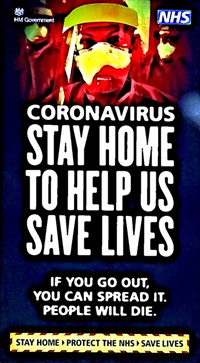
It is, of course, not 2082. It is 2025. And already the biggest domestic upheaval since the war has been wiped from memory. Poof. Gone. Evaporated. We were barely out of our masks before we decided never to mention them again.
I had foolishly assumed that ‘the time we all had to stay inside for two years or Grandmama would die’ might possess some degree of cultural shelf-life. That perhaps there’d be novels, films, plays, or, at the very least, the odd dinner-party anecdote prompted by the question: ‘Daddy, what did you do in the Lockdown?’ Instead, nothing. No memorials for the dead who were left to wave goodbye on cracked iPad screens. No cultural reckoning with taped-off playgrounds, or with Derbyshire police drones barking at dog-walkers. No acknowledgement of the tremendous harm done to our economy and our society. Just silence.
This is not mere absence but active amnesia. The war, which ended six decades before I was born, was forced into every corner of my schooling. But the pandemic, which happened yesterday, is already consigned to the same memory black hole as Swampy, Cat Bin Lady and freakshakes.
Politicians will happily drone on and on about the wrecked economy, the absent schoolchildren, the broken NHS and the rise of extremism but never — never — do they dare utter a word about the cause. They cannot. To even mention Lockdown is to risk admitting complicity, and Westminster was united in demanding more restrictions and more spending. Each frontbencher and wannabe party-leader scrambled over one another to rattle the piggy bank of public money and shout: ‘There’s plenty in here for more PPE!’
And it wasn’t just them. The chattering classes, who had only a few weeks before raged at the government for proroguing Parliament, and who had ecstatically celebrated the civil disobedience of Extinction Rebellion, surveyed the one hour of government-approved exercise and the slow immolation of the economy, rubbed their chins and said: ‘Hmm. Not really enough, is it.’
Even your friend and mine, Joe Public, who now rants and raves over the idea of Digital ID, got in on the arms race of who could call for more restrictions. Ninety-three per cent of the public backed the first Lockdown, eighty-five per cent the second. The nation of shopkeepers was too busy sneezing into their elbows and bulk-buying loo roll to bother considering what all this might lead to.
The few dissenting voices were quickly dismissed as cranks — mainly because most of them were. Spending too much time raging about 5G, Bill Gates and fifteen-minute cities and no time at all on the real world costs. Even as it slowly dawned that the Lockdown was having little effect on stopping the spread of Covid, nobody could admit what was happening. Sweden’s example (no Lockdown, fewer deaths, an intact economy) was ignored. The country had already bought into the new national religion of house arrest. Lockdown became Be Kind Britain’s pièce de résistance. A God-given chance to prove your virtue by covering your face and banging a wooden spoon on a saucepan lid.

Now, in 2025, when Lockdown has been conclusively proved to be a complete waste of time and the greatest act of self-inflicted national harm since Suez, it occupies virtually no space in the national conversation, dwarfed by far more important discussions on subjects such as The Life of a Showgirl and whether or not Andy Burnham will be the next prime minister. (No, he won’t. He literally cannot be. Don’t you people know anything!?)
Whenever Lockdown does bubble up in the national consciousness, it’s some financial scandal, thrown to the public like a Christian in the Colosseum. Michelle Mone’s millions, rotting PPE in dusty warehouses, Captain Tom’s Tranquility Base Hotel and Casino – they are all treated with a faint shrug and a disdainful exhale. Public anger is saved for Raynor Winn and Angela Rayner’s accountant.
Of course, the real scandal in all of this is that we begged our leaders to lock us up, strip our freedoms and bankrupt our future. And that is why the whole sorry mess has been forgotten. Who wants to remember that? To mythologise the distant past is safe. It flatters our national self-image, invites nostalgia and demands no awkward reckoning. But to confront Lockdown honestly would require acknowledging complicity, poor judgment and uncomfortable trade-offs between safety and freedom. It would mean asking whether we panicked, whether we trusted too blindly, whether the harms outweighed the good. Instead, we flinch, preferring silence to scrutiny.
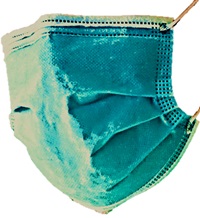
And so, the Covid face mask, that flimsy scrap of cloth that briefly became our national emblem, lies crumpled in the national bottom drawer alongside fellow forgotten curiosa like the fidget spinner or a Tamagotchi.
In 2025, it has already taken on the role of a relic, or an artefact. Destined not for museum displays or a show-and-tell in the online classrooms of Generation Epsilon, but for the same cultural oblivion as Wenlock and Mandeville, the Social Contract and the EdStone. The mask, like the period it came to symbolise, has been quietly put away. Too raw and too revealing of our collective cowardice to be remembered.
This selective remembering and forgetting reveals something troubling about contemporary Britain: our profound fear of having difficult conversations. We’ve become squeamish. Too scared to look at our problems face-on with honesty. Preferring to avoid them, to hold tight to the new national credo of Be Kind and to push any dissenting voices out of polite society, into the margins. It won’t do us any good. You can only avoid difficult questions for so long, before the answers search you out.
Unless we muster the courage to face the mirror, to ask why we surrendered so much for so little and why we let fear rewrite our freedoms, then the next cataclysm, the next great upheaval of British daily life, will find us just as spineless and just as silent. The face mask wasn’t just a shield; it was a gag. And Britain, it seems, still prefers the quiet.
previously in Decade:
and coming soon:
Discover more from Lion & Unicorn
Subscribe to get the latest posts sent to your email.

Thank you for publishing such a wise and well considered article about the folly of lockdowns. The harm this policy inflicted on the country and its citizens (mental, physical and financial) will be with us for many years to come.
I said at the time (and was criticised by most of my family and friends) that the approach Sweden took was much more sensible. Locking people away for months on end was cruel and for sometime the NHS became almost basically just the Covid Health Service resulting in missed cancer diagnoses and heart problems to name but two major health issues….and don’t get me started on the ‘Nightingale Hospitals’ that were barely used.
Overall, as you say, lockdowns were indeed the greatest example of self-harm since Suez.
LikeLiked by 1 person