
The Football Governance Act is an unprecedented legislative intervention in the sport. PAUL SAFFER looks at its century-long gestation.
The passing of the Football Governance Act, creating the Independent Football Regulator that will oversee matters like the ownership of professional clubs in England, provides what some have described as an ‘unprecedented’ level of statutory intervention in the working of the sport.
There had been a long-gestated bill introduced by the previous government. It aimed at tackling matters including clubs putting themselves in financial peril or threatening to join breakaway competitions, but it fell when the 2024 General Election was called. Labour’s act went much further than previous proposals in terms of the regulator’s scope. It was welcomed by fan groups and some football bodies, but met with concerns from the Premier League and international soccer confederations about government interference and the undermining of the body responsible for the sport in England, the Football Association (FA).
The practical workings of the regulator are still being nailed down but, at least in England, the idea that non-sporting authorities should take such a close interest in the running of football clubs (however separate from government) is certainly new. Especially if anyone goes to prison.
All this was the result of a process begun in 2011 by a government humiliated by the ‘bitter’ failure of England’s bid to host the 2018 World Cup, at a time when the reputation of the FA was at a low ebb. The bid itself – encouraged by the governments of Tony Blair, Gordon Brown and then David Cameron – was an expression of football’s rise from 1980s pariah to 2000s ubiquity, and the new act was a by-product of its further surge.

But the idea that something should be done about football was not hatched while a miffed Cameron flew home from Zurich in December 2010, brooding with Prince William and David Beckham on how Russia had left England’s apparently watertight bid languishing with just two votes out of twenty-two. And although politicians have not always been shy of having their say about soccer, governments have generally shown little enthusiasm for legislating on its overall administration.
According to Hansard, of the 30,000-odd occasions ‘football’ has been mentioned in Parliamentary proceedings, the vast majority are in the 21st century, by which stage the one-time amateur sport – administered in England by the same body that was formed for the purpose in the 1860s – had become a professional financial behemoth.
The first mention was in 1833 by Thomas Atwood as some kind of metaphor to do with the House of Lords using the protection of the Corn Laws to bring down the Whig ministry. The first debate relating to football seems to be in 1935, Herbert Holdsworth (Bradford South, Lib) arguing for sport tickets to have the same freedom of relief from duties as the performing arts, Charles Williams (Torquay, Con) approvingly responded:
Those of us who have watched the Liberal Party through many years have always rather associated them with some kill-joy matter such as the Tea Duty, or something of that kind, and we have never in our wildest dreams thought that they would come in and put up their foremost spokesmen to speak on behalf of football.
By the post-war years, most discussions were with regard to the legislation of duties on football pools, but on 7 May 1957, William Mallaleiu (Huddersfield East, Lab) – son-in-law of the Portsmouth manager that kept the FA Cup under his bed during WWII, and a sports writer for the Spectator – asked Home Secretary R.A. Butler (standing in for the prime minister) if ‘he will recommend the appointment of a Royal Commission to examine the affairs of the football industry?’
Butler: I have been asked to reply – ‘No, Sir.’
Mallaleiu: Is the right hon. Gentleman not aware that there is considerable evidence of corruption in this industry and that there is some evidence of tax evasion? Are these matters not proper subjects for investigation?
Butler: From my experience of the authorities, I am sure that they are quite capable of dealing with tax evasion. I should prefer to leave the affairs of the football industry to the industry itself.
There the specific matter rested until 1966 when academic Sir Norman Chester was asked to chair just such an inquiry. Two years later, he recommended an overhaul of the FA’s committee structure to allow representation of professional players and managers as well as referees and clubs.
Asked whether the government wished to legislate for any of the suggestions, sport minister Denis Howell (the first to hold this new-fangled position) said: ‘I must emphasise that most of these matters are for the sporting bodies. The Government cannot instruct them. We have no power to instruct, nor would we want power to instruct, the sporting bodies.’
By the 1970s, most political discussion of football centred on hooliganism, but on 28 June 1972 Joe Ashton questioned Howell’s successor Eldon Griffiths about whether he had encouraged the Football League to sign up to a putative European league as a promotion of Common Market membership. This prompted a governmental response unlikely today: ‘I believe personally that with improved communications and the increasing role of television, some kind of European league is inevitable and that Britain can play an important part in it.’ (He added later: ‘That is very much a matter for the football organisations themselves. I do not believe that it is a matter for the government.’)
The idea that football was not a matter for government intervention faded as the 1980s went on, with soccer-related violence increasing and a series of mass-casualty tragedies. The seeming consequence of the deaths of thirty-nine spectators at the European Cup final in Brussels between Liverpool and Juventus was the government taking up MP and Luton Town chairman David Evans’s proposal of compulsory ID cards for fans (among other measures) in the Football Spectators Act.
After the Hillsborough Stadium disaster, leading to the deaths of nearly a hundred, all that was superseded by the recommendations of the Taylor Report, which led to the forced modernisation of English football stadiums and the establishment of a Football Licensing Authority to oversee it. Football was now a regular part of the political conversation, but the issue of the sport’s overall governance was still not something the government itself wanted to tackle.

Then, with the election of New Labour, came the setting up of 318 task forces to examine many areas of public life, and probably the most high profile was that for football, led by former minister and purveyor of Saturday evening radio ‘red-hot soccer chat’ David Mellor, with a young Andy Burnham as administrator.
Its scope was wide-ranging, sports minister Tony Banks declaring: ‘The remit of the task force is to investigate and recommend new measures to deal with the public’s concerns on issues such as racism, ticket prices, access for the disabled and the increasing commercialism in football.’ The latter area proved the most contentious within the task force, which contained representatives from the FA and professional leagues and clubs, as well from supporters’ and players’ bodies.
Coinciding with the period of the task force’s existence was an attempt by British Sky Broadcasting (in which Rupert Murdoch had a large shareholding) to take over Manchester United FC. After provoking huge public controversy and the disapproval of the Monopolies and Mergers Commission, trade and industry secretary Stephen Byers blocked the purchase, also effectively scuppering attempts by rival cable broadcaster NTL to acquire clubs of their own.
Many within the task force wanted an independent regulator that could oversee such matters as seemed to be beyond the reach of the existing football authorities. But after a proposal along the lines of the Audit Commission, representatives of the FA, Premier League and Football League were able to block even that, issuing a minority report in response to the majority verdict and scuppering any significant regulation. An Independent Football Commission (now Ombudsman) was established, but with few powers.

There were lower-key successes, like the Premier League agreeing to a levy on their booming TV income to fund the Football Foundation, and the foundation of Supporters Direct to help fans buy stakes in their clubs, but ultimately the threat of direct government regulation or intervention was effectively seen off. English soccer’s exponential growth continued, leaving the sport’s near-death experience of the 1980s far behind, though Burnham – now culture secretary – was still moaning in 2009 that football risked ‘losing further touch with its traditional supporter base’.
Despite this uncharacteristic example of New Labour entering government with a big ambition only to deliver something considerably more modest, the feeling that something should be done carried on into the Cameron years. The Coalition sports minister Hugh Robertson said in 2010: ‘The twin aims of greater supporter involvement in running football clubs and the reform of football governance are shared across the political spectrum.’ He added in the Commons soon after: ‘The current situation is not satisfactory’
In December 2010, in the wake of the failed 2018 World Cup bid, the Culture, Media and Sport Committee began an inquiry into domestic football governance, reporting the following July and demanding ‘a rigorous and consistent formal licensing model throughout professional English football and significant reforms to the FA’. But while deeming the governance structures of that time no longer fit for a multi-billion pound industry, the report also emphasised: ‘Legislation should considered only as a last resort in the absence of substantive progress’.
The government set a deadline of February 2012 to implement the recommendations, threatening:
If that does not happen the government will introduce a legal requirement on the Football Association to implement the appropriate governance clauses by the swiftest possible means. To do that the government will seek to secure, using all available channels, appropriate legislation as soon as Parliamentary time allows.
Immediate legislation was forestalled, but FA reform proved a slow process and another report by the same committee in early 2013 set out further concerns about many aspects of football’s administration, including the balance of power between stakeholders, and clubs putting themselves in financial peril. Robertson again warned: ‘If football does not deliver then we will look at bringing forward legislation.’
As the 2010s wore on, political exasperation at the pace of reform within English football produced yet more threats and inquiries, but no direct action. Eventually, though, the 2021 Fan-Led Review of English Football, partly in reaction to the threat of a breakaway European Super League, produced recommendations that led to a white paper in February 2023 and the introduction of a bill that evolved into the 2025 Act:
An Act to establish the Independent Football Regulator; to make provision for the licensing of football clubs; to make provision about the distribution of revenue received by organisers of football competitions; and for connected purposes.
Although under Kemi Badenoch the Conservatives have soured on the Regulator as ‘a waste of money’, today’s Tories are nonetheless a long way from sports minister Iain Sproat’s view in 1995 that ‘the last thing that football wants is a couple of Labour politicians on so-called “task forces” sticking their noses in and telling football what it must do’.
Football was not then a £6bn-plus industry, and current political pressure to ‘do something’ about fans’ anger at the many perceived wrongs in the sport is unprecedented. What has also evolved are the issues that governments have been asked to intervene on, from gambling, to violence, to the FA’s own decision-making process. But it was the power and financial dealings of individual clubs that finally led to legislation, trying to square the interest of largely home-based fans with those of the teams they support, many controlled by owners outside the UK.
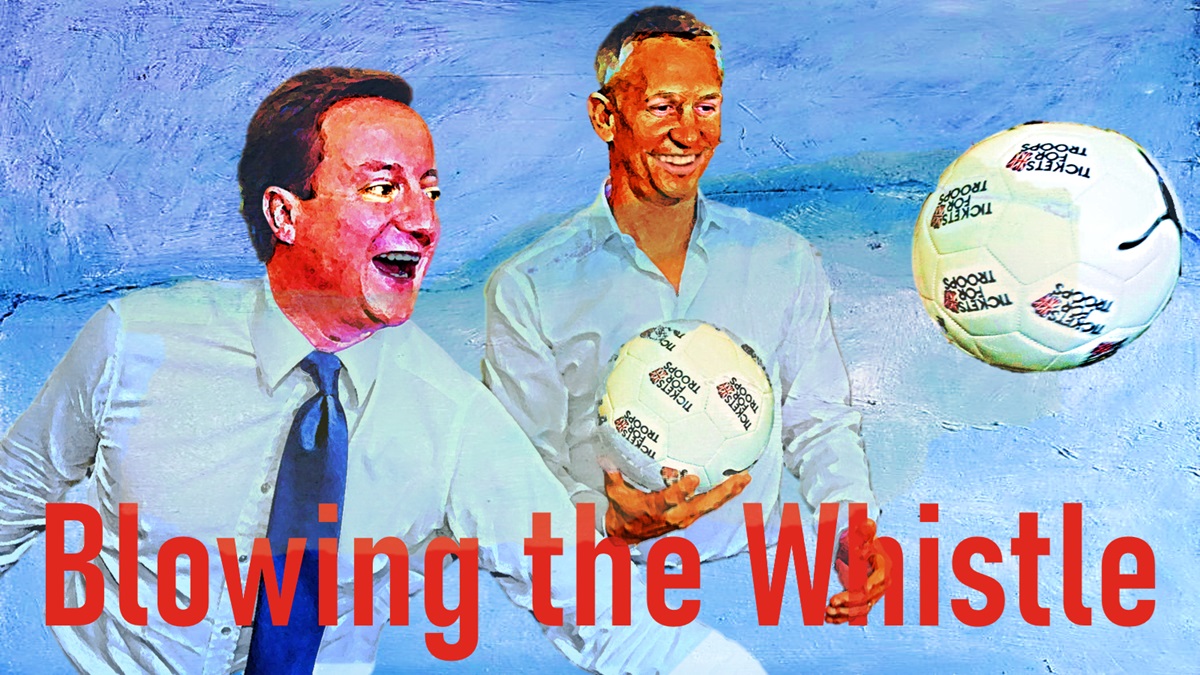
The football vote is not now something to be ignored. (Though even back in 1990, the Valley Party – formed by Charlton Athletic fans disgruntled at Greenwich Council’s refusal of planning permission to rebuild their historic, derelict stadium – got more votes than the Liberal Democrats in the local elections.)
The threat to remove a club’s licence, which gives them the right to compete in English football’s professional top five tiers, is the key to the regulator’s powers, with financial dealings or even matters like relocating the stadium or changing shirt colours requiring approval. The Competition Appeal Tribunal, or the High Court, will be the location for objections to the regulator’s decisions, in a world where football’s international bodies have become well used to defending their rulings against legal challenge.
Whether the Football Governance Act is the answer to giving the People’s Game back to the people – or even if it has a hope of being effective in so international an industry – is not too clear. It might well be an exemplar of Yes, Prime Minister’s Politician’s Syllogism, where the desire to do something has resulted in the doing of anything. Football may or may not be the winner, but lawyers look set for promotion.
Discover more from Lion & Unicorn
Subscribe to get the latest posts sent to your email.
