In a series to mark Lion & Unicorn’s first decade, FINLAY McLAREN presents ten cultural artefacts from the last ten years, telling the story of where we’ve been, where we are, and where we’re going.
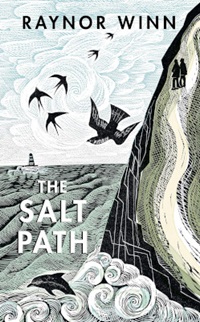
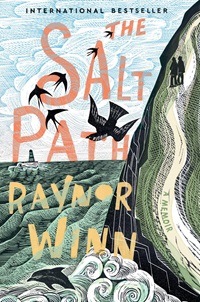
The Salt Path by Raynor Winn tells the heart-wrenching, soul-bruising and totally true (honest, guv) tale of middle-class, middle-brow and middling couple Raynor and Moth Winn.
Contending with the loss of their family home and a terminal diagnosis for Moth (who is bohemian bourgeois, not non-binary), these two backpacking reprobates decide to embark on a 630-mile trek along the South West Coast Path. Along the way they encounter the varied multitudes of people, circumstances and outlooks that populate this country; it’s rather like The Pilgrim’s Progress but with less Christendom and more navel-gazing.
The Salt Path has sold over two million copies and was awarded the Royal Society of Literature’s inaugural Christopher Bland Prize, before being adapted into a film starring the poor man’s Janet Brown, Gillian Anderson and English-accent-for-hire Jason Isaacs. The book’s success is hardly a surprise: even in the rag-and-bone world of modern publishing, any narrative that makes you feel terribly worthy for having borne witness to a gruelling true story is bound to do numbers.
What is surprising is that, despite all the sales, the acclaim, the award shortlists and the column inches, The Salt Path is almost unreadable. Plodding, self-centred and deathly dull, Raynor Winn’s chronicle of a desperate couple’s long journey through endless complaining and bad writing isn’t worth the paper it’s written on. I trudged, limped and, finally, crawled through the whole punishing thing. Thoughts and prayers gratefully received.
Firstly, The Salt Path struggles with tone. This raw, aching testimony of a couple stripped of everything except one another never quite shakes the faint whiff of artisanal sourdough. The Winns’ hardships are relayed with the bemused smugness of a minor royal touring a sub-post office, and their ordeal is framed less as a brutal collapse into society’s margins and more as a rustic sabbatical – the sort of thing Boden Catalogue models might do to ‘reconnect with what really matters’.
Secondly, there’s the walking. Dear God, the walking. Page after page of traipsing along cliffs, through rain and across fields; the only excitement provided by an occasional bramble scratch or slight nettle sting. I’m not against nature-writing – done well it can transcend pedestrian descriptions of ‘green-blue seas’ and ‘windswept moors’ to capture the sublimely beautiful. But Raynor’s efforts simply render the magnificent landscapes of Devon and Cornwall as joyless, grey backdrops to her own ceaseless complaining. The South West Coast Path should sue for defamation of character.
Thirdly, and worst of all, there’s the sheer litany of the Winns’ woes. Every blister, every drizzle-soaked sock, every slight from a stranger is carefully itemised, as though each minor annoyance were a new Station of the Cross. One might expect casual conversations with fellow walkers or local farmers to provide moments of light, warmth or reprieve. Instead, Raynor’s portraits of the people they meet are strikingly ungenerous: a farmer offering a corner of land to camp on becomes a miser; a shopkeeper questioning their scruffy appearance is reduced to a petty tyrant; and every fellow walker represents a fresh source of irritation. Even kindness is recast as exploitation, hospitality treated as faintly suspect.
Through it all, the Winns emerge as perpetually put-upon innocents, stoically shouldering burdens everybody else seems only to add to. It makes for a wearying read. Less an account of resilience in the face of adversity, more a morality tale in which the authors alone are noble, the supporting cast little more than obstacles or opportunists.
And yet, despite all this, The Salt Path was canonised as a work of great emotional truth, simply for documenting a Middle English couple’s miserable hike. Somehow readers felt morally improved by turning the pages, as if buying the book were an act of solidarity with the downtrodden.
This, I think, is the real genius of The Salt Path; not its prose (dire), nor its insights (meagre), nor even its narrative (non-existent). Its genius lies in how perfectly it flatters its readership. It allows the comfortable classes to flirt with vagrancy and to dabble in despair, all from the safety of a Waterstone’s armchair. It is poverty cosplay for the Waitrose shopper; suffering served up in manageable, morally improving doses to readers safe from ever having to spend a damp night in a bivvy bag themselves.
The Salt Path is less a memoir than a paperback virtue signal. And like most virtue signals, it’s all a bit of a front.
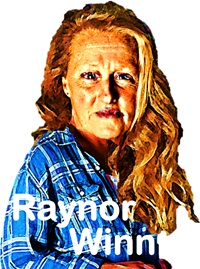
In July 2025, the Observer published a blistering exposé by Chloe Hadjimatheou suggesting that Raynor Winn’s bestseller was more fiction than fact. Less The Salt Path and more The Pinch of Salt Path, eh readers?
According to the report, the Winns – real names Sally and Timothy Walker – did not lose their cherished ‘forever home’ due to an unfair legal battle with an old friend, but because of difficulties repaying a loan they had secured against it. More sensationally, Hadjimatheou reported that the loan had been used to settle an allegation that Sally Walker had embezzled funds from a former employer (a claim corroborated by a BBC investigation).
Doubt was also cast on Tim Walker’s diagnosis of corticobasal degeneration (or CBD) a neurodegenerative disease. Medical experts noted that Tim’s prolonged survival, apparent reversal of symptoms, and unusual physical stamina (as documented in the bestselling book The Salt Path – available in all good charity shops) clashed with established understanding of a condition that typically proves fatal within eight years.
Documents further suggested the couple had owned a property in south-western France (where else?) during the period of supposed homelessness described in the book. Meanwhile, several of the cruel and heartless characters presented in The Salt Path – from land owners to cafe workers – came forward to reveal that their experiences with the Walkers (née Winns) diverged considerably from their depictions in the book (whodafunkit!).
Raynor Winn responded, calling the reporting ‘grotesquely unfair’ and ‘highly misleading’, adding that she will be seeking legal advice (fingers crossed she has better luck this time). She also expressed deep regret for past mistakes, confirmed no criminal charges had been filed against her, shared medical letters to affirm Moth’s diagnosis, and stated that The Salt Path captures ‘the true story of our journey’ (all things L&U’s lawyer insisted I mention).
What’s striking about The Salt Path scandal isn’t just the possibility that a couple of canny opportunists pulled one over on the reading public – after all it’s easier to lie when you don’t have to look someone in the eye – it’s that they pulled it off so easily.
Plodding through the book, you realize how flimsy many of the alleged falsehoods are. No, Raynor, you didn’t meet a ‘bad boy in a posh village’ who railed against ‘the rich man on the hill’. And no, your husband Moth wasn’t mistaken for a famous poet by a wealthy man and his household staff. And you certainly never competed in a pub quiz – yes, this really is one of the events Raynor is accused of fabricating.
So how did nobody notice the myriad (alleged) fabrications until an Observer hack started ringing round? Well, because Raynor and Moth Winn, for all I dislike them, are clever. They spotted the weak spot in the market – that soft, underbelly of Britain’s collective conscience – and gave it a hearty prod.
Because, for the last decade, Britain hasn’t really been interested in ideas, or arguments, or even stories. What we wanted was life. Not expertise, not perspective, not facts, but ‘lived experience’. Ideally lived experiences so tragic, so harrowing, that they’re enough to leave even your Kindle in tears.
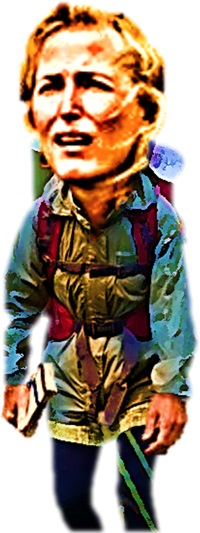
And so when a couple of backpacking vagrants arrived on the cultural frontstep, telling tales of homelessness, terminal diseases and coming third in a pub quiz, the country was only too happy to invite them in. After all, we wanted to listen.
The rise of ‘lived experience’, although tantamount to tautology, has profoundly changed culture and civic life. In fact, I would go as far to say that it has come to define our popular culture.
This phrase ‘lived experience’ is best understood as the first-hand authority of having endured something yourself: the feeling of poverty, the weight of racism, the reality of illness or abuse. Testimony rooted in biography, carrying a natural force that statistics or abstract argument rarely can.
Over the last decade no panel show, podcast, or paperback has been complete without this new social trend rearing its pugnacious head. Nearly all conversations about politics, culture, or morality have seen the playing of the same tried and tested trump card: ‘Well, speaking as someone who’s actually lived through this…’ or ‘Well, speaking as the only [insert minority group here] on the panel…’ At which point, the argument was over, and everyone else was morally obliged to nod along.
It didn’t matter that half the time the ‘lived experience’ in question was as shaky as a Guardian spellcheck. Nor that the people delivering it were hardly victims, but typically fully paid up members of the London media classes. What mattered was that we were in an age where ‘lived experience’ was the highest form of cultural currency.
The most valuable accounts of ‘lived experience’ were not ‘what I did on my holidays’ fare. They had to carry an undertone of struggle; poverty, discrimination, disability or trauma, all did very well on the stock exchange of human suffering that was British culture. And once these victimised lived experiences became cultural cheat codes, a way of ensuring agreement, attention and authority, it was only natural that the industries of storytelling – books, television, theatre – would seize on them.
Publishing in particular didn’t just nod along; it built a business model. Admittedly, since the successes of A Child Called It (1995) and Angela’s Ashes (1996), ‘misery memoirs’ have been one of the industry’s few reliable commercial categories. But recent years have seen a boom in the market – in 2019 sales of memoirs surged by 42 per cent, while 2023 saw that same genre reach a fifteen-year high, generating some £121 million.

The market has been flooded with books dealing in every kind of trauma and hardship: grief memoirs, trauma memoirs, abuse memoirs, and addiction memoirs. Enter any bookshop and there is a table of pastel covers waiting for you by the door. Each new tale is presented as an urgent dispatch from the trenches of despair, but really, they are glossy, gift-wrapped products designed to sell moral satisfaction to the middle classes. Buy the book, absorb the sadness, and emerge as a better, more compassionate citizen.
Television also has a long history of entertaining, educating and enlightening audiences with tales of other people’s deprivation and distress, but recent years have seen a surplus of such programmes. Semi-autobiographical dramas like I May Destroy You (2020) and It’s A Sin (2021) turned their creators’ most harrowing experiences into BAFTAs, with breathless reviews dubbing them ‘hard-hitting’ and ‘essential viewing’. Of course, if you were unlucky enough to have had a happy life you could always write about somebody else’s pain. Three Girls (2017), Help (2021), Mr Bates vs The Post Office (2024) and Adolescence (2025) all cheerfully lifted some terrible real-life event from the headlines and plonked it down on prime time. Letting even people with no victimhood status or traumatic ‘lived experience’ to get in on the fun.
Meanwhile comedy, which in years gone by would have laughed at the faux-earnest bleeding-heart dealers of ‘lived experience’, joined the cultural gold rush. Sitcoms like Fleabag (2016-19) weaponised personal trauma for laughs, After Life (2019-22) mined depression and grief in lieu of any actual jokes, and award-winning stand-up shows like The Darkness of Robins (2017) and Nanette (2017) saw C-list comics letting audiences bask in the warm, self-improving glow of somebody else’s long, dark night of the soul. Comedians became chroniclers of their own suffering, with every awkward family gathering, failed relationship, or mental-health wobble recast as vital, hard-hitting social and cultural commentary, with the odd joke thrown in.
Once comedy had joined the parade, the drift was complete: there was no corner of cultural life left untouched by the cult of confession. What began as testimony morphed into performance, and what started as catharsis became commerce. If entertainment, publishing and stand-up could all be repurposed into vessels for pain, it was only a matter of time before politics – the biggest stage of all – followed suit. And when Westminster discovered that identity could be wielded like a shield, the game was up.
By 2024 every hustings, debate and speech had descended into a sort of public trauma Top Trumps, candidates competing to prove whose backstory of adversity made them more authentic and therefore more deserving of votes. Grew up in poverty? +10 authenticity. Parents were immigrants? +20. Your dad was a toolmaker? Automatic majority in the House of Commons.
‘Lived experience’ didn’t just matter, it was the only thing that mattered. To ask whether a story was exaggerated, embellished, or, God forbid, fiction was to invite public stoning. Just ask Piers Morgan.
The whole country has ended up trapped in never-ending rounds of the latest middle-class parlour game: ‘My Trauma Beats Your Trauma’. University seminars, news features, social media threads, they all thrum to the same tune. If you can’t play the ‘lived experience’ card, you have no seat at the table.
During the 2016 Brexit referendum, Michael Gove declared: ‘I think the people of this country have had enough of experts’, provoking feigned fury from polite society. But he was right: expertise was out, empathy theatre was in.

And so we come back to the Winns. I take my hat off to them. They saw that Britain was on the cusp of turning victimhood into virtue, and virtue into a lifestyle brand, and jumped onboard. Maybe to make money, or maybe because they realised that it made for a good story, who knows. But the Winns didn’t invent anything new, or change the course of British popular culture; all they did was sell us what we were already buying.
Which leaves us with the central, queasy question. Are the Winns uniquely cynical charlatans, or are they simply the logical end point of this national trend? A trend which has seen fame, fortune and moral authority granted to whomever can claim to have suffered most publicly, most poetically, and most lucratively.
I don’t have the answer, but consider this: in a society where ‘lived experience’ and victimhood have become cultural capital, where everybody can be an emotional entrepreneur, and the whole country is cashing in, what happens when the currency becomes devalued? What are we left with when all the suffering, grievance and disadvantage has been spent? What can we say when there are no more tears left to cry and emotional resonance has lost all power? I think we’re going to find out very soon. And I can’t see this being a happy ending.
next in Decade…

and previously…
Discover more from Lion & Unicorn
Subscribe to get the latest posts sent to your email.
