
BEN FINLAY presents a personal observation on British prog rock in ten movements
There is a Prog Playlist available here, based on this article.
Of all the top tens I’ve compiled, this has undoubtedly been the most difficult. I’ve attempted it as an objective list, trying to incorporate lesser lauded titles, and then in an historical format, attempting to tell the story of prog’s golden age in ten albums. None of these approaches felt satisfactory.
Perhaps it’s the nature of my relationship with the genre; like many others, I was drawn to it in my early teens, put it aside some time in my early twenties, and have come back to it later in life. One’s taste hopefully changes and matures over the years, so while I went along with the ‘classic’ titles then, I obviously find it easier to express my own opinion now.
Therefore, after much agonizing, I decided upon the following idea. Reading back though the indispensable Q/Mojo magazine ‘Pink Floyd & the Story of Prog Rock’ from 2005, and consulting other worthy prog repositories, I’ve come up with an alternative to the many worthy classic choices that are often selected.
My reasoning is threefold. First, although I agree with many of the critics’ choices, and I have them in my collection, some are now completely over-familiar, and others are not necessarily my favourites. Second, this new approach provides an important chance to reevaluate some unsung records. Third, I have nothing new to add to the conversation about Close to the Edge, Foxtrot or Dark Side of the Moon. To cast a new light on it in this manner is also far more honest. Prog rock fans are notorious for their (quite rightly) differing and strong views, and I’m no less strongly opinioned either.
So, with the overture out of the way, set the controls for the heart of the fun, and join me for a suite in ten parts – my personal best of British progressive rock.
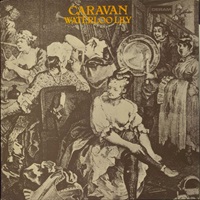
10. Caravan, Waterloo Lily (1972)
Track choice: ‘Nothing at All’
Caravan’s third album, In the Land of the Grey and Pink, gets all the plaudits, but good as it is, the follow-up Waterloo Lily is the one that does it for me. Adding keyboardist Steve Miller to the band, with guest spots from saxophonist Lol Coxhill, the album is remarkable for its jazz/blues sound, as essayed on the ten minute-plus ‘Nothing at All’. However, this direction wasn’t favoured by everyone; as bassist Richard Sinclair later remarked, ‘It didn’t quite work with Steve in the band because the music started to go a bit too loose for the way that (guitarist) Pye Hastings and (drummer) Richard Coughlan played.’
Soon after Waterloo Lily, Sinclair and Miller left Caravan to play in a band named Delivery, which led to the formation of jazz/prog luminaries Hatfield and the North. Still, the album is ripe for a revisit; an interesting departure for the Canterbury stalwarts, housed in a handsome sleeve which is a detail of ‘The Tavern Scene’ from A Rake’s Progress by William Hogarth. What’s not to like?
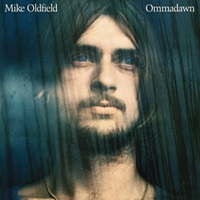
9. Mike Oldfield Ommadawn (1975)
Track choice: ‘Ommadawn (Part One)’
I see your Tubular Bell and raise you my Ommadawn. Oldfield’s third epic is an absolute personal favourite, with part one encapsulating the best of the multi-instrumentalist’s work into twenty minutes of sublime music. The section from the 12.20 mins mark is hypnotic – African drums, choir, acoustic and electric guitars creating an urgency that builds in a dramatic, whirling fashion. I clearly remember blasting this part at high volume across an empty university campus sports field during lockdown, its intensity providing much needed catharsis in my isolation.
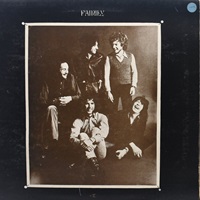
8. Family, A Song for Me (1970)
Track choice: ‘Drowned in Wine’
Family are one of the great underrated progressive bands, fully deserving a reappraisal. Each of their records is richly rewarding. Listening through their catalogue again, one of the highlights was Bandstand (1972), which included the beautiful ‘My Friend the Sun’, but I’m going to plump for A Song for Me (1970) as my choice. You can see the band perform the opening track ‘Drowned in Wine’ at twilight on Glastonbury Fayre (the film of the legendary 1971 festival) – a great atmospheric moment that brilliantly encapsulates Family’s original and eclectic sound. What a band.
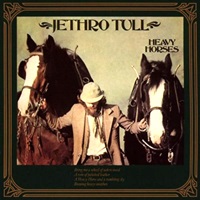
7. Jethro Tull, Heavy Horses (1978)
Track choice: ’No Lullaby’
‘I was getting involved in farming and other rural stuff… so the horse-hoeing husbandry of the original Jethro Tull era was in the back of my mind’ – Ian Anderson
While the Tull cognoscenti loved A Passion Play (1973), the critics weren’t so keen; they raved about Thick as a Brick (1972) and Aqualung (1971). All good stuff, but surely 1978’s rural folk-prog masterpiece Heavy Horses should get some recognition? Admittedly, this record comes at the absolute end of prog’s golden age but is no less an achievement for that.
Heavy Horses is in a fact a glorious lament for a Britain now passed; a love letter to the pastoral, and to leader Ian Anderson’s embrace of the earth and country life. It is also chockful of great tunes such as ‘Acres Wild’, the lovely ‘Moths’ and the wonderful title track. It’s a great record that stands in contrast to the era it was released in. I give full respect to the Tull for sticking to their guns; as Anderson later stated, the band didn’t want ‘to appear as if we were trying to slip into the post-punk coattails that were worn by the Stranglers or the Police’. Good man.

6. Soft Machine, Bundles (1975)
Track choice: ‘Hazard Profile’
Third is the Soft Machine record that crops up most on the prog lists, and it is a great piece of late 1960s psych/jazz/prog, but I’d argue that Bundles is way better. Yes, it veers on the edge of jazz-rock fusion, but it’s a remarkable album that features some great compositions, and most notably the absolute incendiary guitar work of Allan Holdsworth.
The first Softs album on EMI’s Harvest label, Bundles is far away from the band’s original Canterbury-style sound, moving to an instrumental muscularity that flows throughout this record. Holdsworth’s composition, ‘Land of the Bag Snake’, provides the album’s most lyrical melody, and the whole thingis a thrilling jazz-prog ride from start to finish.
5. Genesis, Wind and Wuthering (1976)
Track choice: ‘Blood on the Rooftops’
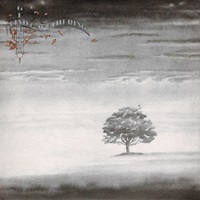
While the Peter Gabriel years are considered the apogee of the band’s prog years, I’m putting in a claim that the first two albums (three, if one considers the live Seconds Out) of the Phil Collins era are every bit as prog, every bit as innovative. In fact, I’ll stick my neck out and argue that as good as the first Collins-led record A Trick of the Tail is, Wind and Wuthering is even better, particularly side two.
The group’s last album with guitarist Steve Hackett is full of beautiful and ornate prog, with the sweeping ‘Unquiet Slumbers for the Sleepers/…In That Quiet Earth/Afterglow’ medley and ‘Blood on the Rooftops’ by Collins and Hackett, a wonderful, romantic evocation of British television viewing in the mid-70s. A great example of late-golden age prog, bristling with atmosphere and an English aesthetic, it’s always been my favourite Genesis record.
4. Yes, Going for the One (1977)
Track choice: ‘Awaken’
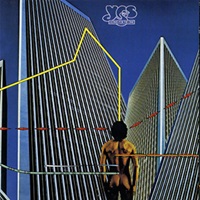
This was the first Yes album I ever listened to, discovered in a family friend’s record collection. I instantly warmed to its dense mid-1970s wall of sound style production and marvelled at the inner sleeve photography of Lake Geneva (the band recorded the album in Switzerland). Aesthetics aside, the music here is great; the bluesy, whirling title track, the beautiful acoustic based ‘Turn of the Century’, Anderson’s prog pop ‘Wondrous Stories’, and the kaleidoscopic ‘Awaken’; as keyboardist Rick Wakeman would later say, ‘for me, the perfect piece of Yes prog.’
3. Gong, You (1974)
Track choice: ‘Isle of Everywhere’
‘Some far-out jazz-prog shit…’ – Ultimate Guitar Magazine, 2020
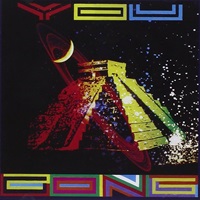
The most far-out title on the list, You is a joyous prog-psych-jazz extravaganza, the third (and final) of their ‘Flying Teapot’ album trilogy, and the last incarnation of the band with founder and visionary Daevid Allen until 1992. The album was recorded at Virgin Records’ Manor Studios in June 1974 and features short narrative pieces alongside longer instrumentals. The expansive jams, such as ‘Isle of Everywhere’ are ahead of their time, looking forward to the sounds of dance and rave music. It is indeed Gong’s spaciest album, with an ethereal atmosphere that is as irresistible as it is addictive. Delicious.
2. King Crimson, Islands (1971)
Track choice: Sailors Tale
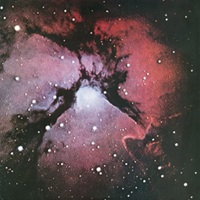
The critics often cite the band’s debut, In the Court of the Crimson King, as their masterpiece, and indeed it is a magnificent piece of work, which defined the prog territory and scared everyone senseless. However, I’ve always enjoyed the gentler, jazzier Islands. The album has (and continues to have) mixed reviews, with comparisons to the classic King Crimson line-up which followed the record always casting an unfair shadow on it. And yes, while the band with drummer Bill Bruford, John Wetton and David Cross is undoubtedly the Crims’ high point, Islands is the great ‘mid period’ Crimson record, a transitional album that owes something to the band’s original sound but also strongly points to its future. Check out the masterful instrumental ‘Sailors Tale’ for evidence (if needed.)
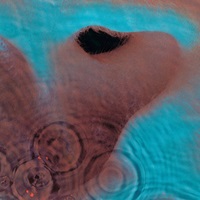
1. Pink Floyd, Meddle (1971)
Track choice: ‘Echoes’
‘Echoes’ was where we discovered the best music we created was when all of us got together and collaborated rather than individually coming to the studio with a song…’ – Richard Wright
‘Meddle was a clear forerunner for Dark Side of the Moon, the point where we first got our focus…’ – David Gilmour
Of course, we all know about the big one from 1973. I have no argument at all with its rightly lauded status but also have nothing to add to it. However, I am a huge advocate of Meddle (1971), the point where the Floyd really discovered themselves. Side one blasts off with the ominous bass line and space-rock boogie of ‘One of These Days’, which is followed by the underrated acoustic ‘Pillow of Winds’ and fan favourite ‘Fearless’. We can pass over ‘San Tropez’ and ‘Seamus’ (featuring the sounds of Steve Marriott’s dog – look it up) to reach side two and the band’s undoubted masterpiece, the mighty 23-minute epic ‘Echoes’.
Inspired by poet Mohammad Iqbal’s ‘Two Planets’ (a metaphor for differing aspects of human nature and desires), but weary of the band’s ‘space rock’ moniker, ‘Echoes’ sees bassist and lyricist Roger Waters finding a new direction. Rather than look above, Waters lyrics look down into the deep ocean, taking us to the subterranean, ‘deep beneath the rolling waves to labyrinths of choral caves’ to paraphrase but one line. As Waters himself commented, ‘Echoes’ ‘is the start of all that stuff about making connections with other people that became the meaning of my work from then on’.
But it’s not just the lyrical impetus that matters; the music is an incredibly moving soundscape, all four members pushing the composition on to greater heights before breaking down into the timeless middle section. The reemergence and build up to the song’s last verse and conclusion has a momentum that is glorious, one that I never tire of, which is remarkable since I first heard the piece (in its live form on the Live at Pompeii film) in 1985.
After that I devoured their back catalogue, saw them live twice in the late 80s and once in the 90s, later attending some of Gilmour and Waters’ respective solo shows. (Gilmour memorably resurrected ‘Echoes’ for his 2006 solo shows to great effect.) That said, all these years later, I wouldn’t care if I never listened to The Wall or A Momentary Lapse of Reason again. But I’ll always come back to Meddle and specifically ‘Echoes’. Perhaps the adage that ‘some things never grow old’ is true. This is ‘prog’ that no one should be ashamed of loving. So there.
see also:

Discover more from Lion & Unicorn
Subscribe to get the latest posts sent to your email.
