In a series to mark Lion & Unicorn’s first decade, FINLAY McLAREN presents ten cultural artefacts from the last ten years, telling the story of where we’ve been, where we are, and where we’re going.
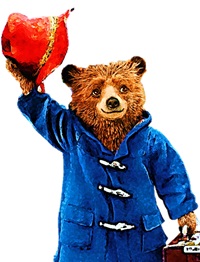
In the Autumn of 1958, when Britain was shedding her imperial skin and embracing modernity, a diminutive bear from darkest Peru emerged from the pen of Michael Bond and stepped onto the platform of Paddington Station.
Wearing a pair of black boots and a crumpled hat, swaddled in a blue duffel coat, and carrying a battered suitcase that bore a tag reading ‘Please look after this bear, thank you’, this peculiarly British figure turned out to be Paddington Bear, unlikely builder of a cultural empire.
Bond, a former BBC cameraman, went on to write over a hundred Paddington adventures during his lifetime, starting with Please Look After This Bear and ending with 2018’s Paddington at St Paul’s. These stories typically involved the bear encountering some aspect of British daily life, be it having a bath, travelling on the London Underground, or a simple trip to the shops, always comically misinterpreting the situation, causing chaos, and then resolving it with help and/or luck, all within ten pages or less. The series became a huge success, selling over 35 million copies and being translated into some forty languages.
As a result, Paddington has become a big noise in the world of merchandising, with his image emblazoned on soft toys, clothes, badges and bags, officially licensed marmalade jars, stationery, stamps, tea towels and all manner of tacky tourist trinkets. He’s also starred in two animated British television programmes: Paddington (1976) and The Adventures of Paddington (2019-25).
To put it simply, Paddington has become Britain’s de facto cultural mascot, a sort of Marks & Spencer own-brand Mickey Mouse, or Hello Kitty by way of E.H. Shepard, as ubiquitous as the Beatles, red double-decker buses and cups of tea. From Land’s End to John o’Groats, Paddington is inescapable. For the last sixty-seven years, living in Britain has meant sharing a country with Paddington Bear.
Such is his star power that in 2014 he made the big step onto the big screen in the live-action feature film Paddington. With Ben Wishaw as the voice of the marmalade-sandwich-loving ursid, the film was a huge success and, as naturally as jam follows cream, the imaginatively titled Paddington 2 followed in 2017.
The sequel, directed by Paul King and co-written with Simon Farnaby, picks up a short while after the first film. Paddington, now settled with his adoptive family the Browns, is shopping for his Aunt Lucy’s 100th birthday. Visiting an antique shop, owned by Jim ‘legal requirement for every British film’ Broadbent, our furry hero finds the perfect gift: a pop-up book of various London landmarks. Paddington – being a CGI bear – is unable to afford the book and so begins taking odd jobs around his North London ends to raise some money. But – again, being a CGI bear – he isn’t cut out for domestic labour, and slapstick comedy ensues.

At this point, the film’s arch villain Phoenix Buchanan appears, a narcissistic washed-up actor played by Hugh Grant (look to camera). Buchanan, reduced to dog-food adverts and one-man shows, believes the pop-up book may hold clues to a hidden fortune and so he steals it, leaving Paddington as the number one suspect.
The unfortunate bear is sentenced to ten years in Portobello Prison, where his earnest kindness transforms the grim penitentiary into a pastel-pink haven of marmalade sandwiches and camaraderie, particularly with gruff cook Knuckles McGinty, played by Brendan Gleeson. Meanwhile the Brown family, led by Sally Hawkins as Mary and [REDACTED] as her bumbling husband Henry, turn amateur sleuths to uncover Buchanan’s fiendish plot and clear Paddington’s name.
Will the Browns succeed? Will Phoenix Buchanan find the treasure? Will Paddington Bear get the chair? Answers on the back of a postcard.
Today, Paddington 2 is almost as culturally ubiquitous as Paddington himself. Seemingly everybody in the country has seen the film and loves it. And it’s my very reluctant duty to inform you all that Paddington 2 is, indeed, as good as everyone says. Paul King delivers the cinematic equivalent of a lovely, warm hug and what is easily the best British film of the last ten years.
Released at a time when family visits to the cinema were confined to soulless Marvel blockbusters and 120-minute exercises in product placement, Paddington 2 stood out for its warmth, charm and heart. The film feels like a twenty-first-century updating of those family-friendly classics of yesteryear, like Mary Poppins, Chitty, Chitty, Bang, Bang and Bedknobs and Broomsticks. Deeply eccentric and whimsical, but beautifully light and laying on just the right amount of sentimentality, Paddington 2 pulls off some big laughs, a few scary moments and a satisfying emotional finale to ensure that a good time is had by all.
The film grossed some $284 million at the box office and for a time held a 100 per cent approval rating on Rotten Tomatoes. It also resulted in Paddington’s status ballooning from mere national treasure to full blown national institution. Paddington fever gripped the nation, culminating in the short film Ma’amalade sandwich, Your Majesty (2022) which saw him meet the Queen, who wasn’t a CGI bear.
This is where the trouble starts.
Because Paddington is no longer simply a lovable character in an old children’s storybook, or the cultural mascot of modern Britain’s twee excesses. That little bear in the blue coat and the red hat is now a national symbol, a sort of John Bull for our time. But, unlike the Union Flag-waistcoated stereotype, Paddington doesn’t represent patriotic pride or the platonic ideal of Britishness, instead he’s become the liberal establishment’s cherished symbol of immigration, integration and diversity.
In February of this year, as Britain continued to grapple with the ongoing illegal immigration crisis, Labour MP Stella Creasy invoked his name in Parliament, warning that stringent asylum policies could ‘deny Paddington Bear’.
Around the same time, GB News guest Dr Krish Kandiah scolded anti-migrant protesters, reminding them: ‘Paddington Bear is an unaccompanied asylum seeker, yet he represents something beautiful about our nation.’ Some years earlier, the ‘Our Home Office’ protest group – no doubt comprised of various shrewish civil servants, festooned in a myriad of Pride badges and lanyards, like highly decorated veterans of the culture wars – had wielded images of the duffel-coated bear to oppose the then government’s Rwanda deportation plan.
The absurdity of all this Paddington-based politicking peaked when the Home Office, in a promotional stunt for the third film in the series Paddington in Peru (2024), issued Paddington with an official British passport, which listed his nationality as Peruvian and his occupation as ‘Bear’.
Framing Paddington as an immigrant is nothing new. In fact, it’s the essential ingredient of the character. The whole franchise hinges on the bear’s charmingly naive outsider view on British life. But to equate the huddled masses of Uber Eats drivers and permanent hotel guests with a children’s character who inhabits a fictional Britain somewhere between Wes Anderson and an Ealing Comedy is lunacy. Paddington’s easy assimilation is a fantasy, not a policy blueprint.
This lionising of a make-believe bear into a national political symbol also speaks to a broader infantilisation in British politics. Imagine Margaret Thatcher declaiming during the 1984-85 miners’ strike: ‘Now, this really is not in the spirit of SuperTed’; or if James Callaghan had addressed the nation during the Winter of Discontent with the rallying cry: ‘We must all look to Bagpuss!’
Of course, patronising proclamations from the great and the good are nothing new. But babytalk from our elected representatives is surely a modern low, and coming from a politician as fêted as Creasy it tells us something else about our favourite beleaguered bear and his position as a national icon. Because more than just the focus-grouped face of immigration, Paddington has also become the patron saint of the new New Jerusalem.
For behold, Be Kind Britain!

In March of this year, two drunken RAF engineers were convicted on a charge of vandalism. Both men were fined and ordered to carry out unpaid work. This would hardly have been newsworthy in itself, except for the fact that the duo had vandalised a statue in the image of Paddington Bear.
During sentencing, district judge and old darling Sam Goozee delivered a masterclass in sanctimony: ‘He [Paddington] represents kindness, tolerance and promotes integration and acceptance in our society… Your actions were the antithesis of everything Paddington stands for.’ (Somewhere, Noddy was nodding solemnly. His little bell ringing a death knell for common sense.)
Goozee’s remarks are extraordinary for two reasons. First, they weren’t written by Peter Cook. Second, for the first time in living memory, an English judge has voiced an opinion of some worth; because he told us so much about the soft-headed worldview of the current British establishment.
Since 2017, in the wake of the Brexit referendum’s bitter fallout, Britain’s political, media, and professional classes have been preaching kindness like it’s a new national religion. Barely a day has passed without a politician or a pundit urging us to ‘be kind’. In her Christmas message that year, then prime minister Theresa May waxed lyrical about embracing ‘Christian values of love, service, and compassion’. Never mind that her party’s austerity policies had left food banks busier than ever, apparently a warm call for kindness could fix it all.
In May the same year, twenty-two real-world Britons were murdered in a terrorist attack at the Manchester Arena. A month later seventy-two people lost their lives as a result of the worst residential fire since the Blitz, at Grenfell Tower in London. In response to each atrocity, leaders from all sides – Theresa May, Sadiq Khan, Jeremy Corbyn, even the Windsors – called for compassion and togetherness, as if a collective hug could mend a fractured nation.
The One Love Manchester concert held in June 2017, weeks after the terror attack, saw the city come together to sing hold-your-head-up-high Britpop anthem ‘Don’t Look Back in Anger’, led by millionaire pop stars and cheered on by politicians. It was billed as a defiant act of unity, but let’s be honest, it was just a bit naff, wasn’t it?
Because ‘Be kind’ is a primary-school lecture, not a response to a national tragedy. Grown adults don’t need Hallmark platitudes from sickeningly insincere politicians to tell them how to act. Yet the establishment keeps up the mantra, as if crooning about love and kindness will absolve them from making tough decisions, or, really, any decisions at all.
It’s an admittedly noble idea. What’s so bad about peace, love and understanding? Who in their right mind would argue against kindness? But scratch the surface, and this saccharine moral scripture reveals its true form as a weapon to silence, sanitise, and smother anything resembling a difficult conversation. Wouldn’t want to upset the neighbours, you see.
Take immigration and asylum. Politicians love to invoke Paddington Bear’s story – refugee welcomed by a kindly (comfortably middle-class) London family – as a shorthand for why we should all just ‘be kind’ to newcomers. Never mind the messy realities of border policy, vetting, accommodation, or public concerns about integration. Raise those, and you’re not just wrong, you’re cruel, a villain to Paddington’s hero. The message is clear: shut up and be kind, or you’re no better than a statue-vandalizing thug.
This is the hallmark of Be Kind Britain. All complex debates are reduced to a simple moral binary: good or bad, kind or cruel, hero or villain. Be it immigration, trans rights, Winston Churchill, assisted dying, lockdown, prostitution, statue-smashers, school exclusions, drug abuse, net zero, the Chagos islands, online safety, benefit cuts, the price of Oasis tickets, or who put the bomp in the bomp bah bomp bah bomp, there is only one answer in Be Kind Britain, and if you disagree you’ll end up with a 6-foot-2 protestor clad in black from her balaclava to her Doc Martens, screaming: ‘Why can’t you just fucking be kind!?’
The overriding message of the last decade is clear: shut up and be kind, or else.
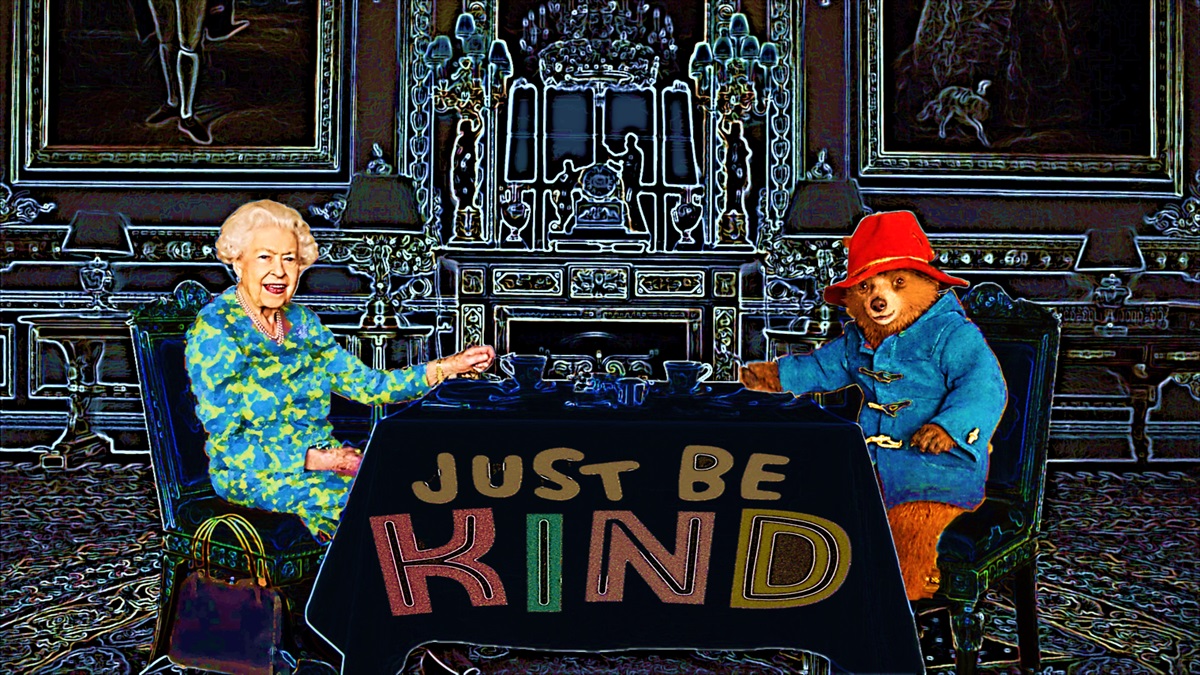
The establishment of Be Kind Britain – our politicians and our media classes – don’t debate. They excommunicate. Dissent becomes bigotry and scepticism becomes heartlessness. The result? A nation where the chattering classes’ obsession with moral purity drowns out reason. A country where nuance is a sin, complexity is an inconvenience and where Paddington Bear is drafted in whenever our leaders are too timid to face a problem head on. If this doesn’t sound like the Britain you know, pop your head out the window. The sermon’s already started.
Luckily, this can’t last much longer, and the establishment classes seem to be realising as much, albeit slowly. In another ten years’ time, Be Kind Britain may be remembered as a naive experiment, its legacy amounting to little more than a trail of suppressed truths and unaddressed crises, and a new politics where kindness has become a synonym for cowardice.
In time, the columnists and statesmen of Britain will awaken from their smug middle-class stupor and in the cold light of day turn to one another and say: ‘What now?’ I don’t have an answer for that, but I will give them a piece of advice. Put childish things away. Paddington Bear is for children, and that’s just fine. We teach children the simple virtues of kindness, tolerance and acceptance for good reason, but we adults live in a more complex reality. In the real world ‘be kind’ just isn’t going to cut it as public policy.
As for the bear, let him return from ideology to innocence. Let Paddington be a bedtime story again. Not a saint, not a symbol, not a passport-holder, but a creature of marmalade and mishaps. As Michael Bond wrote in the very first Paddington story: ‘Things are always happening to me. I’m that sort of bear.’ Yes, Paddington, you are and it’s time Britain let you bumble along in peace.
next in Decade…

and previously…

Discover more from Lion & Unicorn
Subscribe to get the latest posts sent to your email.
