
In a series to mark Lion & Unicorn’s first decade, FINLAY McLAREN presents ten cultural moments from the last ten years, telling the story of where we’ve been, where we are, and where we’re going.
On 8 January 2016, his sixty-ninth birthday, David Bowie released Blackstar.
His twenty-sixth studio album, it received widespread critical acclaim, with various publications crowning it their record of the year. It went on to win three Grammys and took home the British Album of the Year Award at the 2017 BRITs.
Recorded in New York City with a local group of jazz musicians and Bowie’s long-time producer Tony Visconti, Blackstar sees Bowie adding to his long list of artistic influences with the sounds of contemporary hip-hop and jazz fusion, specifically artists such as Kendrick Lamar on his album To Pimp A Butterfly (2015), the experimental hip-hop outfit Death Grips, and D’Angelo and the Vanguard’s 2014 progressive funk and soul project Black Messiah.
These influences manifest in the album’s offbeat jazz-rock sound, producing Bowie’s most lively, interesting and creative album since 1980’s Scary Monsters (and Super Creeps), not to mention one of the best British albums of the last ten years. From the wailing, sonic madness of sax-heavy ‘Tis a Pity She Was a Whore’ to the raging improvisational drum and bass freak-out on ‘Sue (Or in a Season of Crime)’ and the looping, grooving menace of ‘Girl Loves Me’, Blackstar presents an immediate, experimental and bold new musical vision for the Thin White Duke.
Despite the musical vibrancy and vitality, Blackstar is fundamentally an album about death. Bowie’s lyrics find the then sixty-eight year-old – who was undergoing cancer treatment during the recording sessions – grappling with his own mortality. The opening track features references to ‘the day of execution’ and proclaims that ‘something happened on the day he died’, while single ‘Lazarus’ has Bowie singing: ‘This way or no way, you know I’ll be free / Just like that bluebird now, ain’t that just like me?’ These are oddly personal lyrics from an artist who spent much of his professional life hiding behind theatrical personas or within elaborate stage shows, wilfully giving different answers to the same questions. Seeming always to be just out of reach. Not fully here.
How many times does an angel fall?
How many people lie instead of talking tall?
He trod on sacred ground, he cried loud into the crowd
I’m a Blackstar, I’m a Blackstar
David Bowie, ‘Blackstar’, 2016
His voice too takes on dimensions it’s never inhabited before. The smooth and crooning baritone making way for something older, more delicate, at times in danger of being overwhelmed, or drowned out by the constantly shifting jazz instrumentation.
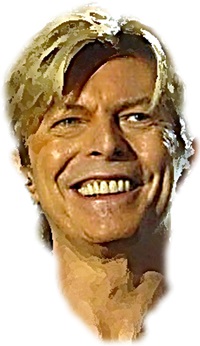
On the final track, album stand-out ‘I Can’t Give Everything Away’, Bowie is at his most tender and intimate. Sampling Berlin-era classic ‘A New Career In A New Town’, the song finds him giving his most open admission of where he is now, facing mortality while defiantly retaining some element of secrecy and mystique: ‘I know something’s very wrong / The pulse returns the prodigal sons / The blackout hearts, the flowered news / With skull designs upon my shoes / I can’t give everything / I can’t give everything away’. And then, in the end, the song fades into total silence. And Blackstar is over.
Seeing more and feeling less
Saying no but meaning yes
This is all I ever meant
That’s the message that I sent
David Bowie, ‘I Can’t Give Everything Away’, 2016
On the 10th of January 2016, two days after Blackstar’s release, David Bowie passed away.
Upon his death, cultural commentators rushed to codify Bowie. To set his legacy in stone. Most characterised him as an outsider. An artist on the periphery. The back-bedroom casualties’ representative in pop culture. This wasn’t the case. Not really. In reality Bowie and British culture were often fully simpatico. Any divergence was usually only a matter of Bowie being a short step ahead of everybody else.
As a young man, Bowie spent the 1960s flitting across London and flirting with various youth sub-cultures, from blues musician to mod to folk singer. By the time of his creative and commercial peak in the 1970s, he had taken his place as the vanguard of the pop avant-garde, bringing experimental theatre sensibilities and Krautrock musicality to the tea-time audience of Top of the Pops and into the mainstream.
The 1980s saw Bowie wardrobe-change into a yuppie, advertising Pepsi alongside Tina Turner, signing multi-million-dollar contracts, and helping to create the corporate music-video culture of the decade. And then the approach of New Labour saw him transform again. Now festooned in a Union Jack frock coat, having swapped Britain for America, Bowie evangelised about the possibilities of the internet, as wannabe rock star turned wannabe prime minister Tony Blair was promising the ‘information superhighway’ in every classroom.
Bowie was always looking ahead. He had an uncanny ability to predict the next big thing. This is why in 2016, he chose to die.
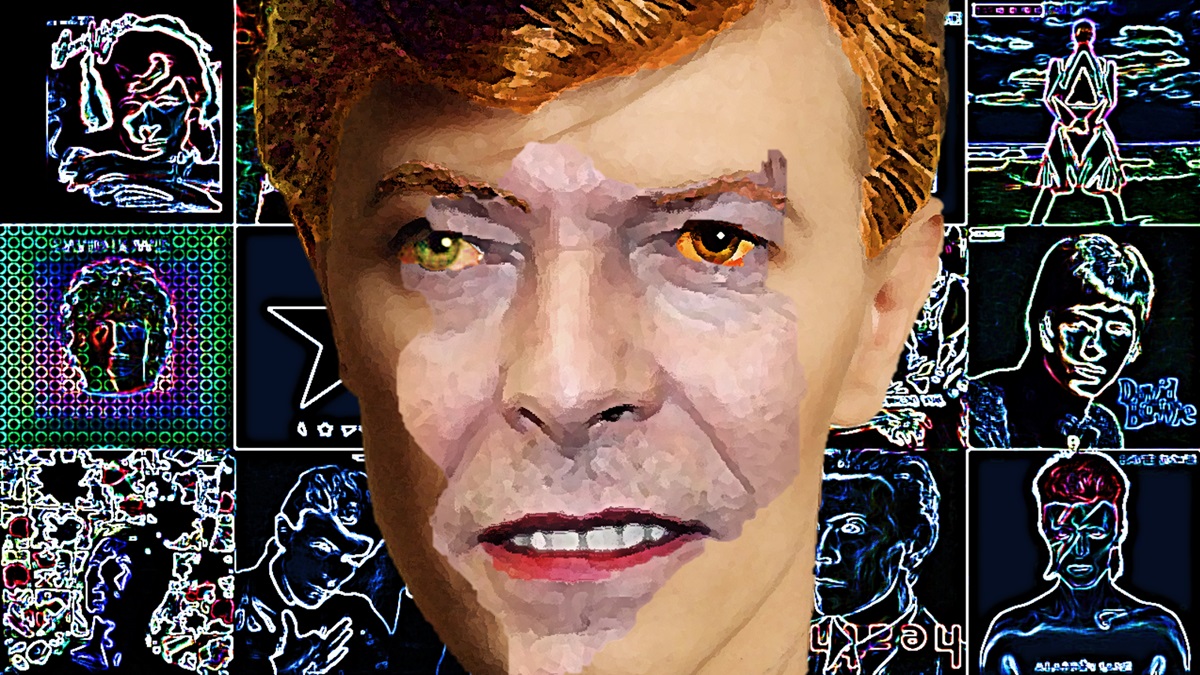
The release of Blackstar and Bowie’s passing heralded one of the great unwindings in cultural history. The following ten years would present the slow death of post-war Britain.
Our current liberal democracy, sustained by borrowing, can-kicking and mass migration, is coming to an end. Financially, we have become an economic triple-threat, with high debt, high taxes and a low-growth economy, all of which have resulted in a never-ending cost of living crisis and the collapse of the New Jerusalem’s greatest triumph: social mobility.
By the time I got to New York
I was living like a king
There I used up all my money
David Bowie, ‘Lazarus’, 2016
Meanwhile, the governing ideology of the Millennium, neo-liberalism, with its dependence on administrative bureaucracy, is under threat from a rising tide of right-wing populism provoked by uncontrolled mass migration.
Over the last decade, Britain’s liberal establishment has bounced from would-be-saviour to would-be-saviour in increasingly beleaguered attempts to hold back the crisis. May, Johnson, Truss, Sunak and Starmer were all, at one time, heralded as the protectors of the status quo, the new statesmen to pull Britain out of the quagmire. All five have failed. Bereft of any big ideas, positive visions or serious policy, our flailing ruling class has become panicked and rudderless, while the rise of the right has continued unabated.
The future doesn’t look any better. The next generation, who will in time take up the reins of power across this country, can’t afford their own homes, or even consider having their own children, resulting in fewer home-owners and a declining birth rate. Instead, the nation’s youth are expected to subsidise the retirements of the older, more affluent generations who created this housing mess in the first place, trapping young people in an endless cycle of renting or, even worse, living with their parents. Even post-war Britain’s one-stop-shop for climbing the social ladder has been kicked away. University graduates are no longer guaranteed graduate-level jobs, or even higher wages than non-graduates. Our ineffective establishment is slowly enabling the conditions for a political revolution.
It’s a shame Bowie has missed all this. He was always a big fan of Weimar aesthetics. Yet, it’s difficult to imagine what Bowie would be doing if he were still alive today; from what ‘next big thing’ he would be drawing new life.
The cultural industries that defined twentieth-century Britain, and informed so much of Bowie’s career, are in their death throes too. TV viewing figures have reached an all-time low, music sales have suffered in much the same way due to the advent of streaming, and literacy is now declining for the first time on record.
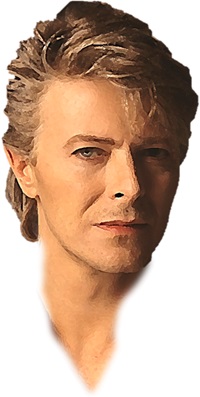
In their place, the new entertainment has been brought to us by the iPhone. We live in an ever more video-based culture, personified by TikTok, Instagram reels and YouTube shorts. Gen Z’s David Bowie – their scandalous epoch-defining artist, their King of cool – is out there somewhere. But they’re not making The Rise and Fall of Ziggy Stardust and the Spiders from Mars, instead they’re editing a new TikTok video about what a day in the life of an androgynous, ambi-sex-turous god-like alien rock star is like. ‘Started the morning off by pushing through the market square. Ended up jamming good with Weird and Gilly…and grabbing some matcha.’
The world David Bowie belonged to doesn’t exist anymore. The last ten years have seen to that. The next ten years will see the emergence of post-war Britain’s successor state.
This will bring with it a new economic model, new art, new fears, new ambitions, new ideologies, new obsessions, new joys, new pleasures, and perhaps an all new national identity. We will soon, for the first time since 1945, have the chance to build something from the ground up. We can let the modern world take us in a brand new direction. This is our Blackstar moment.
So, where do we go from here? Nobody seems to have any idea. But I’ll tell you one thing, Bowie would know.
We’ve got five years, stuck on my eyes
Five years, what a surprise
We’ve got five years, my brain hurts a lot
Five years, that’s all we’ve got
David Bowie, ‘Five Years’, 1972
next in Decade…
Discover more from Lion & Unicorn
Subscribe to get the latest posts sent to your email.
