The Bag O’ Nails isn’t much of a pub. Halfway between Victoria station and Buckingham Palace, its clientele is more tourist than regular. But it’s convenient for public transport so that’s where we met in July 2015: Dan Atkinson, Sam Harrison and Alwyn Turner. And over some bottles of too-fruity red wine, we decided we’d start a blogsite where we could publish things that we wanted to write, but that were – to put it bluntly – unsaleable. This wasn’t to be a pay site, and it wasn’t going to pay its writers either, so pieces needed to be labours of love, or at least of mild affection.
No minutes were taken at the meeting, so there’s no record of whether we explored the commissioning of focus groups, market research and advertising. All we can remember is that our shared respect for George Orwell gave us a name, taken from his 1941 essay ‘The Lion and the Unicorn: Socialism and the English Genius’. And we identified what the subject matter should be. That wasn’t very difficult: we settled on politics, history, culture, sport and pretty much anything we fancied, as long as it was British – that was our one limitation.
The first piece we published was Dan’s Eastward Ho! on 2 August 2015. Which means that today we’re ten years old – hence the self-indulgence of this post. And we’re quietly pleased that we’ve survived. It’s estimated that around a quarter of a million websites are launched every day, most of which soon fall by the wayside. But we’re still here.
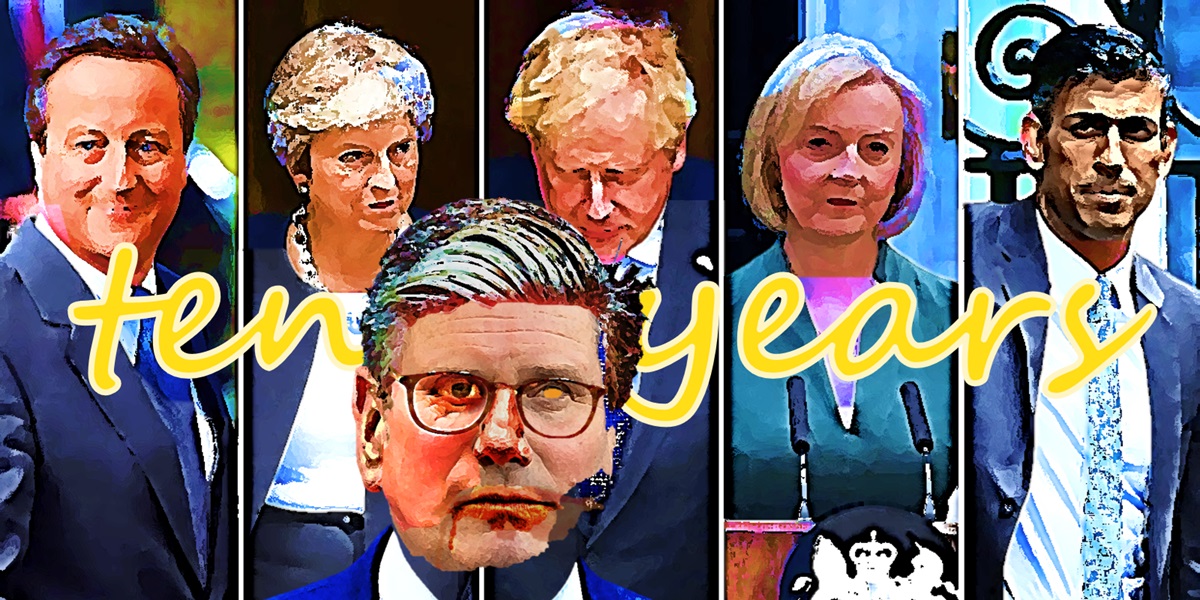
We’ve lasted longer than four prime ministers put together. We’re old enough to remember when Hilary Benn was being touted as the next leader of the Labour Party. We’ve seen people who once seemed like they might be important fade away, the likes of Change UK, Tim Farron, Katie Hopkins, Rebecca Long-Bailey, Paul Nuttall, Laura Pidcock, Christine Shawcroft, Owen Smith, Tom Watson and Chris Williamson.
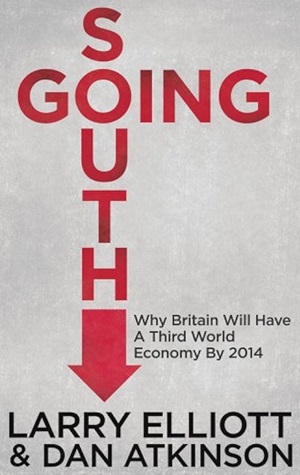
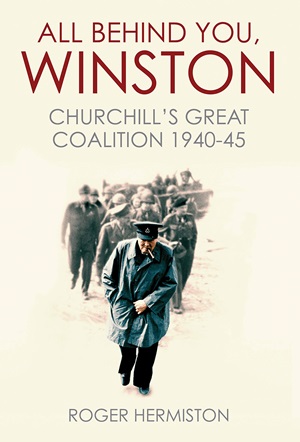
Along the way we’ve been joined by other writers, which has been a wonderful thing. The main point of this post is to celebrate their work, because we’re proud of the consistent standard of the pieces we’ve published.
The nature of the site has changed a little over these ten years. We started in the aftermath of the 2015 election, when David Cameron won a majority for the Tories and Ed Miliband’s Labour went backwards twenty-six seats. It seems an awful long time ago, viewed from this side of three general elections, Brexit, Corbynmania, Covid and the death of the Old Queen. Like much of the country, our excitement at politics comes less readily now. Instead our attention has wandered towards culture, much of it rather old culture.
What hasn’t changed is our wish to celebrate some figures who we think are a little neglected, whether it’s Derek Jameson or Terry Major-Ball, Austin Mitchell or Archibald Sinclair.
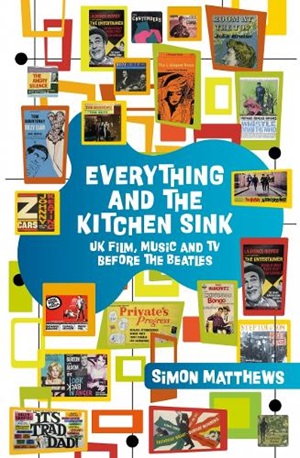
We’ve had some long-running cultural strands: movie reviews by Simon Matthews in Final Cut (plus Jonathan Calder); books by Dan in Rear-view reviews and by Alwyn in Imperial Fiction; music in Ben Finlay’s Top 10s, Alwyn’s Revive 45 and a Britpop strand from Paul Saffer and Alex Sarll. As for the back pages, there’s Paul’s Obscure Olympians.
There have also been series that withered on the vine as a result of neglect. That’s as it should be. We don’t write to order – just stuff that interests us, or that makes us Proud to be British. And when the fun stops, we stop. The internet was made for man, not man for the internet.
Some other things that make us happy…
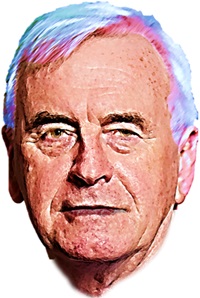
We’re always gladdened when someone we’ve written about gets in touch. Thank you Angela Eagle, George Galloway and particularly John McDonnell, who corrected a fact in our press portrait of him. Also Julian MacQueen of To the Finland Station.
We’re pleased that we’ve become one of the more reputable sources for Wikipedia articles, referencing our material on nearly-forgotten figures like music-hall comedian Tom Wootwell and ‘Uncle’ Bill Mitchell, a children’s presenter on Forces radio in Germany.
We have no explanation for the sustained popularity of William Hazlitt’s 1821 essay ‘On the Ignorance of the Learned’, or an entry in our Calling all cliches strand about the origins of the phrase ‘He who wields the knife never wears the crown’.
As ever, we welcome approaches from people who might want to write for us. We provide editorial support, but don’t censor – you will have to tolerate our garish illustrations, though.
Here are ten pieces, offered as an introduction to the site:
Following the Brexit referendum, Dan Atkinson’s The strange rebirth of social democracy (2016) suggested that Leave’s victory was an opportunity for the country to rediscover lost truths. ‘One of my favourite quotations is from Jean Jaures: “The nation-state is the one thing the poor own.” Now, in Britain, they have the chance to own it once more.’

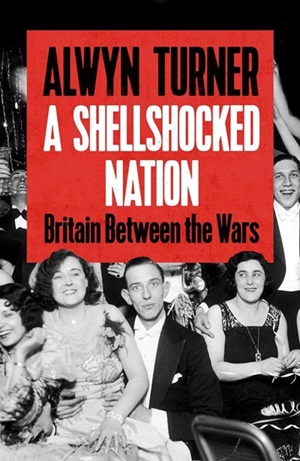
Alwyn Turner wrote a series of ‘press portraits’, biographies of interesting politicians compiled from newspaper articles and interviews. Among them was a lengthy account of Diane Abbott (2016), that was – until Abbott’s own memoirs appeared last year – the most detailed account of her life. It’s still the best.
For the most part, we write as outsiders, but occasionally there’s an exception. When Owen Smith decided to challenge Jeremy Corbyn for the Labour leadership, Roger Hermiston contributed I knew Owen Smith. Owen Smith was a friend of mine (2016), going back to when they both worked on Radio 4’s Today programme: ‘I and several of my former Today colleagues were greatly tickled when for one heady moment it appeared that two alumni of our programme might be fighting it out for the keys to Number 10: Michael Gove (Today reporter circa 1996) versus Owen Smith (Today producer 2000).’
In This is (not) tomorrow (2018), Simon Matthews used a book review as the springboard for an in-depth account of the rise and fall of the post-war art schools. Here, as in so many areas of culture, opportunity has declined. ‘It’s hard to see how a teenager from Dartford could fail abjectly at school and still manage to study for six years in further education before emerging, as Peter Blake did, as one of the UK’s greatest living artists.’
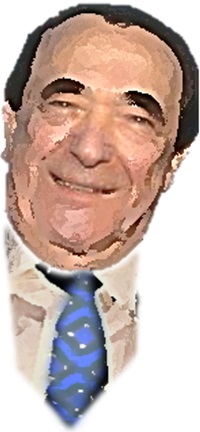
Among Paul Saffer’s exhumations of old feuds was The strange case of Robert Maxwell & the Evil Eye (2020), an account of the press baron’s successful libel case in 1988. ‘Robert Maxwell and Private Eye were never destined to get along…’ it starts, and there follows an odd, fascinating tale.
Our occasional year-end pieces on Politicians of the Year are the work of diverse hands. The Boris Johnson nomination in 2016 was written by Sam Harrison and Alwyn Turner at a time when the foreign secretary’s stock was not high. He had swung the referendum vote, but then had his leadership bid sabotaged by Michael Gove. ‘But let’s not count him out too soon. Johnson may yet emerge as the next prime minister of the United Kingdom.’
In common with other L&U writers, Ben Finlay’s cultural interests lean towards a period before his own time, in his case the late 1960s and early 70s. Looking for vibrations (2020) saw him exploring the relationship between mystic ideas of Albion, the Glastonbury Festival and the search for ‘an untainted consciousness, a new society, a connection to the land’.
Social media posts can seem fleeting things, but as-yet unborn historians of these years will cite them as seriously as scholars of the 1960s quote from the Daily Express. So we sometimes like to take a snapshot of a moment online. We did so with the 2022 death of Elizabeth II, compiling seventy Twitter tributes (one for each year of her reign) from the Muppets, the Animal Welfare Party, Ann Summers, NASA, Cash Converters and many, many more.
Smoking’s not what it used to be. Alwyn Turner’s Time takes a cigarette (2023) remembered the branding and imagery of the various cigarettes he used to smoke. Somewhat surprisingly, it won an award from Forest (‘voice and friend of the smoker’) for Best Essay of the Year. We are an award-winning site.
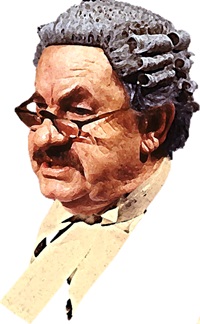
Our most recent debutant, Finlay McLaren wrote one of the most popular pieces of this year, an analysis of a single episode of the TV series Rumpole of the Bailey (2025), and a celebration of a time when viewers were trusted to think for themselves. ‘In the end there is no great lesson, no grander point. Mortimer gives us no answers to the moral questions he poses.’
You can see in the above list our drifting away from contemporary politics toward yesteryear’s culture. Much of this is merely the nostalgia of ageing fans (young Finlay excepted). But there is perhaps still a whiff of our more polemical early days. Because we are rather worried about the state of mass entertainment.

For good or ill, there’s no longer a national popular culture in Britain. Over sixty years, from the 1950s to the 2000s, a media establishment found in the BBC and ITV, in Fleet Street, Denmark Street and Pinewood produced an imaginary lexicon shared across generations and regions. This is the world of the Rovers Return, the Daleks, Eleanor Rigby, Del Boy, ‘Agadoo’, Mystic Meg and Lady Grantham; a world where everyone understood why you were adopting a comedy French accent to whisper urgently, ‘Listen very carefully, I shall say zis only once’, or a gravelly voice to declare, ‘Probably the best…’
At times this media order was troubled by upstart disruptors, but the pirate radio stations, Channel 4 and Sky were all soon absorbed, going on to add to the gaiety of the nation. For they were all one nation.
That isn’t true of Britain’s content providers today. In 2008 Stephen Fry joined Twitter, Netflix launched here in 2012, and TikTok arrived six years later. Just a few days ago Ofcom reported that YouTube has become the UK’s second most-watched media service after the BBC. Increasingly Britons are watching, playing, listening to, and occasionally reading separate entertainment via separate apps, and that software is largely developed and owned in America. What downstream effects this fracturing and offshoring of popular culture will have on our politics is yet to be seen.
For all its myriad faults, the national popular culture of the twentieth century expresses something wondrous, precious and still not fully understood. At least in our opinion it does. So as L&U enters its second decade, expect posts on neglected thriller writers, tea-time adventure telly, dead glam rockers, and troubled brit flicks, with the odd foray into party politics, if only to keep our hands in.
And maybe, just maybe, there’ll be more winners of our coveted Morgan of the Month award.
read more of our contributors:
and hear more as well:
Discover more from Lion & Unicorn
Subscribe to get the latest posts sent to your email.

Please keep in touch.
LikeLike