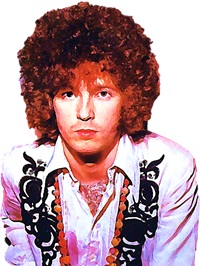
BEN FINLAY provides a personal selection of the ten best British blues albums of the 1960s and early 70s.
Ah, the British blues boom. Earnest, serious, puritanical – all these assertions have validity. And it wasn’t the first British ‘scene’ to witness such intense ideology; their forbearers in the 1940s/50s trad jazz world were predisposed to the same fundamentalism. However, just like them, the British blues boomers were capable at their best of generating powerful emotional music, taking the influence of American blues and then making it their own. The greatest artists on this list learnt their craft incredibly well (particularly considering how young many of them were) and then transformed it into something uniquely them. Therefore, the choices below reflect originality, musical skill, historic significance and influence.
I’ve also prepared a YouTube playlist of the selected tracks.
And, to answer the question (posed, of course, by the Bonzo Dog Doo Dah Band): Can blue men sing the whites? Yes. Yes, they could.
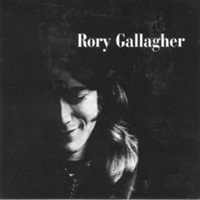
10. Rory Gallagher (1971)
Track Choice: I Fall Apart
Gallagher’s debut solo album builds on the work he put into his previous band, Taste, and augments it with folk-based titles such as Just the Smile. However, the Stratocaster is out for Laundromat, I Fall Apart and the great closer Can’t Believe It’s True.
Stylistically, there is much an offer here, and points the way to the eclecticism of the 1970s. It proved a milestone in his career, and features some of his most beloved songs. There’s a whole range of emotions and talent on display, and as the first album I ever bought of his, it’s a personal favourite.
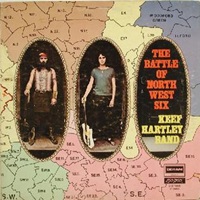
9. Keef Hartley Band ‘The Battle of North West Six’ (1969)
Track choice: Don’t Be Afraid
After leaving John Mayall in 1969, drummer Hartley formed his own band. The Battle Of North West Six is the second KHB album and to my ear, their best work, an original and important album from the Brit blues catalogue. The brass section, comprised mostly of Bluesbreakers alumni, fills out the sound to great effect and the record is full and authoritative. Next step was to play the Woodstock festival, although sadly their set has never officially been released.
Also of note is the gatefold sleeve, designed by Hartley himself, which had portraits of the band over a map of London with the postal districts and suburbs identified.
Trivia note: The album title The Battle of North West Six refers to the Decca studios at 165 Broadhurst Gardens, West Hampstead, London NW6 where this and many other records were recorded.
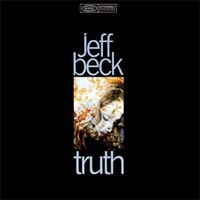
8. Jeff Beck ‘Truth’ (1968)
Track choice: I Ain’t Superstitious
Released a very short time before Led Zeppelin’s debut, Truth is a whomping chunk of Blues-Rock that draws from all before it and looks to the future. While Zep were clear focused, Beck was less so, but the band’s sound (Beck on guitar, Ronnie Wood on bass and Micky Waller on drums) combined with Rod Stewart’s vocals was exultant. Let Me Love You, Beck’s Bolero, You Shook Me and Blues Deluxe are all great tracks and are worth the price of admission alone.
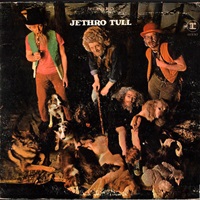
7. Jethro Tull ‘This Was’ (1968)
Track Choice: A Song for Jeffrey
Tull’s only real brush with the blues; nevertheless this, their debut album, is chock full of feeling and originality. It was their only LP to feature lead guitarist Mick Abrahams, who left the band to join Blodwyn Pig before the album came out. He had style, and it shines on this record. Beggar’s Farm, A Song for Jeffrey, Move on Alone and My Sunday Feeling are all great tracks, imbued with a jazz/blues swing that makes the band stand out from some of the more leaden sounding bands of the genre.
Next stop was a change of guitarist (enter Martin Barre after the very short tenure of future Black Sabbath star Tony Iommi). The blues sound soon waned, and they were off to success. This Was paved that way and still sounds great today.
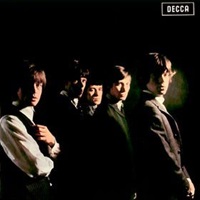
6. The Rolling Stones (1964)
Track Choice: Route 66
The career-launching debut, raw and dynamic, British R&B completely defined. It’s all here: Jagger’s leering vocals, Keef’s earthy guitar work, Brian Jones purism, Bill Wyman’s solid bass lines, all held together by Charlie’s crisp drumming. Its influence is inestimable. Nearly a decade on, David Bowie aimed to replicate that early Stones sound for The Jean Genie, later explaining, ‘I didn’t get that near to it, but it had a feel that I wanted – that ’60s thing.’
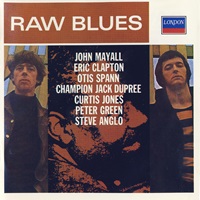
5. Various Artists ‘Raw Blues’ (1967)
Track Choice: Evil Woman Blues
Retailing at just 20s 10d (just over £1), Raw Blues was a mid-price compilation on Decca’s budget Ace of Clubs subsidiary, but it is an incredibly important part of the blues boom canon. Many tracks that were rare or unavailable elsewhere at the time of release are pulled together on this album. In 1964, producer Mike Vernon brought several visiting US blues giants into Decca’s West Hampstead studios where he recorded them with British sidemen. Here we have the likes of Otis Spann and Champion Jack Dupree backed, variously, by John Mayall, Eric Clapton, Tony McPhee (later of Brit boom stalwarts The Groundhogs) and Keef Hartley. Furthermore, Lonely Years and the instrumental Bernard Jenkins by Mayall and Clapton appear here, as does Peter Green (who had just joined Mayall’s Bluesbreakers when this LP was compiled) delivering the great Evil Woman Blues. On top of that, Steve Winwood appears as “Steve Anglo” on Long Night, backed by the Bluesbreakers. Essential.
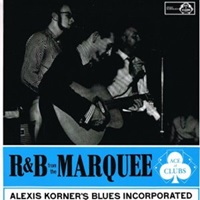
4. Alexis Korner’s Blues Incorporated ‘R&B From the Marquee’ (1962)
Track Choice: How Long, How Long Blues
The oldest record here, but one of the most important. Almost singlehandedly, Korner instigated the Brit blues boom, forming Blues Incorporated in the late 5os, Britain’s first Chicago Blues style band and set the ball rolling. Although not the greatest of guitarists or vocalist, Korner was the UK blues guru – he introduced Mick Jagger and Keith Richards to Brian Jones; persuaded John Mayall to move to London; mentored Free, and visiting blues stars such as Muddy Waters and Big Bill Broonzy were his houseguests. This record, (not actually recorded at the Marquee club, but at the Decca studios) sees classic blues covers performed with loving enthusiasm with a line-up that included Long John Baldry on vocals, and the wailing harmonica of Cyril Davis.
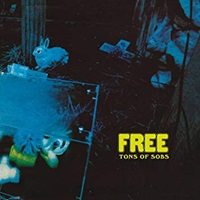
3. Free ‘Tons of Sobs’ (1968)
Track Choice: Moonshine
Free’s outstanding debut album is even more remarkable when one considers that not one of its members was older than twenty (in fact, bassist Andy Fraser was just 16 at the time of the recording). However, the band were highly original, with Paul Rodgers’s voice and Paul Kossoff’s guitar work particularly notable. Tons of Sobs contains all originals (including the brooding Moonshine, surely an influence on Black Sabbath), bar blues classic Goin’ Down Slow and Albert King’s The Hunter. The band saw great success in their short-lived career, and Tons of Sobs is the foundations on which that sits.
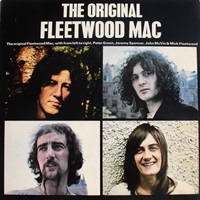
2. Fleetwood Mac ‘The Original Fleetwood Mac’ (1971)
Track Choice: Fleetwood Mac
Despite being a huge fan of their early work, I find it difficult to choose an overall definitive album; the first two have undoubtedly great (if restrained) contributions from Peter Green, but a little of Jeremy Spencer’s Elmore James schtick goes a very long way. However, a loophole arises when considering this 1971 compilation album which comprises of (then) mostly previously unissued material, happily turning out to be the best Fleetwood Mac blues album. Green’s immaculate playing is well to the fore here on Drifting, Watch Out and A Fool No More. If you’re new to the blues Mac, start here, then check out the live albums for a real taste of what they were all about. Tasty.
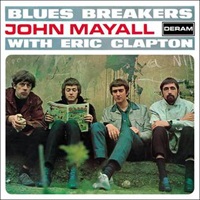
1. John Mayall with Eric Clapton ‘Blues Breakers’ (1966)
Track choice: Steppin’ Out
The big one. So much has been said about this album, but it’s worth saying it all again. Prior to this, no one produced the sound Eric Clapton did here. Insisting on playing his guitar parts at stage volume in the studio, Clapton set the blueprint for blues and rock guitar, with the sound of his Gibson Les Paul and Marshall amplifier becoming the holy grail to guitarists for many years after. Furthermore, the influence of his biting tone, authority, aggression countered with a melodic sensibility is inestimable. The playing on Double Crossing Time and Have You Heard? is incendiary, and instrumentals such as Hideaway and Steppin’ Out are still remarkable for their fluidity today. And despite the huge influence such players as Freddie King and Otis Rush had on Clapton, he undoubtedly made it his own and played as himself.
One should also consider just how influential this album was in the US, where it played a huge part in selling American music back to its young people – which of course changed everything. Indispensable.
bubbling under:
Jo Ann Kelly (1969)
John Mayall’s Bluebreakers ‘A Hard Road’ (1967)
Christine Perfect (1970)
Cream ‘Fresh Cream’ (1966)
Chicken Shack ‘40 Blue Fingers, Freshly Packed and Ready to Serve’ (1968)
see also:
Discover more from Lion & Unicorn
Subscribe to get the latest posts sent to your email.
