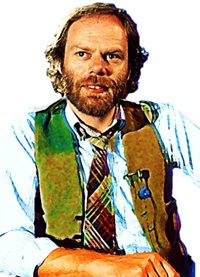
‘Hanging out in the countryside making music with your friends and getting stoned – what could be better?’
Paul Weller, 2010
‘Goin’ ridin’ down by Avalon
Would you meet me in the country
In the summertime in England?’
Van Morrison, ‘Summertime in England’, 1980
‘Sumer is icumen in’ as they sang back in the heady ‘60s – the heady 1260s, that is – the song celebrating the start of summer, and the natural beauty that surrounds it. And at this time of year, with this is mind, let’s jump ahead some 700 years to the 1960s, and the idea of ‘getting it together in the country’: making music communally in the idyllic surroundings of the countryside, a move pioneered by the Band in upstate New York, with the album Music From Big Pink.
But what of their British counterparts? Well, pretty much at the same time, Traffic would rent a Berkshire cottage and kick-start the communal experiment this side of the Atlantic, with their Island Records contemporaries Fairport Convention following suit and relocating to Hampshire, as soon would Fleetwood Mac, after the departure of leader Peter Green.
The albums discussed here have a sense of ‘Britishness’ about them, and a reflection of the rural, pastoral environment they were conceived and recorded in. The music has a connection to summer idylls and the earth, and – with one notable exception – is a collection of some of the finest, unadulterated music from the U.K. of the late 1960s and early 70s.
The communal living and music-making experience seems to have reached a peak during this time, with it tailing off later in the 70s. But summertime is here, and it is time to revisit the country. So, gather in the mushrooms, fire up the stereo as loud as you can (after all, there are no neighbours) and enjoy the L & U Top Ten Getting It Together in the Country albums. Far out. (Warning, this article contains hippies.)
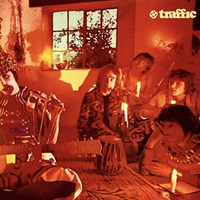
Traffic, Mr Fantasy, 1968
choice track: ‘Heaven is on Your Mind’
First and foremost on this list, Traffic began the getting-it-together-in-the-country trend by renting a remote cottage in the Berkshire village of Aston Tirrold in April 1967, just two months after the Band located to the Big Pink house near Woodstock. Their debut album, Mr Fantasy (and eponymous follow-up album) was conceived here, and indeed the front cover pictures the group around the fireside. One of the first rock releases on Island Records, the music reflects the eclectic mix Traffic wished to produce, blending Steve Winwood’s soulful vocals, guitar and keyboards with elements of Indian music, blues-rock, folk, and general bonhomie. Chris Wood’s saxophone and flute work is notable, as is Jimmy Miller’s percussion-orientated production, particularly evident on the title track. By the time of their next record (a favourite of Paul Weller, of whom more later), their sound was maturing, and the album John Barleycorn Must Die (1970) is essential.

Incredible String Band, The Hangman’s Beautiful Daughter,1968
choice track: ‘A Very Cellular Song’
No list of communally made music would be complete without reference to this band, one of the stalwarts of the British rural hippy lifestyle. This, their third album, reached the top 5 in the UK album charts soon after its release in March 1968 and their blend of Celtic folk, plainsong, Indian and North African influences provided inspiration for the likes of Led Zeppelin, the aforementioned Traffic, and Paul McCartney, among others.
A film was made about the band, Be Glad for the Song Has No Ending, for BBC TV’s arts programme Omnibus, illustrating their attempt at an idyllic communal lifestyle at their farmhouse near Newport, in Pembrokeshire, Wales. Following a North American tour in 1969 (including the Woodstock Festival), the ISB relocated to a new communal base at Glen Row, near Innerleithen, Peeblesshire. Into the 70s, the band’s fortunes waned, and they eventually broke up in 1974. An integral part of the U.K. counterculture, their influence is writ large and proceeded ‘World Music’ by many years.

Fairport Convention, Liege and Lief,1969
choice track: ‘Come All Ye’
Recovering from the tragedy of a road accident that killed drummer Martin Lamble and guitarist Richard Thompson’s girlfriend Jeannie Franklyn, Fairport regrouped with drummer Dave Mattacks and violinist Dave Swarbrick (a star on the traditional folk circuit) and rented a house in the Hampshire hamlet of Farley Chamberlayne, near Winchester. Building on the traditional folk song ‘A Sailor’s Life’,which had appeared on their last album Unhalfbricking, the band inadvertently created British folk rock, marrying traditional songs, or tradition-inspired originals, with electric instruments. This would prove as revelatory as the Band’s first album, engaging with the Fairport’s British roots in a contemporary manner, and proving to be not only influential, but the start of a new genre. (At the BBC Radio 2 Folk Awards in 2006, the album was voted ‘Most Influential Folk Album of All Time’.)
Sung beautifully by one of Britain’s finest vocalists, Sandy Denny, originals such as ‘Crazy Man Michael’ blended effortlessly with murder ballads such as ‘Matty Groves’ (still a cornerstone of the band’s set today). Have no doubt about it, Liege and Lief is one of the greatest British records ever made. As the opening track ‘Come All Ye’ commands:
Come all ye rolling minstrels
And together, we will try
To rouse the spirit of the earth
And move the rolling sky…
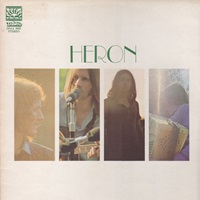
Heron, Heron 1970
choice track: ‘Lord and Master ‘
Inspired by Bob Dylan and The Incredible String Band, Heron formed in Berkshire in 1967. Signing to Pye Records subsidiary Dawn in 1969, the band found that they didn’t enjoy the recording studio environment, instead relocating to vocalist Tony Pook’s family farmhouse in Appleford-on-Thames. There they recorded their self-titled debut album with a mobile studio in a field behind the house, picking up ambient noises such as bird song. Heron recorded their second album Twice as Nice & Half the Price in a cottage garden at Black Dog, a small village near Crediton in Devon, the cover reflecting a gentle hippy bonhomie. One of the lesser-known groups on the list, the song ‘Lord and Master’ from their first record encapsulates Heron’s ‘at one with nature’ vibe nicely.
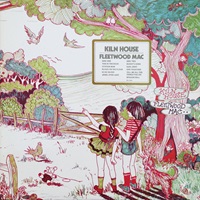
Fleetwood Mac, Kiln House 1970
choice track: ‘Station Man’
‘I remember sitting with Mick, Danny and Christine in a small side room off the practice studio that occupied what decades ago used to be the oast-drying place for the making of beer and mulling over our future. All we knew, Danny and I, was that we had some material to record.’ – guitarist Jeremy Spencer
In mid-1970, founder and leader Peter Green left Fleetwood Mac. Regrouping in the English countryside, the remaining members and accompanying entourage leased Kiln House, two converted oast houses in Truncheaunts Lane in East Worldham, near Alton, Hampshire. The band lived there communally with their families for a six-month period in 1970. While the resultant album lacks the consistency of the Green-led Mac, there is a positive group feel evident, and if Spencer’s rock and roll and blues pastiches are a tad too dominant, tracks such as ‘Station Man’ provide a direction forward (Pete Townsend admitted to ‘nicking’ the riff for ‘Won’t Get Fooled Again’). In his September 1970 review for NME, Nick Logan said called the song ‘one of the group’s foremost achievements to date’. It stayed in the live set until 1977, by then two years into the band’s Buckingham-Nicks imperial phase.
The communal idea must have worked, because in late 1970 manager Clifford Davis and Fleetwood Mac jointly bought a mansion for £23,000 called Benifold (again, located in Hampshire, this time in the village of Bordon) in 1970 (The previous owners had been members of a monastic order.) Whilst living there, they recorded the much underrated and forgotten ‘middle-period’ albums Future Games (1971), Bare Trees (1972), Penguin (1973), and Mystery to Me (1973), using the Rolling Stones mobile studio. Following that, they moved to the States, changed line-up, and apparently did alright for themselves.
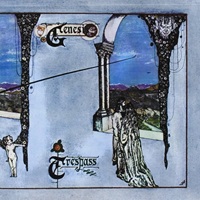
Genesis, Trespass, 1970
choice track: ‘Looking for Someone’
Way back before the hit singles, stadium shows and Phil Collins, Genesis played their part in the rural, communal experience. To work on their second album Trespass, the band took up residence at Christmas Cottage, in Wooton, Surrey, an abandoned weekend retreat house that belonged to friend and ex-schoolmate Richard MacPhail. Producing a folk-tinged, progressive rock style, with much 12-string guitar-work, the record demonstrates a band that was yet to find its feet. However, as Peter Gabriel would later reflect, in heavier tunes such as ‘The Knife’, Genesis were tapping into ‘something more dangerous’ and discovering the ‘first peak of a darker energy.’
Melody Maker remarked that the album was ‘tasteful, subtle and refined’ and named it ‘Album of the Month’, but other reviews were less generous. However, it is worth a reappraisal; not only is the album a time capsule of the group in their hippy-countryside period, (keyboardist Tony Banks would later reflect that they were influenced by early Fairport Convention) it set up the mythical atmospheric template the band would express throughout their career. By the next record, Nursery Cryme, guitarist Steve Hackett and drummer Phil Collins would join the band, and they would be on the way to becoming prog-rock royalty.

Led Zeppelin, III,1970
choice track: ‘Tangerine’
‘We took our guitars down there and played a few bits and pieces. This wonderful countryside, panoramic views and having guitars… it was just an automatic thing to be playing. And we started writing.’ – guitarist Jimmy Page
Led Zeppelin had been busy in 1969. After the release of their second album and relentless touring, Jimmy Page and Robert Plant retreated to Bron-Yr-Aur, an eighteenth-century cottage in Snowdonia, Wales, on a hilltop overlooking the Dyfi Valley, three miles north of the market town Machynlleth. With no running water or electricity, the pair worked on acoustic folk and blues influenced material, writing and developing songs such as ‘Tangerine’, ‘Friends’, ‘That’s The Way’ and ‘Bron-Y-Aur Stomp’, which all appeared on 1970’s Led Zeppelin III. To record the album, Zep relocated to Headley Grange in Hampshire (a popular county for the getting it together in the country fraternity), and produced a record that reflected a change of focus for the band, blending the hard rock sound of numbers such as ‘Immigrant Song’with the more pastoral acoustic tracks written in Wales.
The album was of course enormously popular and remains one of the best collections in the band’s catalogue, with the acoustic-based songs proving to be the most durable. Furthermore, the small cottage that saw the formation of these songs has become somewhat legendary in the imagination of devotees of the band. As music journalist Jonathan Wingate enthusiastically states: ‘When you listen to it you just have to close your eyes and you can hear the echoes of this remote country house. It’s an album which you can imagine being performed around a crate of beer in front of a roaring log fire.’
Indeed, the current owner still receives a constant stream of fans who make pilgrimages to his doorstep. Which must be fun.

Gong, Flying Teapot, 1973
choice track: ‘Flying Teapot’
The ‘wild card’ choice of this list, but it had to be included. Gong was one of the most far-out psychedelic/space rock acts ever, and the epitome of the communal music-making experience, with a French base in Pavillon du Hay and an English one at Middlefield Farm, near Witney, Oxfordshire. In October 1972, they were one of the first acts to sign to Richard Branson’s fledgling Virgin Records label, and in late December, they traveled to Virgin’s Manor Studio in Oxfordshire to record their third album, Flying Teapot. The record was released in May 1973, on the same day as Mike Oldfield’s Tubular Bells, which proved to be more popular in terms of sales, to say the least. Nevertheless, Flying Teapot still sounds fresh and innovative, so go out and find a copy now.
‘High in the sky, what do you see?
Come down to Earth, a cup of tea
Flying saucer, flying teacup
From outer space, flying teapot…’
Indeed.
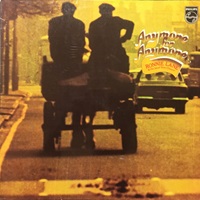
Ronnie Lane, Anymore for Anymore?, 1974
choice track: ‘Roll on Babe’
Following the Faces’ fourth album, Ooh La La, Ronnie Lane left the group and in 1973 purchased (apparently with a carrier bag full of cash) Fishpool Farm in the village of Hyssington, Montgomeryshire, on the Welsh borders. With his new band, Slim Chance, Lane fashioned an album with an overt folk, country and acoustic sound, recording the record with his own Ronnie Lane’s Mobile Studio, which was parked by the farmhouse. The title track saw the musicians decamp to the hillside overlooking Lane’s farm, where the sound of nearby cattle and a light wind picked up by the recording microphones added further rural ambience to the song. The single ‘The Poacher’ encapsulates Lane’s love for everything rural, and indeed he dressed like a country squire, wearing old waistcoats, cravats and grandad shirts. All of this is encapsulated wonderfully in the BBC documentary The Passing Show: The Life and Music of Ronnie Lane (2006).
Anymore for Anymore? stands as a testament to Lane’s vision, and his cover of Deroll Adams’s ‘Roll On Babe’is an absolute all-time favourite of the author. Essential.
Paul Weller, Wildwood, 1993
Choice track: ‘Shadow of the Sun’
‘We’d be in the dining room, or we’d go on the lawn, wherever we were, there’d be guitars about, and people would be playing. So it was that pure music vibe. It was a totally immersive experience. You’re not going home… you’re not breaking the spell.’ – guitarist Dr Robert.
The notable exception mentioned in the introduction. Nearly twenty years after the previous record on this list, Paul Weller released this 90s classic, relaunched his career and got it together in the country with great results.
Reconnecting with the rural locations Weller grew up in around Surrey, the follow up to his first album saw him fully engage with the pastoral vibes of 60s music and particularly the influence of Traffic, John Martyn, Ronnie Lane and Nick Drake. As he recently reflected: ‘From the 90s onwards, I was listening to so much different music which I’d cut myself off from in the past. I was sort of blinkered when I was younger. To the point of not buying records because someone had long hair or a beard. I dropped any sort of barriers at all and so it was a real learning curve as well.’
Wildwood was recorded at the Manor in Oxfordshire, and the studio’s laidback atmosphere finds its way on to the record. Indeed, its nineties take on an older sound revitalised the genre with an energised dynamic; as co-producer Brendan Lynch states, ‘Paul wanted [the album] to be upfront. Folky, acoustic, but powerful… really in your face. It was great to see him creatively hitting a new high.’
Indeed, from the opening track ‘Sunflower’, through the piano driven ‘Can You Heal Us (Holy Man)’, to the acoustic title track on to the epic ‘Shadow of the Sun’, Weller and his band don’t put a foot wrong; a joyous whomping exaltation of the bucolic and a glorious rebirth. Wonderful.
see also:
Discover more from Lion & Unicorn
Subscribe to get the latest posts sent to your email.
