
BEN FINLAY is your guide to the best of British jazz 1957–79.
Jazz is generally considered to be the great American art form, but once its influence had spread, the Brits were quick to develop their own homegrown version. Initially, this reflected the music’s major stylistic changes from the States, but the progressive jazz boom of the 1960s and 70s saw a particular ‘Britishness’ (often more lyrical and melodic than their U.S. counterparts) reflected in the music, and the emergence of an abundance of originality and talent.
Nowadays, British jazz is again thriving, with artists such as Soweto Kinch presenting a nightly weekday show on BBC Radio 3, but the roots of the contemporary scene are often overlooked. While the origins of the ‘golden age’ of British jazz reach back to the likes of modernists Tubby Hayes and Ronnie Scott in the late 1950s, it is from the mid-60s onwards we see such innovation that led to World music (Joe Harriott), fusion and prog-rock (Nucleus) and the introduction of synthesizers into modern big-band settings (Neil Ardley).
Join us, then, as we revive and reevaluate some well-known and lesser celebrated titles with the Lion & Unicorn guide to the Top Ten British jazz albums 1957–79. Hopefully these recordings provide an accessible but also challenging entry into this often-overlooked period. Dig it, hepcats!
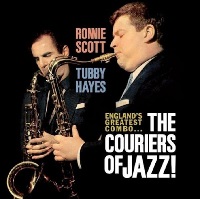
Ronnie Scott and Tubby Hayes – The Jazz Couriers, The Couriers of Jazz (1958)
Co-led by saxophonists Scott and Hayes, The Jazz Couriers were a revelation in British jazz. Active between 1957 and 1959 (when Scott left to open his club in Soho), the quintet took inspiration from their American counterparts (particularly Art Blakey’s Jazz Messengers) but delivered some seriously swinging jazz with their own unique British sound. As record dealer Chris McGranaghan remarks in the documentary Tubby Hayes – A Man in a Hurry (2015) their sound ‘just had London written all over it.’
Track choice: After Tea
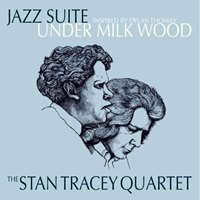
The Stan Tracey Quartet, Jazz Suite (Inspired by Dylan Thomas’s Under Milk Wood) (1965)
Justly lauded, and one of the best-known British jazz albums, this suite based around Dylan Thomas’s Under Milk Wood broke further ground with Tracey’s unique compositional style and deft musicianship. The highlight is Starless and Bible Black, where tenorist Bobby Wellins performs the most numinous of solos. Furthermore, the suite foreshadows the idea of the ‘concept album’ by a least a couple of years before those pesky rock groups got there.
Track Choice: Starless and Bible Black
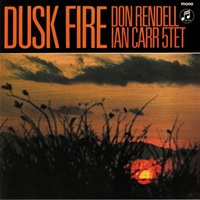
Don Rendell/Ian Carr Quintet, Dusk Fire (1966)
This was the quintet’s second album, and the first to feature pianist and composer Michael Garrick. One of the finest of the younger UK jazz outfits, the band was led by the remarkable trumpeter Ian Carr (of whom more later), tenor saxophonist Don Rendell (who also adds flute to the record) and this author’s future drum-tutor, Trevor Tomkins. Dusk Fire sees a move to more atmospheric, impressionistic compositions entering the British jazz sound, culminating in the title track (composed by Garrick) which employs modality and the influence of Indian music to produce something quite spellbinding. A much-underrated British jazz classic.
Track choice: Dusk Fire
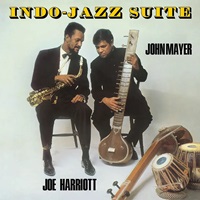
Joe Harriott Double Quintet, Indo-Jazz Suite (1966)
Jamaican-born alto saxophonist Harriot was a mercurial character, and one of the most innovative musicians on the UK scene. His early ’60s records, Free Form (1960), Abstract (1962) and Movement (1963) are, to this author’s ear, superior to the free jazz that was emanating from the USA at the same time, with far more emphasis on group improvisation, while still retaining a sense of lyricism.
In 1966 he formed a ‘double quintet’ of five Indian and five jazz musicians playing together and recorded Indo-Jazz Suite, followed by Indo-Jazz Fusions 1 and 2 (1967 and 1968 respectively). Way ahead of their time, these recordings – one of the greatest ever collaborations uniting the music of East and West – pre-date the interest in world music by many years. Furthermore, it puts the whole ridiculous notion of ‘cultural appropriation’ to bed once and for all. As Indo-Jazz Fusions collaborator John Mayer reflected:
‘It was a very well-integrated ensemble … apart from being of different cultures, nationalities and religious beliefs. There were four Indians, two players from the Caribbean Islands, two Londoners, a Scotsman and a Canadian. There were Moslems, a Rosicrucian (Joe), a Jew, a Catholic, a Protestant and an atheist.’
(Double trivia note: The first Indo-Jazz concert took place at Chichester Festival in May 1966. One of Joe’s cousins, Chester Harriott, was TV chef Ainsley’s father.)
Track choice: Mishra Blues (from Indo-Jazz Fusions 2)

Kenny Wheeler and the John Dankworth Orchestra, Windmill Tilter: The Story of Don Quixote (1969)
Toronto-born trumpeter and composer Wheeler moved to the UK in 1952, and for several years was a member of Johnny Dankworth’s Orchestra. On this 1968 recording (Wheeler’s first as leader) he is joined by the Dankworth Orchestra, and the record has a uniquely British progressive big band sound. Interestingly, it features two English northerners who were soon to play with Miles Davis, guitarist John McLaughlin and bassist Dave Holland. Where this is Holland’s first recording, it was McLaughlin’s last British session before he headed off to the States.
Critics have since praised this album, with John Kelman in All About Jazz stating it is ‘long considered a holy grail of British jazz,’ while no less an authority as John Fordham commented that Windmill Tilter is ‘a classic album… All Wheeler’s signature compositional characteristics are already here… Windmill Tilter still sounds like the arrival of the contemporary-jazz gamechanger it was, and this Dankworth band was a world-class outfit.’ Say no more.
Track choice: Don No More

Nucleus, Elastic Rock (1970)
In 1969 Ian Carr left the Rendell/Carr Quintet and formed the pioneering jazz-rock fusion band Nucleus, which among notables such as bassist Jeff Clyne, drummer John Marshall, oboist Karl Jenkins, also featured the great Chris Spedding on guitar. Carr took the band to the Montreux Jazz Festival (where it won the European Broadcasting Union prize), and then to the Village Gate in New York, before moving on to the 1970 Newport Jazz Festival, where they were one of the few British outfits to garner serious praise.
Their debut album, Elastic Rock, was a blend of uniquely British lyricism and melodic sophistication with the new, rhythmic propulsive fusion adopted by Miles Davis. While it is often argued that British jazz-rock aped its American counterparts, it should be considered that Elastic Rock was recorded in January 1970, several months before the release of Davis’s Bitches Brew, and according to Carr, the band hadn’t heard Miles’s 1969 electric debut In a Silent Way. So, put that in your jazz woodbine and smoke it, naysayers.
Track Choice: Earth Mother

Henry Lowther Band, Child Song (1970)
Trumpeter Lowther played on sessions from John Dankworth to John Mayall, taking in recordings with the Buzzcocks, Talk Talk and David Essex along the way. (Check out his discography; it’s impressive to say the least.) In 1970, he recorded his debut album Child Song on the progressive Deram label, a largely unheralded record in the British jazz collection which deserves serious reappraisal. A fantastic album of melodic group improvisation, muscular rhythms and powerful compositions, this record is a big favourite of the author. The front cover photo of Lowther and young companion enjoying a day in the park is great to boot.
Track choice: Puppet Song

Mike Westbrook Orchestra, Mike Westbrook’s Metropolis (1971)
Quite possibly the greatest composer to come from High Wycombe, Westbrook moved to London in 1962, led several bands before forming the Mike Westbrook Concert Orchestra in 1967 and performing at the Montreux Festival in 1968. Westbrook also was involved in jazz broadcasting for the BBC and when Jazz Scene moved from Radio One to BBC Two, the station broadcast Westbrook’s Concert Band performing Metropolis. The suite, based on Westbrook’s impressions of first visiting London, was developed thanks to a bursary awarded to Westbrook from the British Arts Council, and Metropolis was recorded for RCA in 1971.
Housed in an impressive gatefold sleeve, with a cover depicting an empty road entering the capital, the album features a virtual who’s who of the then London jazz scene featuring such luminaries as saxophonists Mike Osborne, Ray Warleigh, Alan Skidmore, George Khan and John Warren, trumpeters Henry Lowther, Kenny Wheeler and Harold Beckett, drummer John Marshall and vocalist Norma Winstone.
Musically we are in progressive big-band territory here, with shifting tempos, moods and cadences, some Ellingtonian passages contrasting with a fusion-edge. The final movement is stately and a moving outro to this ambitious work.
Track choice: Metropolis (Part IX)
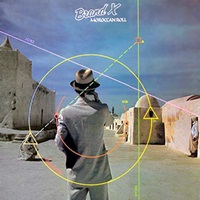
Brand X, Moroccan Roll (1976)
Excellent pun-title aside, this album, the band’s second, is fully deserving of inclusion on this list. Featuring then-Genesis drummer Phil Collins (prior to his 1980s world domination phase), it also included John Goodsall (guitar), Percy Jones (bass) and Robin (brother of Joanna) Lumley on keyboards. Despite the title, there is no rock and roll here; it is a full-on jazz fusion album with elements of prog that stands up in every way to what was coming from the States at the time. While the band don’t put a foot wrong, Collins is in deserve of extra praise here – his drumming is supple, muscular and propulsive, and in the author’s opinion the apex of his career. Sleeve artwork by Hipgnosis as well – groovy.
Track choice: Hate Zone
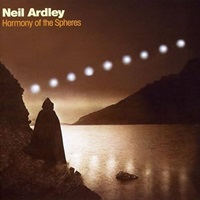
Neil Ardley, Harmony of the Spheres (1979)
Neil Ardley was an impressive figure. As well as writing and recording twelve albums, he also wrote over one hundred popular books on science, technology and music, was a researcher for Mastermind and held a degree in chemistry. Two critically acclaimed large ensemble albums, Greek Variations and Other Aegean Exercises (1970) and Symphony of Amaranths (1972) were followed by Kaleidoscope of Rainbows (1976) which introduced synthesizers to the jazz orchestra format. Again, this album drew plaudits from the pundits, ranking number 22 in the New Musical Express top albums of 1976.
Harmony of the Spheres was recorded in 1978 featuring saxophonist Barbara Thompson, Trevor Tomkins on percussion and none other than John Martyn on guitar. A unique blend of jazz, rock, funk, New Age, and classical, it also has a sense of ‘Englishness’ about it with echoes of pastoral idylls. The album emanated from a thought that came to Ardley whilst looking for new ideas:
‘The idea that the planets emit musical notes as they go round the sun goes back to Pythagoras… the harmony of the spheres… This was an idea the ancient Greeks had, that the planets emit music notes – so that a perfect harmony resounds throughout the heavens, everything being perfect in the heavens… And one day while I was on holiday, I began to wonder what those notes might be…’
ITV’s South Bank Show dedicated an episode to the creation of the record, and Ardley was interviewed about it in Melody Maker. Yet, despite such coverage, (and a sleeve that should have played into the Star Wars zeitgeist of the era) the record was soon forgotten, and it became known later as the ‘lost’ masterpiece of 1970s progressive jazz. Luckily, it has recently been subject to a sumptuous re-release by Chichester-based Analogue October Records and is available again for appraisal. Strap in, it’s a cosmic trip to be sure.
Track Choice: Glittering Circles
NOTE: The two mentions of Chichester are because the author teaches at the University of Chichester and has introduced students to notable highlights of the British Jazz catalogue during a module on British history that spans from 1945-79. The playlist that was used weekly in a section called ‘Break Time Jazz’ is available here.
see also:
Discover more from Lion & Unicorn
Subscribe to get the latest posts sent to your email.
