
SIMON MATTHEWS on David Miller’s 1968 spy movie Hammerhead.
Who remembers Stephen Coulter now? A friend of Ian Fleming, with whom he served in Royal Navy Intelligence during World War II, like Fleming he became a Reuters correspondent and Sunday Times journalist after 1945. Which makes one wonder if he was a spy as well. (He passes the duck test). Less controversially he was also a writer, publishing The Loved Enemy in 1952, set in West Africa and The Quickness of Hand, a thriller, later the same year, for which he used the pseudonym James Mayo. Marghanita Laski thought it was ‘influenced to quite a fantastic degree by Graham Greene’, and the label stuck with the publishers of the latter, who proclaimed it ‘the best thriller since Brighton Rock’.
Others followed, but sales were not great, unlike Fleming whose 1953 debut Casino Royale was quickly adapted for US television. After Dr No and From Russia with Love had been adapted into hugely successful films, Coulter – still as James Mayo – began his own secret-agent series with Hammerhead (1964).
The central character of these is Charles Hood, a public school educated art connoisseur, who works for the Centre, a cabal of London-based industrial companies whose interests are usually (but not always) aligned with British government policy. Six feet tall, handsome, an effortless sportsman, epicure and womaniser, Hood was described as ‘the slickest of the super-Bonds’ by the Sunday Citizen.
Hammerhead is certainly an exciting book, with Hood tackling Espiritu Lobar, a secretive billionaire who wants to steal NATO war-plans for an unnamed enemy. Lobar, nicknamed Hammerhead, has an enormous yacht, full of communication, spy and engineering equipment, including a miniature submarine. It sails around the Mediterranean crewed by a variety of his henchmen and women. A great deal of sex and violence occurs, the latter being described with sadistic pleasure and the former completely objectified, with the women involved being little more than ciphers.
Hammerhead sold well, and Hood returned in Let Sleeping Girls Lie (1965) which US reviewer Anthony Boucher noted had ‘no sense at all of plot or structure’. After a third blockbuster, Shamelady (1966), film producer Irving Allen bought the rights, announcing that Hammerhead would be made in London and directed by David Miller.
Allen was playing catch-up here, having decided several years earlier to turn down James Bond, claiming Fleming’s books ‘aren’t good enough for TV’. He soon made up for this by launching his own spy franchise, the Matt Helm series, starring Dean Martin and based on the character created by US thriller writer Donald Hamilton. Hammerhead used the same scriptwriter (Herbert Baker) as well as featuring US actress Beverly Adams, who appeared alongside Helm/Martin as a character called Lovely Krazeit. (In Hammerhead she’s an exotic go-go dancer/assassin.)
It was really just a question of arithmetic. In 1967 Allen’s The Ambushers took $10m in the US. The Connery/Bond You Only Live Twice managed $18m in the US and $112m world-wide, and another spy franchise – Flint with James Coburn – netted $11m for In Like Flint. This was serious money and Allen’s intention was to run Hammerhead as the first of a series of espionage capers that would rival Bond and be UK-set, but US-friendly.

He selected Vince Edwards, noted for roles in Kubrick’s The Killing and Carl Foreman’s ponderous anti-war film epic The Victors, to appear as Hood. By August 1967 Judy Geeson was lined up as his co-star, with Peter Vaughan as Lobar/Hammerhead and Diana Dors in place as Kit, the owner of a bordello. Filming began in September.
The action kicks off at the Roundhouse in Camden Town, north London, where an unspecified happening akin to performance art is being staged and overseen by a Salvador Dali-type character. (It isn’t clear if this was an actual event, or something created for the film). The police arrive. The stoned audience flee into the rubbish-strewn streets and car-breakers’ yards that then surrounded the venue.
Hood is amongst them and offers Susan George a lift in his Jaguar. We arrive at his mews house, and yes, he really is an art connoisseur. There is a Francis Bacon on the wall. (Dangerously hip for the time). Just fifteen minutes later, we are at a NATO meeting in Lisbon where we meet Hammerhead, a completely evil man with an extensive pornography collection driving around, like any billionaire with a yacht and personal submarine, in a Rolls Royce.
We also meet David Prowse, famously cast as Darth Varder a decade later. Here he plays Hammerhead’s bodyguard with a single line of dialogue. The Mediterranean setting is luxurious and there is a scene at Kit’s Club where Dors’s crew of young women provide an erotic (for the time) floor show. Like the later Bonds, Lazenby and Moore, Edwards is expressionless throughout but OK in fight scenes, and romantic sparks fly between him and Geeson, despite their yawning age gap, thirty-nine and nineteen.
After a big traffic jam, rather like The Italian Job, and a big chase sequence, we get to the NATO meeting, which is portrayed like a mafia conclave. The Roundhouse crew have arrived in Portugal too, giving the final scenes something of the atmosphere of an early Ibiza rave. Hammerhead is extinguished and Hood, for the moment, saves the world.
It’s a nice piece of mod cinema. As one would expect then the music was entrusted to a young record producer, in this case David Whitaker, who worked with the fashionable Immediate and Marmalade labels. A soundtrack album credited to him duly appeared with a title theme, Hammerhead, belted out Shirley Bassey style by Madeline Bell.
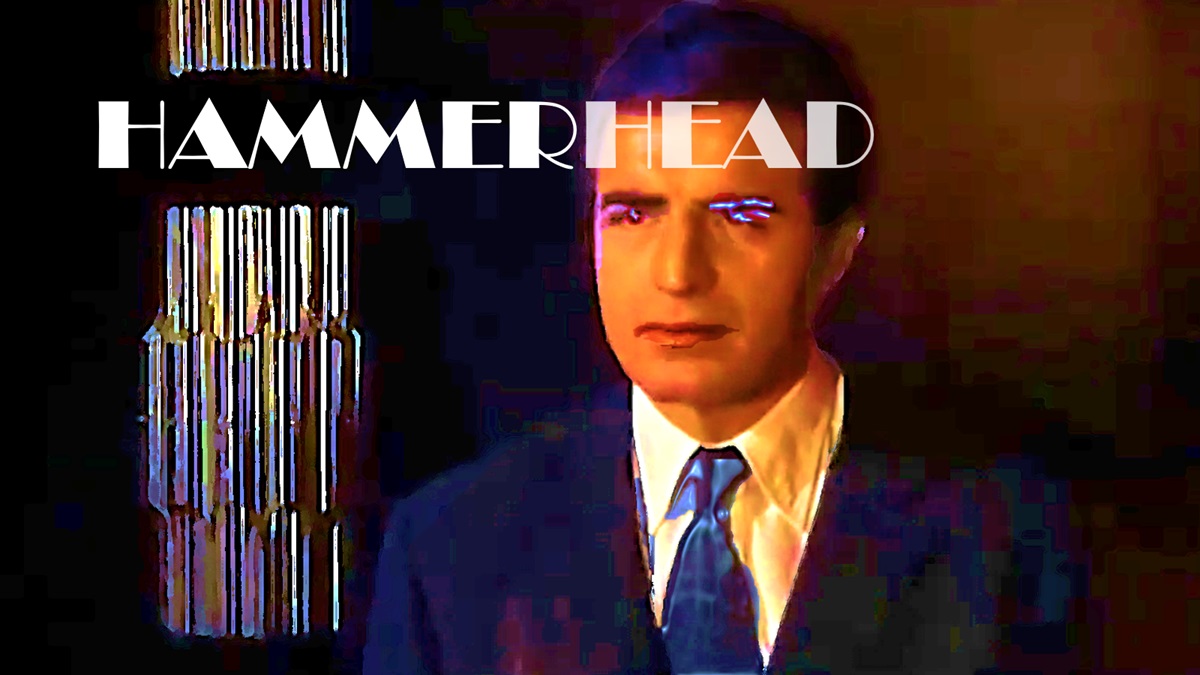
The film was released in April 1968. Reviews weren’t great and its reception was muted. Exactly why is hard to pin down. It wasn’t actively bad. Certainly, the tide was turning against spy capers by the time it reached the screen. Connery had quit Bond. The Flint series was abandoned and Dean Martin would shortly follow suit with Matt Helm. The future seemed to lie – in the midst of the Vietnam war – with grimly realistic, downbeat cold war dramas about shabby moral compromise and liberation movements. So, despite two more Hood novels, a film series based on his adventures failed to happen, though a separate 1969 spy novel by Coulter, Embassy, was filmed in 1972.
But, to return to where we started. Is Fleming a better writer? Or Connery, Lazenby and Moore better actors than Edwards? Surely not in either instance. Bond simply has more money thrown at it. Money, and social connections, count for a lot, though. Fleming made it to the Penguin Dictionary of English Literature (1971), included in a pantheon of the great, good and forgotten. Exactly what constitutes literature, and who decides, is better left to a debate one evening in a congenial saloon bar. Rest assured, watching Hammerhead is no worse than watching Austin Powers and will while away an enjoyable hour and forty minutes of your time.
see also:



Discover more from Lion & Unicorn
Subscribe to get the latest posts sent to your email.
