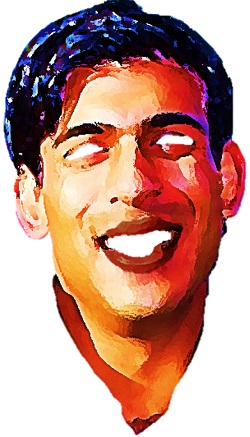
Well, that was a funny old premiership. It was hard to work out quite why Rishi Sunak was actually at Westminster. Lord knows he didn’t need the money. More than that, he had no nose for politics, and he never gave much indication of any kind of vision. For all their faults and failures, you kind of knew what David Cameron, Theresa May, Boris Johnson, even Liz Truss, wanted the country to look like. Sunak? I’ve really no idea. He seemed to see government as technocratic managerialism, but Britain more widely? No, sorry.
So now he leaves office at the age of forty-four, and he can put ‘prime minister’ on his CV. Which is about right. He never gave the impression that this was a calling; he wasn’t in love with politics, it was just a silly phase he was going through. The days are long gone of Harold Wilson and James Callaghan, who both stood in general elections after they left Downing Street (Wilson was an MP until 1983, Callaghan until 1987), let alone Edward Heath, who stayed on to 2001. But then they saw politics as an honourable career and we, the people, have been saying for years that we don’t like career politicians, so maybe we deserved Sunak.
He was utterly useless at campaigning, hence the posing in front of the Titanic and the ill-thought out suggestion of bringing back national service – at best playing to a caricature of his own party. It should have come as no surprise – we’re talking about someone who lost a leadership election to Truss – yet still it was worse than feared. He seemed desperate to be liked, while also being querulous in interviews and in what passes for debate on television: an unhappy combination. I’m sure he’s perfectly nice, but he didn’t resonate with people, even before he made such a dog’s dinner of the D-Day commemorations. Had Johnson – who really can campaign – stayed as leader, the Tories would still have lost, but would have done far better, even allowing for Nigel Farage’s intervention.
Mostly, though, he came across as lightweight, never looking like a man of substance. As chancellor, his big moment came during Covid when he gave away billions of pounds in furlough money and subsidies for businesses; the public likes being given money, and he ended 2020 as the most popular politician in the country, referred to by people who should have known better as Dishy Rishi. As prime minister, he was at his best in announcing compensation for victims of the blood and Post Office scandals – which didn’t change the narrative that the Tories were busy lining their own pockets and those of their mates. Perhaps his most striking policy was the silly proposal of a smoking ban, imported from New Zealand just as New Zealand itself was abandoning it. That never made the statute book because he called an early election (although Sir Keir Starmer is promising to resuscitate it).
Beyond that, nothing remains of his premiership, because he achieved nothing of any consequence. He was only prime minister for twenty months, of course, so one might argue that he didn’t have time to do much. But John Major, another little-known Tory chancellor implausibly propelled into the top job, only had seventeen months under his belt when he went into the 1992 election, and he had some achievements to his name: he’d successfully navigated a war (albeit not one of his making), and he’d scrapped the Hated Poll Tax. He won more than fourteen million votes.
Sunak says he takes responsibility for the defeat, but he’s not entirely, or even primarily, responsible. When the Conservatives panicked and ditched Truss, I noted that ‘it’s certainly too late for the next election,’ so damaged was the brand. Thus it has proved. The party was never going to recover from the chaos of 2022, when a Tory government – a Tory government (as Neil Kinnock would say) – got through three prime ministers and four chancellors in eight months. The key moment was Kwasi Kwarteng’s mini-budget, a turning-point as decisive as Black Wednesday had been thirty years (and a week) earlier. Theresa May used to promise ‘strong and stable leadership,’ which is, at heart, what the Tories are supposed to be for; if they can’t provide at least the perception of that, then there’s no point to them at all.
Sunak’s time as prime minister was so inconsequential that it’s hardly worth dwelling on. Perhaps instead this should be an obituary for the last fourteen years – but that’s a much longer piece for another time. For now, there are just a couple of things worth recording, since they’re going to be so important in the immediate future.
First, the Tories still don’t know what they stand for. The visions of Britain offered by Cameron and by Truss were fundamentally incompatible. Maybe the question is whether they’re a Thatcherite party or not. Or rather, whether they’re any more Thatcherite than all the parties are. Because many of the big changes wrought by Margaret Thatcher – highly controversial at the time – now go unchallenged: privatisation, limitations on trade unions, the focus on inflation, low income tax. All the major parties agree here, which leaves little room for the Tories to look distinct on economic principle. Even on the post-Thatcherite economic agenda, things like cheap credit and net zero, there’s precious little clear blue water between Conservative and Labour.
There was another side to Thatcherism, but it comprised the things that tended to get bundled up as Victorian values: self-reliance, traditional morality, social conservatism. And this was the stuff that was deemed toxic under Cameron, so it was dumped, and the Tories adopted instead the non-judgemental Blairite approach to personal behaviour. They were massively in favour of families – as long as you defined ‘family’ to mean pretty much every household that contains more than one person; living with a cat will do it. And, like Labour, they suspect that people can’t really be trusted to bring up their own children without the state keeping a close eye on them.
Social liberalism was very much Cameron’s schtick and it did make a difference, most obviously with the introduction of same-sex marriage, and with the emergence of a multiracial top-tier in the Conservative Party. The churn-over of chancellors was mostly notable for the political instability that it reflected, but even so, a sequence of men with the first names Sajid, Rishi, Nadhim and Kwasi is remarkable, and it’s a consequence of Cameron’s party reforms.
Less happily, the desperation not to be the nasty party also led, for example, Theresa May to embrace gender self-ID. Fourteen years of a Tory-led government produced an explosion of what people like Lee Anderson (now of Reform) called ‘virtue-signalling, namby-pamby, woke nonsense’. Belatedly recognising that this wasn’t doing them any good, leading Tories began to speak against the left’s culture-war offensive, but the rhetoric made absolutely no difference to the reality. Consequently, they got the worst of both worlds: denounced for ‘lurching to the right’, and yet alienating those who didn’t buy into identity politics.
Most obviously, the Tories talked tough on immigration and failed to deliver so spectacularly that it could only be deliberate. Cut-price foreign labour has been used as a sticking-plaster for a weak economy (while further entrenching the productivity crisis), and one can see the appeal to short-termist politicians. But it took a remarkably stupid tranche of politicians to follow Brexit with a massive rise in immigration. What on earth did they think people were voting for in the referendum? Did Sunak really believe that the desperate chasing of headlines for the peripheral issue of Rwanda would be enough to address the real question of legal immigration?
If so, he was a fool. It was the sheer scale of the changes wrought to employment, high streets and services that caused the unease. Immigration, more than any other factor, created the conditions for Farage to make his triumphant return to politics. But even without Farage, Sunak would have lost; too many Tory supporters had already been driven away.
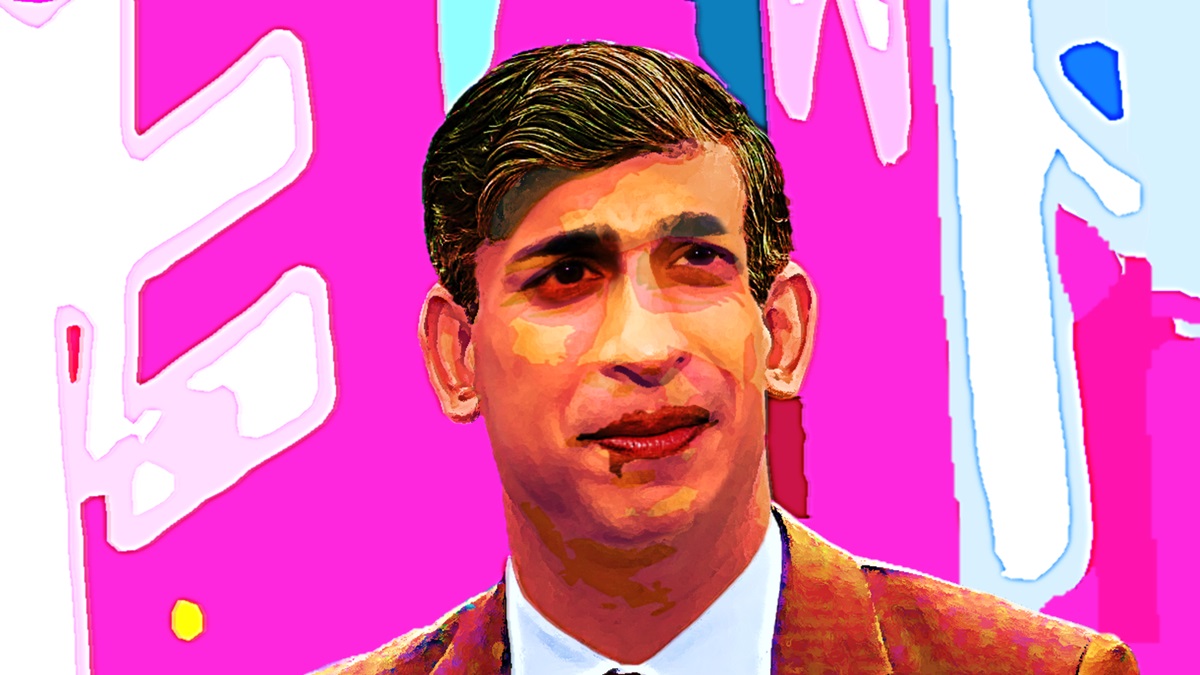
Anyway, the Tories had run out of steam. There’s a natural life-span of a party in government, and they passed it shortly after the pandemic. What have they got to boast about for their fourteen years in office? Not a great deal, but there are some positives. There was the non-return of mass unemployment, despite austerity, Brexit and Covid. The maintenance and upgrading of the minimum wage. The raising of educational standards in schools.
It’s not much to counter the negatives: flatlining productivity, sluggish growth, public services run-down to the point of crisis. A large part of this is not actually within the gift of government. Sunak appeared on Nick Ferrari’s LBC show during the campaign, and a caller complained that when she was in hospital she couldn’t have a shower, because the lock on the door was broken – and I did wonder what the prime minister was supposed to do about that; it felt more like a problem for the hospital maintenance team.
As a country we’ve become so fixated on politicians that they are blamed for everything, while everyone else – those who actually run the hospitals, universities, prisons etc – gets an easy ride. Certainly we don’t want to blame ourselves. In 1998 Giles Radice, Labour MP for North Durham, recorded in his diary a constituent coming to his surgery who ‘complains that we haven’t yet managed to “change people’s behaviour towards each other” and asks what I am going to do about it’. Starmer has that joy yet to come.
As for the Tories, they ought to hold their nerve. The loss of seats is catastrophic but it also demonstrates political volatility. Labour came back from disaster, despite a marked lack of public enthusiasm, and so too can the Conservatives. This is going to be a difficult period of government and Labour will provide plenty of opportunities for an opposition to exploit.
But they won’t hold their nerve, of course. They’ll continue to tear themselves apart, as they have been doing for some years. The final round of the leadership election to find Sunak’s successor will be, I’d guess, fought between Jeremy Hunt and Kemi Badenoch. If they have any sense, they’ll go for the latter. Sunak’s final task is to ensure that there’s not too much blood-letting. And, given his lack of political instinct, he’s likely to fail.
With additional material by Sam Harrison.
see also:

Discover more from Lion & Unicorn
Subscribe to get the latest posts sent to your email.
