
SIMON MATTHEWS investigates Thorold Dickinson’s 1939 film The Arsenal Stadium Mystery.
The much vaunted ‘Golden Age of Detective Fiction’ taken by many as being the 1920s and ’30s, was dominated by murder mysteries set in glamorous locales. Hotels, ocean liners, country houses, large town houses, gentlemen’s clubs, West End theatres, cruise ships, exclusive express trains, flying boats etc all served as settings. In the UK the genre is often associated with female authors – Agatha Christie, Dorothy L Sayers and so on – but a multitude of others, prolific and well-known in their day, played their part too. One such was Leonard Gribble who, showing Georges Simenon-like levels of industry, published 120 books between 1929 and 1985.
Very middle-brow in tone, his output was typical of the material stocked by the independent lending libraries run by department stores and pharmacies. The Arsenal Stadium Mystery, probably his best-known work, appeared in early 1939. The elevation of a football ground to the pantheon of locations deemed suitable for detective fiction was unusual and said something about how Arsenal FC were regarded then.
Originally, as students of football will know, they were Woolwich Arsenal, playing without much success, in an unfashionable part of south London. Their ground wasn’t up to much and their gates low compared with the crowds who flocked to watch the dominant northern sides. So in 1913 they moved across the capital to Highbury, leasing six acres of playing fields from the Church of England Metropolitan Training Institution. Previously occupied by a dissenting academy, this existed ‘to train pious persons as masters and mistresses of juvenile schools connected with the Established Church, upon principles Scriptural, Evangelical and Protestant.’
The college remained in situ on the rest of its land until 1939 and insisted, when Arsenal purchased the freehold in 1925, that a clause remain in the title precluding any Sunday matches. This is North Islington after all, a serious, respectable, and deeply middle-class part of London, then and now.
Once settled in such surroundings, and with money spent on a rather grand new stadium, the club went from strength to strength, either finishing in the top four or reaching the Cup Final in eleven of the fourteen seasons between 1925 and 1939. They managed to get the name of the local Piccadilly Line tube-station changed from Gillespie Road to Arsenal, and, implying they were a cut above the rest, were for a period formally known as The Arsenal. (A nomenclature which survives in the ironic/sarcastic chant ‘one-nil-to-the Arsenal.’)
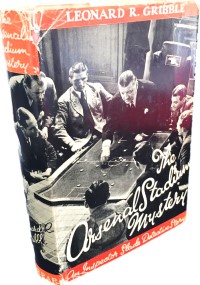
Articles about their prowess inevitably referred to ‘Highbury’s marble halls’ and most seasons the club held celebratory banquets at the Café Royale. In ways that would be entirely familiar today, they were not merely a football team, they were part of the entertainment industry and pretty near the top of it. One 1930s journalist noted ‘Arsenal train on ozone, brine-baths, champagne, golf and electrical massage in an atmosphere of prima donna preciousness’ and, in truth, they represented the wealth, affluence, and unfair advantage that London had over the rest of the UK. Nor was it just about money. Arsenal were the ’30s idea of something modern and scientific. Manager George Allison was regarded as ‘urbane’ at a time when most gaffers were indivisible from their players. The club had a physiotherapist (Tom Whittaker) and planned their approach to each match using a green felt model pitch and coloured counters. They were tactical.
Everything about them was comfortable enough to accommodate a murder mystery. The Arsenal Stadium Mystery was one of Gribble’s Inspector Slade series, which eventually ran to 33 novels. The centrality of the detective, in this case Slade, is one of the genre’s tropes, the character having a kind of omnipotence (unerringly accurate hunches, unusual reservoirs of knowledge, immense calmness etc) that seems to have originated with Sherlock Holmes and then been repeated through all the subsequent literature. The film rights were quickly sold, and shooting began in the spring of 1939, only a month or so after another Gribble book, Stolen Death, had been adapted for the big screen as Inspector Hornleigh on Holiday, Hornleigh being the star of a contemporary BBC radio series.
Leslie Banks plays Inspector Slade. A solid choice, he had just done Goodbye Mr Chips on the London stage, whilst his film credits included some early Hitchcock – The Man Who Knew Too Much and Jamaica Inn – as well as imperialist stuff like Sanders of the River. His acting is competent but not unduly interesting, which suits the plot as Gribble provides simple thrills rather than any detailed or rational exposition. Supporting him are two glamorous young actresses: Liane Linden, only nineteen, who returned to her native Sweden for the duration of the war shortly afterwards, and Greta Gynt, who was Norwegian and a significant star in UK films through to the mid-50s. Allison and Whittaker both appear as themselves, with the Arsenal first-team squad milling about in the foreground, though no one was so foolish as to give the players any dialogue.
The plot? An opposition player collapses at a football match and turns out to have been poisoned. Slade investigates. With some irritation: the case stops him supervising an amateur theatrical production being put on by his colleagues. We see a bit of this, including some rather puzzling shots of dancing policemen, which remind us that odd bits of comedy were often interpolated into 1930s and ’40s thrillers, notably by Alfred Hitchcock, or in anything featuring Basil Radford and Naunton Wayne. That aside, it quickly descends into a tangled whodunnit of the type much liked by theatre audiences and thriller readers.
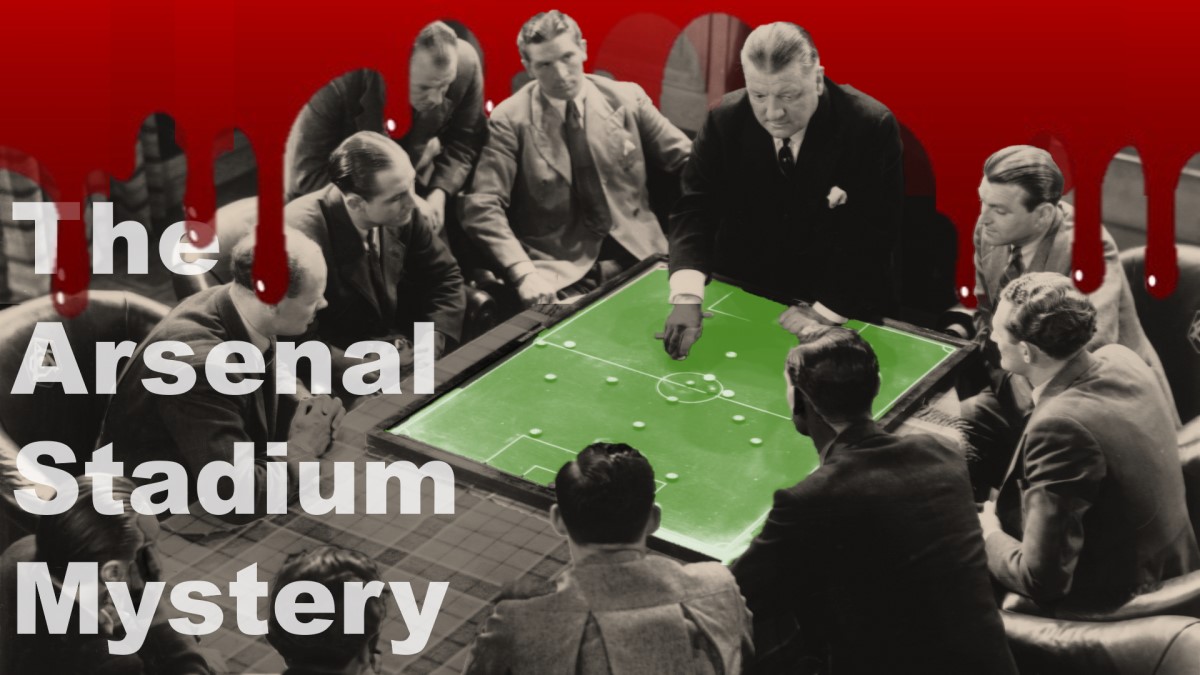
But who watches The Arsenal Stadium Mystery for the plot? Surely, we’re in Escape to Victory territory here? That is, you watch it for the football and the background detail. Which in this case in quite fascinating. We get a lot of footage of the Arsenal vs Brentford (dubbed ‘the Trojans’) match played on 6 May 1939. The style is okay, slower than today but still enjoyable. Arsenal won the match 2–0, and it was the final game of a season in which they finished fifth, and Brentford eighteenth. The crowd, 95 per cent male, are in overcoats, trilbies, cloth caps (thousands) and even a few bowlers. Some enthusiastic women spectators, unusual then, are glimpsed. Off the pitch, the players smoke continually and, by today’s standards, are decidedly middle-aged looking. In the few bits of unscripted background chatter they contribute, they sound well-spoken and respectable.
It remains fondly regarded, and is screened regularly on Talking Pictures TV and London Live as well as being available on You Tube. For many it is the epitome of ’30s UK film, even if it was screened during the ‘phoney war’ and depicts Arsenal in a season that was slightly less than successful. Gribble put Slade in another football thriller in 1950 in They Kidnapped Stanley Matthews but no film version resulted. Instead, The Arsenal Stadium Mystery remains his calling card.
see also:


Discover more from Lion & Unicorn
Subscribe to get the latest posts sent to your email.
