In ‘The Devil Made Me Do It’, a 1974 episode of US series The Snoop Sisters, the two amateur sleuths found themselves investigating a case involving a rock star named Prince (portrayed in the dramatisation by Alice Cooper) who was also the leader of a Satanic cult. Well, that’s California for you. But even in Britain rock stars come to the attention of television detectives all too often.
This is a guide to rock, pop and jazz acts who have engaged with various British TV ‘tecs over the years. These are singers and bands who have been shamefully neglected by music historians, and there’s very little documentation on their careers. Indeed in each instance, we have just one source on which to draw. Nonetheless, we can put at least some details on the record, so the artists don’t disappear entirely.
And the lessons we learn? (1) Comebacks and reunions are dangerous. (2) Having a brother in a band is dangerous. (3) Having a detective as a fan is very dangerous indeed.
The Adders
‘Liverpool had the Beatles, we had the Adders,’ says a Glaswegian, but the fact that he has to explain who they were rather gives the game away: the Adders weren’t really on the same level as the Beatles. They were nice enough, but a bit lightweight. The frontwoman was singer and songwriter Janie Connelly (Julia Cotton), and when she fell from a hotel balcony in Blackpool and died, the group split up.
But when their song ‘The Two of Us’ re-entered the charts, 25 years later, a sharp promoter decided to bring the surviving members back together for a charity gig, with a new singer, Kate McCready (Natalie J. Robb). Those plans were interrupted when guitarist Rick Mulvey was electrocuted in a swimming pool. Then drink-and-drugs-damaged drummer Alan Mann (Andrew Barr), who’d been working as a night cleaner, was also killed, cleaning fluid forced down his throat.
With bassist Tony Balmoral having disappeared to ‘one of those islands where old hippies go to find themselves’, that left only keyboard-player Marie McDonald (Barbara Dickson).
DC Stuart Fraser (Colin McCredie), himself a former drummer, was a fan.
see: Barry Appleton, ‘Legends’, Taggart, 1995
Ayana
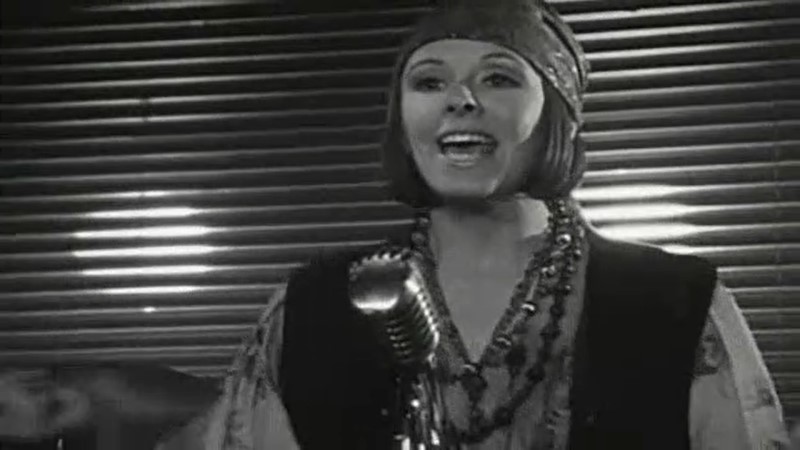
Hammersmith-born singer Ayana Jelani (Olivia D’Lima) signed a million-dollar contract when she was just seventeen. The hits duly came – most famously with ‘Invincible’ – and, well, it was the same old story: the glamorous young pop star, finding the pressures of success too hard to handle, turns to drink and drugs. She was 22 years old when her record company insisted that she go to rehab. So she flew to the Ocean View clinic on Saint Marie.
It wasn’t a wise choice. First, because the clinic is run by Dr Mark Fuller (Keir Charles), with whom she‘d had an affair back in London, And second, because this is Saint Marie, which is a very dangerous place for pop stars, as the Venerators, the Flowers of Progress, Leon and the Ragers and the Infamous T can testify. Or rather, they would testify to that had they not also fallen victim to the island’s curse. Certainly it’s no place for a young woman with an anaphylactic reaction to aspirin.
DI Neville Parker (Ralf Little) hadn’t heard of her.
see: Asher Pirie & James Hall, ‘Painkiller Thriller’, Death in Paradise, 2022

Bad Faith
The death in 1975 of guitarist Andy Fletcher couldn’t have come at a worse time. His blues-rock band, Bad Faith, had only formed the previous year and they’d recorded just one album, the classic God’s Thunder – including ‘Devil’s Got a New Name’ and ‘Real Wild Woman’ – but already they were on the cusp of great things. Then on the night of their biggest gig, Fletcher was found shot dead, in what was assumed to be suicide. The band never played again.
After the split, singer Dave Dalston (George Costigan) went on to have solo hits with ‘White Bride, Black Widow’, ‘I Lost My Heart in a Game of Love’ and ‘Keep It Going’, while bassist Danny Jones (Roger Lloyd Pack) formed a psychedelic band, White Onyx ‘and apparently fried his brain with acid’, and drummer Charlie Webber (Peter Guinness) got religion. Their manager, Clive Evans (Zig Byfield), carried on managing.
Former DSgt Gerry Standing (Dennis Waterman) was a big fan, and God’s Thunder was one of the favourite albums of ADC Robert Strickland (Anthony Calf).
see: Nicholas Hopkins, ‘Loyalties and Royalties’, New Tricks, 2008
Tracy Baxter
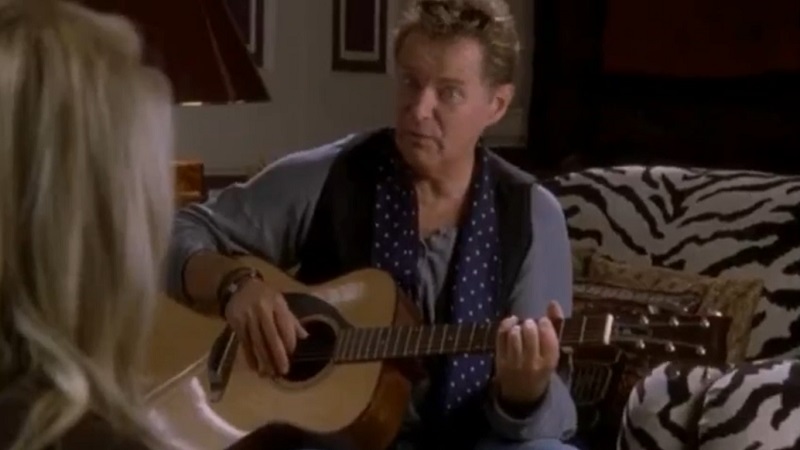
It wasn’t her real name and, oddly enough, it was given to her by the state… In the early 2000s, the singer later known as Tracy Baxter (Louise Delamere) was performing in a nightclub when she witnessed a murder. Her evidence put away a gangster, and she was relocated to Amsterdam under the witness protection scheme; that’s when she got the new name.
She supported herself by singing and playing piano at a bar called the Blue Parrot. Standards mostly – ‘All of Me’, ‘You Do Something to Me’, that kind of thing, ‘sweet stuff for the tourists’ – but that was just to pay the rent while she wrote and demoed her own songs. She was just getting some record-company interest when she was found brutally murdered in her bed. ‘She could be the next Eva Cassidy,’ reflected DI Peter Pascoe (Colin Buchanan). But she wasn’t.
DS Andy Dalziel (Warren Clarke) was a big fan, though it did her little good – he was lying in bed next to her, covered in her blood, when her body was discovered.
see: Stan Hey, ‘Wrong Place, Wrong Time’, Dalziel and Pascoe, 2006
Jerry Bellinitis
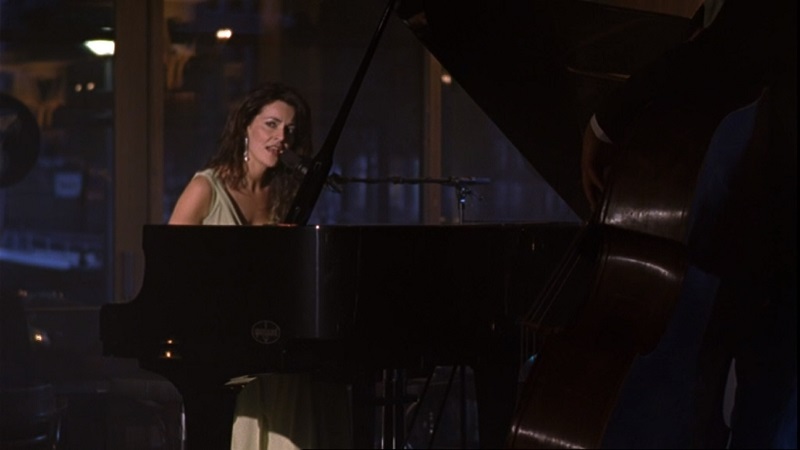
The strange thing about Jerry Bellinitis (Francis Matthews) was how very old-fashioned he was. He was a singer-songwriter at the peak of his popularity in the late 1960s with an act and sound that was at least a decade out of date by then. Saccharine ballads like ‘Surrender Your Arms to Mine’ and ‘Darling Be Tender’:
Darling, be tender,
Tender to this poor guy.
A love that will never end,
A love that can never die.
That was at #23 in the hit parade on the day he first met Marella Carney (Hannah Gordon), who turned out to be the love of his life. Better known as the Black Canary, she was an illusionist; she wasn’t much good at stage magic but did have an identical twin sister, which made the tricks easier. She came to a violent end, but he surely couldn’t have been responsible – he’s in a wheelchair these days.
Maddy Magellan (Caroline Quentin) had never heard of him.
see: David Renwick, ‘The Black Canary’, Jonathan Creek, 1998.
Carrie Blaine
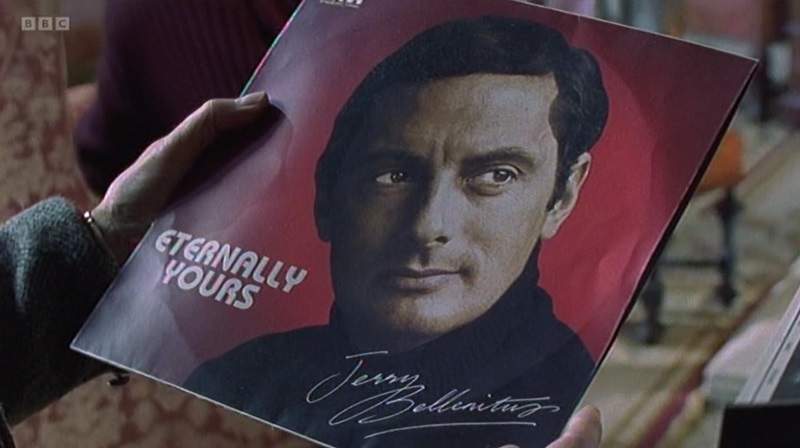
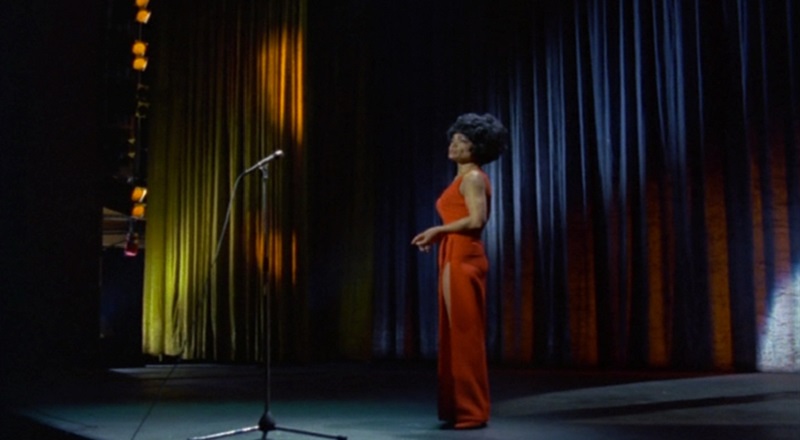
By 1974 veteran cabaret singer Carrie Blaine (Eartha Kitt) was seen as yesterday’s star, but she knew her powers were undiminished. Which is why she was planning a comeback concert. Her task was made more difficult, however, by the fact that she was being drugged with mildly hallucinogenic stimulants by her husband and his mistress, who planned to kill her and make it look like the suicide of a madwoman.
see: Terry Nation, ‘A Pocketful of Posies’, The Protectors, 1974
Bograt and the Nekros
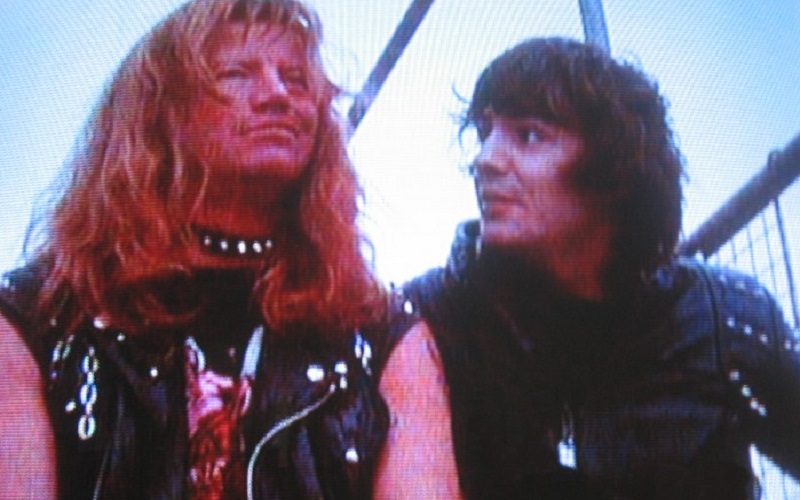
Bograt (Robin Askwith) was a 1970s heavy metal singer from Birmingham. ‘Those streets, those subways, they gave him everything,’ explained his manager Lenny Bright (Karl Howman). ‘Life, art, inspiration. This is his city.’ Then Bograt got middle-aged and washed out. He tried to make a comeback in the 1980s with a re-formed Nekros, but his heart wasn’t really in it.
Luckily, private investigator Rocky Cassidy (Neil Morrissey) was a big fan and persuaded him to go through with the reunion show – for him and all the other fans.
see: Diane Culverhouse & Julian Spilsbury, ‘Peacemaker’, Boon, 1988
Jason Brown
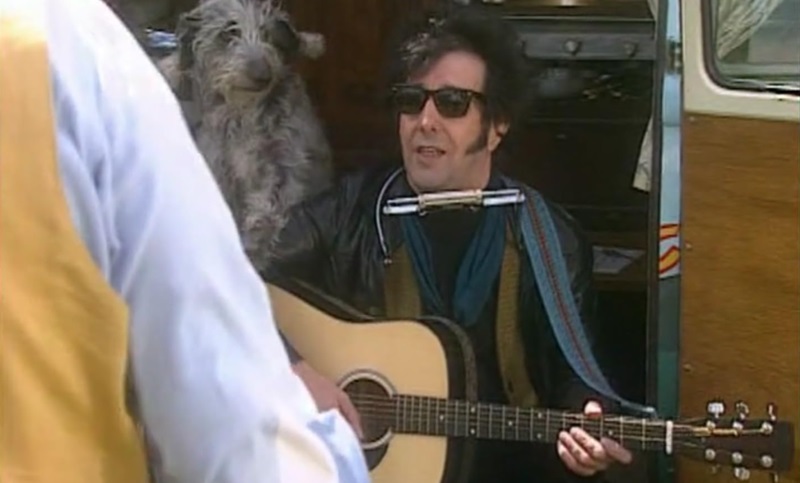
Some people thought Jason Brown (Brian Hibbard) looked like Bob Dylan. He didn’t, but he could do a fair impression of the man, playing acoustic guitar and harmonica as he ploughed through ‘The Times They Are a-Changin’’ and ‘It’s All Over Now, Baby Blue’. Not that he just did Dylan songs; he could also have a go at ‘I Got You Babe’ and ‘We Gotta Get Out of this Place’.
He was actually a pastry cook from Catford, but he also turned up in Aidensfield in the North Riding of Yorkshire, driving a van that, according to a local, is ‘painted all psychodaisical’. He was quite taken with the place. ‘It’s far out, man,’ he explains. He has a string of drug convictions, and the question is whether he’s been dealing as well as strumming.
PC Nick Rowan (Nick Berry) wasn’t much impressed.
see: James Robson, ‘Toss Up’, Heartbeat, 1995.
Caliban’s Claw
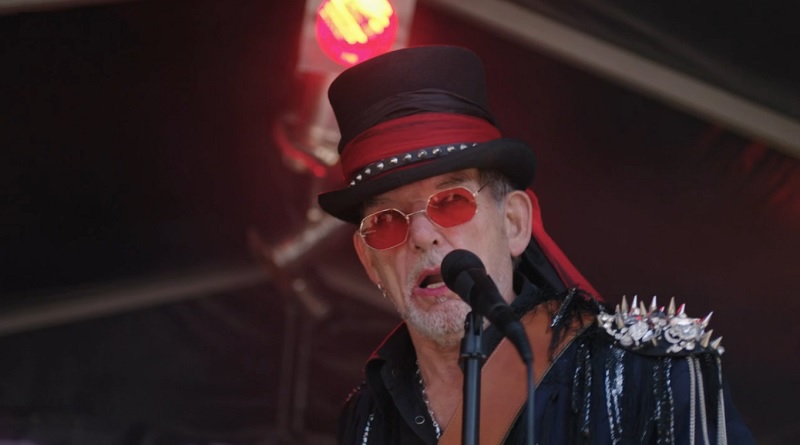
Some claimed the trio were ‘the hardest rocking band to come out the West Midlands’. Songs like ‘Sharper than a Serpent’s Tooth’, ‘Let Us Not Be Mad’ and ‘Die Upon a Kiss’ were classics of 1980s metal.
Their roadie in the early days – Bushy, they called him – was a practitioner of black magic, who kept trying to get the group involved in his rituals. And, remembered singer Tony King (David Schofield): ‘In the end, we just thought, eh, why not?’ They staged a ceremony that culminated in them doing a deal with the Devil, signed in blood, in pursuit of stardom; Bushy told them it’d make them ‘bigger than Zeppelin’.
As others have discovered, however, contracts like that come at a price: ‘We sold our souls for fame and fortune and then, right when we were at the very top, he came to cash them in’. Just as they were making it big, the tour bus crashed and Ricky Cornwall, the drummer, was killed. The band fell apart.
Many years later, King decided to stage a comeback, but panicked when he started seeing visions of the Devil. Particularly after former guitarist Earl Albany (Sean Connolly), now a parish priest, was run over by a bus as he fled a similar apparition.
Investigator Frank Hathaway (Mark Benton) was a big fan.
see: Ed Selleck, ‘See Thyself, Devil!’, Shakespeare & Hathaway: Private Investigators, 2020
Candy Crew
They may have been a manufactured girl group, but Lucy B (Jayne Wisener), Gemma G (Scarlett Rose Patterson) and Tina T (Marcy Oni) were at least a successful manufactured girl group, with three #1 hits to their Candy Crew name.
Then Gemma G (‘G for Gorgeous’) was kidnapped, and a ransom demand was sent, together with one of her fingers. On the one hand, this was a problem – she was the only one who could sing, the others mimed. But on the other, it was also a sharp career move: the band’s latest single was at #2 in the chart and the publicity, said manager Richard Anderson (Del Synnott) was ‘bloody great for record sales – and I mean, ker-ching!’ That was before he was shot dead, of course.
see: Howard Overman, Vexed, s01 ep03, 2010

Nev Connolly
Nev Connolly (Murray Head) was a star in the late 1980s, the kind of singer who appealed both to teenage boys and to their mums. A decade on from his peak, he was looking a little desperate, dressing up in a highwayman outfit for a video. On the other hand, it was while filming that video, out at a big country estate, Compton Lacey, that he met his future wife. So he bought the place in a romantic gesture. And a couple of years later, that’s where he was shot dead.
Gardener-cum-sleuth Rosemary Boxer (Felicity Kendall) was a big fan.
see: Clive Exton, ‘Arabica and the Early Spider’, Rosemary & Thyme, 2003
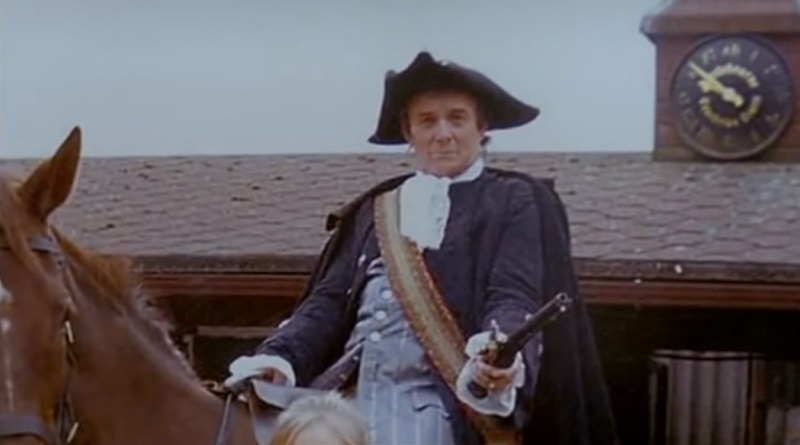
Crystal Kiss
Pennines synth-poppers the Crystal Kiss burst on the scene in 1988 with their debut single, ‘Marginal Love’, which went to #2 in the hit parade. Their headlining gig at the Forum saw them on the brink of stardom, but it wasn’t to be. During the recording of their follow-up, ‘A Lesson of a Lonely Heart’, guitarist John Gaunt and bassist Martin Harford (Wayne Foskett) got in a fight. Gaunt ended up dead, Harford was sent to jail for manslaughter, and that was the end of the Kiss.
Singer Liz Forbes (Emma Fielding) – she contributed ‘wispy, ethereal vocals’ – made two solo albums in the 1990s. They didn’t sell in vast quantities, but those who liked her folky jazzy adult material, songs such as ‘Dark-Eyed Boy’, liked it very much. Keyboard-player Ian Bassett (Finbar Lynch), on the other hand, released an ambient album – Incantation Station: Relaxation Music for Your Mind and Body – and eked out a living in Spain, putting on 1980s nights in cheap bars.
Quarter of a century later, Forbes, Bassett and Harford (now out of prison) decided it was time for a reunion. Then Harford hanged himself, and that was the end of the Kiss again.
DCI Banks (Stephen Tompkinson) was a big fan of Liz Forbes.
see: Robert Murphy, ‘Piece of My Heart’, DCI Banks, 2014
Gloria Dee
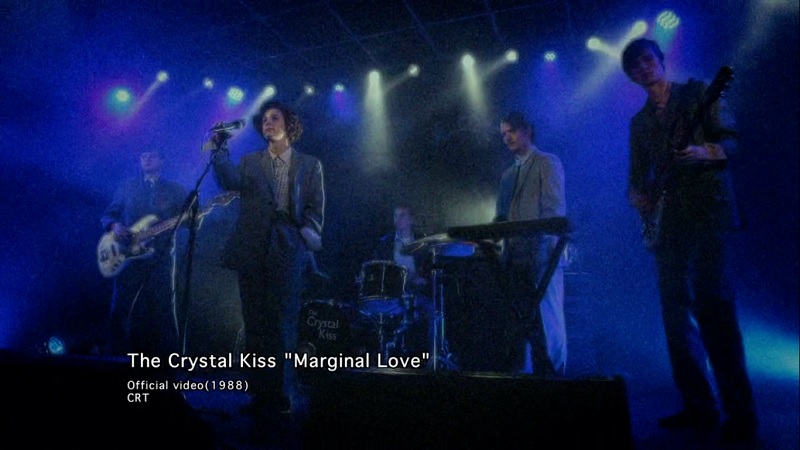
The Gloria Dee Quartet were a jazz band from New York: piano, trumpet, bass and, of course, singer Gloria (Camilla Beeput). They were more used to playing Minton’s in New York City, but in 1953 they came to London for a residency at the Straight 8’s jazz club in Wardour Street, promoting their album The Fabulous. They played smoky, sultry versions of standards: ‘Frankie and Johnny’, ‘Won’t You Come Home, Bill Bailey?’, ‘I Ain’t Got Nobody’, ‘There’ll Be a Hot Time in the Old Town Tonight’.
Rev Sidney Chambers (James Norton), amateur sleuth, was a big fan. Big enough to spend the night in Gloria’s bed. They were a racy lot, those English country vicars in the 1950s.
see: Daisy Coulam, Grantchester s1 ep5, 2014
Edwin Drood
A prog-rock trio featuring Roy Pilgrim (Ralph Brown) on vocals and electric violin, drummer Martin Crow (Mike Sarne) and guitarist Glenn McArthur (Hank Wangford). They were the kind of band that appeared at the Reading Festival in 1979, wearing fanciful outfits and singing songs to match:
The sands of sleep fall falsely over futures far too bleak,
And the truth no man can speak wanders while our will is weak,
Ah, but from the Devil’s dust there’s no escaping…
Success continued into the mid-1980s, at which stage Pilgrim fell in with the Creed of Eden, an ecological cult, and dedicated his life to weightier matters than mere rock ‘n’ roll.
Investigator Jonathan Creek (Alan Davis) was a big fan.
see: David Renwick, ‘No Trace of Tracy’, Jonathan Creek, 1997
Flowers of Progress
They weren’t in the front rank of Madchester bands, but the Flowers of Progress did release a great debut album back in 1991, with some big songs: ‘Helium Love’, ‘Flower Zombie’, ‘Daisy Buttercup’, ‘Little Ms Dead Eyes’, ‘Bloated Sunshine’. Vocalist Stevie Smith (Francis Magee), was backed by his brother, Jim Smith (Steve Evets) on bass, guitarist Pete Thunders (Nick Moran), and drummer Duncan Roberts, aka Disco Biscuit (Neil Morrissey).
The album was recorded on the Caribbean island of Saint Marie (it was around the same time that the Happy Mondays were in Barbados making Yes Please!), and should have been the foundation of a great career. But there was no second album, difficult or otherwise. The two Mancunian brothers fought constantly and, after a particularly tempestuous gig in Cardiff in 1992, they split up. Of the others, Thunders went on to become a not very successful artist, and Disco Biscuit made a fortune investing in property.
More than a decade later, an old song, ‘Grand Central’, was picked up by an American brewer – maker of Grand Central Beer – for an advert. So, under the guidance of new manager Cheryl Moore (Sally Phillips), they got together again in the same studio, with some new material:
Bang, bang, like a bullet from a gun
Bang, bang, let’s rave unto the sun
So get your sexy shades on like you’re full of it
And party like a boo-na-na-boo-na-na-boo-bullet.
Despite the lyrics, the comeback might’ve worked out, but it wasn’t to be: Stevie Smith was murdered before the new album could be completed. DI Humphrey Goodman (Kris Marshall) – who claimed not to be a fan, though he had a copy of the album – summed him up: ‘Habitual wild child and lead singer. Lived life on the edge. Died the ultimate rock ‘n’ roll death: electrocuted in a swimming pool.’
see: Ian Kershaw, ‘Swimming in Murder’, Death in Paradise, 2015
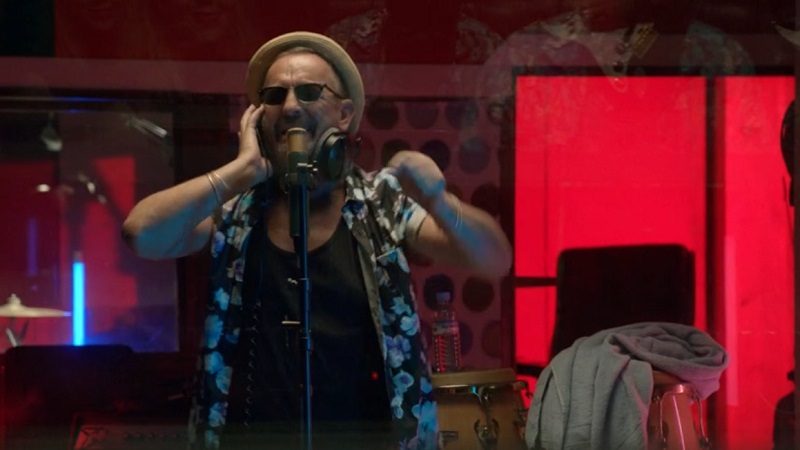
Maeve Gibney
‘Twenty years I tramped around the Spanish resorts and the cruise ships, singing Madonna and Tina Turner and getting nowhere,’ remembered Maeve Gibney (Joanna Riding). The truth is, she didn’t deserve to get anywhere. She wasn’t really very good. ‘Life was easy, and so my voice had no soul, no pain.’ And then, she was attacked in the street, slashed across the cheek with a knife. She knew her assailant, but she didn’t tell the police who it was, couldn’t tell them – couldn’t tell anyone. But it was that moment of violence, the emotional pain of the assault that ‘made me the singer I’d always dreamed of being’.
So she turned to the jazz-club circuit, getting a regular gig at Les Deux Plumes in Bath, where she sang covers of songs like Julie London’s ‘Girl Talk’ and – rather oddly – the Rah Band’s ‘Clouds Across the Moon’ (which sounded better than you’d think as a torch song).
The question was: did any of this have anything to do with the fact that her second husband’s body was found buried in a field in Glastonbury, with one arm sticking out of the ground?
Neither DCI Lauren McDonald (Tala Gouvela) nor DS Dodds (Jason Watkins) had ever heard of her.
see: Robert Murphy, ‘Clouds Across the Moon’, McDonald & Dodds, 2022
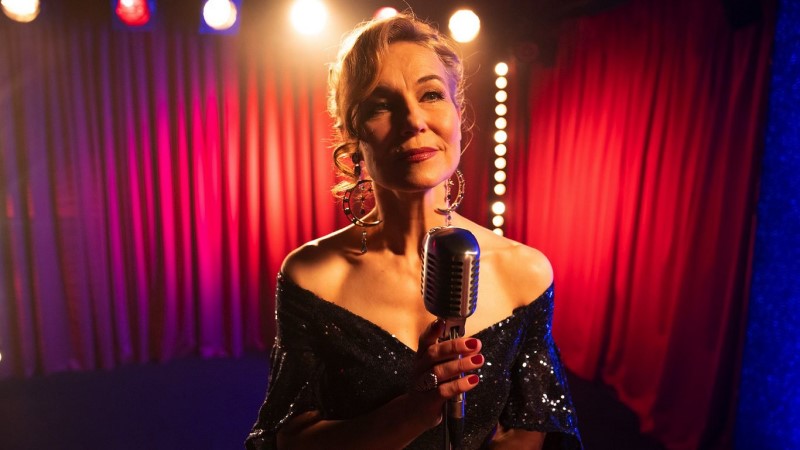
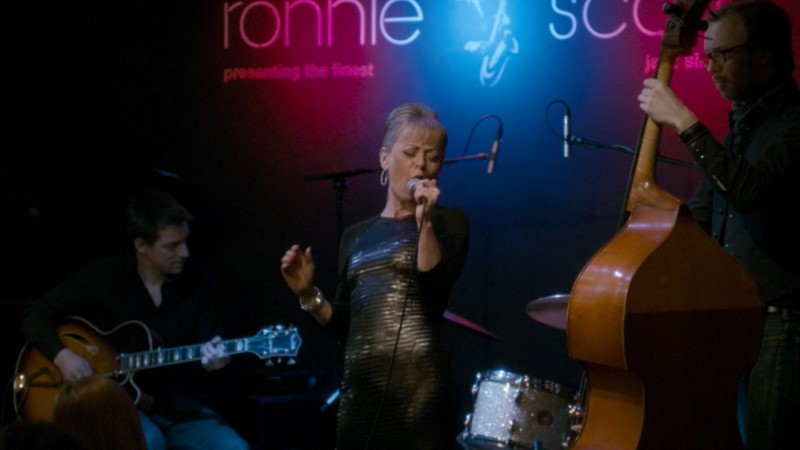
Angela Gold
Angela Gold (Tracie Bennett) won the Jazz UK Award for Best New Female Vocalist in 1991. Everything was on the up: she was working regularly in the clubs, with the occasional venture onto a bigger stage, including the Royal Albert Hall, and she had a record deal lined up. She’d already made her first promo single: a smoky piano-led version of ‘Cry Me a River’. (Because apparently there simply aren’t enough female singers doing smoky piano-led versions of ‘Cry Me a River’.)
Then, in 1993, she was arrested and charged with murdering her lover, Gentleman Jim Hockney, one of the biggest stars in British porn; you’ll maybe know him from movies such as The Rodfather, Last Bango in Paris, The Schlong Good Friday and A Star Is Porn. She was acquitted – she had a star barrister to get her off – but in the process her career was destroyed. She lost the record deal, couldn’t find live work and was dumped by her manager. Reverting to her real name, Anne Gould, she resorted to giving singing lessons to those less talented than herself.
It wasn’t until the real murderer was identified some twenty years later that she could resume her career, with a comeback at Ronnie Scott’s Club in Soho. Maybe this time, things were going to work out.
None of the UCOS team were fans before, but they were when they heard her sing.
see: Roy Mitchell, ‘Cry Me a River’, New Tricks, 2013
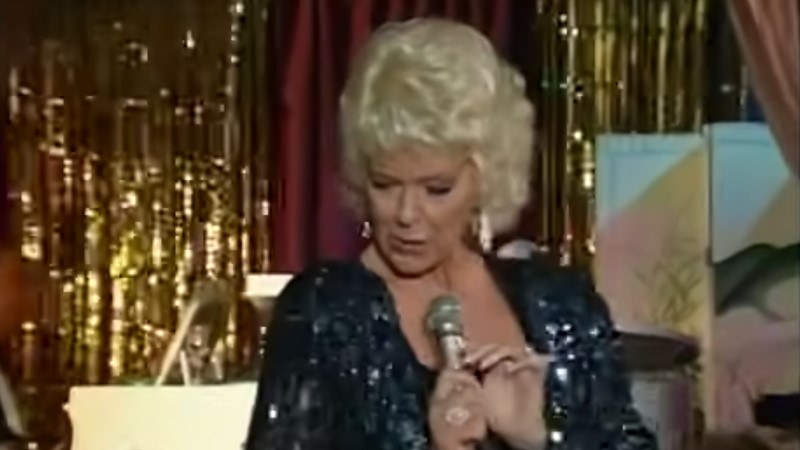
Gloria de la Haye
Gloria de la Haye (Josephine Blake) used to be part of a music-hall double act, Betty Dee and Buttercup. They played at the likes of the Metropolitan, Edgware Road. But that world’s passed now and she’s reduced to singing on cruise ships. She’s not happy about it. ‘What a drag it is doing an act afloat,’ she says. ‘Turns your stomach when the sea gets choppy.’ She’s not overfond of the repertoire either: ‘We’ll Meet Again’ and ‘Smoke Gets in Your Eyes’ (‘I am prepared to scream if one more person requests “Smoke Gets in Your Eyes”’).
Horace Rumpole (Leo McKern) was a fan. He had the taste to request one of the old songs from the Met:
Whose lemonade is laced with gin?
Who taught the vicar how to sin?
Knock on her door and she’ll let you in?
My little sister!
see: John Mortimer, ‘Rumpole at Sea’, Rumpole of the Bailey (1991)
Hired Gun
Jack ‘Axeman’ McKinley (James Cosmo) was one of the great guitarists of the British blues boom. He played with John Mayall at the Richmond Jazz & Blues Festival, but became better known with his own band, Hired Gun. They were good enough that Eric Clapton jammed with them at the Crawdaddy. They were ‘a kick-arse blues band,’ in his words, and the song titles tell the story: ‘Bear Back Blues’, ‘Good Time Rock’, ‘My Soul Is on Fire’, ‘Never Give Up’, ‘Breaking Storm’.
The rest of the line-up comprised Mimi Clifton (Suzi Quatro) on vocals, Gary Cooper (Phil Davis) on bass and vocals, and Nicky Harding (Michael Angelis) on drums. There was also a second guitarist, Ginger Foxton, but he disappeared without trace in the 1970s. That was the tipping point: there was enough bad blood already, and the trauma of losing Ginger split them up.
Thirty years later, Gary Cooper – now with an MBE for his anti-drugs campaigning, and posing as a country gentleman – re-formed the band. The legend had faded a little, though: the big reunion was at the less-than-prestigious Midsomer Rocks festival at Badger’s Drift, third on the bill to Roger Chapman & the Shortlist and Geno Washington & the Ram Jam Band. But we’ve all got to re-start somewhere.
They kicked off the set with their old classic, ‘Doll’s House Blues’:
You gotta rock it in the cradle
Roll under the table
Never take it easy
Gotta live it nice and sleazy
Party till you’re drunk
Ain’t never gonna stop
Got nothing to lose
Sing the doll house blues with me…
At which point, Mimi fell to the stage-floor, dead, electrocuted by a sabotaged mike-stand. A couple of days later, Nicky Hardin was also dead, drowned in a Cadillac in the swimming-pool of Gary Cooper’s manor-house. And that was the end of the comeback.
DCI Tom Barnaby (John Nettles) was a big fan.
see: Michael Aitkens, ‘The Axeman Cometh’, Midsomer Murders, 2007
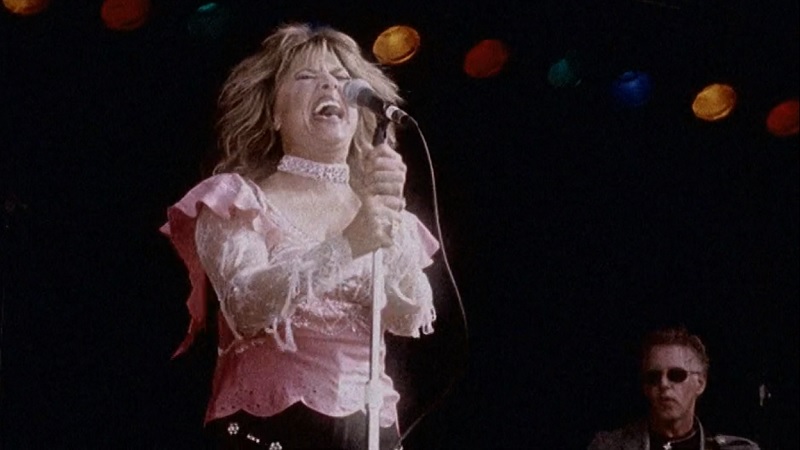
Diane Huntley
Diane Huntley (Anna Carteret) was a singer specialising in lightweight, bouncy pop that was written by some big names: Chris Andrews’s ‘Out to Get You’ and ‘You Won’t See Me No More’ by Gary Osborne:
There’s something you should know,
I think it’s only fair.
Soon I’ll have to go,
Although I don’t know where.
I’ve been around for far too long,
I’ve seen too many things go wrong.
There’s something you should know
for you won’t see me no more.
Actually, despite the best efforts of backing group the House of Lords, it all sounded distinctly dated in 1969, and although she did well on it – she played at the Talk of the Town – even her manager Johnny Fox (Trevor Bannister) knew she wasn’t really up to the standard of his previous star, Brenda Stafford.
Unfortunately, Brenda had killed herself, jumped out in front of a tube train. And then, six months after her death, her brother Alan was found murdered. It turned out he’d been investigating a dubious guru, known only as the Guru (Marne Maitland).
Alan was a friend of Simon Templar (Roger Moore), who takes on the case.
see: Harry W. Junkin, ‘Portrait of Brenda’, The Saint, 1969
The Infamous T
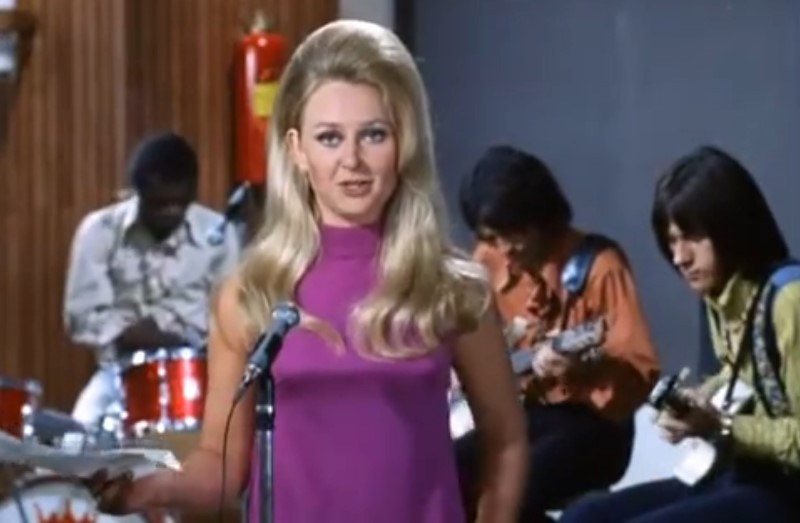
The reggae rap scene on the island of Saint Marie is small, but what there is of it was dominated by 22-year-old Trenton Isaac (Kwami Odoom), better known as the Infamous T. He wasn’t a nice man, though. ‘People loved him: his music, seeing him perform,’ said his backing singer, Erica Williams (Harmony Rose-Bremner). ‘But there was a side he never showed to his fans. He could be nasty, you know? Cruel.’
He also had a taste for the melodramatic, and paid a friend to fire blanks from a pistol at him onstage, in an attempt to drum up publicity, hoping thereby to impress a visiting A&R man from Jah Sounds, a British-Jamaican record company.
The plan didn’t work though, and a real bullet was fired instead, killing the Infamous T. Anyway, it turned out that Jah Sounds were more interested in signing Erica.
DI Neville Parker (Ralf Little) had never heard of him, or indeed of reggae rap.
see: Jillian Mannion, ‘Murdering Lyrical’, Death in Paradise, 2022
Johnny Jones
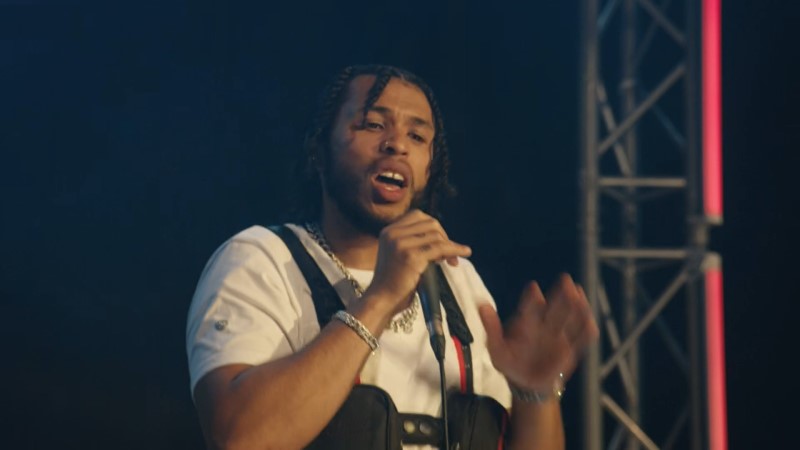
Johnny Jones (Frank Barrie) – JJ as everyone called him – was big in the 1950s, one of those interchangeable British tenors who knocked out covers of songs like ‘Only You’. Well, actually, that was his only hit, but he did appear on Oh Boy! and he did make other records: you’ll find them on his album Songs I Love to Sing.
Forty-five years on and he still had a fine voice. He was also disliked by most of those who met him, and he’d managed to alienate pretty much all the residents at Birch Grove residential home. Which is where he met his end, drugged and drowned in his bath, with his toupee stuffed in his mouth.
PC Tony Gallimore (Glen Davies) said his mum was a big fan.
see: Scott Cherry, ‘Golden Oldies’, Murder in Suburbia (2005)
Leon and the Ragers
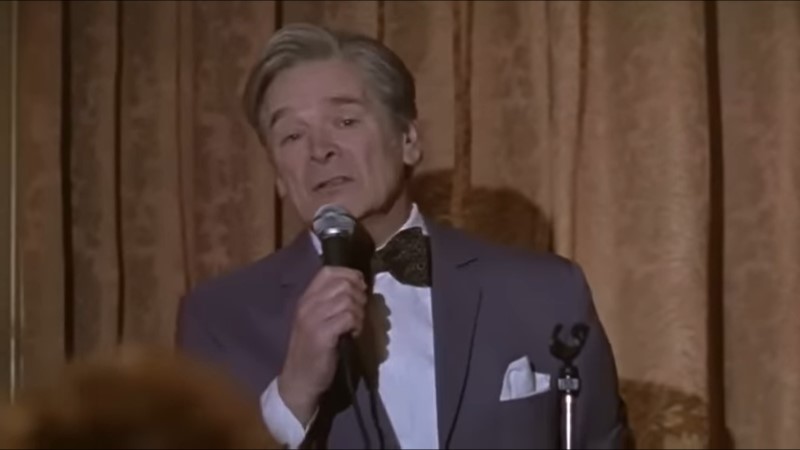
Back in the mid-1980s, Leon and the Ragers were the leading reggae band on Saint Marie, with albums such as Love Revolution and Paradise Hill. And, of course, their tribute to the island:
Saint Marie,
Island of liberty.
Saint Marie,
You ever are my destiny.
They were big enough that they undertook a European tour, hoping to break out to a wider market. But Jasmine, who was married to guitarist Billy Springer (Levi Roots), worried that he was becoming addicted to drink and drugs. She insisted that the tour was cancelled halfway through and the group returned home. Soon after, Jasmine was murdered and the group split up.
Thirty years later, they were back with a triumphant reunion gig. But after the show Billy was found shot dead in his dressing-room. Suspicion fell on his colleagues: singer Leon Laroche (Clint Dyer), drummer Delmar Brown (Delroy Brown) and keyboardist Maya Oprey (Suzanne Packer).
Officer Dwayne Myers (Danny John-Jules) was a big fan, though DI Jack Mooney (Ardal O’Hanlon) was more of a Pink Floyd kind of chap.
see: Will Fisher, ‘Melodies of Murder’, Death in Paradise, 2018
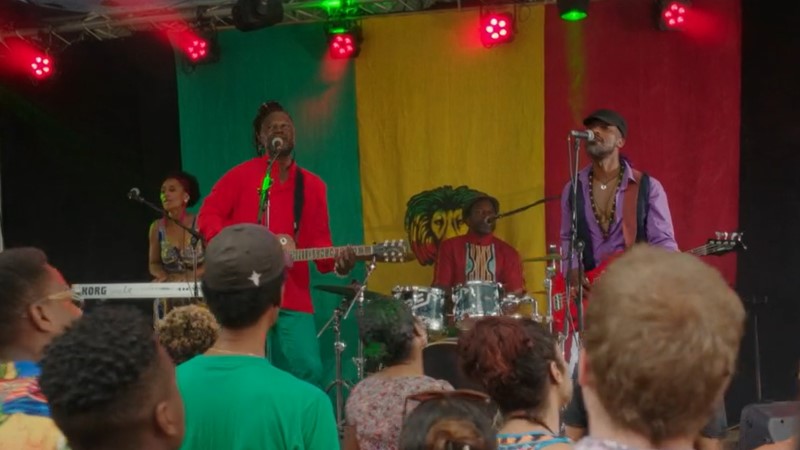
Miriam Leslie
Miriam Leslie (Miquel Brown) was a jazz singer with a regular gig at the Fiesta Club in London, a place owned by underworld gang boss George Mallory (Pat Ryan). She was Mallory’s girlfriend, but she wasn’t involved in his criminal activities – she didn’t even know he’d been killed in a turf war.
DI Jack Regan (John Thaw) wasn’t necessarily a big fan, but he did get a signed photo from her.
see: Ian Kennedy Martin, ‘Regan’, Armchair Theatre, 1974
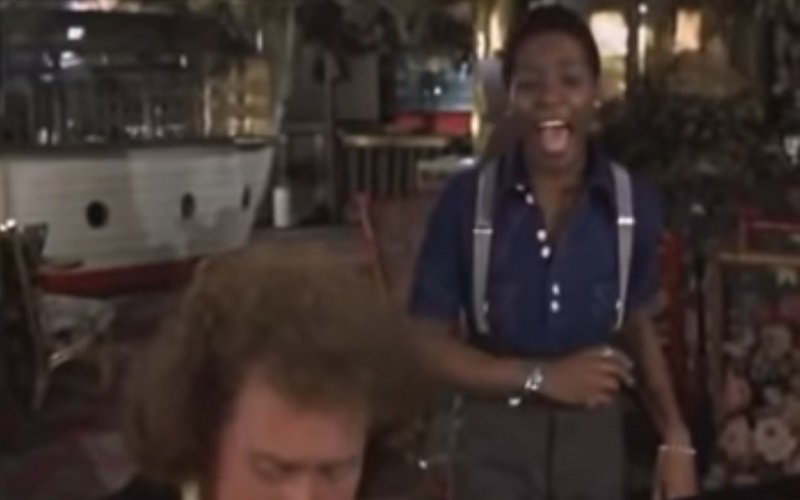
Deeby Macc
Deeby Macc (Jazz Cartier) was ‘a pretty famous rapper’, with hits like ‘Tempted to Touch’. He also ‘had a big thing’ for the British supermodel Lula Landry (Elarica Johnson) and wrote songs about how he was going to steal her away from her rock star boyfriend Evan Duffield (Bronson Webb). Many of her friends thought Deeby would be a step up from Duffield ‘with all his white-boy tortured poet act’.
So when Lula was murdered, thrown off her balcony, and it turned out that Deeby had the tenancy on the flat below hers, eyebrows were raised.
Cormoran Strike (Tom Burke), himself the estranged son of rock legend Jonny Rokeby, had never heard of him.
see: Ben Richards, ‘The Cuckoo’s Calling’, Strike, 2017
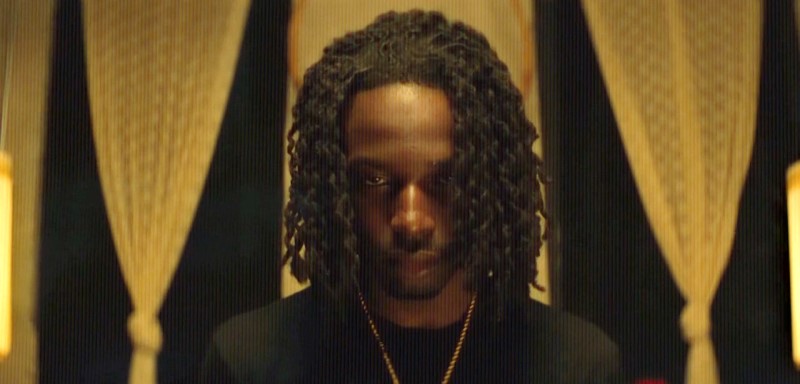
Eve Marbury
Impresario Julian Varnham was a big deal in Uttley: he owned the Alhambra, as well as a nightclub and a bingo hall. He also had a great interest in helping children, with a charity called Outstanding Northern Talent that provided educational bursaries. One of the beneficiaries of that was Eve Marbury (Joanna Riding), who came from a troubled background, went to music college and later made an international career as a singer. She still remembered her roots, though, and flew back from Chicago for Varnham’s funeral. She also took the opportunity to try to find her missing brother.
Former DI Alex Ridley (Adrian Dunbar), himself an amateur singer, wanted to be more than a fan. Which was a mistake: it always spells trouble for TV detectives when there are female nightclub singers around, the ones who do smoky versions of standards like ‘What’ll I Do?’ and ‘After You’ve Gone’.
see: Julia Gilbert, ‘Swansong’, Ridley (2022)
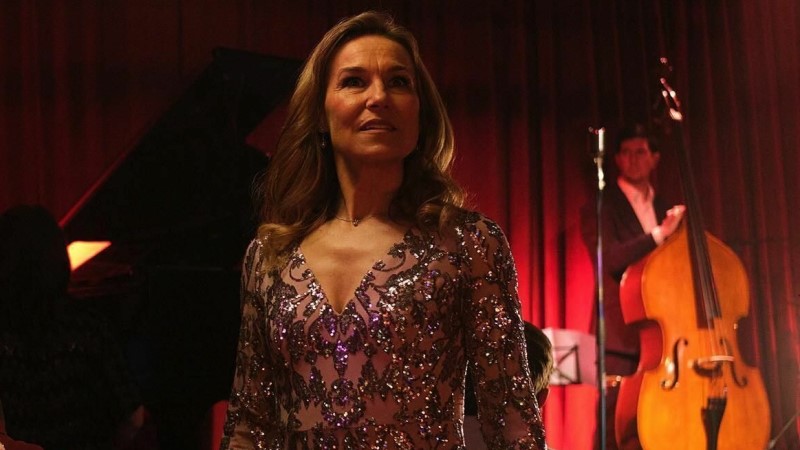
Midnight Addiction
In the late 1960s there were the Dead, the Airplane and the Addiction. And if Midnight Addiction aren’t quite as familiar a name as the first two, they were the third biggest-selling British band ever, with their blues-based prog rock, best known for their songs ‘Hard Times’ and the anthemic ‘Counter Culture Blues’.
The main man was Richie Maguire (David Hayman) on drums and vocals, with his brother Mack (Hilton McRae) on bass, and Franco (Anthony Higgins) on guitar. And, of course, there was legendary singer Esme Ford (Joanna Lumley), all top hat and no bra, who disappeared in 1974, believed drowned in Grenada.
That disappearance, however, turned out to have been staged, with the assistance of the band’s flamboyantly camp manager Vernon Oxe (Simon Callow). Thirty-five years later, Esme suddenly reappeared, saying it was time to get the band back together: ‘I just want to do it again, before it’s too late.’ Unfortunately, the group’s road manager, Bone (Zig Byfield, former manager of Bad Faith), was murdered shortly after her reappearance and everything spiralled into disaster. Anyway, Esme was a bit of a fraud: when she ‘sang’, she was actually miming to the voice of Maggie Bell.
DI Robbie Lewis (Kevin Whately) was a big fan.
see: Nick Dear & Guy Andrews, ‘Counter Culture Blues’, Lewis, 2009
Sally Ellen Oakley
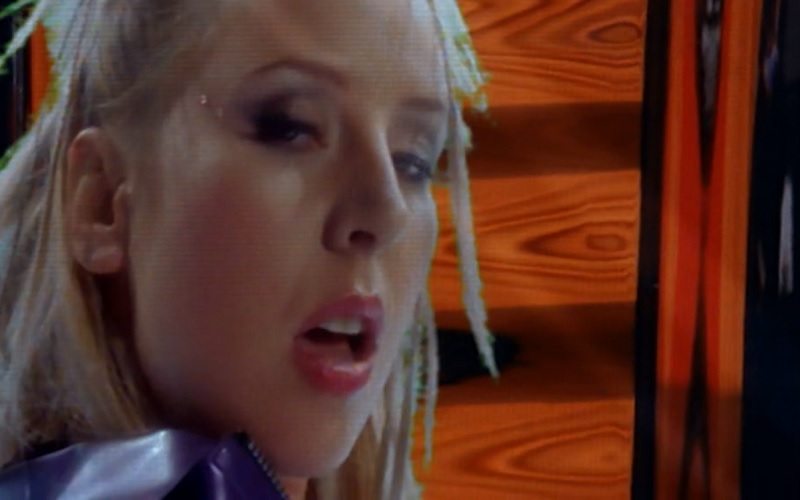
Once voted Britain’s Tastiest Bottom, Sally Ellen Oakley (Caroline Carver) was best known as a glamour model. But in the late 1990s, following in the path of Samantha Fox (and of Jilly Johnson and Nina Carter), she also ventured out into a singing career, having a string of hits, most famously a cover of Donna Summer’s ‘Hot Stuff’. She married Dudley Housman (Jack Dee), ‘the luckiest bastard in Britain,’ according to the Sun, and a songwriter whose work was dismissed by critics as ‘derivative sub-Dylan-lite’. Actually, it was much worse than that:
To be with you is to ride on rainbows
And laugh like the morning dew.
The silence sings and a hall of kings
Couldn’t teach me nothing new,
Cos all I ever knew was to be with you.
That was from a musical he was writing of Samson and Delilah with Sally cast as Delilah. (He was hoping to get Michael Bolton as Samson, and Whoopi Goldberg as God.) As it happens, it was the woman Housman was having an affair with who had her hair cut off. Which was the point at which Sally walked out, and Jonathan Creek (Alan Davis) walked in.
see: David Renwick, ‘Angel Hair’, Jonathan Creek, 2003
The Overnight Sensations
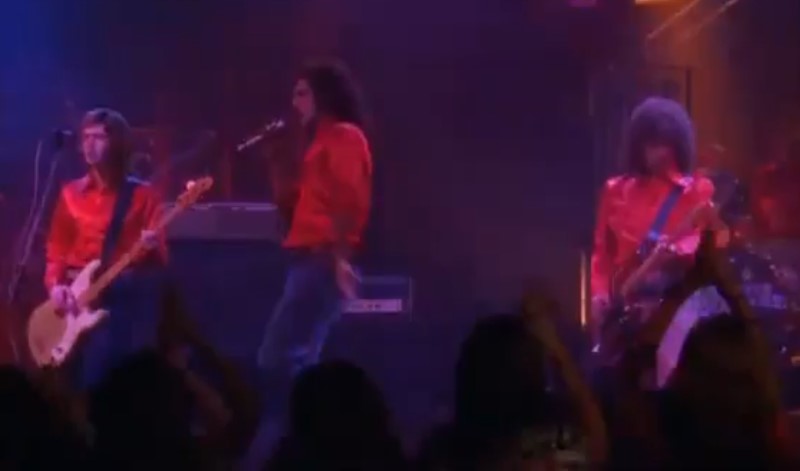
Like so many teen bands in the mid-1970s, the Overnight Sensations were very much in the shadow of the Bay City Rollers. You couldn’t get a pair of high-waisted satin flares between them and the likes of Buster, Flintlock, Stevenson’s Rocket, Rosetta Stone, Bilbo Baggins… I could go on. The one difference was that the Sensations hit it big. ‘Yesterday’s Boy’ spent six weeks at #1 in 1976, ‘the last long hot summer of glam rock’:
Once when we were lovers,
You told me you were mine.
Now your heart’s gone to another –
Why can’t I stop from cryin’?
Then came punk, and their career nosedived. It didn’t help when singer Teddy O’Connor (Tony Slattery) had a fight on stage with guitarist Gerry Jameson (Nigel Planer) at a gig in 1977. That was the end of it really.
Times were hard for Teddy in later years, and he sank into alcoholic self-indulgent misery. Apart from anything else, he was understandably bitter that he wrote ‘Yesterday’s Boy’, but didn’t get the writing credit or the money; as far as he was concerned, there were millions owed to him by manager Billy Wunder (Ian McNeice), a large, menacing, gay Svengali type (also very much in the shadow of the Rollers, then).
After a long absence, Teddy started talking about getting the band back together. Not with Gerry, of course, there was too much bad blood there – something about a girl – but with bassist Trevor Dooley (William Key) and drummer Harvey Troupe (Tim Healy). It didn’t work out, and he had to settle for a gig at the Swan in Willesden, North London with a tribute band. Even then, he started a brawl, which ended with him getting thumped by the landlord. And that was the last anyone saw of him until he was found dead.
DC ‘Dangerous’ Davies (Peter Davison) and DI Ray Aspinall (Rob Spendlove) were fans.
see: Tim Vaughan, ‘Three Steps to Hendon’, The Last Detective, 2005
The Queenmakers
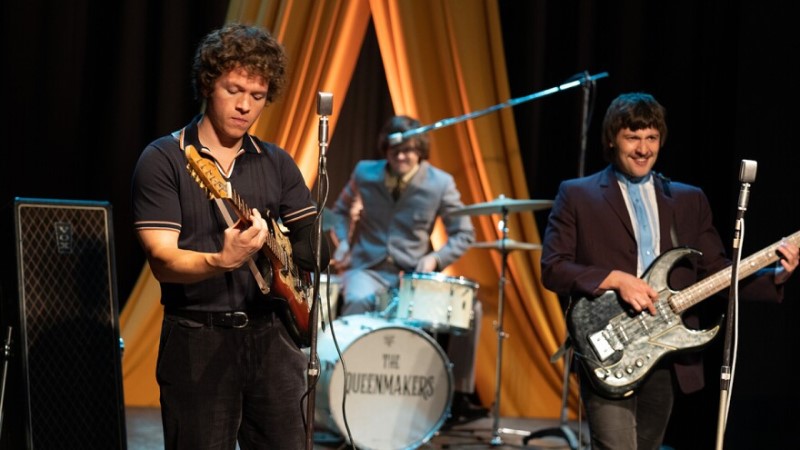
Having done the obligatory apprenticeship in Hamburg, Manchester beat group the Queenmakers were on the cusp of success as the ’60s started swinging. But it wasn’t easy. Their original roadie killed himself – he was homosexual and being bullied by the band’s lead singer, 25-year-old Reggie Wallis (Sam Woodhams).
Then, two years to the day since that tragic incident, just as the boys were about to go on stage at Great Slaughter Town Hall, Reggie himself was found dead in the dressing-room, apparently of anaphylactic shock after a bee-sting. But the press weren’t convinced: ‘Reggie-side?’ was the headline in the Albion Bugle.
Still, it’s an ill wind and so on. The publicity ensured that their new single, ‘Out of Sight’, got heavy radio-play and went shooting up the charts, hitting #1 by the end of the week:
She’s so sunny, I’m not wearing shades.
She’s so pretty, hope she never fades.
Everyone’s falling in love with you,
Everyone’s saying they’ll all be true.
I’m the one, baby, who’ll help you see the love.
The surviving members decided to carry on as a trio: bassist Tony Taylor (‘the moody one’, Sam Henderson), drummer Sunny (Jon-Paul Bell) and one-armed guitarist Pete Sherry (Max Runham), who moved onto lead vocals.
WPC Peggy Button (Ami Metcalf) was a big fan: ‘They’re lovely!’ she enthused.
see: Oliver Frampton, ‘Song for the Dead’, Sister Boniface Mysteries, 2022
Ricky
He’s a mystery is the American pop star Ricky (Rolf Saxon). We don’t even know his full name. All we know is that when he arrived in Britain at the age of thirty-one, ready to start a European tour, he was held up at Customs. And that he was big enough to attract a gaggle of Fleet Street’s finest, keen to ask about his drug problems.
see: Barry Appleton, ‘Passage Hawk’, C.A.T.S. Eyes, 1986
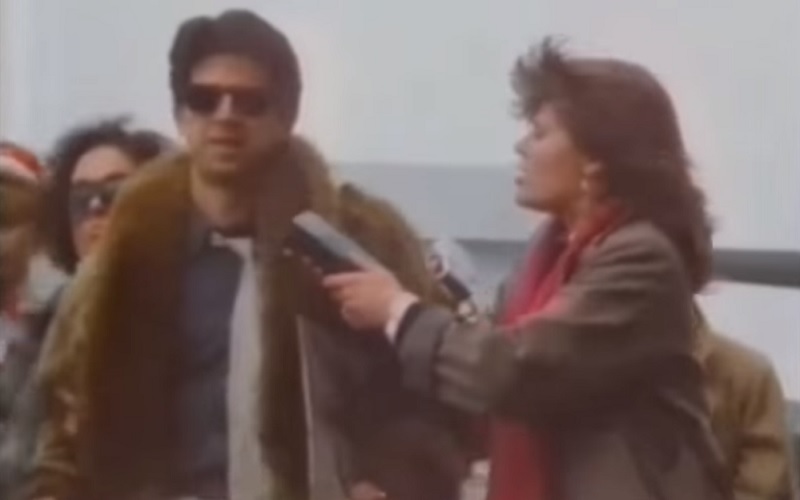
Frankie Rio Trio
Singer and pianist Francis Reardon (Alan Price) was better known as the leader of the Frankie Rio Trio, big stars in the 1950s with hits like ‘I Put a Spell On You’. By 1969, although Frankie could still knock out a fine version of ‘The House of the Rising Sun’ at the drop of a hat, he was down on his luck, with no recording contract and no money. But the Trio – now including drummer Danny Flowers (Ram John Holder) and bassist Gerard Lowe (Allan Corduner) – had a prestigious gig in Whitby, where a record company scout was expected.
Whether it worked out with the A&R man we don’t know, but it’s hard to see how anyone could have resisted such a beautiful rendition of ‘Changes’ from the soundtrack of O Lucky Man!, a film that wouldn’t be released for another four years. He might have been in his sixties, but he was still ahead of the game, our Frankie.
see: Johnny Byrne, ‘In the Bleak Midwinter’, Heartbeat, 2004
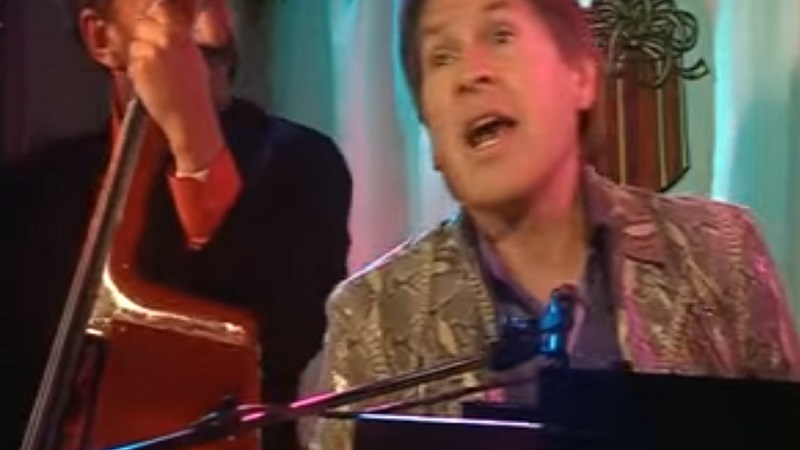
Arthur Rogers Modern Jazz Quintet
The Arthur Rogers Modern Jazz Quintet have certainly got a way with ‘a happening tune’. The line-up was trumpet, piano, string bass, bass and vibraphone, the latter played by blonde-beehived Sarah James (Annika Willis). What Sarah doesn’t know is that in the special arrangements sent over from America, her solos have been written in musical code; they contain secret information that’s being passed to the enemy. It’s an ingenious cover for a spying mission. After all, as Major Nelson of MI5 points out: ‘These jazz wallahs, they get about a bit, you know.’
Carlos Valera (Carlos Thompson), who can play a mean boogie-woogie piano himself, is the unwitting head of their management company.
see: Julian Bond, ‘All that Jazz’, The Sentimental Agent (1963)
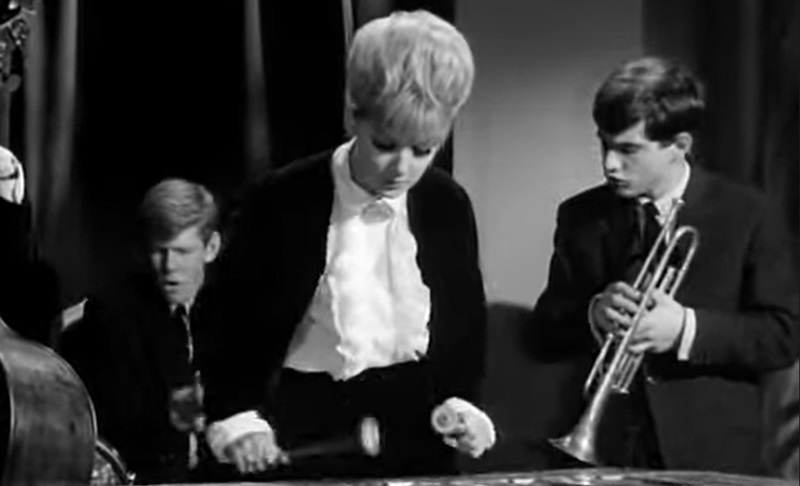
Carla Romero
Carla Romero (Jenifer Landor) was a singer in New York nightclubs, but in 1935 she found her way over to London, where she appeared at the Black Kat under the name Elsa Hart. Her repertoire included the likes of ‘If I Had You’, ‘Sugar (That Sugar Baby o’ Mine)’ and ‘Lullaby of Broadway’.
She was a bad sort, though. While in America, acting on the instructions of the Mafia, she stole secret naval blueprints; then she slipped her mob bosses and fled to London, hoping to sell the papers to the fascist government of Italy. Which is why she was known as ‘la femme fatale who dared to double-cross the Mafia’.
Hercule Poirot (David Suchet) thought she had ‘a fine voice’.
see: Russell Murray, ‘The Adventure of the Cheap Flat’, Poirot (1990)
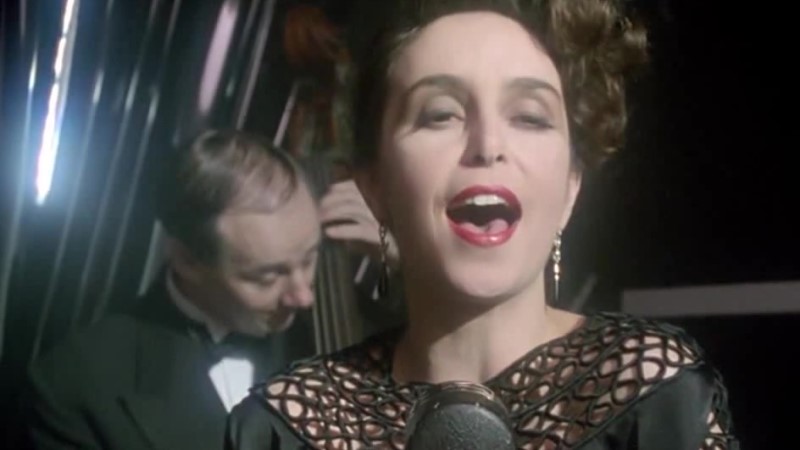
Rule 7
The frontmen for successful five-piece Manchester indie band Rule 7 were brothers Jack (Michael Winniczuk) and Sam Taylor (Michael Dixon), on vocals and guitar respectively. There used to be Billy Radfield (Liam Garrigan) as well, but he left for a solo career that didn’t really work out: a #48 single was as good as it got for him. On the other hand, he was still alive, which was more than one could say for Jack, who was found murdered in his flat, the morning after a triumphant headlining gig at the Apollo in 2009.
Ellie, teenage daughter of DCI Janine Lewis (Caroline Quentin), was a big fan.
see: Susan Oudot, ‘This Charming Man’, Blue Murder, 2009
Sky Ryder
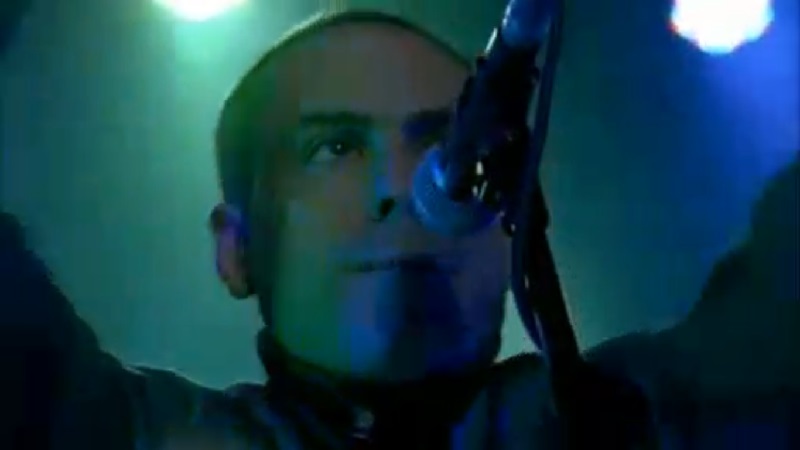
Sky Ryder (Brian McDermott) was big once. ‘A personable boy, sings wholesome songs,’ that’s what they said, ‘fine uplifting songs’. Songs like his cover of Sonny James’s ‘Innocent Angel’ (1961), which sold a million copies. ‘So much for nearly two thousand years of Christianity,’ snorts Edwin Oldenshaw (Richard Vernon), though he does acknowledge it has ‘a catchy tune’, while Imlac Defraits (Denholm Elliott) thinks it warrants the return of capital punishment.
The years pass quickly, though, in the fast-moving world of 1960s pop, and at the age of thirty-eight, Ryder is looking like a relic amongst all these beat groups. ‘I started before them and I’ll still be up there when they’re just a box of David Bailey’s throw-outs,’ he says defiantly, but that was before he murdered the young woman he’d got pregnant.
see: Michael Gilbert, ‘Undue Influence’, The Man in Room 17, 1966.
Jake Skinner and the Fraud Squad
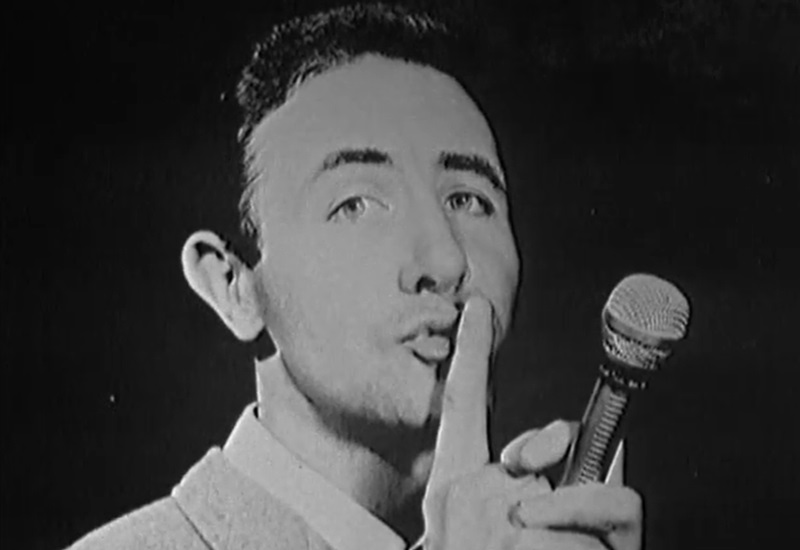
Jake Skinner (Bruce Dickinson), singer and guitarist with hard rock band the Fraud Squad is a big star, ‘the prince of rock ’n’ roll,’ according to Ronnie Hackett (Michael Feast), the boss of Dog Eat Dog Records. He was supposed to be in the studio, recording his version of Free’s ‘Wishing Well’, the last track on his new album, but he was a rebel at heart and he walked out, turning his back on an American tour.
Instead he hooked up with his old mate Eddie (John Altman) of the Marauders, and joined him at the Paradise Club in East London, playing amped-up covers of oldies like ‘Johnny B. Goode’ and ‘That’ll Be the Day’, as well as ‘I Shot the Sheriff’. That’s when Jake’s future career turned into a power struggle between Hackett – one of the hard men of the music industry – and gun-toting Danny Kane (Leslie Grantham), manager of the Paradise.
see: Russell Murray, ‘Rock ’n’ Roll Roulette’, The Paradise Club (1990).
Slim Slavey and the Slavers
The unfortunately named Slim Slavey and the Slavers (‘They crack whips,’ boasts their roadie) were a glam band, complete with theatrical make-up, two drummers and hard-rock guitars. They’d begun to get a name for themselves, with a debut single under their belt and another on the way. But they still needed to hone their act, which is why they were playing such a low-key venue as the village hall in Elverton (admission 15p).
The star was undoubtedly Harold James Potter, better known as Smiling Slim Slavey (Paul Nicholas), while the Slavers looked remarkably like Mr Big. Their story came to an end when Slim was electrocuted on stage while singing ‘Evil Vampire’. It turned out the noise had driven the hall caretaker to desperate measures.
PC Snow (Terence Rigby) had heard of them and dropped by at the gig (‘in my day, it would’ve been called a hop’), because he wanted to ‘keep in touch with the modern scene. It is weird.’
see: Elwyn Jones, ‘Pop Goes the Weasel’, Softly Softly: Task Force, 1974
Swiss Coast
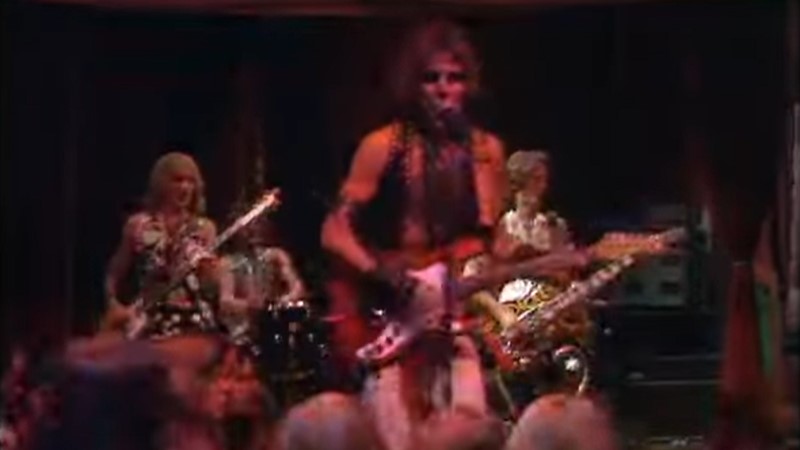
The Swiss Coast were huge in the 1970s, with hits like ‘Lower You’, ‘Stranded’ and ‘Stranger Things’, but it wasn’t an uninterrupted run of success. Maybe it was a lack of application: Silver Lining (1986) was only their sixth album. Mind you, it did yield their first #1 single since 1977 – they could still do it when they tried, and there was still a lot of goodwill towards the band.
That was all a long time ago, though. John, the lead singer, left in 1991 (he died in 2010), and although the band carried on, they were pretty much washed up in Britain by 2014, as their manager Alan Summers (Keith Allen) admitted: ‘We’re more or less forgotten over here.’ On the other hand, they were big in Eastern Europe, in Albania, Georgia, Serbia – they drew record crowds in Belgrade, apparently. Despite which, times got so tight that drummer Reg Reynolds (Nigel Planer, formerly of the Overnight Sensations) was reduced to giving drumming lessons to kids. That doesn’t mean he was a paedophile though. Let alone a murderer.
DC Mark Travis (Jack Doolan) was a fan.
see: Hans Rosenfeldt, Marcella, series 2, 2018
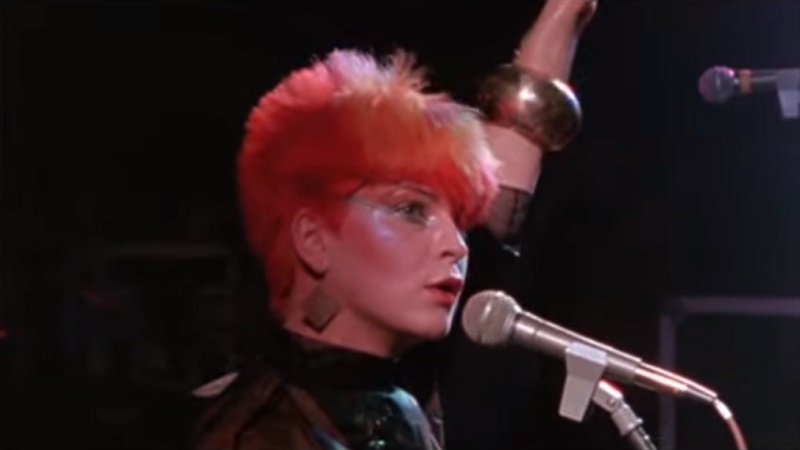
Toola
Toola (Toyah Willcox) was a punky, new-wavy kind of singer, with songs such as ‘Danced’ and ‘Neon Womb’:
Standing all alone in the neon womb
Reminds me of my mother’s lonely tomb
She wasn’t exactly a star, but she could pull a crowd in 1979 – even to an end-of-the-pier show. And she did have a heavy manager, in the psychotic shape of Mal Kenrick (Christopher Biggins). Toola’s bassist Gary ‘Mole’ Molecombe (Gary Holton) thought that Kenrick was a murderer and told him so. Which meant that Mole was first sacked from the band, and then administered a lethal overdose.
see: Philip Martin, ‘Find the Lady’, Shoestring, 1979
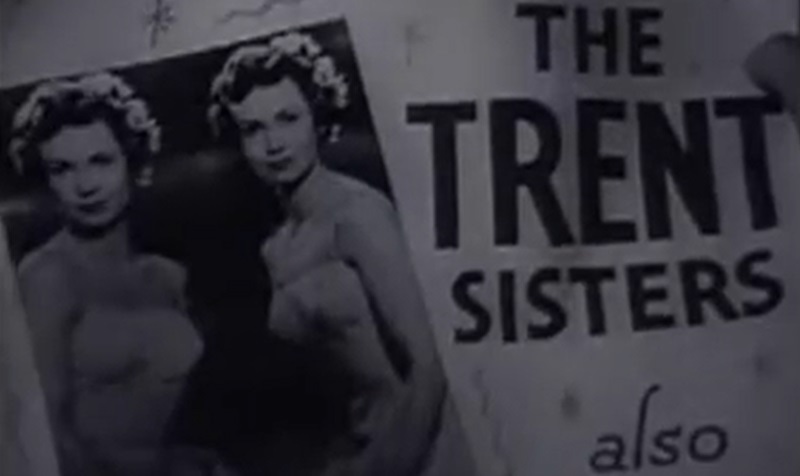
The Trent Sisters
Identical twins Toni and Terry Trent (Betta St. John) were an American singing act. In London, on an overseas tour to entertain US troops, one of them witnessed a murder and then subsequently disappeared. Dr Peter Brady, the Invisible Man, took up the case and found himself entangled in some Cold-War espionage shenanigans.
see: Brenda Blackmore, ‘The Decoy’, The Invisible Man, 1959.
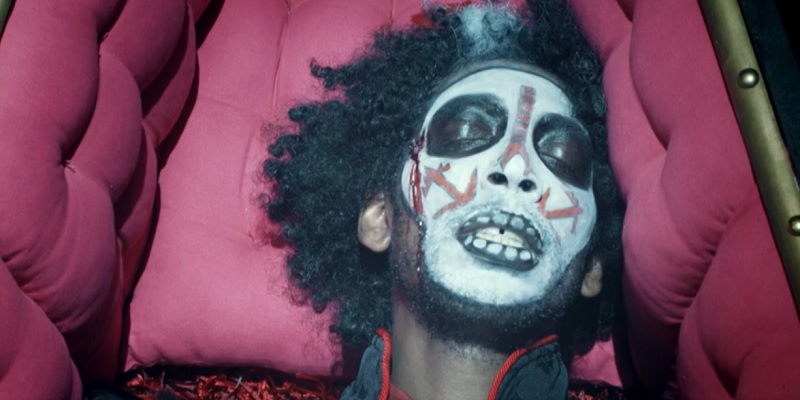
Venerators
In the 1990s the Venerators were one of the biggest voodoo rock bands in the Caribbean. They were awarded gold discs for albums like Get Your Voodoo Groove On, Electric Guava, Voodoo Lovebaby and Dead ‘Live’. Songs included: ‘Hateful Words Come to My Mouth’, ‘Juju Jamboree’, ‘Stick a Spell on My Heart’, ‘Voo Doo Voo Don’t’.
They used a horn section and other musicians, but the nucleus of the band was bassist Eddie (Keith Duffy), Curtis (Ray Fearon) on guitar, and Renward (Robbie Gee) on keyboards. The undoubted star, though, was singer Solomon ‘Solly’ Jackson, a wild performer who wore whiteface make-up and was carried on stage in a coffin.
And then it all went wrong. Solly let the stardom go to his head, and began indulging his love of the good life. Too much partying, too many women. The band fell apart. And when, ten years later, they attempted a comeback, it ended in tragedy. The coffin was brought on stage to the strains of ‘The Serpent Swing’, just like the old days, but inside, Solly was dead.
Officer Dwayne Myers (Danny John-Jules) was a big fan.
see: Jack Lothian, ‘Music of Murder’, Death in Paradise, 2011
Volcanic Youth
A five-piece all-female new wave band, Volcanic Youth were like a British Runaways for the 1980s. You’ll maybe remember their cult classic ‘Death by Vinyl’:
Keep things a mystery,
You know they have a history.
And though it never ends well,
It’s called death by vinyl
They never quite made it big, though, at least in the original line-up. First, bassist Cat Stone (Julie Graham) left the band when she became pregnant in 1985. Shortly after, singer Nikki Holler (Chelsea Edge) drowned in her manager’s swimming pool. That left keyboard-player Tallulah Savage Hughes (Josette Simon) and drummer Viv Collins (Frances Barber), with guitarist Electra Bliss (Michelle Collins) taking over vocal duties.
And that was the band that broke into the mainstream with their next album, Twenty Seven (the title referred to the age at which Nikki died), which reached #3 and included songs like ‘Cover Those Eyes’ and ‘Strangled’. Their biggest hit was ‘Blue Girl’, famously used in a jeans advert.
They split up eventually, but ten years after they last played together, they decided to re-form, together with bassist Gina Galvin (Sydney White). The idea was to record a new album at Trent House Studios in the small village of Wildemarsh, a studio run by reclusive rock legend Sir Ray Ives (Bob Goody). They were a more mature act by now, as seen in Electra Bliss’s latest song:
Well, the reason for my floods of tears
Is cos you say we’re surely dying.
Remember me cos that’s all you’ve got,
Cos I’m the road that don’t go home.
Those were the last words she ever sang. She was strangled with a microphone lead and didn’t even finish recording the song. Then long-term manager Len Savage (Con O’Neil) was stabbed in the back. Meanwhile Viv Collins was being forced out the band: she was a hopeless alcoholic and anyway she had back-problems following that stage-diving accident in Lithuania. And that left two…
Volcanic Youth’s songs were written by Alex Wells, and Nikki Holler was actually miming to the singing of Anna Straker.
Detective Sgt Matilda Stone (Olivia Vinall) was the niece of Cat Stone.
see: Matthew Thomas, ‘Death by Vinyl’, Queens of Mystery, 2019
Walking Dead
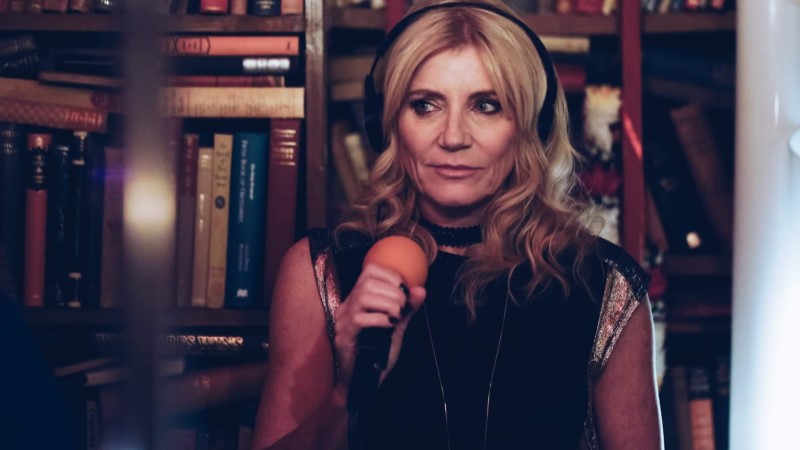
The Walking Dead were best known for their single ‘Suzanne’, a slightly old-fashioned beat song but with just enough hint of freakbeat to take it into the charts of 1966. The follow-up was ‘Break My Love to You’. If you squinted, you might mistake the group for the 21st-century indie-folk band, Siblings.
see: Peter Flannery & Stewart Harcourt, ‘Gently Upside Down’, Inspector George Gently, 2011
Wildwood
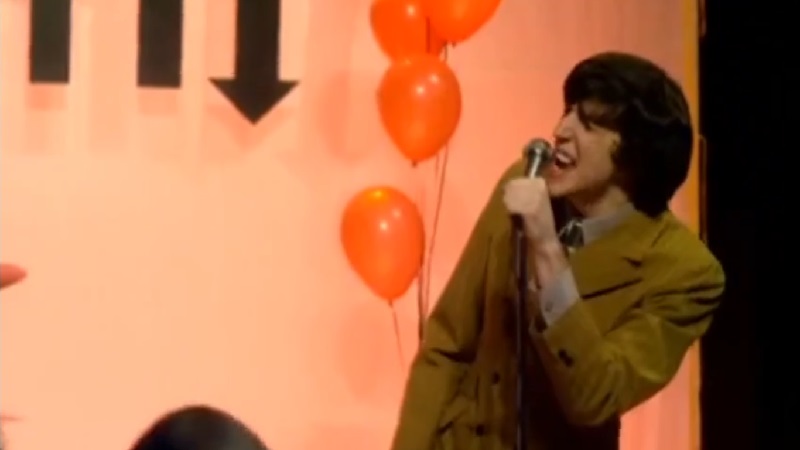
The Wildwood were a West London four-piece, who followed a familiar path for a British group in the 1960s. You could track their progress in their publicity shots, from larking around in matching suits, through to would-be decadent drag (very much like the Rolling Stones photo-session for ‘Have You Seen Your Mother, Baby’). They started out playing simple pop – their debut single was ‘He Loves You’ – but within a few years they were smoking cannabis and having hits with the baroque likes of ‘My Sweet Lady Kate’ and ‘Jennifer Sometimes’:
Jennifer sometimes sits in the sunshine
Playing with her hair
Go back to the old school, look under a toadstool
There’s nobody there
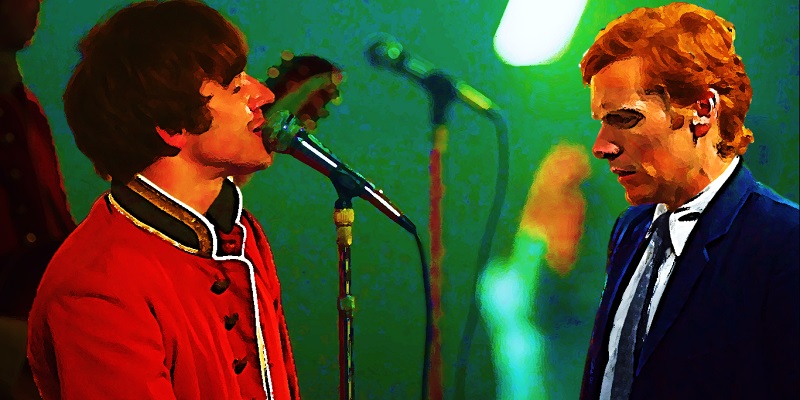
That was from their 1967 album Boys and Girls Come Out to Play, where you’d also find ‘Pay Me Thrice’, ‘Young Man Knows Not Whom’, ‘He Did He Did’ and ‘Galaxies Recovered’. They sounded a bit like the Hollies and, in their scarlet army tunics and pork-pie hats, looked a bit like the Libertines, albeit thirty-five years before the fact.
The line-up never changed: vocalist Nick Wilding (Will Payne), with his brother Ken (Michael Fox) on guitar, Chris Clark (Jonathan Barnwell) on bass, and drummer Lee ‘Stix’ Noble (Dario Coates). But musical differences emerged, one faction wanting to push onward into psychedelia and pretension, another wanting to get back to their rockin’ roots. So which should it be: Baudelaire or Bo Diddley?
It was a question that was never answered. Someone slipped Nick some acid, he had a very bad trip, and after that the Wildwood were no more.
WPC Shirley Trewlove (Dakota Blue Richards) was a big fan.
see: Russell Lewis, ‘Canticle’, Endeavour, 2017
Zeno
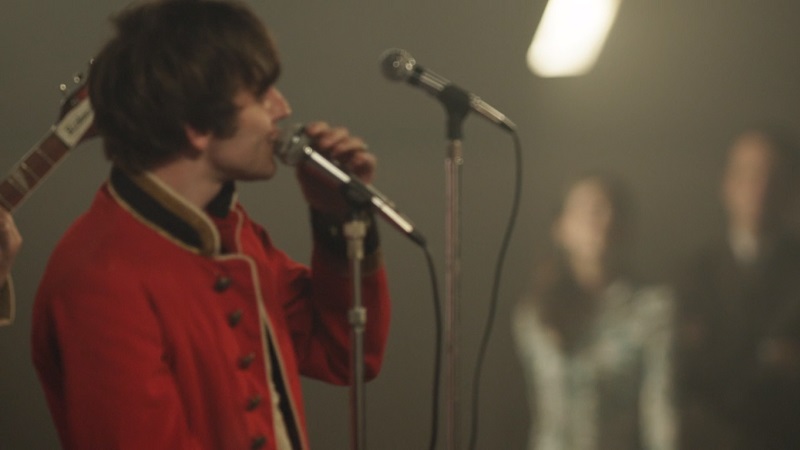
As a schoolboy growing up in Kingsmartin, Harold Goodbody (Peter Capaldi) was notorious for playing practical jokes. He also wanted to be a star, but he was never going to be a rock god under his real name, so he reinvented himself as Zeno, and broke big. Big enough to headline a major festival – appearing above acts such as Atom Seed – and to attract a crowd of 120,000.
In person, he’s still the same capricious prankster, ‘a naughty boy,’ in the words of DI Wexford (George Baker). But he’s a good-looking naughty boy, with his thick, lustrous, wavy hair and angle-poise features, a millionaire urchin. You can see why he has to have a police officer stationed outside his house, to keep the fans away.
What’s odd is that we only know of one song, his great anthem ‘Let Me Believe’, whose majestic descending chords and male backing vocals sounded like a Mott the Hoople knock-off:
Come by, come nigh,
Come try, tell why.
Some will sigh and some will cry,
Some will lie and some will die.
see: Matthew Jacobs, ‘Some Lie and Some Die’, The Ruth Rendell Mysteries, 1990
missing in action
There are further acts, details of whom remain sketchy at this point.
- Jody Brent (Philip Sayer) once had a hit with ‘Lazy Daisy’, but when it was successfully revived in 1980, he was nowhere to be found. Which was why Eddie Shoestring (Trevor Eve) was sent to track him down.
- Renny Gold (Tina Jones) was a nightclub singer, whose husband died in a car crash in 1998. Since she had just increased his life insurance, Jimmy Griffin (Kevin Whately), The Broker’s Man, was called in to investigate whether it really was an accident.
- Cabaret singer Tony Hubbard (Gary Bond) used to be half of a successful 1960s duo with Dawn Grey (Diane Langton), but was later reduced to a season at the downmarket Golden Peacock on Jersey. That’s where he was shot dead in 1990, even though he was a friend of former cop Jim Bergerac (John Nettles).
- Meesh Winwood (Rebecca Palmer) was a successful but tormented singer who gave up her career in 2001 and returned to her Welsh hometown. Which was when a stalker started killing her friends and getting closer to her, in A Mind to Kill.
Any information on these or similar acts would be most welcome. But remember: musical crime is rarer than you think, so don’t have nightmares. Keep ‘em peeled.
My thanks to Dan Atkinson, Sam Harrison, Ryan Kisiel and Anthony Teague for their assistance in compiling this list.
see also:
Discover more from Lion & Unicorn
Subscribe to get the latest posts sent to your email.
