Following Part 1 of BEN FINLAY’s guide to the best albums for Spring, we now reach the top five…
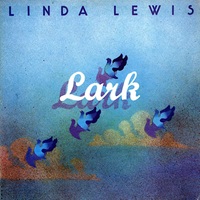
5. Linda Lewis, Lark (1972)
‘Bold, dramatic and chilling yet smooth, soulful and comforting, this record encompasses the British musician at her best.’ – Giles Peterson
I’m a huge Linda Lewis fan, and it’s a much overdue pleasure to finally get her on to a list. Lewis’s second album is a joy to behold, with her soaring, soulful voice (she had a five-octave range) now also taking on a more mature element in comparison to her first record. Lark was cut after her brilliant impromptu guest spot with Terry Reid at Glastonbury Fayre in 1971, and before she broke into public gaze via her cameo performance on David Bowie’s Aladdin Sane, which saw the singer achieve a certain amount of recognition in a male-dominated era. Really, she shouldn’t have needed it, as Lark is a superb offering, every bit as good as anything offered by her US soul counterparts, and an accomplished album for an artist who was just twenty-two years old at the time of recording it.
On 27 September 2024 (on what would have been her 74th birthday), a blue plaque was unveiled to commemorate Lewis at her former home of Arlington Mansions, Sutton Court Road, Chiswick, where she wrote Lark. One of the most important blue plaques in music history, as far as I’m concerned.
Trivia notes: Bass player Pat Donaldson – of Fotheringay and Sandy Denny fame – is on the record, as is Fotheringay (and later Fairport) drummer Gerry Conway. ‘Reach for the Truth’ was sampled by Midfield in 2000, and ‘Old Smokey’ was sampled by Common in 2005. The cover of Lark was designed by English art director John Kosh, who was the creative director of Apple Corps for the Beatles and art director and album cover designer for Abbey Road and Let It Be, as well as other Apple artists
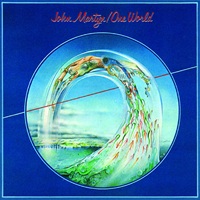
4. John Martyn, One World (1977)
‘You can really tell we were somewhere else when we made it. I was really pleased with it.’
One World sees Martyn return to the studio after a break of from recording of two years. In 1976, he spent some time holidaying in Jamaica, where he happened to encounter dub lunatic Lee ‘Scratch’ Perry – one can only wonder how much weed those two imbibed together. Tracks such as ‘Big Muff’ (apparently named after a guitar effects pedal, but other theories abound) was a co-write between the two, with ‘Dealer’ and ‘Smiling Stranger’ also heavily imbued with a dubby, narcotic feel about them.
Recorded at Island Records supremo Chris Blackwell’s Woolwich Green Farm, in Theale, Berkshire, the album features such musical luminaries as Danny Thompson, Steve Winwood, Fairport’s Dave Pegg and John Stevens. While every track is superb, the closing ‘Small Hours’ is the standout. Apparently, a supply of opium fuelled Martyn’s during the stay at the farm, and this is most aurally explicit on ‘Small Hours’. The song was recorded outdoors around the lake at 4.30 a.m. with the sound of geese audible in the background, as well as a passing train at the two-and-a-half-minute mark. Decorated with Winwood’s woozy Moog sound, it is a gorgeous, stoned ode to the nocturnal, and perhaps one of the most ambient tracks ever. As Ralph McTell, later commented: ‘If that doesn’t move you, there’s something wrong with you… It’s a hymn to the night: reflective, dark, experimental, absolutely beautiful.’ Right on Ralph.
Trivia note: ‘Scratch’ Perry once cooked a curried goat dish for John that was so heavy on the chillies, he was nearly hospitalised. Nutter.
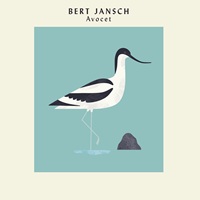
3. Bert Jansch, Avocet (1979)
Recorded in the spring of 1979, Avocet sees Jansch accompanied by former Pentangle bandmate Danny Thompson (double-bass), and Martin Jenkins on mandocello, violin and flute. The album is a completely instrumental work, with the six tracks named after birds, from ‘Bittern’ to ‘Kingfisher’, Jansch composing pieces that attempt to capture the spirit of the birds in question. This is a perfect soundtrack for spring, imbued with the wonder of nature and the sense of rebirth.
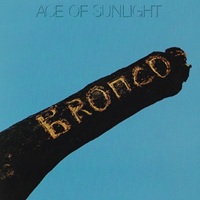
2. Bronco, Ace of Sunlight (1971)
Perhaps the most unfamiliar act on this list, Bronco deserved to be better known. Fronted by ‘Britain’s finest unknown singer’, Jess Roden, the band began as a UK country rock outfit, inspired by The Band and Neil Young and Crazy Horse. The first album, Country Home (1970) was a suitably rustic affair from its sound to its front cover, but Ace of Sunlight (1971) veered towards a more mainstream sound. Nevertheless, it is a superb record, not least its opening track ‘Amber Moon’, a wonderful slow-burn that really demonstrates the quality of Roden’s vocals.
The group would record one more record before packing it in around 1973, but it is their first two records (re-released as a double CD in 2010) that is their best work.
Trivia note: Both Ian Hunter and Mick Ralphs from Mott the Hoople guest on Ace of Sunlight. Yet another Fairport connection here as well: Trevor Lucas sings backing vocals on several tracks.
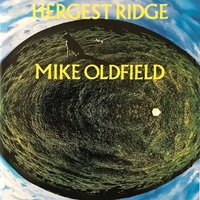
1. Mike Oldfield, Hergest Ridge (1974)
Following the huge commercial success of Tubular Bells, Oldfield retreated to a house named The Beacon near the small town of Kington on the England–Wales border. In a fragile mental state, he had no ideas for a future record, so took to performing Medieval tunes with folk musician Les Penning at a local restaurant, in return for free drinks. He eventually began to work on a new piece, one that reflects the rural idyll that he had located himself in. As with Tubular Bells, the recording took place at Richard Branson’s stately pile, The Manor in Oxfordshire.
Often unfairly compared to its monolithic predecessor, Hergest Ridge is a wonderful piece of work, and for me (controversial take here) the finer record of the two. It is also a lovely album for a bright, spring morning, and unfolds at a stately pace that builds towards a satisfying ending, which Oldfield was particularly pleased with.
Trivia notes: Lyndsey Cooper of Henry Cow fame plays oboe on the record. The Beacon is now a guest house, and a popular destination for Oldfield devotees. Oh, and in case you were wondering, the Irish Wolfhound on the cover was named ‘Bootleg’. And, as far as I know, there aren’t any Fairporters on the record; makes a change, I know.
Bubbling under:
Elton John, Tumbleweed Connection (1970)
John Cameron, Kes OST (1969)
Paul McCartney, Ram (1971)
Henry Lowther Band, Child Song (1970)
Van Morrison, Veedon Fleece (1974)
see also:
Discover more from Lion & Unicorn
Subscribe to get the latest posts sent to your email.
