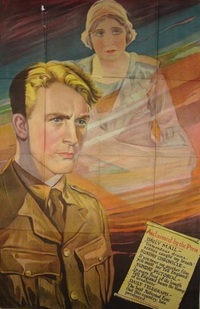
SIMON MATTHEWS watches Tell England, Anthony Asquith’s 1931 movie about the Gallipoli campaign.
A decade after the guns fell silent in Flanders, two great literary works reminded the public of the futility, brutality and immense suffering that had been inflicted on the generation of young men who marched off to war in 1914. R. C. Sheriff’s Journey’s End premiered on the London stage in December 1928, and Erich Maria Remarque’s novel All Quiet on the Western Front was published a month later. Film adaptations of both appeared in cinemas in April 1930, with All Quiet on the Western Front winning two Academy Awards and being particularly admired.
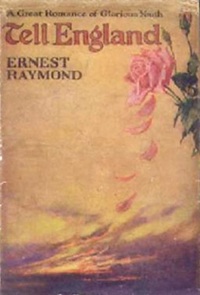
Both Sheriff and Remarque fought in the war, which gave their work a grim realism. A third writer, Ernest Raymond, had been in the forces too, as a Chaplain, and his 1922 novel Tell England went through fourteen editions within six months of being published, matching the popularity of their work, without being quite so hard hitting. It tells the story of three English public-school boys and how they fare in the First World War.
A film of it was agreed whilst Journey’s End and All Quiet of the Western Front were being made, and was clearly aimed at the same market. It appeared in March 1931, and was, by the standards of the time, a prestige production.
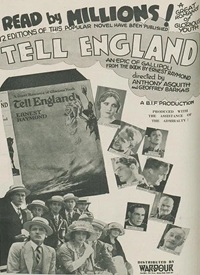
Raymond’s novel is centred on Gallipoli, and several of those behind the camera had personal experience of this futile campaign. Director Anthony Asquith was the son of the prime minister who sanctioned the expedition, co-director Geoffrey Barkas and scriptwriter A. P. Herbert had both served there. Filming in Turkey was out of the question, so the war scenes were done in Malta ‘with the assistance of the Mediterranean Fleet’. Production was by British Instructional Films, which might sound odd, until one realises their roster of work included many re-enactments – often with interpolated documentary footage – of major episodes from the war, The Battle of Jutland (1921) and The Battles of Coronel and the Falkland Islands (1927) being typical.
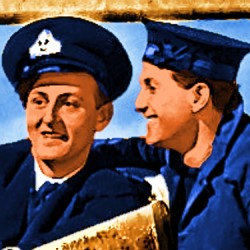
As is often the case, alterations were made to the source material. Instead of a trio of young men, just two are portrayed, Edgar and Rupert, played by Carl Harbord and Tony Bruce. Harbord, aged twenty-three, had just made a big impact in the film of Liam O’Flaherty’s The Informer; Bruce, twenty-two, was part of the Old Vic company. Fay Compton was cast as the former’s long-suffering mother.
The intention had originally been to shoot it as a silent film. When sound was belatedly settled on, a German process – Klangfilm – was used, which was clearly less than satisfactory. Much of the dialogue fades in and out, and there are long spells with no background noises, which gives everything an unnatural feel.
The drama opens in the early summer of 1914, at a public-school sports day with crowds of young men in swim suits milling about speaking in ridiculously cut-glass accents. According to IMDB both the Boulting brothers (seventeen at the time) and Anthony Buckeridge, of Jennings and Derbyshire fame (eighteen), appear as uncredited extras here. War is declared and the two central characters join the army, as officers naturally, where they are assigned batmen; comic working class figures who speak in stage cockney accents.
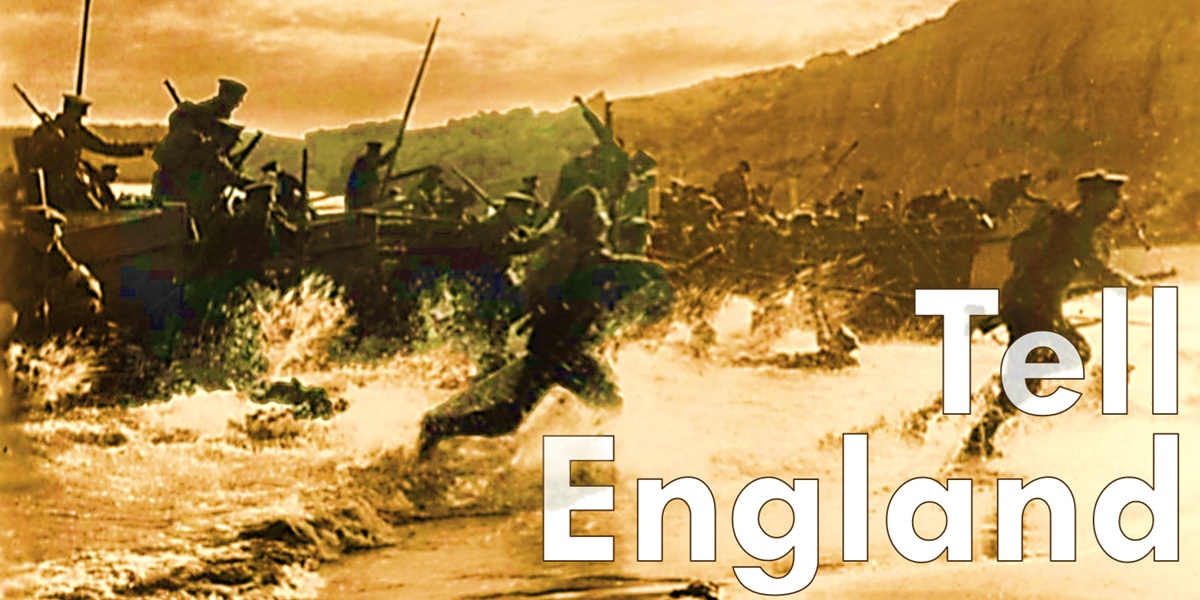
A caption flashes up on the screen: ‘To Gallipoli where the great attack is prepared by Sir Ian Hamilton.’ The action switches to the Mediterranean, Sir Ian Hamilton appears, playing himself, and the assault on the Gallipoli beaches is re-enacted. It’’s very effectively done, with a lot of hand-held camera work, which hardly seems possible for something filmed in 1930. Audiences must have been impressed at the time. Then it’s back to the training camp, with shots of the two boys/officers, Fay Compton going through emotional trauma, and lots of long silences.
We swing back to the training camp. Both officers are posted to Gallipoli, under the command of a monocle wearing CO. Everyone is walking about in sun helmets. There are trenches, dug-outs and a general ambience of Journey’s End in the Med, as the troops prepare for an assault on the Turkish lines. This is handled quite realistically, which much hand-to-hand fighting. Edgar ends up trapped in no man’s land. He survives with great heroism but is fatally wounded and dies in a field hospital where Rupert visits him and weeps.
The campaign – which audiences in the 1930s knew had been futile – ends shortly afterwards with a British withdrawal. We see the Turks chivalrously saluting the graves in the British cemetery post-evacuation, and the story concludes with another copperplate written caption appearing on the screen: ‘The End.’
In overall tone, this is more Rupert Brooke than Wilfred Owen. War is shown as a romantic and noble undertaking, a definition that may have re-assured the public in 1922, when many were shocked by the mass slaughter of the western front and the lack of any apparent reason for the conflict. Buried beneath this is a gay sub-plot, hinted at by the adoration between the two officers, something Raymond revisited in a later novel The Quiet Shore (1958), which is also set at Gallipoli.
Watching Tell England now, ninety-five years after its release, isn’t hard going. At eighty minutes, it doesn’t outstay its welcome. But it’s a very mixed bag of decently done battle scenes, stilted dialogue, and poor sound. It could have been much better and, unlike Journey’s End and All Quiet on the Western Front, which launched the careers of Laurence Olivier and Lew Ayres respectively, it did nothing for its two young leading actors. Harbord moved to Hollywood in the mid-30s but never established himself and ended up playing bit parts. Bruce died from appendicitis in 1937.
Perhaps its faults lie in Raymond being a less accomplished writer than Sheriff and Remarque. That may be true for Remarque, who is compared to Thomas Mann, but is Sheriff better than Raymond? Both are determinedly middle-brow. No one would rate Sheriff’s screenplay for The Dambusters as great literature. Raymond was certainly prolific, publishing forty-six novels, two plays (including one, The Berg, about the Titanic) and ten volumes of literary essays, biography, and memoirs down to his final retirement, at the age of eighty-six, in 1974. One of his novels was serialised on Book at Bedtime as recently as 1990, whilst his sub-Galsworthy sixteen-novel series A London Gallery, depicting city life from the 1880’s to the 1940’s, remains an interesting achievement.
Despite this, with the heyday of the lending library (and possibly libraries of any type) long gone, he is forgotten now. A new film version of Journey’s End appeared in 2017 to excellent reviews. Another adaptation of All Quiet on the Western Front was released in 2022 and was acclaimed as a masterpiece, nominated for fourteen BAFTA’s and nine Academy Awards. The chances of a remake of Tell England seem slim by comparison.
from the maker of:

see also:

Discover more from Lion & Unicorn
Subscribe to get the latest posts sent to your email.
