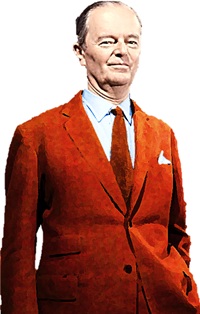
BEN FINLAY remembers the golden age of factual television.
It’s just gone four o’clock, it’s already dark, a Sunday afternoon, Christmas Eve, 1972. After a hopefully productive day of preparation for the forthcoming bonhomie, you sit down with your paper (if you want to see what is on all three channels) or the Radio Times (if you just want the BBC) to plan your evening’s viewing. Assuming you are the type that likes to dig a little deeper with their viewing choices, what is on to satisfy the mind?
Well, on BBC One you have Carols with King’s College Choir at 6.45, followed by a showing of West Side Story at 7.25. The evening is rounded out by the annual instalment of the BBC’s A Ghost Story for Christmas strand, this year a particularly fine adaption of M. R. James’s classic ‘A Warning to the Curious’, starring Peter Vaughn. Not a bad evening’s viewing, but what of the factual, the documentaries, the challenging but ultimately interesting stuff?
Look no further than BBC Two. At 4.30 there is Money at Work: The Poverty of Nations which investigates whether aid programmes really do alleviate squalor. It is followed by an episode of the long-running documentary stand Horizon, now in its sixth year, looking at some of the eccentric inventions patented in the last hundred years in an episode entitled ‘Patently Absurd’. But the riches have only just begun.
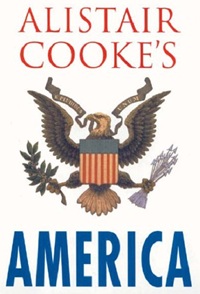
At 7.25 there is part seven of the classic series America: A Personal History of the United States written and presented by the immaculate Alistair Cooke. (This week it’s slavery in the U.S. – no concessions on content just because it’s Christmas.) A festive episode of the classical music quiz Face the Music continues the evening, with panellists including Bernard Levin, Joyce Grenfell and Robin Ray. Then there’s A Day Out, a film by Alan Bennett at 10.00, before a late showing of the John Ford classic The Quiet Man featuring John Wayne at 11.05 to nod off to. I’m sure you’d agree that there is some reasonably highbrow stuff there for the night before Christmas.
Compare that to Christmas Eve 2025. The Carols from King’s have survived, but been moved to BBC Two, and there is an (insubstantial) revamp of A Ghost Story for Christmas on the same channel at 10.00. In between are Celebrity Mastermind, Only Connect (not celebrities because it’s too hard) and the ubiquitous Whitehouse and Mortimer on their ‘Christmas’ fishing trip (filmed in October).
On BBC One there is perma-misery-fest Eastenders, followed by The Great Sewing Bee (you’ve guessed it) Celebrity Special, and a repeat of last year’s Gavin & Stacey finale. ‘Barely enough to keep the mind alive,’ as Peter Cook once said. Little there for the discerning viewer; an obsession with celebrity culture, and the glaring absence of any great factual programming, shows how far standards have declined.
But isn’t it somewhat futile comparing the viewing of yesterday to now? There are infinitely more channels, times and values have changed, and we’re no longer obliged to listen to exalted experts – cultural democratisation has shifted everything, so anyone can do it. Well, I agree that there should be opportunity for anyone to make intelligent programming, but not everyone can. (The old equality of opportunity versus equality of outcome argument comes into play here.) And it’s not exactly what’s happening either. It might be difficult to quantify with any scientific exactitude the declining standards of television, but I can make a thorough argument about how good some of the programming of the past was, and how it fulfilled John Reith’s remit to ‘inform, educate and entertain’.
So, to put it bluntly, television is a bit crap these days, isn’t it? As I wrote in my BBC Four piece, intelligent viewing is few and far between and is usually only good when it’s something from the archive.
This is reflected in my increasing obsession with past TV glories, most specifically factual documentaries, watching many hours of the grand series of the past, a treasure trove if there ever was one. What a time it must have been to be a member of the ‘thinking’ class* and been around to witness factual programming in real time.
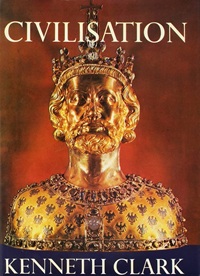
The grand series I write of began with Kenneth Clarke’s seminal history of Western art, Civilisation, first broadcast in 1969. Two further outstanding authored documentaries from the early 1970s really do illustrate that this era was the ‘golden age’ of factual television: Alistair Cooke’s America: A Personal History of the United States (1972) and The Ascent of Man (1973) presented by the incomparable Jacob Bronowski. All three of these indispensable documentary strands were commissioned by David Attenborough when he was controller of BBC Two. Most recently, BBC Four have been showing one of the best latter-day authored documentaries, A History of Britain by Simon Schama; in a new introduction to the series, Schama talks of the influence that Cooke and Bronowski had upon him when he came to make the programme.
Attenborough himself would of course go on to write and present not only the groundbreaking Life on Earth (1979), but also lesser known series such as A Blank on the Map (1971), Eastwards with Attenborough (also 1971), and The Tribal Eye (1975), a seven-part series about tribal art. And he introduced and narrated The Explorers (1975), which recreated the voyages of famous explorers, at the time the most expensive series ever commissioned by the BBC.
ITV also excelled in the era, with the long running series Disappearing World (1970), which introduced viewers to hitherto unknown cultures and small societies around the world that were threatened by modernity. The World at War (1973), remains the best documentary about World War Two, a painstakingly made series, and still essential viewing today.
Ultimately, the grand documentaries were to become a thing of the past, the last gasp of a Rethian view of television. By the late 1990s, Simon Schama recalls that the ‘big, authored documentaries were “completely unfashionable”’, with reality ‘fly on the wall’ programming now the order of the day. Reality TV was also cheaper, costing a fraction of many of the great series, and as the culture shifted further towards individualism, and the popularity of telling of ‘my story’ grew, programme makers lowered expectations, consigning quality, depth and attention span to yesteryear.
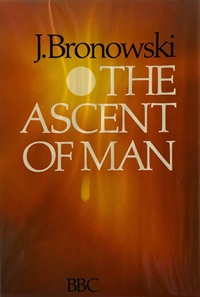
In the present day, we do see occasional authored documentaries, but they are far fewer, and are nothing on the scale, let alone the quality, of a Civilisation or an Ascent of Man. These were simply high watermarks from a different age, a more objective and thoughtful era of programming, that would never insult the viewer’s intelligence but instead educate and enhance one’s knowledge. Those times have sadly passed.
But don’t despair; one of the few advantages of the modern world is that we able to rediscover this rich treasure trove via DVD boxsets, streaming and YouTube. So, in time-honoured fashion, for Part Two of this piece I have a compiled a top ten of what I consider the greatest programmes from the golden age of factual TV. Remember to mark it in your Radio Times and tune in this Saturday to the L&U.
* The term the ‘thinking’ class is attributable to my father Paul Finlay. I once asked him if we were of working-class stock, and he replied, ‘No, we don’t go in for all that, we’re the thinking class.’
coming soon:
see also:
Discover more from Lion & Unicorn
Subscribe to get the latest posts sent to your email.
