At the end of writing a book, there tend to be bits and pieces left on the cutting-room floor: things that didn’t fit, stories that led into a blind alley, stuff that never got written up. The following are some notes I made for A Shellshocked Nation: Britain Between the Wars.
The decline of music hall
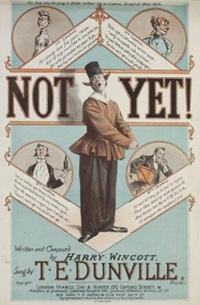
The decline of the music hall hit some of the old stars very hard. Comedian T. E. Dunville’s act hadn’t changed since the 1890s; still wearing the same odd outfit, delivering staccato sentences, accompanied by spasmodic jerks. It was, noted the critics, ‘a style that belonged to the past’, and he increasingly suffered from depression, ‘arising from his own fears of a declining popularity’. Even when he was praised, it was as a lone survivor, still ‘burning the torch of eccentric comedy’.
On 21 March 1924, the morning after two performances at the Grand, Clapham, he took a train to Reading and drowned himself in the Thames, leaving behind a note for his wife: ‘I feel I cannot bear it any longer’. Knife-marks on his neck suggested that he had previously tried to slit his own throat. He left an estate valued at just £236. ‘We can ill afford to lose such a man,’ said the coroner, recording a verdict of suicide.
Elsewhere, Ella Shields was still capable of headlining bills, as at the Birmingham Empire later that year in November 1924. But also on the bill that week was Fred Barnes, whose pre-war fame was rapidly being washed away by drink – he missed the first night of the engagement because he was in court, being found guilty of driving while drunk and causing a traffic accident. He was fined and sent to jail for a month, but it could have been worse. Also in the car was a sailor, allegedly half-naked, who Barnes said he’d only just met; fortunately, the sailor ran away after the accident and was never seen again.
Phil Scott
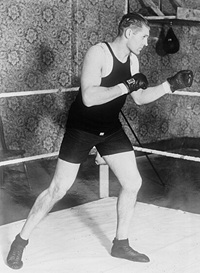
In February 1930 British heavyweight boxing champion Phil Scott fought the American Jack Sharkey in Miami, Florida, with the winner expected to take on German Max Schmeling for the vacant world title. It wasn’t to be Scott. The referee stopped the fight in the third round after the Londoner was knocked down for the fifth time, in front of a hostile, jeering crowd.
Back home, the press was outraged. ‘He was robbed!’ read the headlines, with stories of how Sharkey repeatedly landed low blows. It was also suggested that there was something suspicious about the referee’s decision, given how much money had been wagered on a third-round Sharkey win. Trevor Wignall, chief sportswriter of the Daily Express, said the bout was ‘the foulest and most disgusting that has ever disgraced professional pugilism’.
Others saw it as symbolic of national decline. ‘When I was a boy there was a thing called duty. There was a thing called sense of shame,’ thundered Observer editor, J. L. Garvin, now in his sixties. ‘We say the English know how to take a beating. In my younger days we did not take a beating. We made sure it was the other fellow took a beating.’
The public support for Scott did not last. His next fight – in July 1930 – was in front of a crowd of 40,000 at the Wimbledon Stadium, London against Young Stribling, another American. Scott was knocked down four times in the first round, and failed to land a single punch in the second before the referee stopped the fight. ‘Call that boxing!’ scorned the Daily Mirror. ‘The general impression was of a faintly animated ninepin being repeatedly knocked down by a battering ram.’
Cardini
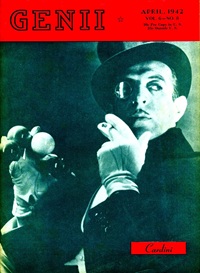
After serving on the Western Front, Richard Pitchford of Swansea spent a long time in hospital recovering from the psychological effects of shell-shock. Eventually, he was adjudged ready to re-enter society, but when he was asked what profession he wished to pursue, he replied, ‘I want to be a conjuror.’ This was seen as a sign of continuing mental disturbance, and he was promptly given another six months to see if he might recover more fully this time.
Fifteen years later, under the stage name Cardini, he was appearing at the Royal Variety Performance, one of the most famous stage magicians of the age.
Juvenile jazz bands
The word ‘jazz’ was adopted by the juvenile marching bands that became a familiar sight in the North, Midlands and South Wales from the late 1920s, though there was little musical resemblance to the American original. These jazz bands were around fifty-strong, had very basic instrumentation – kazoos and drums, sometimes glockenspiels – and wore homemade uniforms that were colourful and often fanciful: the Tipton Lionhearts dressed in Burmese outfits, while the Zuyder Zee were in Dutch costumes.
Both those ensembles featured in the competition held as part of Dudley Carnival in 1930 – for this was essentially a junior version of the brass band movement and, like its older sibling, competition was its life-blood. The field at Dudley comprised thirty-six bands and the vast number of participants ensured that some 5,000 spectators paid to see just the first elimination round in the Castle, where each band staged a three-minute display and was judged on dress, music, effects, conductor and drummer.
They then marched out of the courtyard and paraded through town. ‘Wherever one went in the borough this week,’ said the local press, ‘one was always met by the Jazz Bands with their gaily coloured uniforms, their prominent banners, and their remarkably assiduous and agile conductors.’
Britain’s Shirley Temple
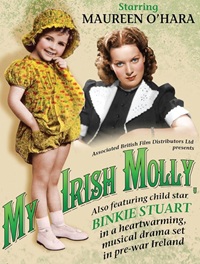
The American publication Motion Picture Herald polled British cinema-owners in 1936, and discovered that seven-year-old Hollywood star Shirley Temple was the biggest box-office draw. Consequently, there was a long stream of homegrown girls billed as ‘Britain’s Shirley Temple’, including Hazel Ascot who was nine when she starred in Talking Feet (1937), as well as Dierdre Gale and South African-born Sybil Jason, each of them just seven when they made their movie debuts in Honeymoon for Three (1935) and He Was Her Man (1934) respectively.
Then there were Irene Price and Little Eva (not that one), neither of whom made the transition from stage to screen. And, youngest of all, Binkie Stuart, four years old when she appeared with George Formby in Keep Your Seats Please (1936). None of these came anywhere near to rivalling the real Shirley Temple in popularity or earnings – Dierdre Gale made just £100 from seven film appearances – and none had a career that survived the decade.
In fact, the only durable child star was thirteen-year-old Sabu, discovered in India, working in the stables of the Maharaja of Mysore. He made his debut in Alexander and Zoltan Korda’s Elephant Boy (1937), and went on to star in The Drum (1938) and The Thief of Bagdad (1940), before accompanying the Korda Brothers to Hollywood, where he played Mowgli in their version of Jungle Book (1942).
Laura Knight
In 1933, attempting to counter the negative associations of the phrase ‘chocolate-box art’, Cadbury’s commissioned ten contemporary artists to paint box-lids for their products, including work by Mark Gertler, Paul Nash and C. R. W. Nevinson. ‘Never before had so notable and successful an advance been made in the movement to ally art and industry,’ boasted the Cadbury adverts.
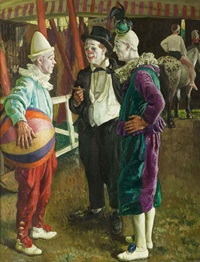
Also included was Laura Knight, the leading female artist of the time (‘better than nine-tenths of our leading men,’ added the Daily Mirror), whose pursuit of new inspiration was restless and committed. When painting the Russian Ballet, she took dance lessons to get a better insight into her subjects, and she travelled with the Great Carmo’s Circus and Menagerie to research work such as Laugh, Clown, Laugh, the hit of the 1929 summer exhibition at the Royal Academy.* She befriended and painted gypsies, and exhibited a series of pictures of black women and children that she’d made at the Johns Hopkins Hospital, Baltimore. She also played to the media, turning up for openings wearing a sombrero and a fur coat, and happy to provide a quote. ‘Every modern artist owes something to negro art,’ she said. ‘Art should be international and sexless.’
When, in 1927, Benito Mussolini was quoted as saying that women had ‘a certain mental inferiority’, the Graphic responded with photographs of ‘Four women who refute Mussolini’: Laura Knight was in there, alongside scientist Marie Curie, and novelists Clemence Dane and Colette.
* The previous year she’d shown a portrait of the veteran clown Whimsical Walker, who had performed for Queen Victoria in 1886 and was to do so again for her great-great-granddaughter, Princess Elizabeth in 1934. ‘My father always told me I was born to be hung,’ he said.
Edna Squire Brown
Edna Squire Brown appeared in the Crazy Gang revue The Little Dog Laughed (1939) at the London Palladium, with a dance act that saw her dressed in ‘a revealing (but artistic) Greek gown’. To stop it being too revealing, she was accompanied by seven white fantail doves that had been trained to settle strategically upon her person in a way that protected her decency. In a variation performed elsewhere, she discarded even the gown, relying simply on the doves. Regrettably, some unchivalrous audience-members were known to bring birdseed to the theatre.
A Nazi at the Cenotaph
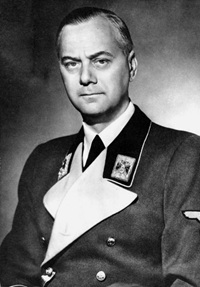
In May 1935 Alfred Rosenberg, a senior Nazi and author of The Myth of the Twentieth Century, made a controversial visit to Britain. (Why was this man allowed into the country, demanded ILP leader James Maxton, when his own invitation to Leon Trotsky had been rejected by the home secretary?)
While in London, Rosenberg laid a wreath, adorned with a swastika, on the Cenotaph. It didn’t last long. It was removed and thrown into the Thames, for which offence a man named James Sears was prosecuted and fined two pounds.
Sears had served through the war, enlisting as a private at the age of forty, rising to captain and fighting at Mons. He was now a company director and a Labour Party election candidate. His actions had been a ‘protest against the desecration of the Cenotaph by Hitler’s hireling,’ explained his son, ‘against the brutal barbarism which at present exists in Germany’.
Later that year, Captain Sears failed to take St Pancras South West from the Tories. He died in 1951. Rosenberg, on the other hand, was tried and executed at Nuremberg in 1946.
from the maker of:

Discover more from Lion & Unicorn
Subscribe to get the latest posts sent to your email.
