BEN FINLAY provides a personal selection of the ten best British folk-rock albums of the 1960s and early 70s.
Click here for a
BRITISH FOLK-ROCK PLAYLIST
‘At a certain point, around 1968, we thought, well, we’re never going to sing soul as well as Otis Redding and we’re never going to play the blues as well as Muddy Waters. We should be finding our own roots out here in Britain and trying to do a contemporary version of British music. We had to build a bridge between the tradition and popular music, because it had kind of died out in the public consciousness. Traditional music was something that farmers and fisherman did, but it wasn’t even close to the mainstream.
So, we wanted to contemporize British music, to bring it into popular music. We did it in a slightly studied way, I suppose, but after a while it became second nature. That became the music of Fairport Convention, Steeleye Span, and all those other bands…’
Richard Thompson, 2013.
The golden age of British folk-rock was short lived, lasting from 1969 to 1975. But in that time a highly original form of British music evolved, and a stylistic broad church emerged that ran the gamut from traditional Morris tunes to the blissed-out reveries of John Martyn. Born out of the UK folk revival of the 1950s and 60s, Brit folk-rock emerged just as their American counterparts were fusing roots music with electric instrumentation; British pioneers such as Fairport Convention made music as thoroughly convincing and authentic as the Band was making in upstate New York at the same time.
And it is with the Fairports that the centre of folk-rock lies. Not only did they produce the genre’s defining album in Leige and Leif, but two members of the band – lead guitarist Richard Thompson and drummer Dave Mattacks – appear on many of the notable records of the era, and are integral to much of the music in this top ten, as is the figure of Fairport founder and bassist Ashley Hutchings, perhaps the purest devotee to tradition in the folk-rock firmament.
The choices on the list are made for originality, significance and just because they are some of my favourite records. This is music I have lived with for a long time (I first saw the Fairports live in 1988 at the age of fourteen) and it still very much resonates with me now. So, light the campfire, bring along a flagon of spicy ale and take a trip around the maypole with the L&U guide to the top ten British folk-rock albums.
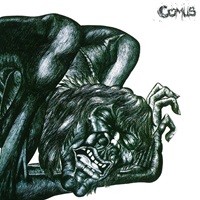
10. Comus ‘First Utterance’ (1971)
track choice: ‘Drip Drip’
The first choice on this list is my ‘wild card’ but nevertheless deserves its place here. Comus were formed in 1968 and lived communally in Beckenham. They were helped by a young David Bowie who gave them a gig at ‘Growth’, his Arts Lab at Beckenham’s Three Tuns pub. The band also appeared at Bowie’s Beckenham Free Festival in August 1969 and supported him at London’s Purcell Room.
In 1970 they signed to progressive label Dawn, and the following year released First Utterance, From the sleeve to the music contained within, this is an utterly dark and quite often disturbing record. Eschewing conventional drums and electric guitars the result is far heavier than many bands that did plug-in. Roger Wooton’s guttural vocals are augmented by funereal violin, whirling flute propelled by frantic hand percussion. Far from the pastoral idylls evoked by much folk rock, First Utterance is a work of urgency and vitality. Unfortunately, commercial success eluded the band, with Wooton laying the blame on Glam rock, explaining in 2007 that ‘the irony is that Bowie, who helped us off the ground, became our nemesis. Glam rock came in and suddenly audience figures dropped right off, we got fewer and fewer gigs and no one was interested.’ Whether it was Ziggy that did for Comus or not is of course arguable, but listening to First Utterance is not. Alert the neighbours and put it on now.
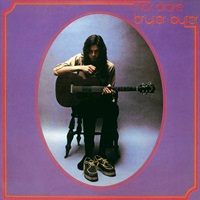
9. Nick Drake ‘Bryter Layter’ (1971)
track choice: ‘At the Chime of a City Clock’
Drake’s second album was made upon his move to London, and this is reflected in a shift from the more pastoral sounds of his debut Five Leaves Left. Producer Joe Boyd built the record around Fairport’s Thompson, Mattacks and bassist Dave Pegg, also recruiting such diverse talents as John Cale (viola on ‘Fly’); jazz pianist Chris MacGregor on ‘Poor Boy’ (alongside vocalists P.P Arnold and Doris Troy) and saxophonist Ray Warleigh on the wonderful ‘At the Chime of a City Clock.’
Bryter Layter sold only a few hundred copies at the time, but its legacy has been huge and long lasting. ‘Fly’ features in Wes Anderson’s film The Royal Tenenbaums and the beautiful ‘Northern Sky’ in Serendipity. The title track also features prominently in the 2020 novel Summer by Ali Smith. Not bad for a record that pretty much disappeared from view on release.
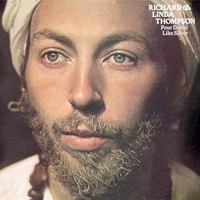
8. Richard & Linda Thompson ‘Pour Down Like Silver’ (1975)
track choice: ‘Dimming of the Day/Dargai’
This is the latest recording of all the titles included on this list and made as the golden age of Brit folk-rock was on the wane. But what a way to go; while Richard and Linda’s debut I Want to See the Bright Lights Tonight is a rightly lauded classic, Pour Down features such gems as Night Comes in and Beat the Retreat. The album was recorded after the couple had adopted the Sufi faith in 1974 and moved into a commune in London. The songs reflect their new faith and demonstrate Thompson writing in the Sufic tradition of expressing divine love in earthly terms, most notably on the stunning Dimming of the Day. Pour Down Like Silver is an elegant, sparsely produced album that demonstrates how far the British folk-rock movement had come in just a matter of years. The live performances from the tour that followed the records release are captured on ‘In Concert, November 1975’, issued in 2007 – essential listening of the Thompsons and their great live band (featuring Mattacks and Fairport bassist Dave Pegg) at their creative peak.
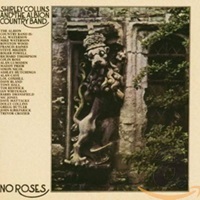
7. Shirley Collins and the Albion Country Band ‘No Roses’ (1971)
track choice: ‘Murder of Maria Marten’
Sussex born Collins was a veteran of the British traditional folk scene; she had made an album with mercurial guitarist Davey Graham, paired with her sister Dolly making several notable albums, the duo signing to burgeoning underground label Harvest in 1968 to make two classics of the genre, Anthems in Eden and Love, Death and the Lady. In 1971 she met former Fairport Convention bassist and founder Ashley Hutchings, then with the recently formed Steeleye Span. The couple soon married, and after Hutchings had performed in the experimental play Corunna with Steeleye Span, he and Collins started work on No Roses. The record was made with an ensemble of twenty-six musicians, named The Albion Country Band, beginning a venture Hutchings would pursue (in various guises and line-ups) throughout the rest of his career. (see number five)
For the recording of No Roses, the core of the group centred around the post Sandy Denny line-up of Fairport Convention, reuniting Richard Thompson and Simon Nicol on guitars, with the two Daves, Pegg (bass) and Mattacks (drums). The result is a dense, earthy recording that is a deep representation of the power of the British folk-rock sound, best encapsulated in ‘Murder of Maria Marten’ a true story of wrongdoing in Suffolk in 1828.
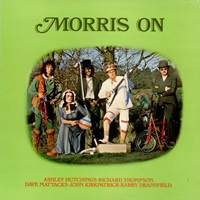
6. Ashley Hutchings et al, ‘Morris On’ (1972)
track choice: ‘Old Woman Tossed Up in a Basket’
Conceived as Ashley Hutchings finished recording No Roses and was in the process of leaving Steeleye Span, Morris On again pulls in folk-rock regulars Thompson and Mattacks, this time augmenting them with John Kirkpatrick on accordion and Barry Dransfield on fiddle. By now, seriously immersed in the tradition, Hutchings brings the much-maligned tradition of Morris to the table. The result is no way as worrying as it sounds; Morris On is in fact a joyous romp through tunes associated with the genre, with false starts, studio chatter and a good-natured lightness that is a sunny relief to the sound of bands like Comus or the early, dark Steeleye Span.
The cover photo is a pure pantomime delight, capturing the ensemble in Hutchings’s garden with the erstwhile bassist toting a Gibson Flying V, and Mattacks astride a chopper bike propping up a hobby horse. A great record that is a personal favourite.
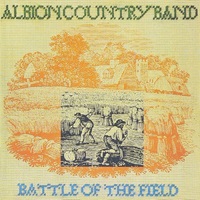
5. Albion Country Band ‘Battle of the Field’ (1973)
track choice: ‘The New George/La Rotta’
‘The faded flower of England will rise and bloom again…’ ‘Albion Sunrise’
As mentioned, The Albion Country Band were formed for the recording of No Roses in 1971. Following that record and Morris On, Hutchings was keen to make the band permanent, but it struggled with line up issues and split in August 1973. However, the group managed to record one album, Battle of the Field, but the album was shelved when the band folded. It was finally released in 1976 and is a steeped in a deep rural groove, with Moog synth bass appearing along the way, an attempt to move the music forward. As it was, just a year later, Hutchings created the acoustic Etchingham Steam Band, formed because of the power cuts of the time that caused problems for any band using electrical instruments or amplification.
(See also the Albion Band’s ‘Rise Up Like the Sun’ (1978). Although just a little outside of our time frame here, a brilliant folk-rock album that is thoroughly recommended.)
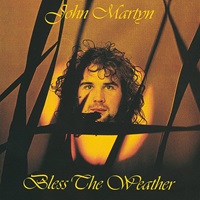
4. John Martyn ‘Bless the Weather’ (1971)
track choice: ‘Bless the Weather’
While many cite Solid Air as the classic Martyn record, I counter that argument with this 1971 rustic classic, which reflects his and wife Beverley’s move from London to Hastings. From the moment Danny Thompson’s huge double bass drops on the title track, John’s imperial phase (1971 to 1979) begins. Bless the Weather has an at-one-with-nature jazzy/folk vibe about it, particularly exemplified on tracks such as Walk to the Water, Head and Heart and Back Down the River. Furthermore, the trademark echoplex sound is unveiled on the swirling, trippy Glistening Glyndeborne, and the whole record is a delight. Most importantly, it turns the whole folk-rock genre on its head, with no traditional material, fiddles or four-square rhythms, instead bringing us into a shimmering stoned evocation of one man’s highly individual vision of music. No wonder Q magazine chose Bless the Weather among the dozen essential folk albums of all time in 1999, and the Guardian included it in their ‘1000 Albums to Hear Before You Die’.
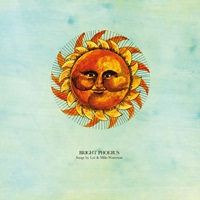
3. Lal and Mike Waterson ‘Bright Phoebus’ (1972)
track choice: ‘Bright Phoebus’
The Watersons are often referred to as ‘the most famous family in English folk music’ and are royalty of the British traditional scene. Formed in 1962 of Mike, Lal and Norma Waterson with cousin John Harrison, they performed unaccompanied traditional tunes, releasing their first album Frost and Fire (a personal favourite) in 1965. The group split up in 1968, when Norma went to work as a DJ on a radio station on Montserrat.
In 1972, Lal and Mike made this album with various folk-rock alumni (Thompson and Mattacks again) somewhat in response to the genre, the irony being that in time it has become considered a classic of it. Recorded in a basement room at Cecil Sharp House, home of the English Folk Dance and Song Society, the album is a radical departure from the traditional sound of the Watersons. Lal and Mike’s idiosyncratic songwriting evokes the contrasting bright and dark nature of the British climate, connecting with pagan roots and producing some genuinely original songs such as ‘The Scarecrow’ ‘To Make You Stay’ and ‘Winnifer Odd’. The title track is an uplifting hymn of optimism; the line ‘today bright Phoebus she smiled down on me for the very first time’ closing out proceedings with a glorious paean to the sun. Marvellous.
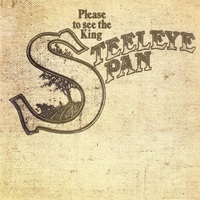
2. Steeleye Span ‘Please to See the King’ (1971)
track choice: ‘The Blacksmith’
The first three Steeleye Span albums (Hark! The Village Wait, Please to See the King and Ten Man Mop) demonstrate the band at their earthy, grittiest best. Ashley Hutchings is of course on all three; although Steeleye would go on to commercial success without him, these recordings are where the real heart of the band lies. Difficult to choose a definitive album (I’m a big fan of their debut), but this just pips it for me. Despite the lack of drums, it is more powerful for it: Hutchings’s bass packs a mighty oomph, Martin Carthy’s telecaster sound is wiry and taut and the whole recording is dense and keen-edged. There is a darkness and often medieval sound about Please to See the King with olde instruments such as dulcimer blending with electric guitar; Boys of Bedlam features an eerie, moaning crowd which is spookily beautiful.
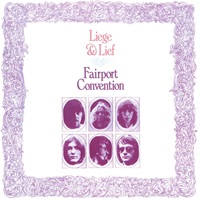
1. Fairport Convention, ‘Liege and Lief’ (1969)
track choice: ‘Matty Groves’
What more can be said about this record? Fairport’s (and folk-rock’s) absolute high point, it’s a radical reworking of British traditional music shot through with originality and verve but also one carved out of tragedy.
Liege and Lief was conceived while the band were recovering from a road accident that killed drummer Martin Lamble and guitarist Richard Thompson’s girlfriend Jeannie Franklyn. Fairport regrouped with Dave Mattacks as Lamble’s replacement and violinist Dave Swarbrick (a star on the traditional folk circuit), renting a house in the Hampshire hamlet of Farley Chamberlayne, near Winchester.
Building on the traditional folk song ‘A Sailor’s Life’, which had appeared on their last album Unhalfbricking, the band inadvertently created British folk rock, marrying traditional songs, or tradition-inspired originals, with electric instruments. This would prove as revelatory as the Band’s first album, engaging with the Fairports’ British roots in a contemporary manner, and proving to be not only influential, but the definition of a new genre. (At the BBC Radio 2 Folk Awards in 2006, the album was voted ‘Most Influential Folk Album of All Time’.)
Sung beautifully by one of Britain’s finest vocalists, Sandy Denny, originals such as ‘Crazy Man Michael’ blended effortlessly with murder ballads such as ‘Matty Groves’ (still a cornerstone of the band’s set today). Have no doubt about it, Liege and Lief is not just the pinnacle of British folk-rock, but one of the greatest British records ever made.
bubbling under:
Fairport Convention, ‘Full House’ (1970)
Steeleye Span, ‘Hark! The Village Wait (1970)
Pentangle, ‘Cruel Sister’ (1970)
(notably side two, an 18-minute version of ‘Jack Orion’)
Sandy Denny, ‘The North Star Grassman and the Ravens (1971)
Trees, ‘On the Shore’ (1971)
Further reading: To read more about folk-rock – its roots, golden age and legacy – I thoroughly recommend The Electric Muse Revisited: The Story of Folk into Rock and Beyond (2021) which is an indispensable history and guide. Similarly, Rob Young’s Electric Eden: Unearthing Britain’s Visionary Music (2011) is a superb book on British music and its cultural heritage, spanning the visionary classical and folk tradition from the nineteenth-century to the present day.
see also:
Discover more from Lion & Unicorn
Subscribe to get the latest posts sent to your email.
